
 Subscriptions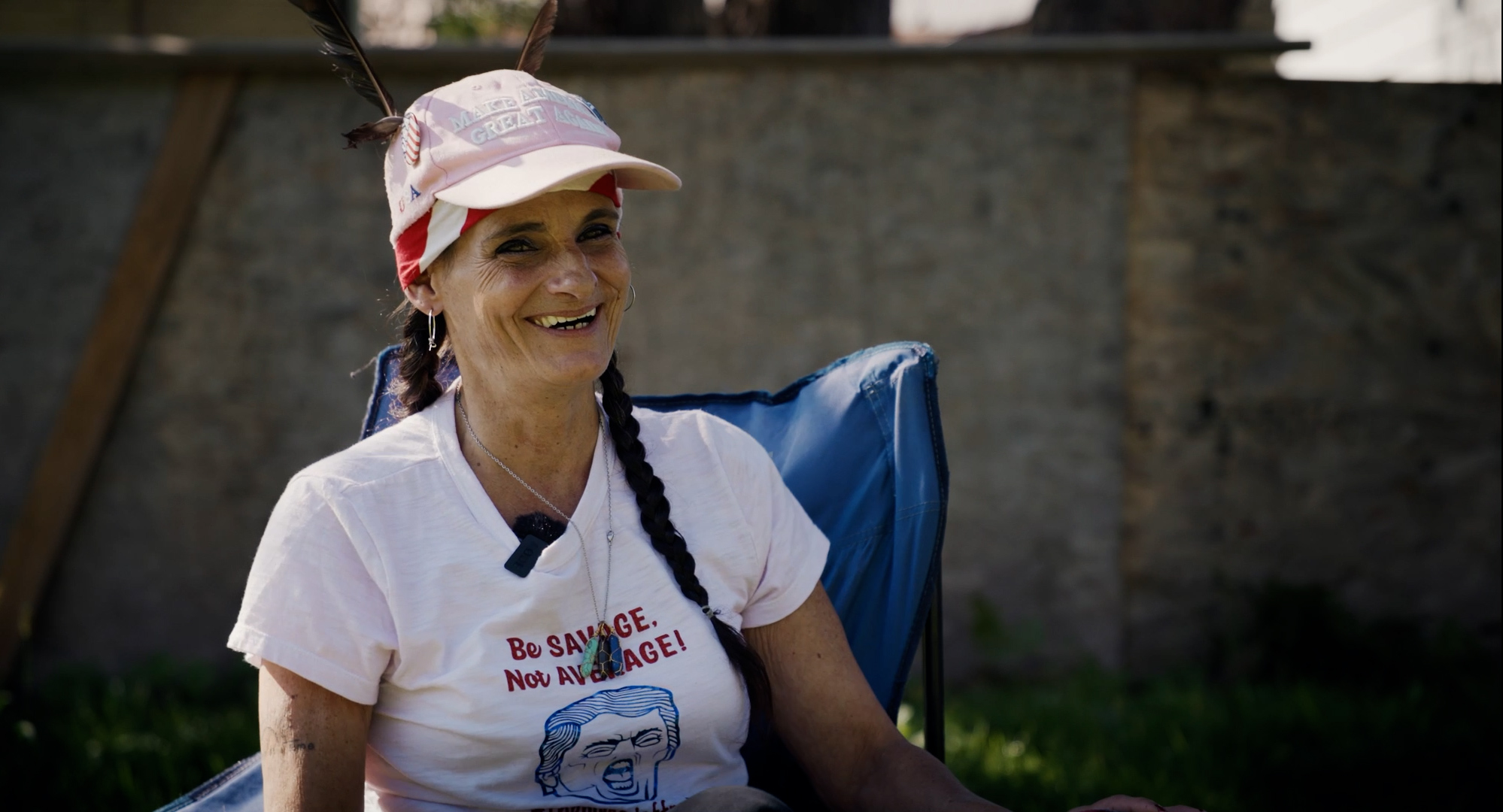

Read our Monthly Magazine
And support our mission to provide fearless stories about and outside the media system
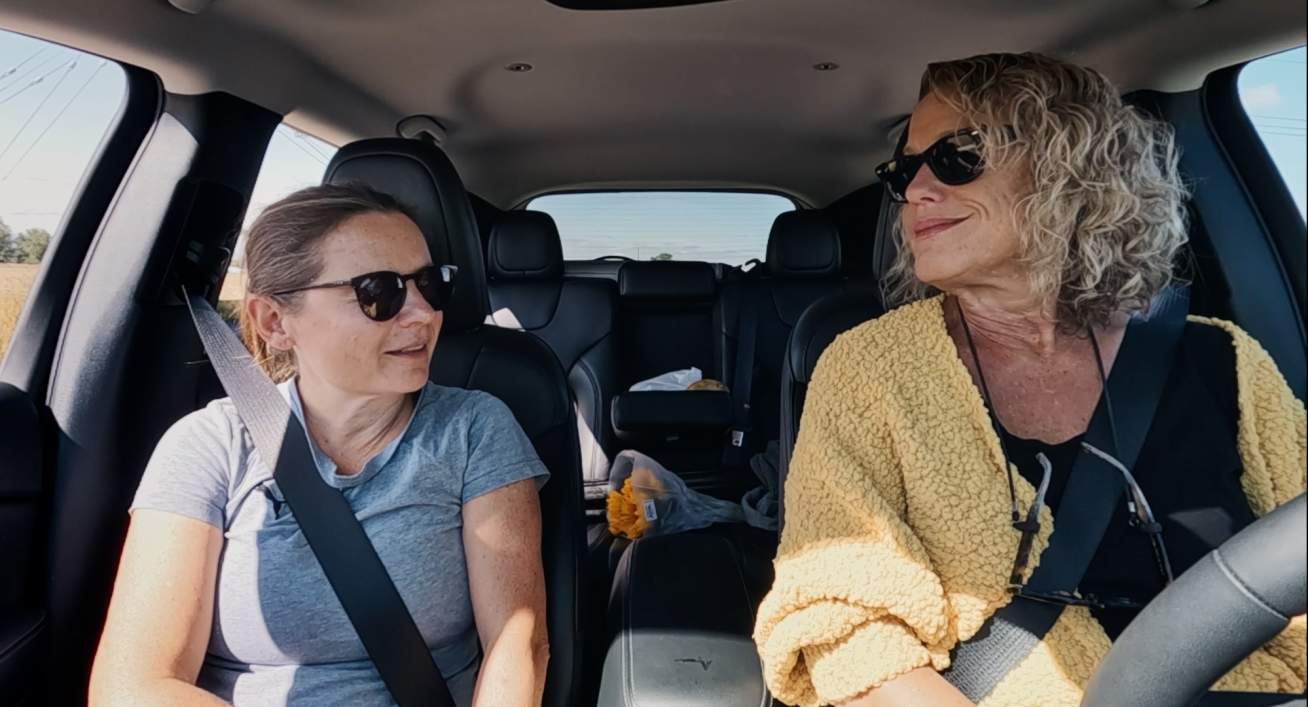
The Conspiracists follows you both on a road trip across the US, meeting women drawn into the world of conspiracy theories.
For former Marine drill instructor Yvonne St Cyr, her involvement in the January 6 insurrection at the Capitol was one element of fighting a “spiritual war between good and evil” after an unstable upbringing and her turn away from the church during the pandemic. Meanwhile, Tammy Butry, who like Yvonne was convicted for her actions at January 6, became attracted to conspiracy following a number of traumatic life experiences – including suicide, sexual abuse and violence; and her children being imprisoned in the ‘kids for cash’ scandal in which judges accepted financial kickbacks to send children to private juvenile detention centres for minor incidents.
In all of the iconography that emerged around January 6, and the ‘MAGA’ movement more generally, men – such as the ‘QAnon Shaman’, Jacob Chansley – tended to dominate the interpretation of that event as the embodiment of a hyper-toxic-masculine violence channelled by Donald Trump under the guise of white supremacist patriotism. What I found striking about your film was the footage and photographs of a number of women who were present that day, who I don’t recall seeing in any of the media coverage at the time. How did the idea for a documentary following the journey of women living with such belief systems come about?
NC: I ended up going to January 6 to take photos of the ‘Stop the Steal’ rally and to use it to create some kind of comparative visual anthropology project on the various protest movements that had been going on for the past five or six years in the US. Because I was working in [the field of] women and gender studies, I focused on women and their participation in right-wing movements.
When I got home and looked at the pictures I had taken at the Capitol that day, what struck me was, as you described, that here were these men in full body armour and camouflage, decked out in Trump paraphernalia, and next to them were these white, middle-aged, middle-class women who were sitting there like they were at a church picnic, taking it easy, while the men next to them were standing up and yelling. It was a weird, sinister, carnival, revival, reunion kind of situation.
But what I recognised was the camaraderie – and it reminded me a lot of the Women’s March I went to in [Washington] DC on the day after Trump’s first inauguration in 2017, where people were packed shoulder-to-shoulder and there was this joy of being amongst like-minded people. That was what I had experienced at the Capitol as well, but it had a very sinister feeling to it because of the rhetoric being thrown around.
There was a real surrealness of these women, who acted like nothing was happening and were using it to livestream to Facebook; an opportunity to plug their businesses from inside the tunnel while the police were spraying tear gas. It was just so surreal. So, I followed these women for a year, and they all led me down the path to conspiracies and ‘conspirituality’, which had nothing to do with what I set out to study in the beginning.
The film poses many interesting questions for viewers – one of them for me was the extent to which women such as Yvonne and Tammy really support Donald Trump and ‘Make America Great Again’ as a political movement, or whether they see him merely as a vehicle in their wider conspiratorial, spiritual, belief system?
NC: Tammy, for example, didn’t really vote or pay attention to politics. Yvonne didn’t like Trump but she voted for him. There’s something about him, clearly, that is weird and charismatic, even if it’s evil. So many of these people are tired of broken systems so, when he came out originally saying he wasn’t a politician and that he wasn’t here to play that same game, and he uses that very coarse language and says ‘I’m one of you’ and that he’s not very presidential, [it appeals].
I studied middle-aged people and was watching them get to that stage of life where they’re kind of in that ‘integrity versus despair’ stage of development. Their lives don’t look exactly like they thought they might at age 50 or 55 and there’s a lot of loneliness, a lot of isolation, and the tipping point really was the pandemic. It was during that time that Yvonne and Tammy became Trump fans. But Trump could leave today and this doesn’t change – because it became a community, and then it’s people’s identities.
Even right now, with all the infighting going on and Trump turning on some of these loyal supporters, and Tucker Carlson and all those people who now are disagreeing or being shut out, [the people believing in this kind of ideology] know that, if you stand up because of any of [what is now unfolding around Donald Trump, such as the Iran war, higher prices, the Epstein Files], you get shunned – and when you’ve built a community around you for six years, and you’ve gone through a pandemic which also messes with people’s heads in lots of ways, it’s not now about disavowing the war in Iran, it’s not about what you’ve been screaming about for six years – ‘release the Epstein Files’, right? Now, it’s about preserving your identity and community, because starting over, how are you going to do that?
I don’t honestly think any [of the women I followed] particularly love Trump. In fact, Yvonne told me once that God works through flawed men and that’s why he’s there. They recognise that he’s flawed, and that’s okay.
So, if Donald Trump has a role in Yvonne and Tammy’s beliefs, what is it that they believe?
LS: It’s this mix between conspiracism and New Age spirituality: ‘conspirituality’ – which is a way of understanding the ‘divine feminine’ and the ‘divine masculine’, which I found very interesting. Do you want to explain it, Noelle, as you’ve explored it in your book?
NC: It’s very strange because Yvonne will sometimes say things that take me by surprise because they sound like something I might actually say, right? So, she believes that warrior females have worth and you can’t have a balanced world without them, but at the same time, women have very specific roles in what they’re allowed to do. For Yvonne, the patriarchy exists, no matter how feminist she might sound in one moment. I think part of this is why these women are drawn to Trump, because there is something about this personality that’s drawn to ‘soul contracts’.
It’s not unlike religion in many ways: this belief that they’re suffering and that they need to have patience for something that’s promised to come. There’s a set of rules by which you have to operate to exist in the world in order to get that reward, and it may not come your way for a long time, and they know that. What I see, again, [as leading to these beliefs] is another broken institution of organised religion. The pandemic created a scenario where people had to turn online if they wanted to participate in spiritual practices in an organised way with other people.
[Yvonne turned to online conspirituality beliefs particularly during the pandemic when her church closed. She believed something was wrong because God would never close his doors to his congregation].
In the film, Yvonne and Tommy assert a number of conspiracy theories for which there is no evidence including: that The Matrix film was a documentary; that the Queen and the Royal Family kidnapped children from Canada and that they hunted and ate children; that the Rothschilds and the Rockefellers are reptiles and that they created cancer; that Mother Teresa trafficked children and that she was Anthony Fauci’s father; that Fauci – the former Chief Medical Advisor to the US President – created the HIV/Aids virus.
Many of these are the sorts of outlandish claims that people might expect to hear on the conspiracy front. But, Yvonne and Tammy also speak extensively about their belief in being ‘starseeds’ – an ideology which is about attaining greater consciousness and questioning the world around you in elaborate and self-reinforcing ways?
NC: A lot of it asks questions like: do you feel like your life has lost purpose? Are you tired and lacking energy? If you’re in the right frame of mind, and you’re looking for a coping mechanism and you need something to cling on to that badly – which again, to keep talking [about how this is similar to] religion, because it’s not that different – then it’s pretty easy to go ‘oh, wow, that resonates with me’. In Yvonne’s case, she’s taken it a step further – she believes in something called ‘algorithmic conspirituality’: she’ll go on Facebook and because a post will pop-up at a particular moment, she’ll say ‘it’s a message from the divine as I wouldn’t have turned my computer on at this very moment and had that popping up unless it was meant to happen, and everything’s predetermined’.
Traditional gender roles in which the ‘divine masculine’ is dominant is just another way of expressing gender ideology, but it’s also a space where women can be celebrated for being intuitive and trusting their guts – and where they’re encouraged to do that because that allows them to start asking questions. So they start attending school boards and become these momma bear warriors who use violent rhetoric, and when what you’re saying is in defence of children, you can say whatever you want – and that really is true.
This [belief system] appeals to women who are around 50, when you go invisible. You’re really past your reproductive age. You no longer potentially contribute to the GDP. Oftentimes, you’re somewhere between caring for children and ageing parents. More and more of these people found themselves online, not just because of in-person gatherings being cancelled during the pandemic, but because of middle-aged circumstances. I saw that across the board – and because I related to them, right? I’m exactly the same age as these women. I’m able to understand some of this because I was observing enough of it in myself to see how I used different coping mechanisms to get through that time. And I really do think that a lot of it is a coping mechanism.
You’re at that stage of life where you have an existential crisis and all kinds of questions – and it’s much easier to believe that ‘one day I’m going to ascend to Heaven on Earth’. It’s not that unlike finding religion in midlife, as it’s based on a belief system where you don’t need tangible evidence. You don’t need science to back it. You don’t need anything other than another human to tell you: here are your instructions, go about your day.
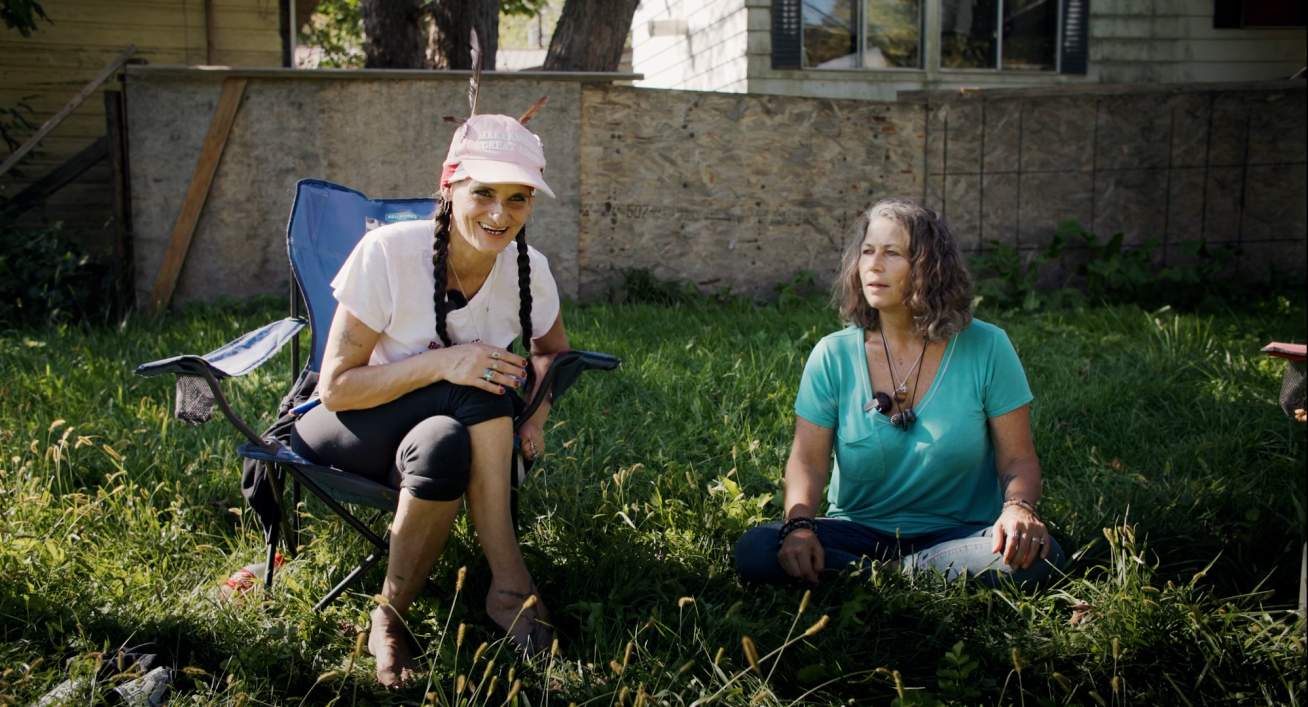
And the idea that any challenges that come your way can be explained by this being part of your ‘soul contract’? So that real structural and political inequalities, which more tangibly help explain why life might be tough, remain unengaged with…
LS: It’s a ‘soul lesson’. Every time you confront some form of adversity, you’re going to be thinking: why is this happening to me? That’s shit and that’s not fair. But, if you’re in this conspirituality world, then you actually have a narrative to explain why you’re having a shit time – because it’s all a soul lesson, and you can learn from that. I can learn forgiveness and then I grow as a person. So, every time you come back into the world – because they believe in reincarnation – you’re building on the lessons you’ve already learned in [a previous] life, and you’re becoming a better person, every single time. So rather than just accepting that, actually, life can be rubbish and awful, you want to find a reason for why it is [that way]. The ‘soul contract’ is a kind of ideology which really helps, because you’ve got a reason why something is happening to you.
Noelle’s book has a whole chapter about the origins of the New Age movement and how this ‘starseed’ theology [developed from the work of] the Russian-American, Helena Blavatsky, in the late 19th Century [who co-founded the Theosophical Society in 1875 and whose 1888 work, The Secret Doctrine provided a foundational occult framework for the belief that human souls originate from other planets]. She believed that everyone has an ‘inner god’ and that everything comes from your intuition – and the [emphasis in the starseed ideology on] female intuition comes out of that as well.
You see that translating directly into what Yvonne and Tammy say. They got it from watching lots and lots of YouTube videos, but it’s incredible to me that actually the spirituality piece of this goes right back to the late 19th Century and the start of the concept of the starseed being from another galactic planet who has come down to help us understand the world through soul contracts.
I found the film so memorable because it provides a very human look at these women and why they believe what they do. At no point are they presented as stupid, requiring judgement, or seen as ‘other’. How did you decide that Yvonne and Tammy’s stories were the ones you wanted to follow?
NC: It started out as an academic project, but I crossed boundaries [in developing relationships with some of the women] so I wasn’t going to pass an academic review and I gave up on that. In the first year, I studied them at a distance – following their social media accounts. And everybody kind of looks the same when you do that. It’s easy to categorise everybody in one pool when there is so much more nuance going on. Even January 6, not everybody was there for Trump – there was another rally going on that day, attended by a lot of granola-eating women who were anti-vaccination. Women from that rally were also sitting on the Capitol steps. I have them in my photographs.
But then Yvonne’s journey got so complicated, following her through social media, I started to get stumped – I couldn’t really figure out some of the language [she was using] anymore without asking her some questions. So I reached out to her on Facebook on my research account, and said I’d been following her spiritual journey and that I had a couple of questions. And Yvonne being Yvonne, she gave me her cellphone number instead. I called her and we talked for an hour, and then we kept doing that.
Things changed [over time] with Tammy. I had been getting to know her but still keeping some distance, but she kind of drew a lot of the empathy out of me because her story was so tragic. In so many ways, she had so many real-time crises while I was talking to her, that I would keep finding myself wanting to jump in and help her find resources.
So I made peace with the fact that I was actually developing relationships with these people. I didn’t want to do that. There’s only two of them, because they were the only two I could tolerate developing relationships with – most of the other people I talked to, it was very clear to me, had an agenda of some kind.
Spending three years talking to [Yvonne and Tammy] consistently over time, I got to know them really, really well, and because of that I developed more of a story [about their lives]. But I don’t know what that methodology looks like in the real world on a large-scale – because, honestly, that’s what it would take if you want to try to understand why people are completely discarding a shared reality to the point where it actually has real world consequences in material ways for them.
This giant right-wing pool is not purist: there are neo-Nazis, Christian nationalists watching for Armageddon, conspiritualists waiting for ascension. All those messages are adjacent. And so, in the process, ordinary people – like the ones I write about – will start dabbling in things that they’ve never [said or thought] before.
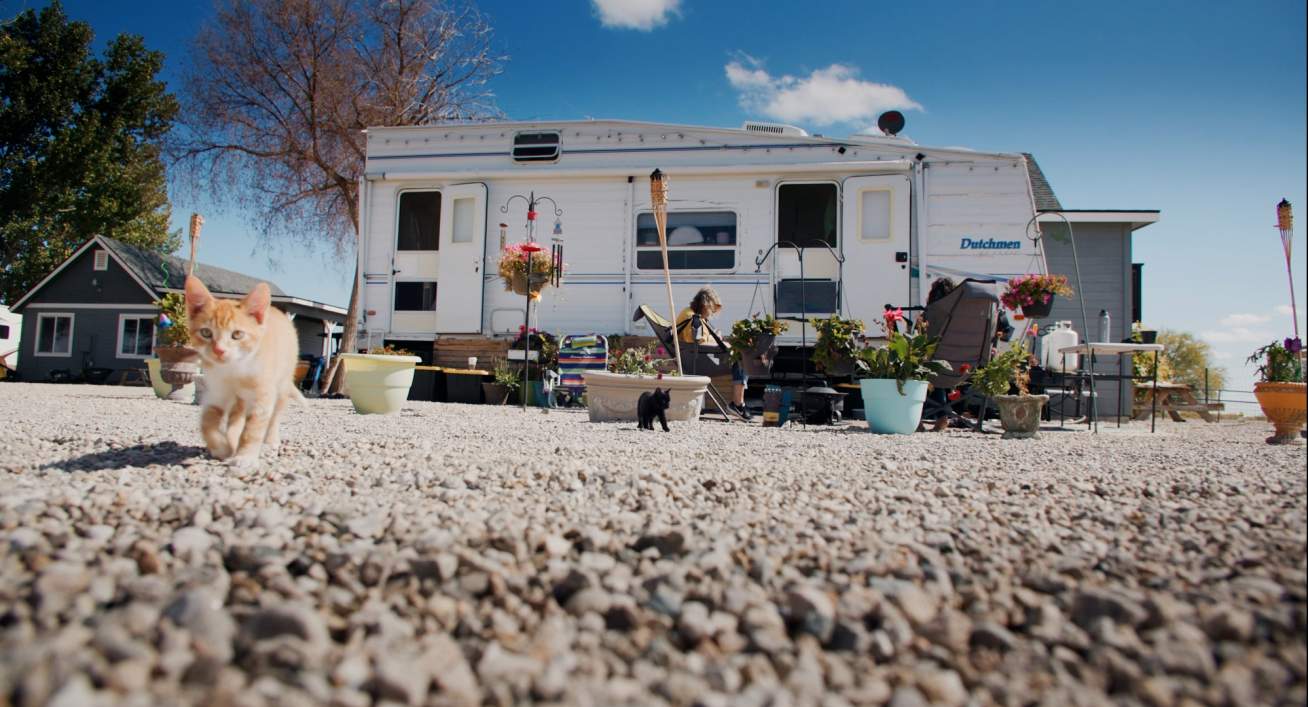
Yvonne [believes herself to be] a ‘divine sovereign citizen’ and that playing into the system is keeping her a complacent slave – and so she stopped paying her mortgage and quit her job. She ended up living in a camp trailer in the middle of a field in Idaho where, in the winter, her pipes would burst, and she had no water. She sees that as part of her sacrifice for her godly mission, essentially. When she [was waiting to go to prison to serve her sentence for her January 6 conviction], she kept denying it would happen. But then, when it did happen, it was because ‘the spirit wanted to place her there so that she would find a new soul’. Everything Yvonne did was to stand for the truth till the last breath. And she’s completely vindicated. Because she had her case on appeal, when her pardon [from Donald Trump] came down, [the conviction was completely wiped from her record]. It wasn’t rewriting history for Yvonne, it was erasing history – as if it never happened. Yvonne feels more sure of her power than ever.
The film is a nuanced portrayal of Yvonne and Tammy’s beliefs in that they are neither simply dismissed nor endorsed. These women are allowed to be themselves so viewers can decide what they think and feel about them. It’s an approach I also favour journalistically, and I’ve received some criticism in the past for ‘providing a platform’ for somebody espousing dangerous conspiracies when I interviewed former nurse Kate Shemirani, providing viewers with an insight into her beliefs.
How did you walk that line, Liz, between listening but not agreeing, and doing it in a human and personable way that kept the women open to you and you open to them?
LS: Noelle and I met about 18 months before the road trip and we were introduced because I was looking into polarisation. I was asking myself questions like: why would any woman vote for Trump when he’s a misogynist? Why did January 6 happen? My films are all about democratic backsliding, and this was a great example of that. I’m also, obviously, particularly interested in women’s stories because I am a woman director and I am in my 50s. The story of women in their 50s isn’t one that’s often told.
The road trip was about seven days so Yvonne had the opportunity to explain [her beliefs] to me – and she’s a teacher, so she wanted to take us into the ‘5D’ world with her. So that dynamic really worked. Being a British filmmaker, the women didn’t quite know where to put me, so I could just be there and listen. If I had constantly pushed back and interrupted, we wouldn’t have gotten that deep story – and that’s an approach I take with all my films.
The level of polarisation that we’re at is so dangerous for society. If we’re going to get out of that, we need to start understanding what each side is thinking – and therefore letting them tell their stories, not ridiculing them or pushing back and saying that they are stupid [was crucial because] that wasn’t going to get us anywhere near the truth of why and how they think what they do by the end of the film. I still don’t have the same belief system as Yvonne or Tammy. In fact, I’m far, far away from that. But at least I understand where it comes from, and hopefully, when people watch the film, they will understand where it’s coming from.
The big shock of that journey for me was [realising] that they actually are true believers. These aren’t things that they say because it’s funny or interesting or it gives them a platform or they earn money from it. I think they really, really, genuinely, believe it – and I wouldn’t have been able to get my head around that until I’d been on the road trip with them.
NC: After talking to dozens of women, they were the only two I was convinced were true believers, and part of the reason we were able to create this human look at them is because I originally approached this from an academic point of view with the methodology of ethnography in mind. Ethnography is a great shield in these situations, because I’m not an activist – I’m not going into it to change minds – I’m going into a different culture to understand their traditions and customs and the language. To understand what those things mean to them, not what they mean to me, and so that doesn’t require a push back – because I’m trying to learn from them. I was just hearing how they feel, which was a great tool.
What I hadn’t anticipated in doing that is developing empathy for them. I thought I’d be able to maintain a clinical distance from it but, by year two, I [had learned about] their entire childhood, their adulthood, and I could see the trajectory, and those tipping points throughout their lives that probably helped push [them in this direction]… That moment where you could go this way, or this way – and then you can see how this conspirituality belief system also serves as a set of coping mechanisms. In many ways, their explanations are part of a faith-based belief, but it’s also a coping mechanism, and I don’t think you can see that if you’re arguing with someone.
There’s a poignant moment in the documentary, Noelle, when you speak about developing empathy for these women and the human need for hope. It’s not something that may immediately come to mind for people when they think about those with conspiracy beliefs, but it seems to be a pretty key insight that helps explain why people are willingly escaping reality…
LS: With the current film I’m making about asylum seekers, I’ve met a lot of people who’ve been through dangerous journeys across the world, on boats, through deserts, and all these awful things, and I have been wondering what keeps them going. And they are using the method of hope as well, even when their situation is hopeless. I see so often in my conversations with them that [what keeps them going is] that they hope to get to the UK or to the next stage [of their asylum process] or whatever, and the alternative is so bad to even think about.
So the thing that keeps you going, even if it’s almost totally unrealistic, is hope. It’s so powerful, isn’t it? But what I find interesting is: why do some people go down the route of conspiracy theories to find their hope and others don’t? There are other forms of finding hope. Many people, with similar kinds of backgrounds, didn’t go down the rabbit hole during COVID. From the women we followed in the film, we’ve got some ideas around trauma and isolation; the need for participation. But other people who have had traumatic lives or were isolated and needed participation, didn’t all necessarily go down the conspiracy route.
NC: They didn’t have nurturance. The one thing I know I had that they didn’t is at least one supportive adult in my life from the time I was small who I could rely on in some way. That is something neither Tammy nor Yvonne ever had.
[Tammy had an inconsistent relationship with her father growing up, while her stepfather sexually abused her. Her mother died when she was 11. Tammy had four children of her own by the time she was 25. Yvonne’s father was an alcoholic and she spent considerable periods of time in foster care and living away from her family growing up].
LS: That’s true. What I also think is interesting is when people ask: how do we get somebody out of conspiratorial thinking? And the first research [cited] is that fact-sheets aren’t going to work because they don’t trust trusted sources. What then often happens is friends and family can’t bear it anymore and so they step away – and that means the person with the conspiratorial thinking just goes to their ‘conspiracy family’ to find support and so the whole thing gets amplified in confirmation bias. The problem is there’s nobody left in their lives to help pull them back. I can totally understand why people shut [those with] conspiracy theories out because it’s just too much, it’s exhausting, and it’s really difficult – but, actually, in a way, that’s the worst thing to do, because if there is an opportunity [to engage with them] if they have a change [in their belief system], there’s still someone there that they can trust [to turn to]. I think, Noelle, you played that role quite well with Tammy unintentionally. You were that person she could trust, right?
NC: But it was more about her real life circumstances, not her conspiracy beliefs.
In all the time I spoke with these women, we almost never spoke about Trump. I was never once asked about my political affiliation. It was automatically assumed I was okay with everything they were saying because I wasn’t pushing back and I wasn’t fighting them and I was still being kind to them – so I must be like them. That happened to me everywhere I went, from January 6 to the truck convoy I attended in Maryland, I was always accepted because I’m a white middle-aged woman, so I’m harmless and, if I’m there, I’m one of them. These women knew I was at January 6, they knew why I was there, they knew I was looking for a project and I was studying women’s participation – but they never asked me anything about myself. Yvonne said to me, after talking to me for two years, ‘I don’t think I even know what you do’.
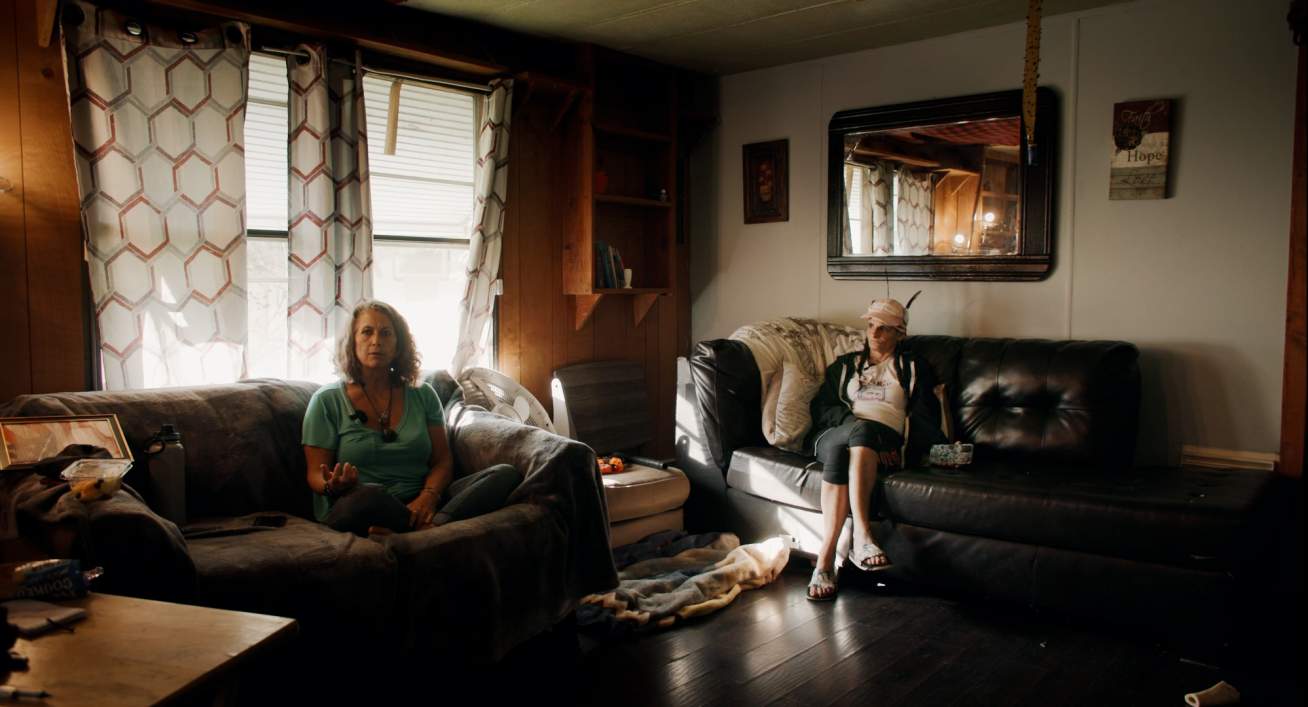
Only a minority of people may hold the sorts of conspiracy beliefs that Yvonne and Tammy do, but there is a lot to learn from why the things they believe became attractive and convenient. In the film, when Yvonne is asked about why she believes what she does, she says that this world doesn’t make sense to her otherwise.
The loneliness epidemic, the loss of shared community spaces, ‘bowling alone’, the alienation and addiction of social media platforms, corruption, vast levels of socio-economic inequalities in hyper-capitalist societies such as the UK and the United States, ‘rugged individualism’… What are the more fundamental strands, which go beyond the situations of those like Yvonne and Tammy, that are illuminated by following the journeys of those who venture down rabbit holes for a way to live? What is it in a wider sense that we should all have our eyes open to if we’re going to live in this world together as best we can?
LS: With a lot of conspiracy theories, there’s this grain of truth, and then it just gets warped. It’s so interesting watching this film in the context of the recent Epstein revelations, because a lot of this [ideology] comes from the QAnon conspiracy theories that there is a cabal of paedophiles who are running a sex trafficking ring and sucking the blood of children. It seems so incredibly absurd, but then the Epstein Files came out and you realise there is an elite group of sex traffickers. There’s a lot of corruption. And so the idea that the elites are making us slaves, which actually comes from these deep, deep structural inequities that we have in life, which have just got worse and worse… It’s the same kind of fight, whether you’re on the left or the right, against these elites, which has a lot of truth in it. But with the conspiracy theories, this all just gets warped and put into whatever convenient narrative, such as ‘Pizzagate’, in which Hillary Clinton was apparently one of the Democrats who were the sort of reptiles doing the blood and sex trafficking, as well as the Royal Family. When you see so many things in life actually kind of relating to these theories a little bit, you can see where it comes from.
Our big problem is we’ve completely lost trust on all sides – left, right, centre: nobody trusts anybody anymore, and we’ve got to find our way back to truth. But how do we get there? If we can do these investigations, these explorations of different social groups and how and why they’re thinking and feeling [what they are], and start to understand and learn a bit more about them, rather than just shutting each other out, then that’s hopefully a little bit of a pathway back to building trust between the groups. But we’re so far gone I just sometimes wonder how we can ever rebuild the bridges and get the trust back.
NC: What I’m just raging about inside right now is we wouldn’t be where we are right now if people with self-serving motivations, and their own personal goals, weren’t perpetuating it. Trump has been playing the ‘Q’ theme music at every rally in the background – average people aren’t going to pick up on that, but the Q supporters do and go ‘he’s sending us a message guys’. People like [Republican Representative] Marjorie Taylor Greene – she didn’t have an overnight epiphany, it wasn’t until Trump came at her and she fought back that now, all of a sudden, she is speaking out like she could have spoken out for the last 15 years if she wanted to. But because of her own motivations, her own goals, her own self-serving needs, she perpetuated this. These are self-serving opportunists who absolutely have no regard for human life and no respect for democracy. That’s why we moved into authoritarianism in America.
People like Yvonne and Tammy, they’re self-radicalising. And this wouldn’t exist without the internet. The right in the old days would have stayed in their fringe pocket. It would be a guy sitting within the four walls of his house, right? But the internet brought the right together and made it a movement, to the point that our politicians saw it as something they needed to glob onto in order to get elected.
LS: And of course, the people who are running the main platforms on the internet, have very, very vested interests and agendas.
NC: A whole coverage industry sprung up. This can’t go away because a lot of people have no jobs. How many podcasters make a living from their office at home now? How many influencers rely on their monetised platform?
Coming back to identity and belonging – our human need for this as conscious, social, emotional, psychological creatures is not going to go away. At the same time, hyper-capitalist societies feel increasingly fractured, disconnected, and dehumanising – which is part of the appeal of conspiracies. How hopeful are you as to what can be done?
NC: I don’t know about [what can happen in this] lifetime because what is required is dismantling and rebuilding so many things that were deliberately built from the beginning to keep us divided. Every country has its own version of a caste system, essentially. And there are no shared spaces where people can really congregate anymore. People go to the Trump rallies not to hear what he has to say, but because they can’t wait to meet the personalities that they know online – just like, if you go to Disneyland, you need to go and find Minnie Mouse, Donald Duck, and Goofy.
What I realised was how much of the social situation [of all this] was a replacement; [a way to deal with] the isolation and the loneliness. There’s a lot of reasons for that, but we don’t value people’s mental health in society. That’s the problem. And that’s why I’m still in touch with Tammy – I’m someone she can rely and depend on who doesn’t judge her; I’ll give her solid information that is in her best interest and not in my own. I [don’t see it so much as being a ‘good human’] as cooperative living. I see it as we’re all struggling through this together, and struggling in isolation is really awful. I think sometimes just knowing that [Tammy] has somebody she can pick up the phone to, who will answer her call, and spend even a couple of hours with her, is what she needs. That’s what people need.
[When Tammy’s child hung themselves in prison, Noelle was the first person she called].
LS: The key turning point was the 2008 financial crash. We thought it would be the end of the neoliberal philosophy. Suddenly, everybody realised that the American Dream… [wasn’t possible]. So bringing this back to identity and belonging, suddenly everyone starts questioning the story they’ve been told and this thing they’ve been building toward. They start asking: what is my identity in life? Where do I belong? And when you completely lose trust in this system that we’d all been bought into since the Reagan era, when that falls away, what do you do? You start getting your news just from Facebook and your close friends – because you no longer trust the biggest systems and structures that were in place for us. So I think 2008 was a really key tipping point for us which was then just loaded onto by COVID, and then a number of other instabilities.
NC: She has had so much trauma in her life and, even though Tammy trusts me in the way she does, it doesn’t mean I’ve changed her belief system – because I can’t replace her identity in that community. If she was to say to me ‘you’re right’, then what’s she going to do for 16 hours a day? Because in 2012, her Facebook page showed her up at two in the morning asking if anyone was awake and wanted to talk. She was looking for any conversation, any human interaction. There was a constant attention-seeking for validation, for loneliness, because she was bored. [The conspiracists] have got an identity, a whole community around them now, and I can’t replace any of those things for her.
[Tammy has seen the film and was pleased that the main ‘hero image’ used to promote it is of her. She is still in touch with Noelle].
Noelle Cook is the author of ‘The Conspiracists: Women, Extremism, and the Lure of Belonging’. Liz Smith is an award-winning independent investigative filmmaker
The Conspiracists will be screening at venues across London. For more information visit linktr.ee/TheConspiracists
Hardeep Matharu is the Editor in Chief of Byline Times