
 Subscriptions
 Subscriptions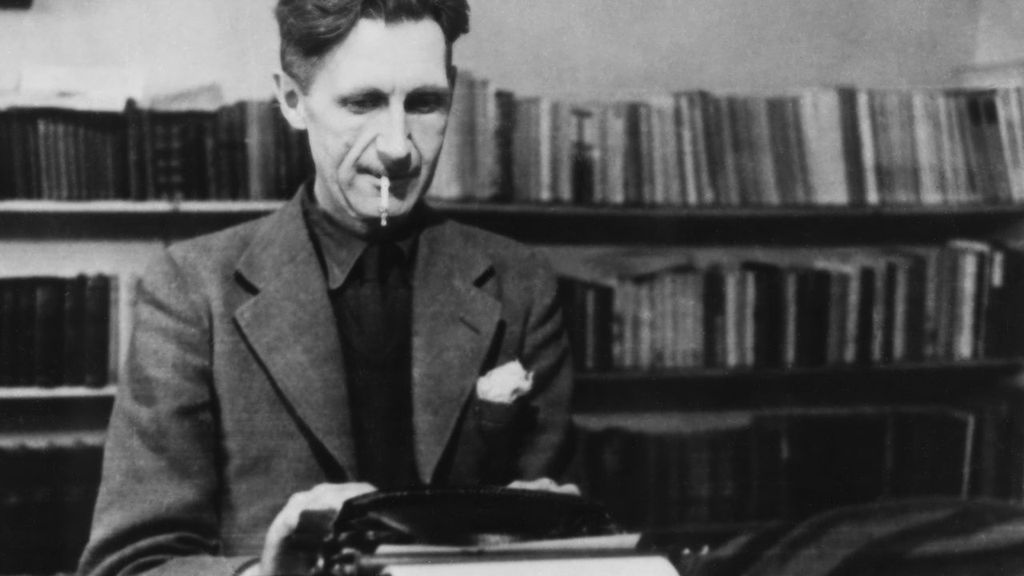
Read our Monthly Magazine
And support our mission to provide fearless stories about and outside the media system
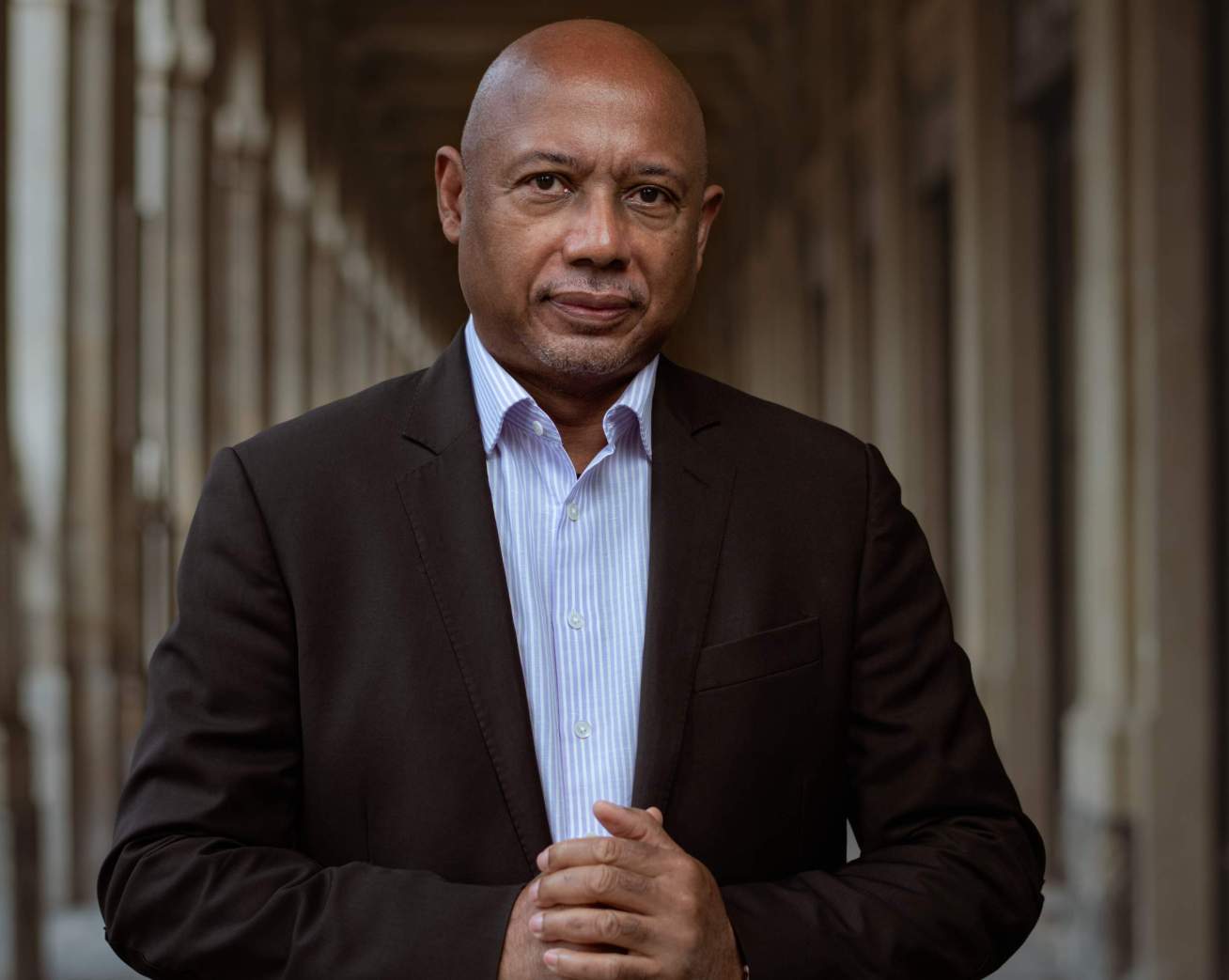
It seems increasingly true to suggest that we live in an Orwellian world. What were the personal origins of Orwell: 2 + 2 = 5?
I’d read Orwell in school like everybody else. Animal Farm, Nineteen Eighty-Four, but my particular, personal relationship to him was from afar: he was a cultural good, a cultural icon, but in terms of the type of work I needed for my political fight, he was not a priority because I was reading other people like James Baldwin and needed voices that would help guide me in my own reality. In school, Orwell was sold to us as a science fiction, dystopian writer – and you didn’t have time for that, in my reality. That writing was more or less about a sort of European playground, the sense that ‘they have everything already so they can play with science fiction’. I did not have time for that.
So it took me time to understand the real Orwell, to discover him, and to become close to him, and he became as close to me as Baldwin [whose work Peck explored in the 2016 documentary I Am Not Your Negro], because I understood the link with both of those men to humanity – the fact that they both went to the other side of the planet, they went to find the ‘other’. That is the key to being able to shed all your prejudices, of whatever kind they are. The moment you discover that the other is also you, a whole range of bullshit just drops.
Today, people can kill a whole population because they are [seen as] animals. Gaza is the best example. People don’t feel any empathy because somebody has decided that they are animals or terrorists. That lack of empathy, or even humanity, is so widespread, especially when those in power feel themselves as the centre of the world, which they are not.
Orwell wrote in Why I Write, an important essay, that in order to understand a writer’s motives, you have to go back to where they came from, where their life started, and so I went back and discovered this incredible photo of Orwell with his nanny.
That image of Orwell, who was born in 1903 in the then British India, as a baby with his Indian ayah is so striking, haunting. Can you speak more about why it was so central in this film? When I saw it, I sensed the suggestion that, once somebody has seen as human, and loved, the person they are told to perceive as ‘other’, but who is actually being oppressed, that this becomes a basis – as you have already mentioned –for placing yourself on the side of the oppressed, on the side of injustice, and against division?
Because I’ve grown up in many different countries, I’ve seen those photos of white blonde babies in the arms of black women. In another of my films [the 2024 documentary Ernest Cole: Lost and Found], I explored similar photographs of those nannies in South Africa, and there is one of them who says ‘I love that baby so much, but I know that when she grows up, she will treat me just like her mother’. And that breaks your heart.
You see that black woman kissing and loving that child, probably more than her own because her own is at home, and I was always very sensitive to that. I grew up with those images, and I understood also what it meant for Orwell, because that’s first contact, that’s first skin contact. That means you’re closer to that woman than your own mother, especially in the colonial context. And that feeling, you never lose it.
And that’s why Orwell, when he was 19, went to Burma [then still a province of British India in 1922, having moved to Britain when he was one]. He goes back to that feeling. But he realised he was a colonial policeman and that was a tremendous shock. Because he had already changed. So the picture of Orwell with his nanny, for me, is the most violent image of the absurdity of racism. In that colonial relationship, the woman you despise, you would give that woman your most trusted being, your child – it doesn’t make sense.
Suddenly, that woman looks into the camera saying: I’m human and I have your baby in my arms, if I was so inhumane, I would have strangled that baby because of what you’re doing to me, and I don’t. That’s what that moment is saying.
Orwell was certainly a writer who understood where he came from, how class influenced his outlook, what the forces were that shaped him. Much of his writing warns about the consequences of people not being aware of the forces that shape them. In today’s world, especially with the dominance of big tech and how it feeds into authoritarianism, this seems to be a bigger problem than ever...
It strikes me that increasingly in the world it is becoming harder – that there are more people who are not really critically aware of the forces that are shaping them. That’s what most people are feeling today – and that’s the goal. That’s what authoritarian regimes do.
When Steve Bannon said ‘we’re going to flood the zone with shit’, that’s what they did and they succeeded. There’s too much [going on around you] and you know you can’t respond to it. Where do you start? When even the words you’re using don’t mean the same thing anymore? When [those in power] can say that they actually mean the exact contrary? That is Orwell’s formula: 2 + 2 = 5. Destroy language and destroy history – because you learn from history. That’s what Donald Trump did. He erased everything.
The footage used in the film depicting Nineteen Eighty-Four’s protagonist Winston Smith being asked how many fingers are being held up in front of him [four] makes this point well. In the first clip shown, he says four. In the second, he says four or five. In the third, he says he doesn’t know. And that is the disorientation with reality that authoritarians aim to create: an unconsciousness about how we, and the world around us, are being distorted.
From the extensive archives available to you, how did you decide what photographs and footage you wanted to use in your film?
I wanted diversity. But the first step was to choose the words of Orwell that I would need to tell my story. The first decision was actually to say, I’m going to make a film exclusively with Orwell’s words, and I call that a libretto because it’s like what you need to create your opera. Then you bring in the instruments. That’s another layer of storytelling. But you start with words.
And then there is a search for a precise archive. No image was just used as a gimmick. Every image has quadruple meanings, and how they talk to each other, or they reflect to each other from one to the other, [is part of the storytelling]. You can find the contrary of what you thought you were seeing, when the next cut shows something else. You know that the one before was preparing you for the next cut. I’m not doing collage, I wrote it as I would do a fiction film.
I tried to stay faithful to Orwell’s ideas, and not to put anything in the film that he was not saying. It was a very delicate exercise but it works when, in fact, you’re not that far from the person. I was not at all far from Baldwin, because Baldwin educated me. And I was close to Orwell, because Orwell came to my world and understood where I came from, so I had no problem being inside of him, to be in his emotions, to be in his writing. He had that human connection.
I know that, if I would have met him, he would not have judged me because I’m black. But he would have judged whether I was a good or a bad person. That’s something you learn by going to the ‘other’. That allows me to feel at ease with him. I feel we are brothers. We speak the same language. We react the same way when confronted with injustice.
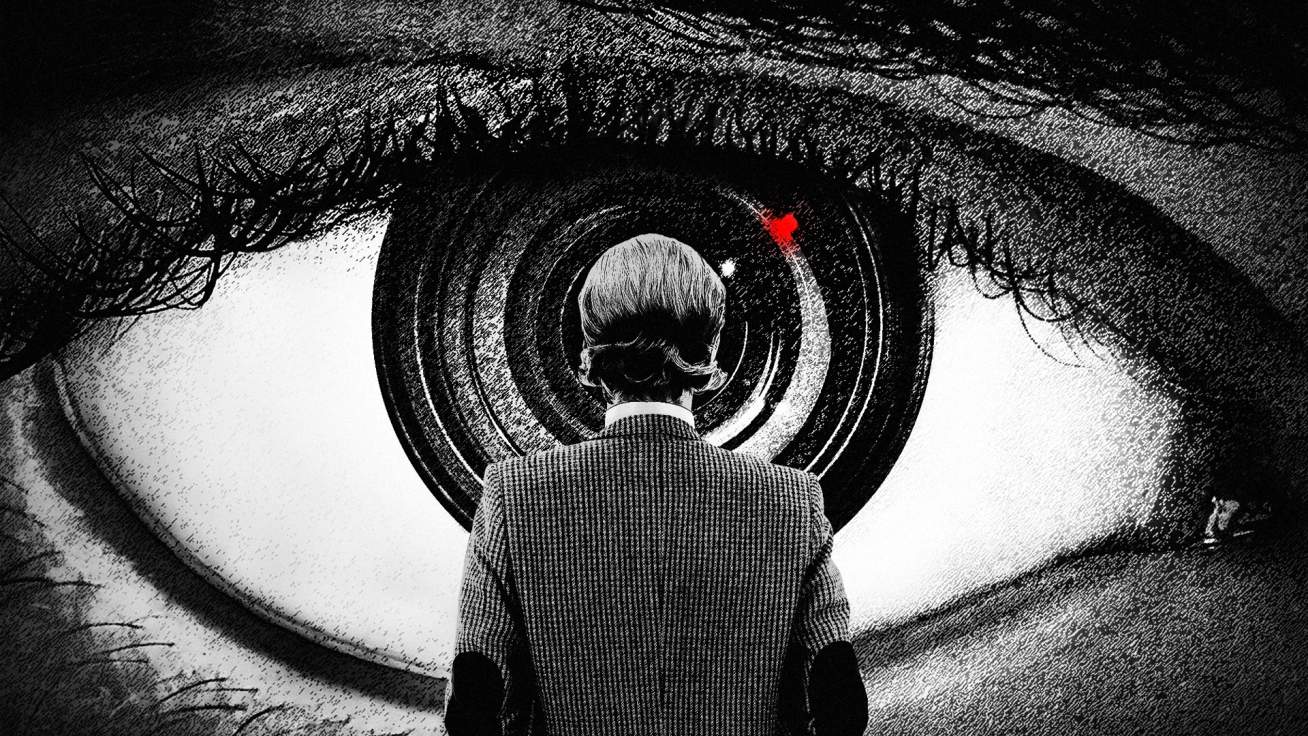
The film focuses on the media in its section highlighting the slogan from Nineteen Eighty-Four that ‘ignorance is strength’. How big of a problem is this today?
There is no free press. And by the way, there was never freedom of speech. Who gets to go on TV or on the radio… that’s not freedom. So what have we left? The internet. But online, you are anonymous, looking for clicks. So we are in a very constructed world. And unfortunately, we don’t even see that – most people, they just accept it as a fact, that there’s nothing you can do. That it is like this.
The internalised powerlessness people feel also acts as a form of social control that works in the favour of those exercising power for their own gain, by making people feel that nothing can ever be different...
It’s a terrible situation. For me, this film is an amber alert. We know that, in the 1930s in Europe, there was the same feeling, and people were in denial – they think with their privilege: that war is far away. A few weeks before the Second World War, nobody thought we would go into a war that would kill between 60 and 85 million people in less than five years. That’s why authoritarians want you to forget history.
Orwell’s work is the latest in a line of artists, activists, and leaders that you have brought to the screen. What is the central thread that connects your work?
It’s just my way to cope with whatever conflict and injustice I have before my eyes.
I have a high view of democracy, because I didn’t have it when I was young. I left Haiti when I was eight and went to Congo where there was also another dictatorship, which killed [Congo’s Prime Minister] Patrice Lumumba. I made a film about Lumumba [2000’s Lumumba] because what he did was incredible, but people forgot about him. He’s one of the African icons, who fought for independence, and was confronted with the same world. America was saying ‘we want progress, we want democracy’, and at the same time, they are the ones who decided to kill him. That’s doublespeak.
So I took democracy seriously, but I never took seriously the people who had it in their mouth but were actually killing people. I knew as a young boy that when [politicians] were saying ‘democracy’, it was not about me. And I also knew, the same way Baldwin did, in analysing Hollywood films, that when the [Native American] Indians were dying in the hundreds, I knew it was me. Today, we call it the dog-whistle.
I ask myself: what can be my contribution to the fight? What is happening around me? I could see in France there was a denial because it would say how bad race was in America, as if in France [the issue of] race is perfect. So I made the [2001 series] Exterminate All the Brutes – if that’s what the French were saying, I was going to go to the bottom of the whole story and put it in front of them so they couldn’t say they didn’t know [about France’s own colonial history of racism].
What do you hope people will take from Orwell: 2 + 2 = 5?
I hope that it will help one or two or three generations down the road because I don’t feel that we are ready for any big changes right now. But, as I said, it’s an amber alert. It’s about what are you going to do? Because we are five minutes from midnight and anything can happen in the coming weeks, or in the coming six months. Anything.
In [the Immigration and Custom Enforcement raids by the US Government in] Minneapolis, at one point, people went into the streets and stopped the bullets with their bodies. That was also my generation. I knew that after I finished my studies, I was going to go back to fight against the dictatorship [in Haiti] and I knew I was going to die and so did most of my colleagues, but they all knew they had a purpose. But today, people don’t think like this. People want to go through their tweets, they can stay far away.
If you put your head in the sand it will come to you at one point. That’s what happened to Europe in the 30s. The illusion to pretend that you’re going to be isolated… You think you can stop migrants, but by the way, during COVID, you saw what migrants were doing [working in public services].
So it’s a story of blindness, of denial, of ignorance.
Orwell: 2+2=5 is in UK and Irish cinemas now
Hardeep Matharu is the Editor in Chief of Byline Times