
 Subscriptions
 Subscriptions
Read our Monthly Magazine
And support our mission to provide fearless stories about and outside the media system
A Byline Times investigation has found that the three most prominent figures in Palantir Technologies, the AI data analytics firm at the heart of the intelligence used to justify US-Israeli strikes on Iran, have each publicly advocated for exactly the military confrontation that followed, with one describing it as an investment opportunity.
Palantir’s co-founders, Peter Thiel and Joe Lonsdale, have both publicly argued that conflict with Iran is inevitable, with Lonsdale saying he was hoping to “invest in Iran” after a regime change.
Palantir’s CEO, Alex Karp, predicted war with Iran would prove the worth of the company’s autonomous weapons system.
This corporate position represents a profound conflict of interest. Palantir both informed the formal assessments that precipitated Israeli and US strikes in 2025, and is now profiting from the conflict as it provides real-time AI targeting to military operations by integrating classified data from satellites, surveillance and other intelligence.
Palantir’s Intelligence Platform
Palantir’s MOSAIC platform has served as the analytical backbone of the IAEA’s Iran monitoring operation since 2015. The $50 million AI system processed approximately 400 million data objects, including satellite imagery, trade logs, metadata and social media feeds from inside Iran. It operated chiefly by making predictive inferences based on pattern analysis – a method critics have described as “Minority Report for uranium” and as “pretext fuel” for sanctions and strikes against Iran.
MOSAIC was derived from an older Palantir system already sold to the Israel Defence Forces (IDF) for its operations against Iranian-backed groups in Gaza and Lebanon – a lineage that raises further questions about the platform’s independence as a verification tool.
When MOSAIC flagged an apparent surge of enriched uranium at Iranian facilities between 6 and 12 June 2025, the platform’s assessment — that Iran was potentially weeks from producing multiple nuclear weapons — reportedly formed the basis of Israel’s intelligence against Iran.
Peter Mandelson and Palantir
Palantir co-founder Peter Thiel had extensive business dealings with the sex offender – but the same scrutiny is not being applied to the firm’s UK government contracts as that generated by the Mandelson scandal. Nafeez Ahmed reports
The IAEA Board of Governors passed a non-compliance resolution on 12 June. Israel struck the following day. Trump then authorised strikes on Iranian nuclear facilities, after which he claimed Iran’s capabilities had been “obliterated.”
However, when Tulsi Gabbard — Trump’s Director of National Intelligence – first testified to Congress three months earlier, she had confirmed that the consensus assessment of the US intelligence community was that Iran had not pursued a nuclear weapon since 2003. Trump rejected that assessment.
Instead, according to The National Interest, no one in the US intelligence community was given the opportunity to probe the sourcing or verify the new intelligence presented to the Trump administration by Israel. By June, Gabbard had abruptly reversed her position, echoing Trump’s claim that Iran could build a nuclear bomb “within weeks”.
Speaking at a press conference on Monday, IAEA Director General Rafael Grossi said that inspectors have lacked access to key Iranian facilities for over eight months, preventing them from verifying whether nuclear material is being diverted for military purposes.
However, he said that there is no evidence of an active nuclear weapons programme: “We don’t see a structured programme to manufacture nuclear weapons.”
On Wednesday, a classified Iran briefing was delivered by White House officials to key Congressional and Senate representatives. According to Congressman Seth Magaziner, who attended the briefing, it showed that there was “no intelligence that Iran was planning to attack the United States”, and the administration has “no plan” for the war’s aftermath.
The war “was launched without any imminent threat to our nation”, said Senator Elizabeth Warren about information disclosed at the briefing.
The Case for Regime Change
Palantir’s dual role — as the analytical engine powering nuclear verification and, simultaneously, a strategic military partner of the US and Israeli Governments — represents a fundamental conflict of interest at the heart of the global non-proliferation architecture.
Joe Lonsdale, who co-founded Palantir with its largest co-founding shareholder, Peter Thiel, in 2004, has been the most explicit advocate for military action against Iran.
In a CNBC interview in June 2025 during the 12-day war between Israel, the US and Iran, Lonsdale urged pre-emptive strikes against Iranian nuclear infrastructure. He expressed confidence in American bunker-buster munitions, saying he had been told “they work” and that “you can always hit things multiple times just to be sure”.
Lonsdale described the country as one that “could be a prosperous republic if not run by crazy people”, and said he could not wait to “invest in Iran” after the anticipated regime change.
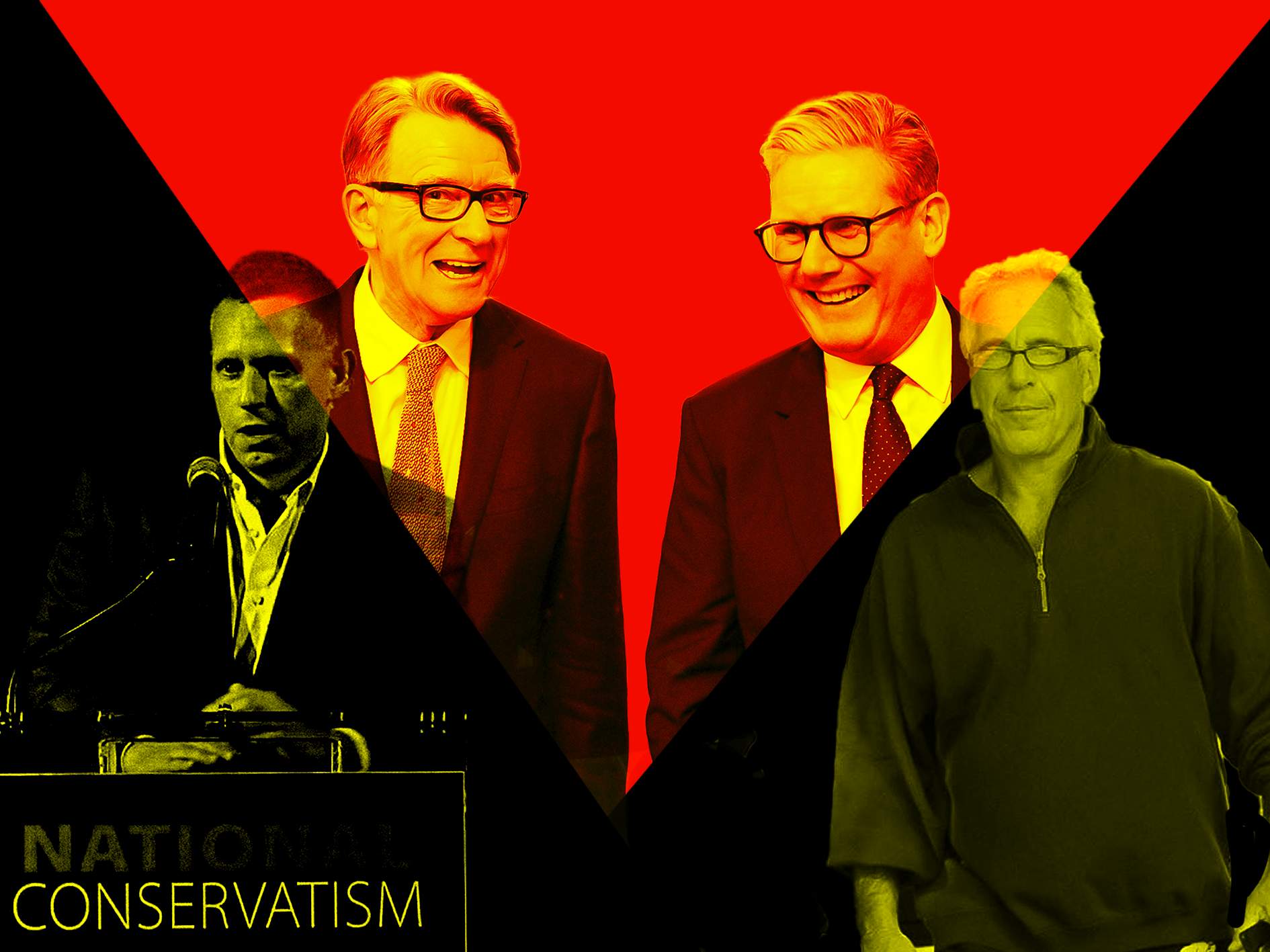
Thiel Spokesman Denies Former Israeli PM’s Claim Jeffrey Epstein ‘Co-Owned’ Palantir Founder’s Venture Fund – But Confirms Epstein was a Limited Partner
A former Israeli Prime Minister and intelligence chief described Peter Thiel and Jeffrey Epstein as “owners” of a venture fund. The founder of Palantir, now embedded in Britain’s most critical infrastructure with the help of Peter Mandelson, has denied the claim – but emails reveal how Thiel cultivated Epstein as a business partner
Palantir signed a strategic partnership with the Israeli Defence Ministry in January 2024, committing the firm to providing technology for “war-related missions”.
Later that year, in an interview, Peter Thiel argued that every historical instance of nuclear acquisition by an adversary had produced a regional war, framing an Iranian nuclear weapon as a “catastrophe” requiring preventive action.
Alex Karp, Palantir’s chief executive, has long framed the confrontation as part of a wider inevitability.
In an August 2024 interview with the New York Times, Karp said the US would “very likely” face a three-front war against Russia, China and Iran simultaneously – essentially a world war scenario involving the great powers. He argued that autonomous weapons systems, the kind Palantir builds, would prove decisive.
Commercial Incentives
Palantir’s stock has surged since the Trump administration took office, and its valuation now exceeds $300 billion.
The revelations in the Department of Justice’s disclosures that Peter Thiel retained a close business partnership with Jeffrey Epstein, despite his conviction for sexual abuse of minors, depressed the stock for several weeks.
But war with Iran has been good for the firm’s shareholders, its stock rising 7% in the first week of the conflict.
Palantir did not respond to request for comment.
The convergence of ideological conviction, commercial interest, lobby infrastructure and surveillance technology suggests that the Iran strikes may not represent the end of a regional crisis but the beginning of something larger.
If Karp’s three-front prediction reflects the operating assumptions within this network, the question facing policymakers on both sides of the Atlantic is not whether the conflict will widen, but when.