 No tracking. No cookies
 Subscriptions
 Subscriptions
Read our Monthly Magazine
And support our mission to provide fearless stories about and outside the media system
Reform UK have been accused of pandering to Moscow, after failing to attend a Parliamentary debate on Russian interference. The debate, held in Parliament’s Westminster Hall on Monday, was called after a public petition which received more than 114,000 signatures, demanded a “public inquiry into Russian influence in UK politics and democracy.” Not a single Reform UK MP attended the debate.
Nigel Farage’s party is already under intense scrutiny over its Russian positions, following revelations about Nathan Gill, Reform UK’s former Welsh leader. Gill was sentenced to ten and a half years in prison in November for taking bribes from a pro-Russian politician in Ukraine.
The Government’s independent Rycroft review is currently underway, set to produce a final report on foreign financial political interference next month. It was launched in direct response to Gill’s conviction. Ministers claim its recommendations will build on new rules set out in the forthcoming Elections Bill, which is expected to be introduced this week, to guard against foreign political interference.
Plaid Cymru MP Ben Lake criticised Reform UK for their “absence” at the debate, particularly after the “treachery” of Nathan Gill.
“Wales is one of the areas that has secured the highest concentration of signatories [on the petition] across the entirety of the UK,” he said. “It will come as no surprise… that the reason for that interest and level of concern in Wales is the antics and treachery of the former leader of Reform UK in Wales, Mr Nathan Gill.”
“As I think everybody will agree, the man has committed treachery for £40,000, so we must ask serious questions about his integrity and that of his party, whose members I notice are absent from today’s debate.”
“Sadly, it might not be possible to bring about any legislative changes in time for the elections in Wales and other parts of the UK in May this year,” he said. “Nevertheless, it is important that we do not waste any time so that further elections are not influenced in any way by the scourge of Russian interference.”
“I also ask the Minister that, as part of the [Rycroft] review’s considerations, we look at the egregious loopholes in our current laws that the Russian state was able to exploit by funnelling money through to political actors and traitors in the UK for their own ends,” Lake said.
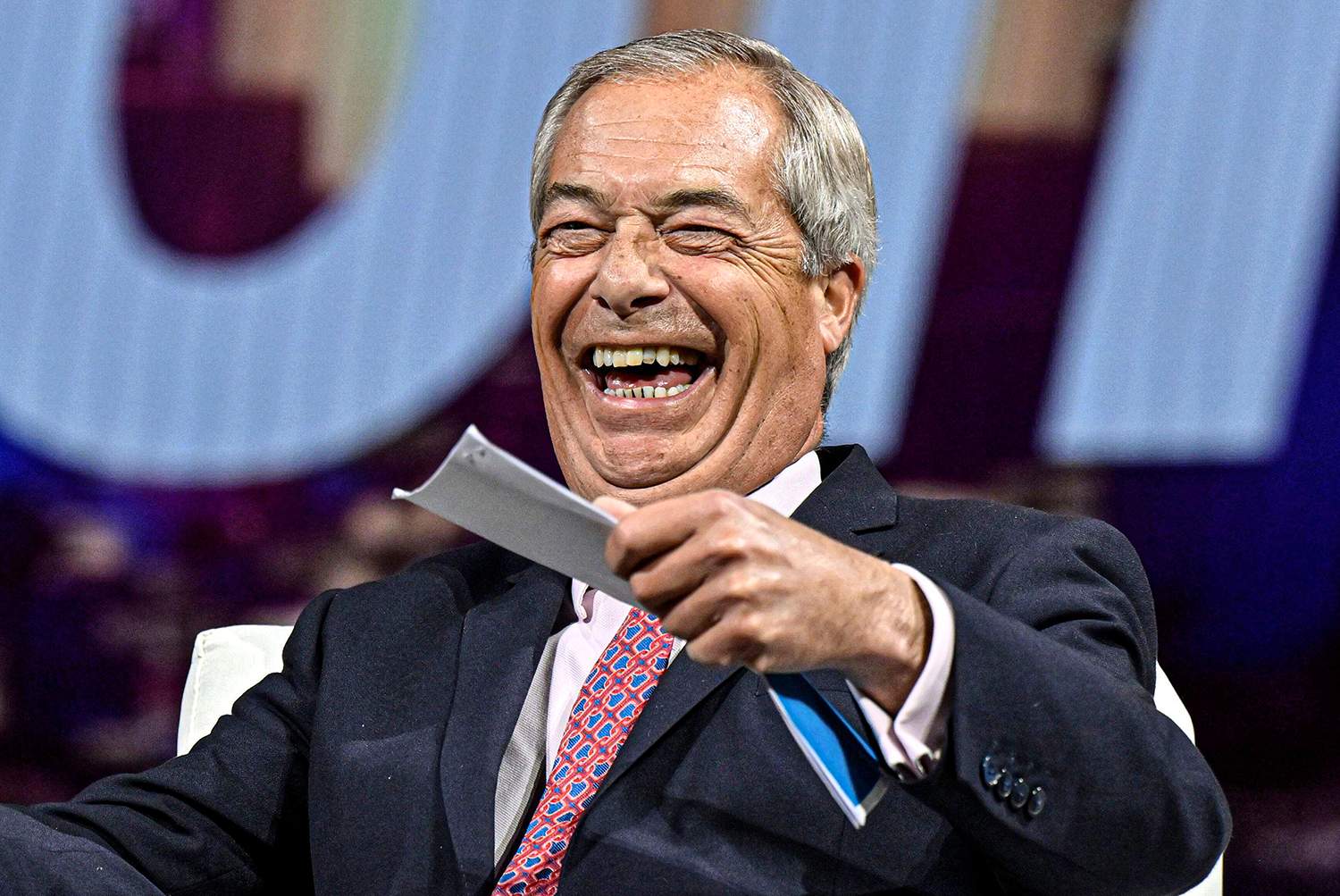
Crypto Investor Donates £9 Million to Reform UK as Nigel Farage Plugs His Company and Tells Industry ‘I Am Your Champion’
The Reform leader recently used media interviews to back Christopher Harborne’s company while promising to cut taxes and regulations on crypto firms
Green MP Ellie Chowns argued that recent revelations – including those contained in the Epstein files – pointed to a wider ecosystem of far-right, pro-crypto and Russia-linked influence, including Reform
“The Epstein files make it clear that Gill was not one bad apple, but part of something much bigger and darker: a web of pro-crypto, far-right, Russia-linked anti-democratic forces. It is an oblique and shady movement, in which the hon. Member for Clacton [Nigel Farage] appears to be embroiled deeply,” Green MP Ellie Chowns said.
“We see far-right parties across Europe all using the same playbook: attack migrants, distract, create fear, benefit from crypto and grab power. It is dangerous, disgusting and part of a plan,” she added. As the debate progressed, a number of MPs across parties expressed concerns about the role of cryptocurrencies in enabling foreign influence. Reform UK is the first political party to accept crypto donations, and Nigel Farage has declared himself a “champion” of the industry.
“Cryptocurrency donations into our politics should be banned completely,” said Labour MP Phil Brickell. “Crypto is designed for anonymity, speed, cross-border movement and weak oversight, and Reform UK has chosen to host its cryptocurrency payment provider not in the UK, but in Poland, away from the prying eyes of the Financial Conduct Authority. Dare I ask why? Against that backdrop, we know that crypto is widely used for sanctions evasion, organised crime and illicit finance.”

In Putin’s Orbit: The Crypto Politics of Jeffrey Epstein and Peter Thiel
The web of ties between Epstein, Moscow and Silicon Valley leads back to Steve Bannon and Nigel Farage
Security Minister Ben Jarvis gave assurances that the forthcoming Elections Bill will “strengthen safeguards against covert political funding.” The legislation specifically includes “safeguarding against the potential use of cryptocurrency by foreign actors to obfuscate the source of their donations.” The Rycroft review “will assess opportunities for further improvement,” he said.
Polling by More in Common last year underscored the gap between Nigel Farage and public opinion on Russia-Ukraine. While support for Ukraine over Russia was overwhelming across every voter group in Britain, only 26% of respondents believed Farage shared their view, with a further 29% saying they were unsure. By contrast, 64% said they believed Prime Minister Keir Starmer backed Ukraine, while 17% did not know.
Reform UK was contacted for comment.