
 Subscriptions
 Subscriptions

Read our Monthly Magazine
And support our mission to provide fearless stories about and outside the media system
When Keir Starmer became Prime Minister he promised to lead a “government of service” that would put the “country first”.
In contrast to the Conservatives, who he accused of “always putting their rich mates and donors before working people”, Starmer promised that his own Government would be different.
“The era of politics as self-interest, above service, is over” he declared.
There was only one problem. Long before entering Government, Starmer had sought the advice and counsel of a man who had already been repeatedly sacked from high office for doing the complete opposite.
The return of Peter Mandelson to national politics was in some ways a moment of triumph for the small cabal of advisers surrounding the Prime Minister.
Known variously as the ‘Prince of Darkness’ and the ‘Dark Lord’ for his mastery of the dark arts of politics, Mandelson had long been a hated figure on the left of the Labour party.
For Starmer’s chief adviser, Morgan McSweeney, who was a long-serving protege of Mandelson’s, his return served the double purpose of strengthening his own position, while sending a clear message about the sort of party that Labour had become.
The Devil’s Butler: How Jeffrey Epstein Used London to Hide in Plain Sight
The Epstein files expose how the UK capital served as a playground and protector for the disgraced late financier and his wealthy associates
“It was a calculated f*** you to the left basically” recalls one prominent Labour figure.
In the end it sent a very different message. The news that the Metropolitan Police have launched an investigation into Mandelson for allegedly leaking highly sensitive Government information to the convicted paedophile and financier Jeffrey Epstein marked the end of a long and scandal-ridden career in British politics.
It has also now pushed Starmer’s premiership into its biggest ever crisis, forcing Labour MPs to think seriously for the first time about removing him from office.
Starmer has spent recent days desperately seeking to distance himself from the scandal.
Responding to the revelations, which included claims that Mandelson had taken payments from Epstein, while lobbying for policies that would benefit him, Starmer claimed to have been “gobsmacked” by what he had learnt.
Yet in reality the relationship between the two men had been well known and widely reported for years prior to the scandal. In 2023 the Financial Times first revealed that Mandelson had stayed at Epstein’s flat, following his conviction for sex crimes. Yet when Byline Times asked at the time whether the Prime Minister believed that Mandelson remained a “fit and proper” person to advise him, his then spokesman Matthew Doyle replied that he had “no reason to believe he isn’t”.
Pushed by other journalists on the details of their relationship, Doyle replied that “those are questions you need to put to Peter Mandelson, not to me.”
Doyle’s refusal to engage is particularly notable in hindsight, given he would himself later be handed a peerage by Starmer’s Government, despite facing questions about his own relationship with another convicted paedophile, Sean Morton.
A Government spokesperson would not confirm whether or not Doyle had retained this relationship with Morton after his conviction.
A ‘Crackdown on Cronyism’
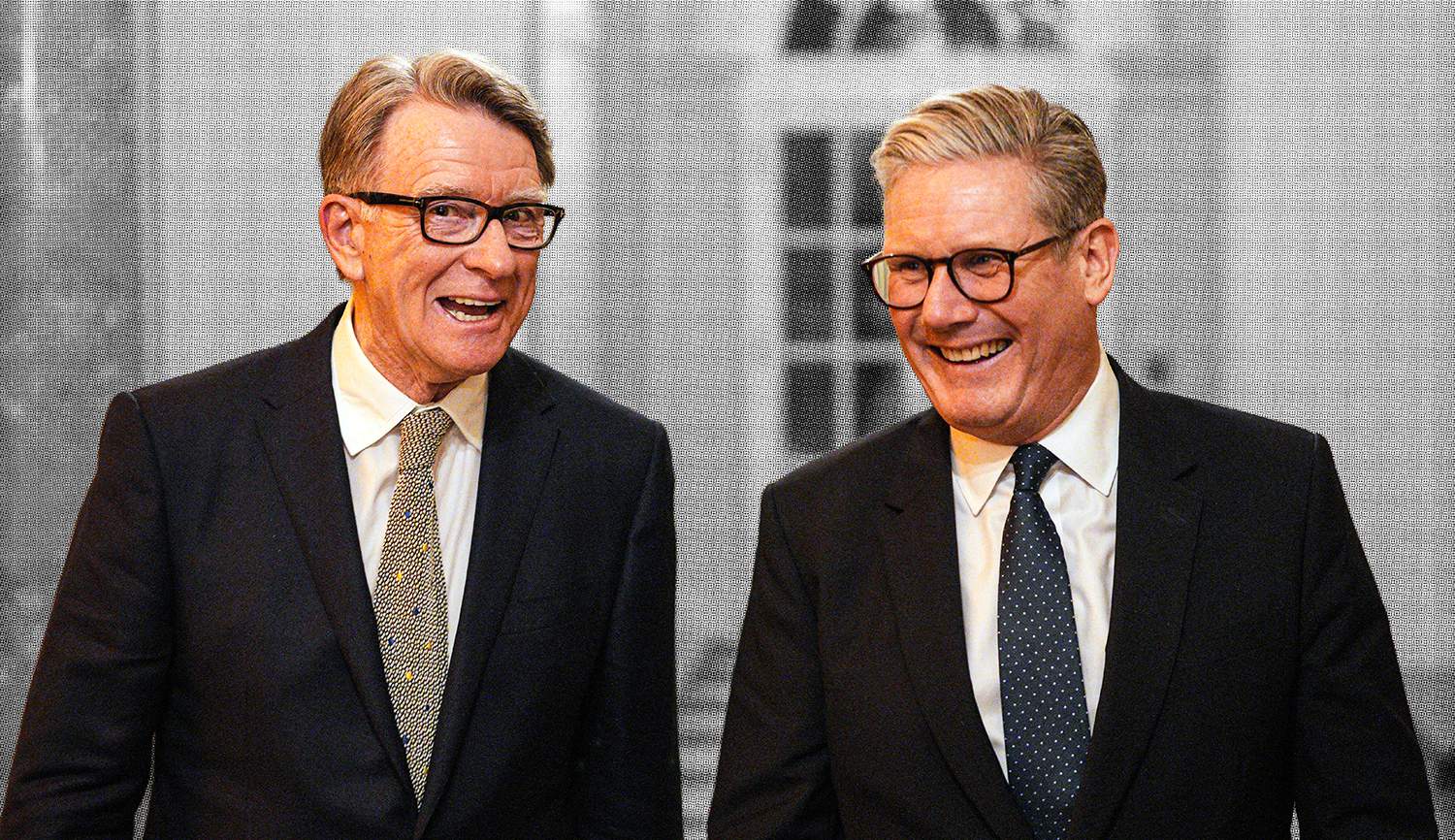
Keir Starmer’s Reluctant Sacking of Peter Mandelson Over Epstein Connections Gives the Lie to His ‘Crackdown on Cronyism’
The Prime Minister and his advisers spent years dismissing questions about Mandelson’s relationship with the convicted paedophile Jeffrey Epstein
Despite their claims of ignorance, the truth is that both the Prime Minister and his advisers were well aware of Mandelson’s character and associations, before accepting his advice and making him US Ambassador.
That they appointed him anyway tells us a huge amount about the type of Government Starmer is actually leading, rather than the one he promised to.
Despite pledging to restore power and influence to “working people” while launching a “total crackdown on cronyism”, Starmer’s administration has been marked by exactly the sort of special favours and subservience to special interests that so marked the Conservative Government under Boris Johnson.
In opposition Starmer led the charge against the Government’s “self service”, following allegations that they overruled security concerns about handing a peerage to the newspaper proprietor and son of a former KGB agent, Evgeny Lebedev.
Yet we now know that Starmer went ahead with Mandelson’s appointment, despite similar concerns having been raised over his own business connections and relationship with Russian figures, including the sanctioned oligarch Oleg Deripaska.
In some ways the concerns about Mandelson were even more serious than those about Lebedev. According to leaked emails and text messages revealed by the Guardian in 2022, Mandelson and his Global Counsel lobbying company had multiple connections to Moscow and had “monetised his access to a wide array of pro-Kremlin billionaires”.
These connections are even more significant given the similar concerns that had also been raised about Epstein’s own connections to Russia. In the wake of Epstein’s correspondence being released by the US Government, Poland’s Prime Minister Donald Tusk announced that he would launch an investigation into whether or not Epstein had been a Russian asset.
Asked this week by MPs about a possible Russian connection, Starmer replied that “the investigation [into Mandelson’s relationship with Epstein] will go wherever the evidence leads”.
One piece of evidence yet to be fully scrutinised is the business interests Mandelson retained after being brought back into Government as ambassador to the US.
As this paper reported at the time, when Starmer visited Washington in February 2025, one of his first stops after meeting with Trump was to the headquarters of the controversial American surveillance tech company, Palantir.
As the Good Law Project later uncovered, the visit had been personally arranged by Mandelson, whose own Global Counsel firm then represented the company, owned by the Trump-supporting billionaire Peter Thiel.
Despite this apparent conflict of interest, no official records of the meeting between Starmer and the firm were recorded by the Government. The Conservative party have called for the full details of what was discussed to be revealed.
Given the litany of questions surrounding Mandelson over so many years, it is remarkable that nobody in Downing Street thought fit to block his appointment.
A big part of this came down to his close relationship with Starmer’s Chief of Staff Morgan McSweeney, who had been a long term friend and protege of Mandelson and reportedly spoke with him “every single day”.
According to multiple reports, McSweeney was instrumental in appointing Mandelson as ambassador, while also being “relaxed” about the reports of his relationship with Epstein.
Such an attitude is particularly striking from McSweeney.
For years Starmer’s adviser had pushed the Labour party to shift its focus to what he described as “hero voters”.
Portraying his party as being too tied to the so-called metropolitan elites, McSweeney urged them to embrace the socially conservative, supposedly working class ideas of his own “Blue Labour” faction.
Yet we now know that at the same time as he was urging his party to reconnect with ordinary working voters, McSweeney was instrumental in bringing into Government a man whose priorities were at the complete other end of the social spectrum.
At no time was this more apparent than during the 2008 financial crisis.
According to the Epstein files, Mandelson, who famously declared that Tony Blair’s Government was “intensely relaxed about people getting filthy rich as long as they pay their taxes” assured Epstein that he was fighting against taxes being imposed on bankers’ bonuses while suggesting that JP Morgan executives should “mildly threaten” the then chancellor Alistair Darling over their planned imposition.
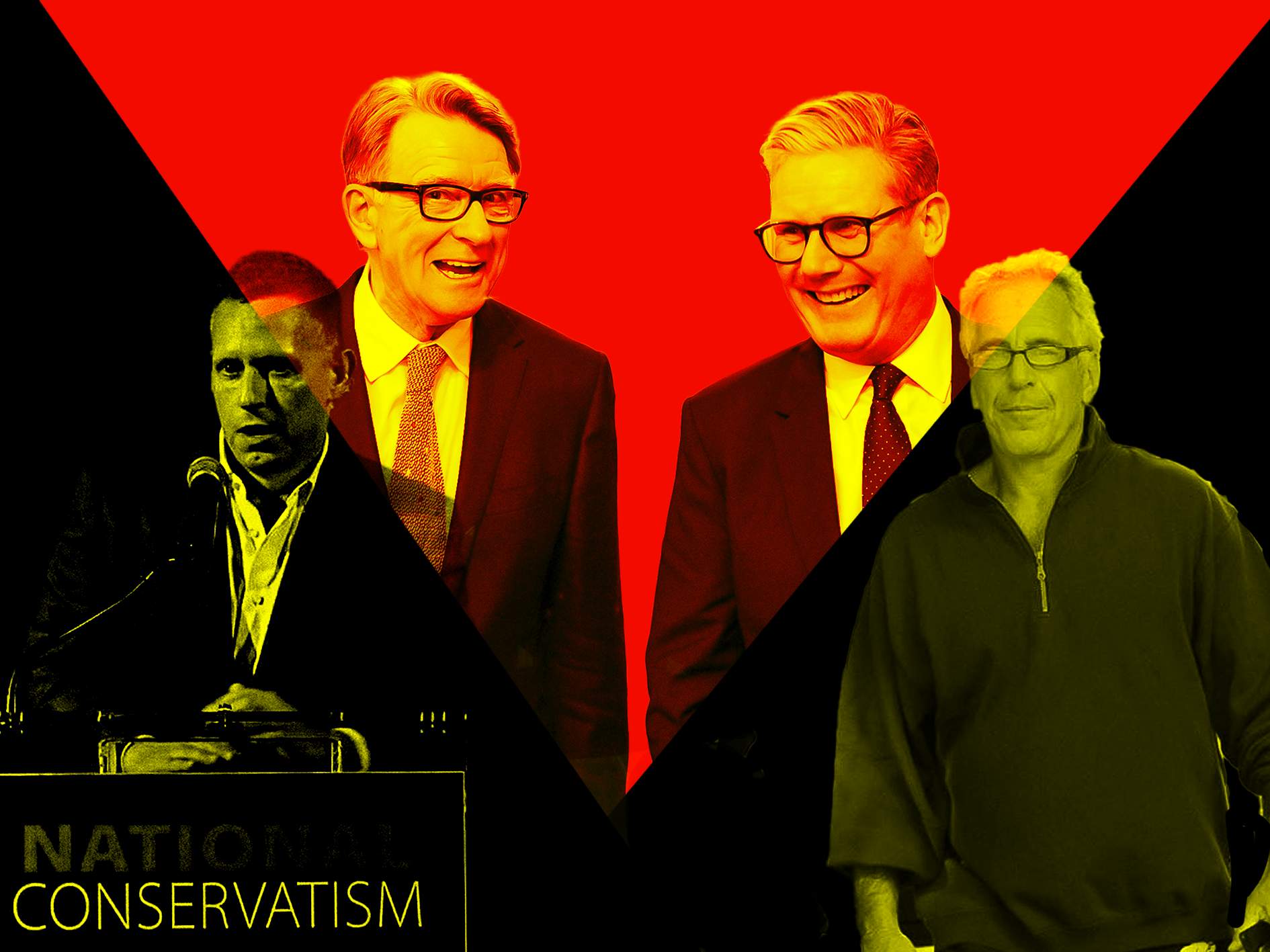
Jeffrey Epstein ‘Co-Owned’ Venture Fund with Palantir Founder as it Entered UK Government
The Russian connected convicted sex trafficker co-owned a fund with Peter Thiel, now embedded in Britain’s most critical infrastructure with the help of Peter Mandelson
The McSweeney Mandelson Axis
The scandal has only deepened concerns among some Labour MPs about McSweeney’s role in Government. Over recent years Starmer’s Chief of Staff has gathered growing numbers of enemies on the Labour benches due to his perceived factional obsession with ousting left-wingers from the party and pushing the Prime Minister into taking more conservative positions, at odds with his own instincts.
It was McSweeney who was behind Starmer’s decision to oust multiple Labour MPs for voting for the two child benefit cap to be scrapped – a policy that the Prime Minister would later be forced to U-turn on. It was also McSweeney who lay behind the Prime Minister’s push towards Reform style anti-immigration politics, encapsulated in his fateful ‘Island of Strangers’ speech. A year on and with Labour hemorrhaging votes to a resurgent populist left Green party, many in the parliamentary Labour party believe that McSweeney has to go.
His role in blocking Greater Manchester Mayor Andy Burnham’s bid to return to Parliament also risks bringing matters to a head, should Labour lose the upcoming Gorton and Denton by-election to Reform or the Greens.
“Getting rid of Morgan is our only way back,” one Labour MP who had previously resisted calls for McSweeney’s exit, told this paper.
Others are less convinced, believing that Starmer’s Chief of Staff is Starmer’s last line of defense. Get rid of McSweeney and you ultimately get rid of Starmer too.
For now Starmer remains determined to keep him, telling MPs this week that his chief aide remained “an essential part of my team.”
“He helped me change the Labor Party and win an election. Of course I have confidence in him.”
In British politics, such assurances can often be deadly. Many a Prime Minister has announced their full confidence in an adviser, only for them to then be swiftly ousted.
However, as ever with Labour, the default position could ultimately end up being stasis.
“Most of the new intake [of Labour MPs] are just too scared to speak out about him [McSweeney]” one Labour MP on the left told this paper.
“For many this is all well known stuff and my fear is they’re becoming hardened to it”.
For now the future of both Starmer and McSweeney remains unclear. Yet for Mandelson, a long and disgraceful career in politics has now surely come to its final end.
The only question is whether his final act will be helping to bring down the very administration he was charged with helping.
ENJOYING THIS ARTICLE? HELP US TO PRODUCE MORE
Receive the monthly Byline Times newspaper and help to support fearless, independent journalism that breaks stories, shapes the agenda and holds power to account.
We’re not funded by a billionaire oligarch or an offshore hedge-fund. We rely on our readers to fund our journalism. If you like what we do, please subscribe.