
 Subscriptions
 Subscriptions
Read our Monthly Magazine
And support our mission to provide fearless stories about and outside the media system
Like so much that Donald Trump has done since he returned to the White House, the US attack on Venezuela and capture of its President was shocking but not surprising.
It was shocking because of its flagrant violation of international and US law.
However, it was unsurprising, because Trump has for the past year signalled his aggressive intent towards Venezuela, while making clear in his recent National Security Strategy that he had a right to intervene anywhere in the Western hemisphere, regardless of legal constraints, under what he dubbed the “Donroe Doctrine”.
And yet Trump’s ruthless assertion of the Donroe Doctrine did somehow manage to take at least some by surprise. European leaders were not only blindsided in the sense that Trump had declined to offer even the elementary courtesy of forewarning close allies of the impending action to remove Nicolas Maduro from power.
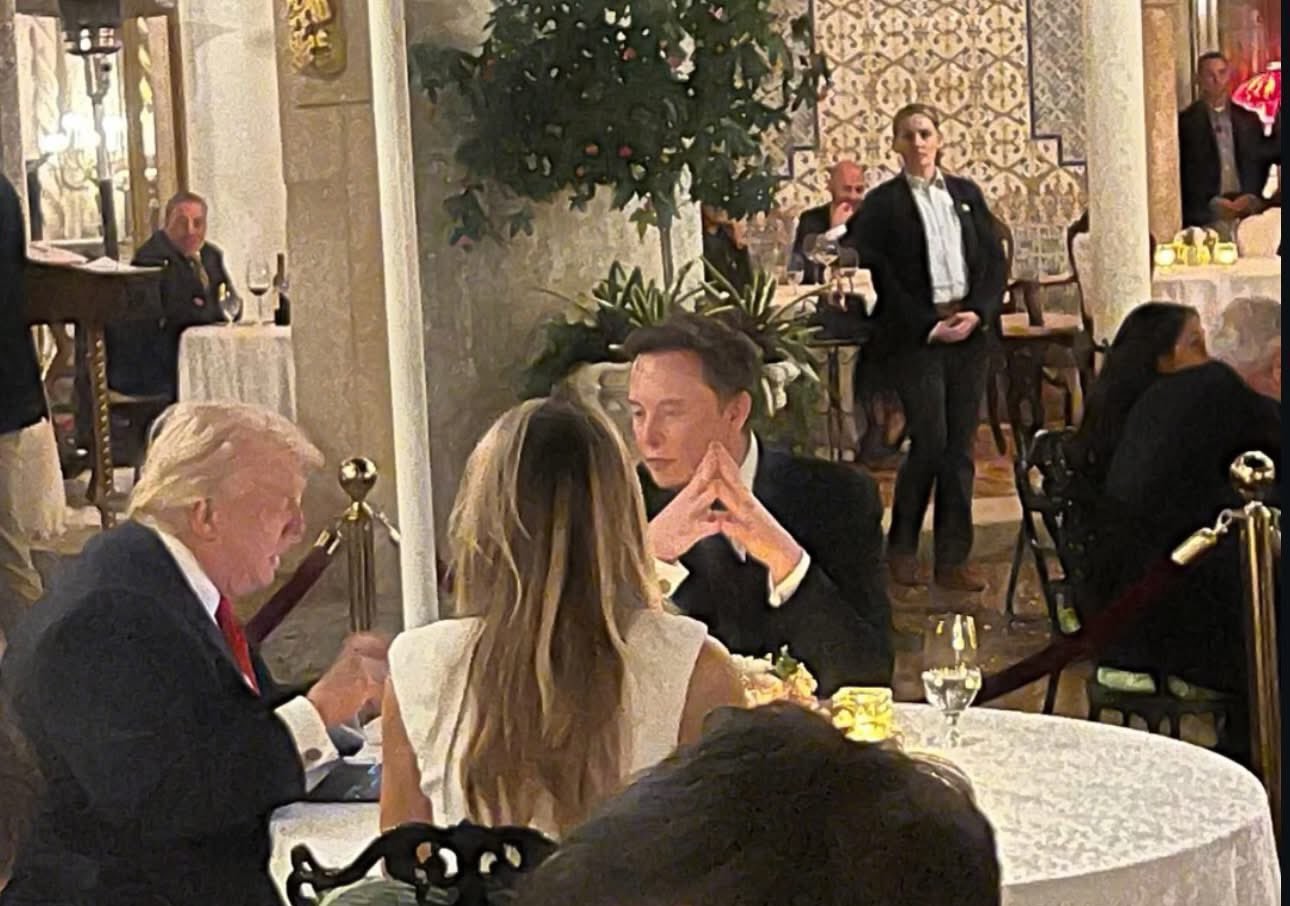
The Musk-Trump Alliance Is Back as the White House Wields Diplomatic Power to Defend Big Tech Profits
Presented as a defence of free speech, the Trump administration’s visa sanctions on European regulators shield tech platform profits and undermine democratic regulation abroad
Judging by their fumbling response, they appear not to have anticipated that the US President may have been serious when he laid claim to the western hemisphere as an exclusive US sphere of influence. The result is that Europe now finds itself plunged into a deep geopolitical crisis for which it appears entirely unprepared.
To be fair to Europe’s leaders, Trump’s action placed them in a near-impossible position. They have spent the past four years trying to rally global support for Ukraine on the basis that Russia’s invasion was in breach of Article 2 (4) of the UN Charter which prohibits ‘the use of force against the territorial integrity or political independence of any state’.
Now they face a choice between condemning the US action in Venezuela as a breach of international law, and thereby risking Trump’s wrath, or backing his action and being branded hypocrites. Most have chosen to sit on the fence, with Sir Keir Starmer offering the most mealy-mouthed response of the lot.
This European pusillanimity is deeply worrying because Europe’s own interests are directly threatened by the Donroe Doctrine. Sounding like a mob boss when speaking at Trump’s press conference at the weekend, secretary of state Marco Rubio told the world that the message of the Venezuelan intervention was that when this president says he is serious about wanting something, he gets it.
The problem for Europe is that the one thing that this President covets above all is Greenland. Indeed, Trump has since reiterated his determination to annex Greenland from Denmark, a NATO ally and EU member, insisting that America needs it for its national security.
Europe can no longer be under any illusion that Trump is anything other than deadly serious about acquiring Greenland. What’s more, the US President has not ruled out using force if necessary. That leaves Europeans facing a desperate dilemma. If Trump was not deflected from attacking Venezuela by concern for international law, then he is unlikely to be deterred from seizing Greenland by pious declarations from European capitals.
On the other hand, if he did take Greenland by force – which would be far easier than capturing Maduro – then that would mark the end of NATO, with potentially disastrous consequences for European security.
Europe may thus soon find itself facing a choice: does it care more about preserving Danish sovereignty over Greenland, which it may not in any case be within its capabilities, or preserving what remains of the NATO alliance, which remains vital to maintaining security on its eastern flank from a hostile Russia?
This is not a choice that any European leader ever expected to have to face. But such is the reality of a continent that lacks hard power in a world that is rapidly reverting from a rules-based order to one based on might makes right.
Nor are territorial claims the only way in which Europe’s interests are threatened by the new Donroe Doctrine.
Trump has made no secret that at the heart of his colonial foreign policy is a determination to secure access to resources including oil and critical minerals. He has been admirably clear that his priority in Venezuela is not the restoration of democracy and the rule of law, or the release of political prisoners and respect for human rights, but US control over Venezuela’s vast oil reserves, which at more than 300 billion barrels remains the world’s largest.
ENJOYING THIS ARTICLE? HELP US TO PRODUCE MORE
Receive the monthly Byline Times newspaper and help to support fearless, independent journalism that breaks stories, shapes the agenda and holds power to account.
We’re not funded by a billionaire oligarch or an offshore hedge-fund. We rely on our readers to fund our journalism. If you like what we do, please subscribe.
America does not need Venezuela’s oil for itself, but for the strategic advantage it gives the US over China and other countries that do rely on Venezuelan supplies.
The risk is that Trump’s new imperialism – alongside China’s weaponisation of its monopoly of rare earths – will set off a global race to secure resources, akin to the 19th century “Scramble for Africa”, as countries conclude that they can no longer rely on international markets to deliver their needs. This is a race that Europeans, politically fragmented, lacking hard power and with few resources of their own, are particularly ill-equipped to win.
Nothing less than a radical change of mindset will be needed if Europe is to retain any autonomy in a Thucydidean world where the strong do what they can and the weak suffer what they must. Trump’s Donroe Doctrine is a wake-up call Europe can no longer afford to ignore.