
 Subscriptions
 Subscriptions
Read our Monthly Magazine
And support our mission to provide fearless stories about and outside the media system
Two British Prime Ministers gave foreign policy speeches recently. Only one of them was any good. Unfortunately, it was not the speech given by the current Prime Minister, Sir Keir Starmer.
Starmer’s address to the Lady Mayor of London’s Banquet at the Guildhall on Monday was a patchwork quilt of small ideas, sown together, like a student essay, with a few “buts”, “becauses” and “moreovers”, to make it sound coherent. It was a dog’s breakfast. Mutton dressed as lamb. A litany of false boasts, ambitious claims, non-sequiturs, and dodges around the hard questions.
No matter how many times Starmer inserted the word “so” into his speech, the speech lacked persuasive logic, or honesty about Britain’s current status on the world stage.
It did correctly acknowledge that the UK has to try to navigate its way between today’s three global giants – the US, the EU and China. But in all three cases, Starmer exaggerated how well we are doing, and underplayed the extent of the challenges.
Starting with the EU, Starmer made perhaps his frankest acknowledgement that Brexit had been a mistake. He said “how it was sold and delivered was wrong. Wild promises were made to the British people and not fulfilled. We are still dealing with the consequences today, in our economy, and in trust – in the degradation of political debate.”

The ‘Pink Ladies’ Laundering Anti-Migrant Views Into the Mainstream
An anti-migrant movement backed by Reform and Conservative politicians and regularly invited onto news channels is funded by a far-right group and has platformed a Neo-Nazi activist
But, he framed the argument as if it was still merely how Brexit was delivered which was the problem, rather than the very decision to leave the EU itself. He also shied away from even his more limited argument’s logical conclusion, which is that the UK should try to renegotiate major parts of the Brexit deal, to get better terms, including by lifting his own party’s redlines on rejoining the Customs Union or Single Market.
Instead, he continued to claim that it was enough to tinker around the margins of the existing Brexit deal, making the exaggerated claim that the Government had successfully “redefined our bond with the EU, building a new partnership that benefits both sides, sticking to our red lines while supporting British businesses, making food cheaper, and slashing red tape.”
This flies in the face of the mounting body of evidence that Brexit has been an economic disaster, even with the small modifications achieved by the government so far. The US think tank, the National Bureau of Economic Research, recently published a study estimating that the decision to leave the EU had reduced the UK’s GDP by between 6 to 8 percent. Another recent analysis, by the House of Commons library, estimated that Brexit is costing the Treasury up to 90 billion a year in lost tax revenue, and that it has cost the average British resident between 2,700 to 3,700 pounds per year.
Even the Times and Telegraph are now publishing articles acknowledging Brexit has been, in the words of Jeremy Warner for the Telegraph “an unmitigated economic failure.” In the Times, Ryan Bourne, who described himself as one of the members of the small band of “Economists for Brexit” argued that it was time to face facts. “Brexit did not cause Britain’s growth malaise, but it undoubtedly deepened it. Nor did it create our fiscal woes, though it worsened them too. Denial about this helps no-one. Indeed, a successful sovereign economic policy demands taking responsibility and facing the world as it is, not as we wish it to be.”
But despite these about-faces, Starmer continues with the pretence that the UK can make Brexit a success, as long as it just engages with the EU bloc more skilfully.
This denial of reality extended to his remarks regarding the US. Starmer hailed recent bilateral UK-US deals achieved during and since President Trump’s state visit, which he described as bringing in over £150 billion worth of US investment. He also referenced the new pharmaceutical deal announced this week with the US, which lifts US tariffs on UK branded-medicines exported to the US, in return for agreeing to pay more for US pharmaceuticals sent to the UK.
The pharmaceutical deal is a genuine achievement. It does indeed make Britain “the only country in the world with zero tariffs on branded medicines.” But it is one that has been forced upon the UK, as a result of Trump’s global tariff war. It will make more drugs available within the NHS, but significantly raise drug prices, adding to the overall cost of running the NHS. Starmer did not mention the fact that many other elements of the “historic” Economic Prosperity Deal he announced with Donald Trump in May remain to be negotiated.
What else is coming down the line? What other areas of the economy will the UK be forced to open up to US companies, on more favourable terms, as a result of Trump’s tariff threats. How are British companies supposed to handle trading on increasingly divergent terms with both the US and the EU, adding to their production and administrative costs?
Starmer also exaggerated the benefits of other new trading arrangements concluded by his Government, for example with India, the trans-Pacific trading area, and individual European partners, none of which will offset the cost of losing friction-free access to the EU single market. The UK has only been forced into agreeing such commercial arrangements around the world, often on less advantageous terms, because it is in a position of weakness.
Starmer also glossed over the fact that the US is no longer a dependable security ally. He deplored the fact that “some are even arguing that the UK should leave NATO” and rightly said that “leaving the most successful military alliance in history would be catastrophic.”
But, the idea of leaving NATO is only held by a tiny fringe minority of British voters. The real threat to NATO’s cohesiveness comes from the White House, which has raised doubts about the US’s commitment to the alliance’s Article V collective defence guarantee, and is flirting with cutting a deal with Russia on Ukraine on the Kremlin’s terms.
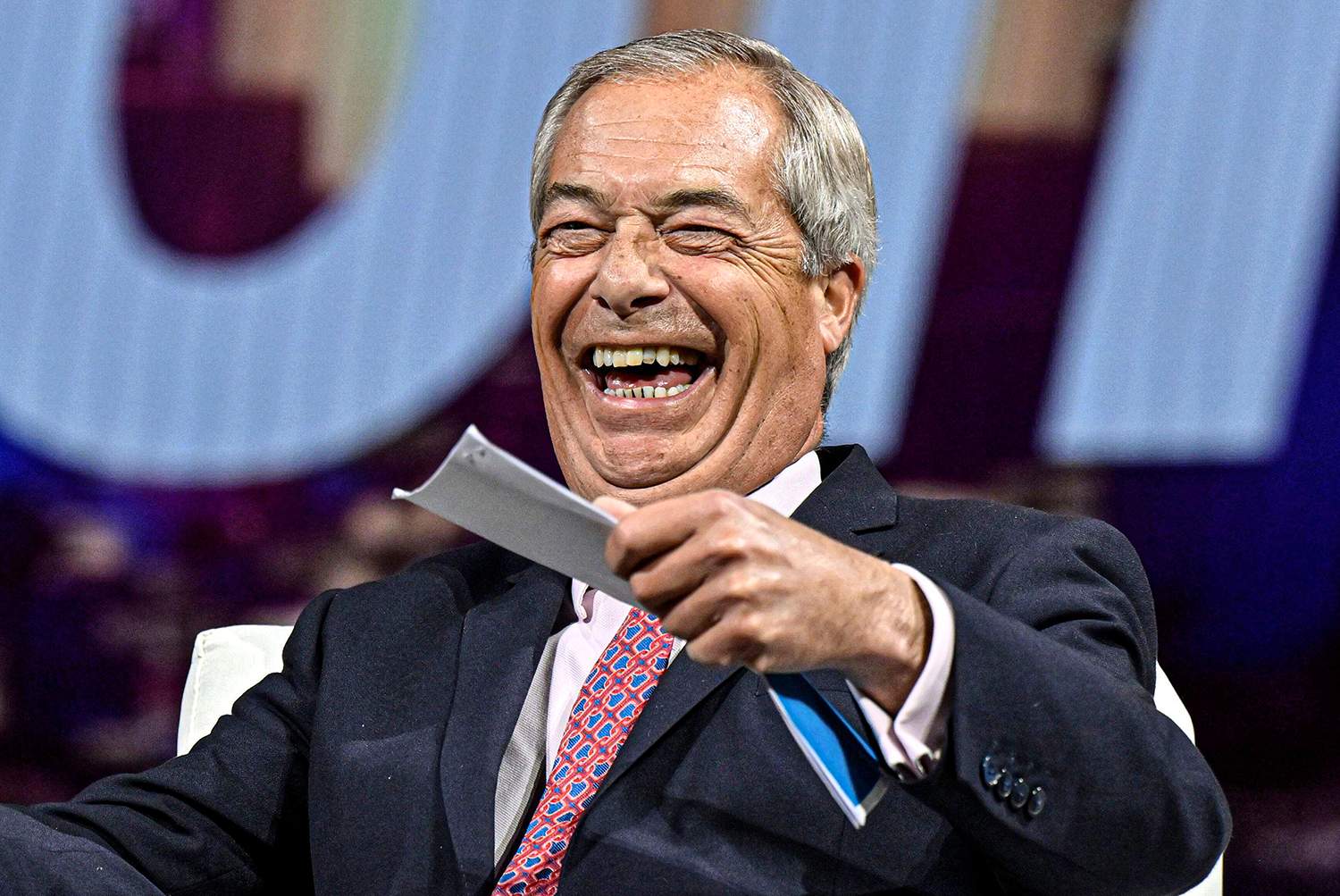
Crypto Investor Donates £9 Million to Reform UK as Nigel Farage Plugs His Company and Tells Industry ‘I Am Your Champion’
The Reform leader recently used media interviews to back Christopher Harborne’s company while promising to cut taxes and regulations on crypto firms
Nowhere in his speech does Starmer acknowledge this growing strategic divide between the EU and the US, and the challenge for the UK in trying to maintain good relations with both.
Finally, Starmer adopts a having-our-cake-and-eating-it approach when it comes to China. He accurately describes China as a rising power, a dangerous country, which violates human rights, bullies its neighbours, backs Russia on Ukraine, and “poses real national security threats to the UK”. He stoutly avows “Nothing will ever change our values or our readiness to stand up for them.” But, then he goes on to say that the UK must jump on the China bandwagon like everyone else, and do business with it when it suits.
The ultimate tell in the speech was when he said that Britain was adopting “a more transactional approach to pretty well everything – from trade, tech, and raw materials, to migration and security.” This may be an attempt to come across as a hard-headed, sensible realist, navigating the world, in the words of the Times economist above, “as it is, not as we wish it to be”. But, in reality, it is an attempt to put lipstick on a pig, to repackage a series of ad hoc decisions and trading arrangements as adding up to a coherent whole.
Major Differences
The far better speech was given by the former Prime Minister, John Major, speaking at the LSE on 18 November.
Of course, it’s much easier for Major to speak hard truths, since he is not trying to seek re-election. But his speech had a flowing logic and honesty to it, almost entirely absent from Starmer’s.
In the first section, Major explains the more challenging international environment, including rising protectionism, growing disregard for international rules, and a crumbling post-war system. He describes the world as “unsettled, grumpy, fractious”, deplores the venomous and divisive influence of rising populism, and acknowledges upfront the problem that “ America and her allies grow apart”. He also calls out the moral failure of transactionalism, and notes that people are losing faith in democracy itself.
In the second part of his speech, he urges the West to stay united in confronting the twin challenges of Russia and China, who he describes as “allies against democracy”. He insists the West must not allow Russia to prevail in Ukraine: “a shameful outcome, and one all of Europe – and beyond – would come to regret”. He calls out Trump for allowing China to get away with posturing as a champion of multilateralism, while offending friends and allies with his arbitrary tariffs. “A wise America would gather them close, not push them away. A friendship broken can be hard to regain.”
Major then turns to Brexit. Like Starmer, he denounces the false promises made during the referendum campaign, but more explicitly catalogues the damage it has caused “it left our country poorer, weaker and divorced from the richest free trade market in history.”
He goes on to describe the UK’s current situation in brutally honest terms: “The UK once revelled in being a leading member of the EU, with half a billion citizens, and the undoubted first ally of the US – the world’s most eminent super-power. Today, we know we are neither, and so does the world. As we plan for the future, we must see ourselves as we now are, and what we are is 70 million people in a world of 9000 million.”
Major acknowledges that it will be no quick or easy endeavour to try to rejoin the EU, and that this can never be on the same favourable terms as before. He recognizes that the EU has shortcomings.
ENJOYING THIS ARTICLE? HELP US TO PRODUCE MORE
Receive the monthly Byline Times newspaper and help to support fearless, independent journalism that breaks stories, shapes the agenda and holds power to account.
We’re not funded by a billionaire oligarch or an offshore hedge-fund. We rely on our readers to fund our journalism. If you like what we do, please subscribe.
But, unlike Starmer, he follows the logic of his arguments to their natural conclusion, to make the case for why the UK should nevertheless raise its ambitions for a reset with the EU. This should include reexamining the idea of rejoining the Customs Union and Single Market. He welcomes some of the steps the government has taken, but criticizes both it and the opposition for still being “wretchedly timid.”
In the final part of his speech, Major talks about the domestic political challenges facing the UK, including the growing public debt, stemming from the tendency of successive governments to “offer jam today”, and a bitter pill tomorrow. It’s now bitter pill time.” He says current levels of immigration are unsustainable, but a solution can only be found through working with European partners, and also addressing the root causes of migration. “The policy of cutting aid and investment to poor countries is very shortsighted. It will accelerate demand to migrate as hardship increases. This is a policy which acts completely against our own interests.”
He urges the established political parties to defeat populism, not copy it.
He concludes by aying that the UK must not let the immediacy of today’s problems crowd out the challenges of tomorrow “or we will simply drift, and events, rather than our national interest, will forge our future”.
Major addressed head-on all the challenges Starmer preferred to overlook.
I know I’m being hard on Starmer. He didn’t create today’s mess, he inherited it. He’s boxed in by Labour’s previous decision to back Johnson’s Brexit deal. He has to carry the public with him. Perhaps he is trying to prepare the ground for bolder decisions.
But, he does not have the luxury of time. At the moment, his Government is merely muddling through. It is not achieving its growth targets. If he wants to stop the drift, he needs to display more of the courage of his convictions. That is, if he has them. Unfortunately, this speech did not enlighten me.