
 Subscriptions
 Subscriptions
Read our Monthly Magazine
And support our mission to provide fearless stories about and outside the media system
Reposted from Peter Jukes’ narrative project, Trojan Horses: Trump, Russia, Brexit
With the news that a poll to call for a public inquiry has reached a sufficient number to be considered for a parliamentary debate, we might be inching closer to a full reckoning with the extensive ‘active measures’ and hybrid economic information war Vladimir Putin has waged against the UK since 2012.
The 10-and-a-half year prison sentence Nathan Gill, former UKIP and Brexit Party MEP and Welsh Leader of Reform UK, for taking Kremlin-linked bribes, has turned an intelligence concern into a criminal conviction – and activated a live constitutional question.
Nigel Farage’s wingman in Strasbourg accepted around £40,000 to push pro-Kremlin lines in the European Parliament. One of Gill’s bribes was to organise a roundtable for ‘Putin’s Man in Ukraine’, Viktor Medvedchuk, who was also the ultimate payee of the Kremlin gold. This puts Nigel Farage firmly in the frame, directly linking one of his top aides to one of Vladimir Putin’s.
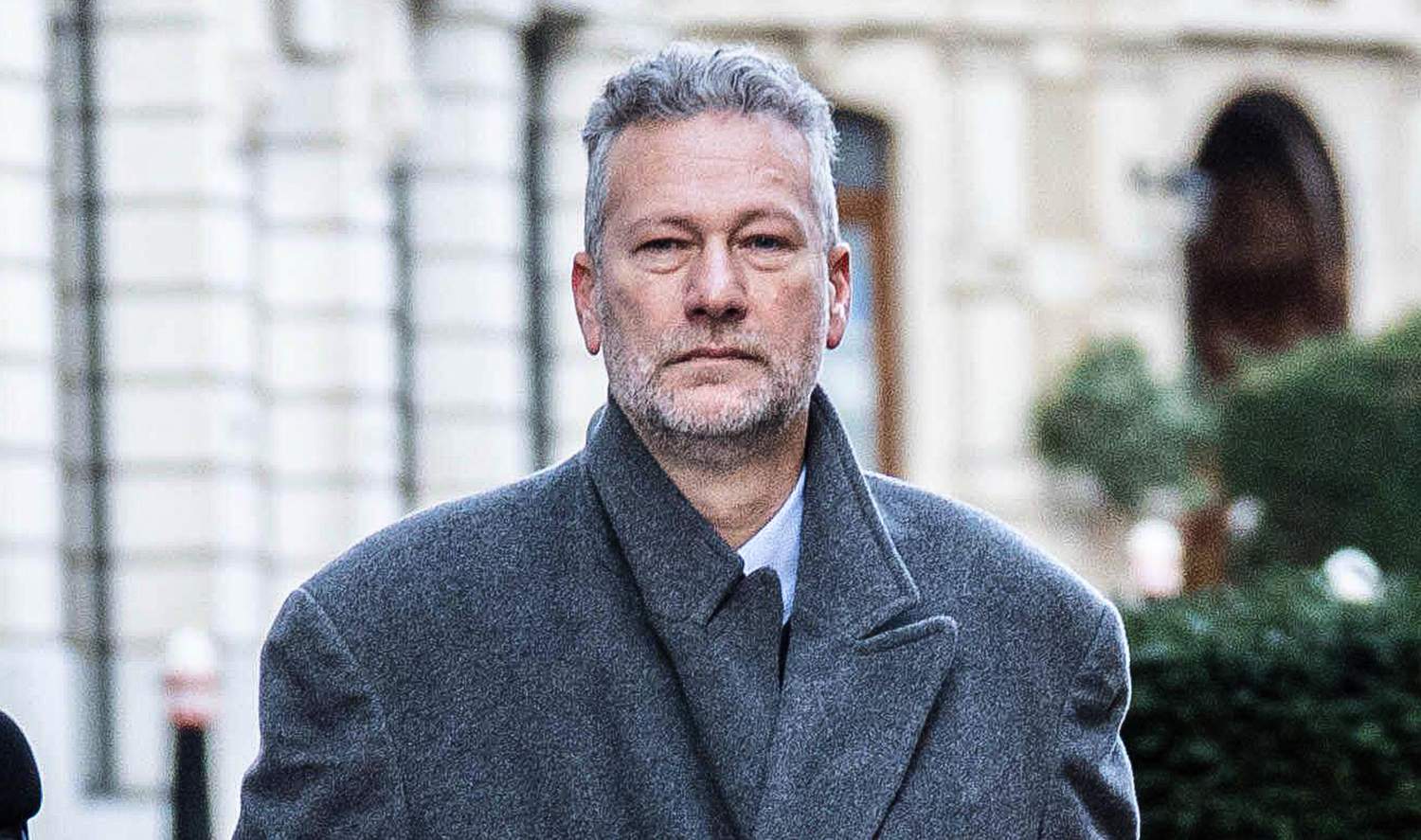
Nathan Gill Sentenced: What He Was Really Doing for the Kremlin
Reform UK’s former leader in Wales was in the centre of Putin’s preparations to attack Ukraine, argues Sergei Cristo
In a statement, Liberal Democrat Leader Ed Davey called Gill “a traitor … at the very top of Reform UK, aiding and abetting a foreign adversary” and branded Farage’s party “a danger to national security”.
But if you think this is bad, consider our former Prime Minister Boris Johnson and the troubling high-level Russian connections he had over many years.
Brexit and Blaming the Victim
As well as being the figureheads of their respective Brexit campaigns, Nigel Farage and Boris Johnson share another thing in common: as Russia launched its first phase of war against Ukraine in 2014, they both blamed the EU for the conflict.
Back at the time of the Crimea land-grab, in March 2014, Farage told the press and the European Parliament that the EU had “poked the Russian bear with a stick” by encouraging Ukrainians to topple President Viktor Yanukovych, accusing Brussels of a “militarist and expansionist” policy that had provoked the crisis in Ukraine.
Nathan Gill echoed his leader’s defence of Putin a few months later, in his maiden speech to the European Parliament in September 2014, warning that an association agreement between Ukraine and the EU would “lead to war”, and insisting that “what you are doing today is throwing petrol onto the bonfire which the EU lit”.
Nigel Farage went on to head the Leave.EU campaign a year later.
The other leading leave campaigner, Boris Johnson, directly echoed this two years later. In May 2016, he told reporters that “if you want an example of EU foreign policy-making on the hoof, and the EU’s pretensions to running a defence policy that have caused real trouble, then look at what has happened in Ukraine”.
How did it come about that both leading Brexiters were also Putin cheerleaders?
From Nalobin to Farage: the long Russian courtship of the Tory right
Carole Cadwalladr and I have documented in the award-winning Sergei and the Westminster Spy Ring, how the Kremlin was trying to suborn the Conservative Party and UKIP long before Gill was taking envelopes of cash from Medvedchuk’s bagman.
In late 2010, Russian-born Tory activist Sergei Cristo says he was approached at the Carlton Club by Sergey Nalobin, a first secretary at the Russian embassy and son of a KGB/FSB general, with an offer that Russian companies that would like to “contribute to the Conservative Party”. An illegal act, like Gill’s bungs.
Just as interestingly, Nalobin quizzed Cristo about the rivalry between the then Prime Minister, David Cameron, and his former Eton, Oxford and Bullingdon Club contemporary, the then Mayor of London, Boris Johnson.

Our podcast revealed the various official Russian Embassy attempt to infiltrate British right-wing politicians, first through Conservative Friends of Russia, and then its successor, the Westminster Russia Forum. Nalobin was joined by a second Russian spy, Alexander Udod, who approached Nigel Farage’s UKIP. Both Nalobin and Udod were expelled from the UK.
But by 2012, Boris Johnson already had his own Russian connections.
Enter the Lebedevs: Johnson’s Russian Entanglement
As Adam Bienkov documents in Byline Times, Boris Johnson’s association with media baron Evgeny Lebedev and Evgeny’s father, Alexander Lebedev, a former KGB colonel, goes back to 2009.
Under Lebedev’s ownership, the Standard became even more closely aligned with Johnson, loudly backing his re-election in 2012 and then his return to national politics.
It was a two-way process. Lebedev lobbied the mayor to support a glitzy new Russian arts festival in London that, according to the official minutes, was designed to “transform global perceptions” of Russia – with Lebedev promising to “lead discussions” with the Kremlin and secure “substantial support from the Russian Government”.
By this time, as John Sweeney reported, also in Byline Times, Johnson was a regular guest at the Lebedevs’ West London home and at Palazzo Terranova, the family’s Umbrian villa near Perugia. As foreign secretary and later prime minister, he continued to attend their famously hedonistic parties.
The Lebedevs did not donate cash to the Conservative Party, but they offered something arguably more valuable: access, status and a platform.
By 2020, Johnson had used his power as prime minister to make Evgeny Lebedev Baron Lebedev, of Hampton in the London Borough of Richmond upon Thames and of Siberia in the Russian Federation –despite security service concerns later revealed by the Channel 4 film Boris, the Lord and the Russian Spy and an accompanying OCCRP investigation.
But the real source of concern was not the son but the father. Despite constant claims to be a ‘dissident’ who fell out with Putin, by the time Boris Johnson was a Brexit figurehead, the former KGB colonel was back in Putin’s inner circle.
Lebedev Sr in Crimea – and the Surkov leaks
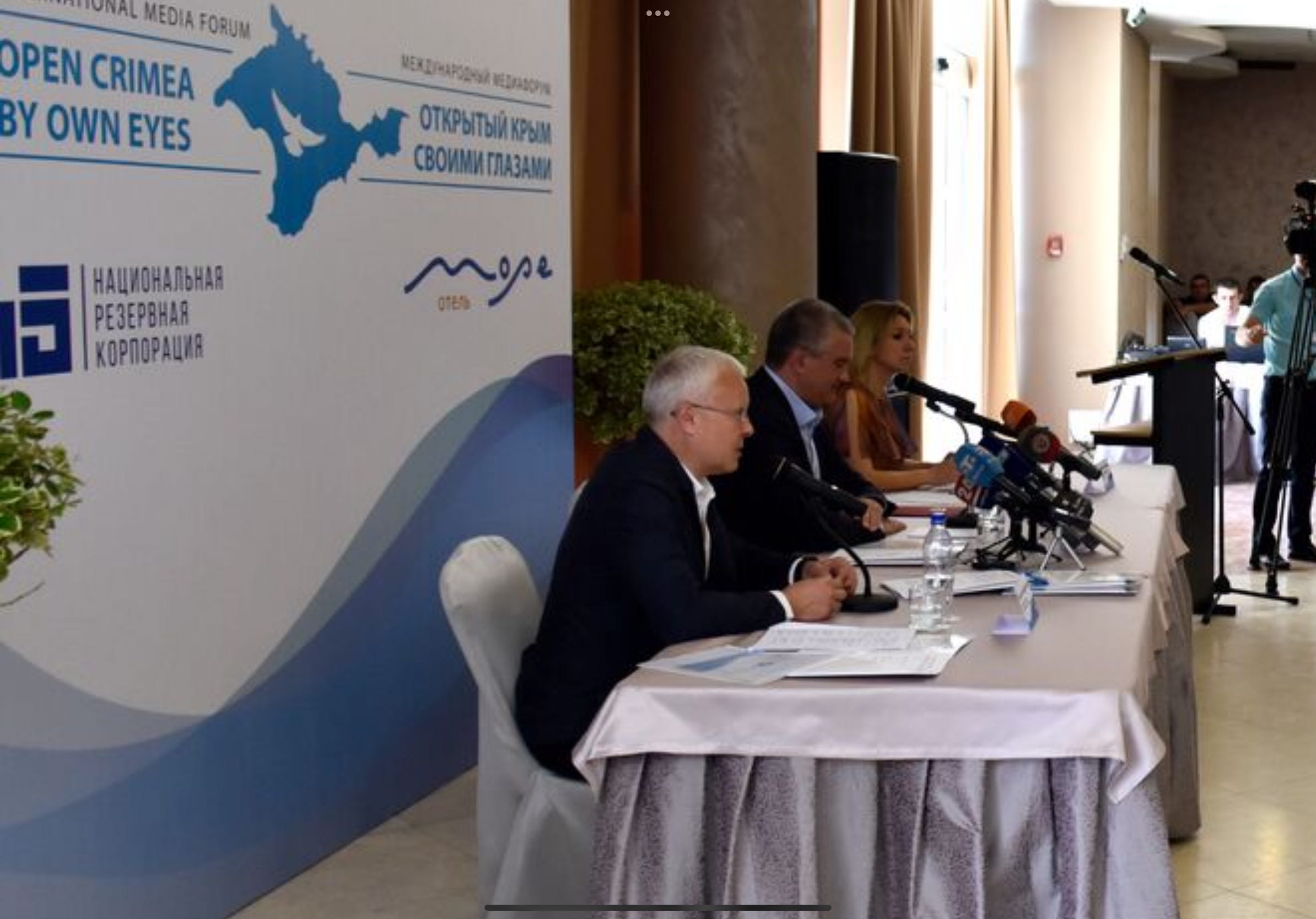
By 2014, when Putin invaded Eastern Ukraine and forcibly annexed Crimea at the barrel of a gun, Alexander Lebedev was one of the biggest investors in the peninsula.
Lebedev has for years owned and developed hotel and resort assets in Alushta, on the Crimean coast, including the “Almond Grove” complex and other hotels held via Cypriot offshore companies – businesses that continued after Russia’s 2014 annexation despite EU sanctions on Crimea-related investments.
Lebedev was made an “honorary citizen of Alushta” in 2012 for his investments and philanthropy on the peninsula, and boasted of taking a major role in renovating theatres and cultural sites in occupied Crimea.
The fact that Lebedev was back in Putin’s inner circle is confirmed by the “Surkov Files” surfaced by OCCRP and partners. They revealed that just weeks after Russia seized Crimea, Alexander Lebedev was writing directly to Sergei Ivanov, then chief of staff to Vladimir Putin, proposing to organise discounted “group vacations” in Crimean resorts for employees of the Russian defence ministry, interior ministry and major state companies.
He followed up with a letter to Vladislav Surkov, the Kremlin’s chief ideologist and architect of the Donbas proxy war, offering to host a peace conference in a Crimean theatre whose restoration he had financed.
Russian state and local media covered the event in 2017, with Lebedev hosting the conference with Sergey Aksyonov, the Russian-installed “head” of the region, and foreign ministry spokeswoman Maria Zakharova.
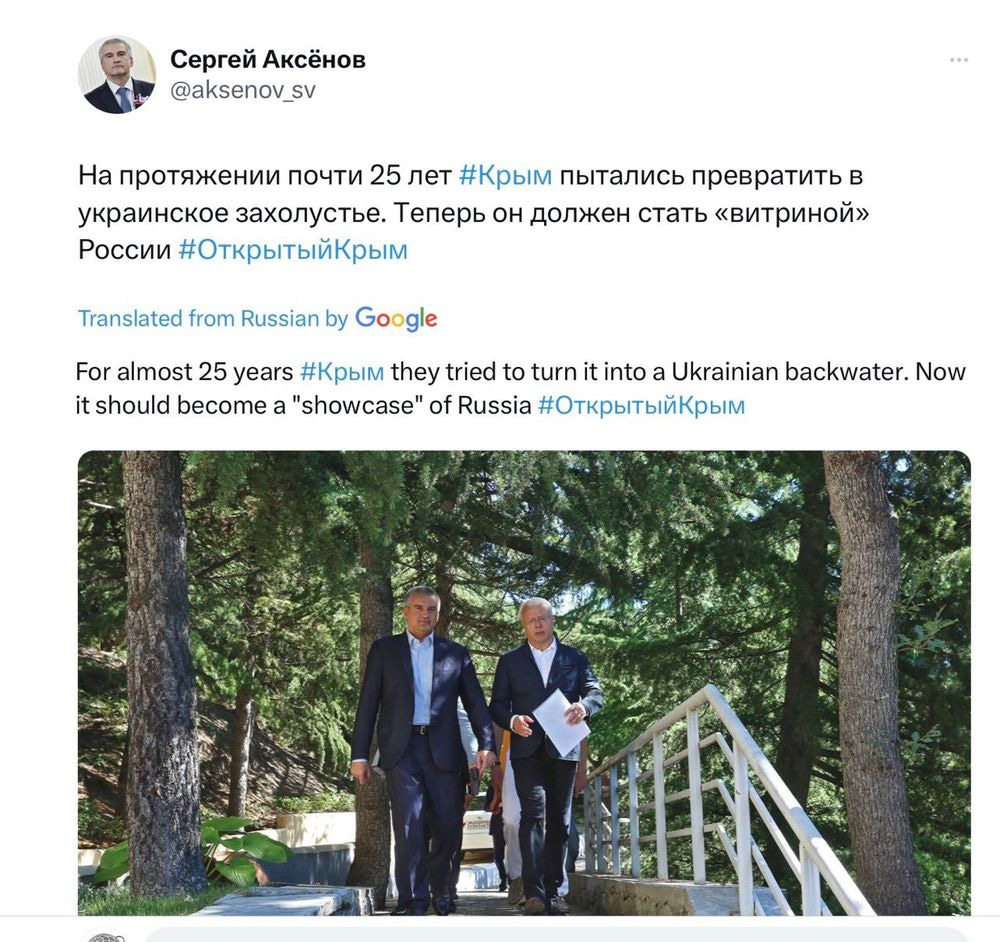
This is not the profile of a retired, politically disengaged ex-spy turned businessman. It is the profile of an oligarch active in Putin’s inner circle at the very moment Russia was redrawing Europe’s borders by force.
And it is during this period that his connections to the then Foreign Secretary, Boris Johnson, become the most intense.
Sweeney’s Scoop: Italian Intelligence and the Umbrian ‘X-Rated’ Parties
Writing for Byline Times in October 2021, John Sweeney first revealed the concern of the Italian intelligence services over Alexander Lebedev, and the two castles he owned in Umbria to host lavish parties, particularly for British politicians
Drawing on an anonymous report from Italy’s intelligence services and early drafts of the book Oligarchi by Italian investigative journalist Jacopo Iacoboni, Sweeney explained how Italian intelligence services:
- Questioned whether Alexander Lebedev had ever really left the KGB, noting that his resignation was considered “not quite clear” and that he continued to attend annual KGB meetings at the Kremlin.
- Warned that his name had been linked to “espionage and interference” operations.
- Described the Villa Terranova parties as “X-rated”, raising the risk of kompromat in an environment where senior British politicians and Russian elites mingled with minimal security.
Johnson, as both mayor and foreign secretary, had attended the villas’ parties – sometimes leaving his police protection behind in Britain, an extraordinary breach of protocol for a minister handling sensitive intelligence on Russia.
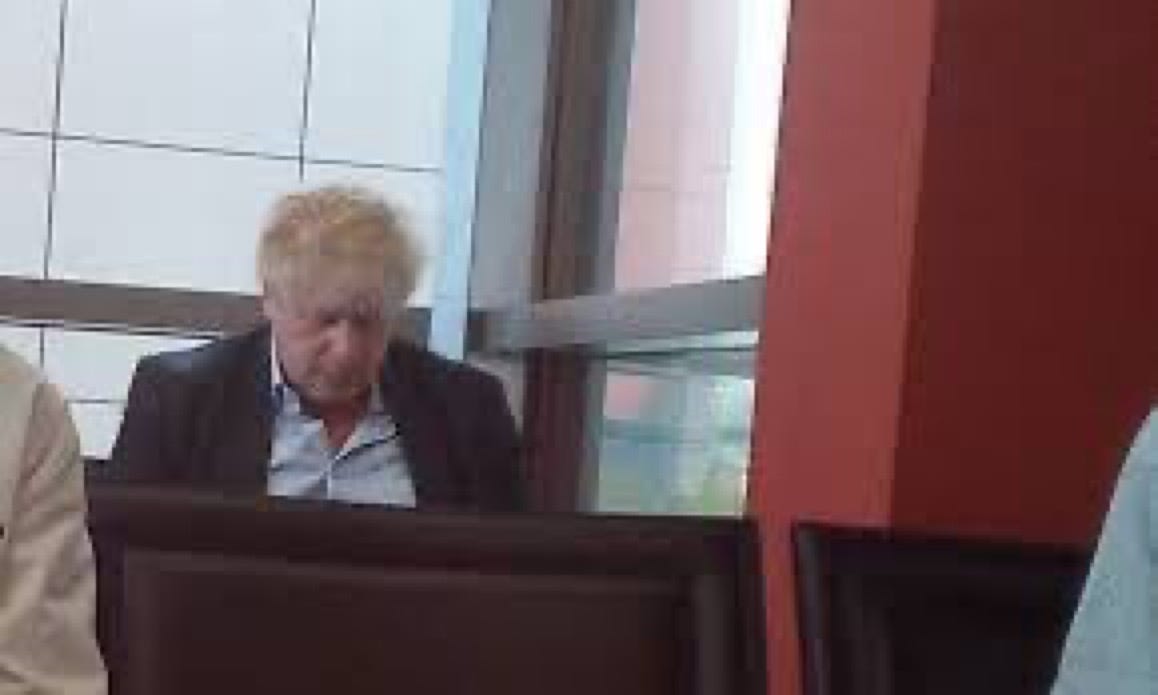
Johnson was photographed “worse for wear” by a member of the public at Perugia airport at a particularly important moment in late April 2018, when the hostility between Russia and the UK reached a new peak.
In March 2018, GRU officers used the nerve agent Novichok in Salisbury to target former spy Sergei Skripal and his daughter Yulia. The attack triggered a major NATO and EU diplomatic response.
On 27 April 2018, foreign ministers met in Brussels, with Johnson publicly urging allies to stand firm against Russian “malign activity”. The next day, instead of returning to London, Johnson flew alone to Perugia and on to Palazzo Terranova, without his Foreign Office officials or police bodyguards.
Paul Caruana Galizia at Tortoise discovered the real reason for this strange unofficial trip: Alexander Lebedev tried to set up a secret, unmonitored phone call between Johnson and Russian foreign minister Sergei Lavrov, specifically to discuss the nerve agent attack on Salisbury – bypassing British officials and secure channels. According to Caruana Galizia’s sources, the call never took place only because Johnson overslept.
Later, in front of the Liaison Committee, Johnson famously told MPs that “as far as [he was] aware” no government business was discussed at the villa – a formulation that now looks, at best, economical.
In December 2019, on the night he celebrated his General Election victory, Prime Minister Boris Johnson chose to avoid the traditional Downing Street event and instead chose to attend Alexander Lebedev’s lavish 60th Birthday Party.
The Canadian Government sanctioned Alexander Lebedev in 2022 because it judged that he was part of Vladimir Putin’s inner circle and had directly enabled Russia’s invasion of Ukraine.
From Profumo to Palazzo Terranova
In 1963, John Profumo, the Conservative Secretary of State for War, resigned after lying to Parliament about an affair with Christine Keeler, who was also involved with Yevgeny Ivanov, a Soviet naval attaché suspected of intelligence links. The scandal helped bring down the Conservative Government of the time.
The Johnson Lebedev story is potentially even more explosive. From 2016, during his tenure as Foreign Secretary with oversight of the British secret intelligence services MI6 and GCHQ, Boris Johnson was constantly — often covertly — in contact with a senior member of Russia’s political and espionage elite, in what have been described as compromising social circumstances. At stake was the biggest conflict in Europe for 80 years.
This makes Nathan Gill’s activities look peripheral.
Though Boris Johnson later became a stalwart defender of Ukraine after the full invasion in 2022, his role in providing ideological support for Putin as a leading Brexiter, just like Nigel Farage, against the EU, is on the record. So is Russian intervention in the contentious and epochal EU referendum.
But as The Citizens case before the ECHR makes clear, how and why Britain’s security was so compromised during a crucial era of conflict needs to be investigated urgently by a public inquiry to protect any future elections.