
 Subscriptions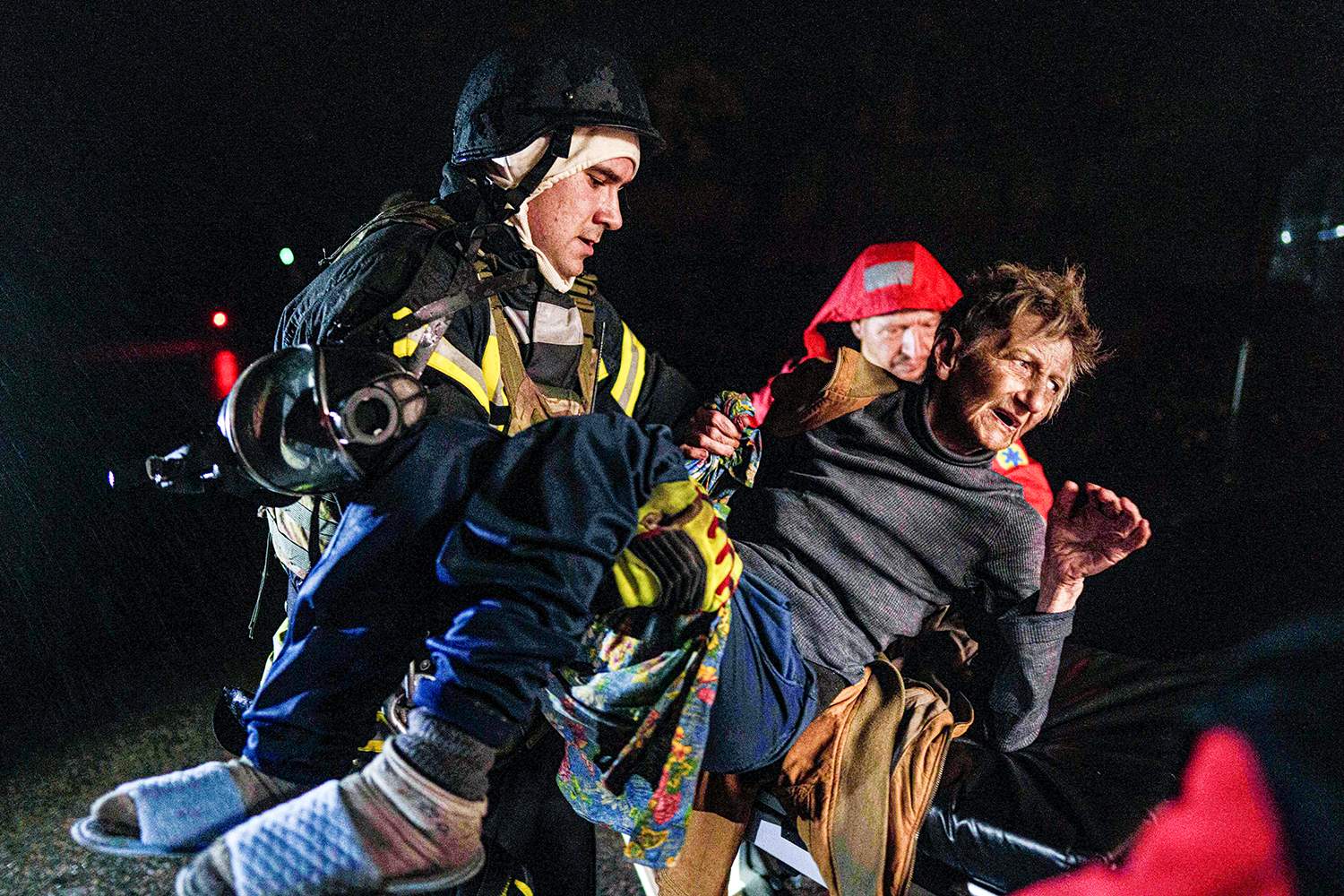

Read our Monthly Magazine
And support our mission to provide fearless stories about and outside the media system
Early on Friday, Kyiv came under a Russian missile-and-drone attack targeting the city’s power grid and other infrastructure. The barrage, which began in the hours before dawn, sent loud explosions across the capital and caused widespread blackouts on the left bank, a large portion of the city that sits on the eastern side of the Dnipro River. The strikes left Kyiv’s energy grid badly damaged after at least two combined heat and power facilities were targeted.
City officials reported that at least nine people have been wounded, five of whom were hospitalised, with no reported civilian fatalities. Following an attack of this scale, this is often an indicator of a successful Russian attack against infrastructure targets. Video and photos shared on social media showed at least one apartment building on fire. The result, according to Mayor Vladimir Klitschko, of debris from a downed drone.
The assault on Kyiv was part of a simultaneous wave of attacks on other Ukrainian cities. In the south, regional authorities in Zaporizhzhia reported that Russian drones struck populated areas and infrastructure, starting multiple fires. Three civilians were injured in those strikes, and officials later said a seven-year-old boy had been killed. In the central industrial city of Dnipro, residents also heard explosions throughout the night, and local media reported power outages in some neighbourhoods.

Winter Is Coming: Can Ukraine Keep the Lights On?
As temperatures fall and Putin’s strikes on the grid escalate, Ukraine prepares for a winter of severe hardship, reports George Llewelyn from Kyiv
These assaults continue a pattern of Russia’s targeting of Ukrainian energy facilities. Reporting in Bloomberg and Financial Times noted that last week’s missile attack had hit several of Ukraine’s main gas-production plants, wiping out up to sixty percent of Ukraine’s gas production capability according to Serhii Koretskyi, the CEO of Naftogaz, the country’s largest oil and gas producer. He described the attacks on October 3rd against facilities in Kharkiv and Poltava as the “most massive and aggressive attack since the full-scale invasion started.”
Russia has launched frequent strikes on power plants and rail lines in recent weeks. Ukrainian leaders said such attacks were intended to sow chaos as winter approaches. Already facing a billion-dollar gas shortfall against winter readiness targets, the margins for energy production and storage are growing dangerously thin. Last winter, through creative patching and successful management of the grid, Ukraine managed to shield most of its cities from serious power outages, though blackouts in rural and frontline parts of the country lasted up to eighteen hours a day.
For weeks, Kyiv and its allies have noted that Moscow is renewing an “energy terrorism” campaign similar to those seen in past winters. This year, however, Russia has stepped up its aerial assaults by several orders of magnitude, launching an estimated nine times as many drones and missiles in the first nine months of 2025 than it did in the same period the previous year. Amid increasing scale attacks, Ukraine’s rate of successful interception is dropping. According to Maxim Timchenko, CEO of DTEK, Ukraine’s largest energy company, the attacks are becoming “more massive, more precise; definitely they are using AI… if they select a target and send 50, 60, 100 drones and missiles, then it’s very difficult for our air defence to protect these facilities”.
ENJOYING THIS ARTICLE? HELP US TO PRODUCE MORE
Receive the monthly Byline Times newspaper and help to support fearless, independent journalism that breaks stories, shapes the agenda and holds power to account.
We’re not funded by a billionaire oligarch or an offshore hedge-fund. We rely on our readers to fund our journalism. If you like what we do, please subscribe.
As it contends with growing attacks and dwindling air defence resources, Ukraine is increasingly turning to more novel methods to protect against aerial drone attacks. Notably, in recent months, Ukraine has begun to use helicopters and first-person view drones to intercept Russian Geran drones. Ballistic missiles, often used to target larger and more critical infrastructure facilities, such as the Combined Heat and Power plants attacked last night, are more difficult to counter. Recent developments have enabled these missiles to change their typical ballistic trajectory mid-flight, making it substantially more difficult for Ukraine’s limited Patriot missile defence stocks to anticipate and intercept such attacks.
As temperatures begin to drop across Ukraine and with winter rapidly approaching, Russia’s latest campaign against Ukrainian infrastructure appears to be growing. For Ukrainians, it heralds a winter much harsher and more deadly than those of recent years.