
 Subscriptions
 Subscriptions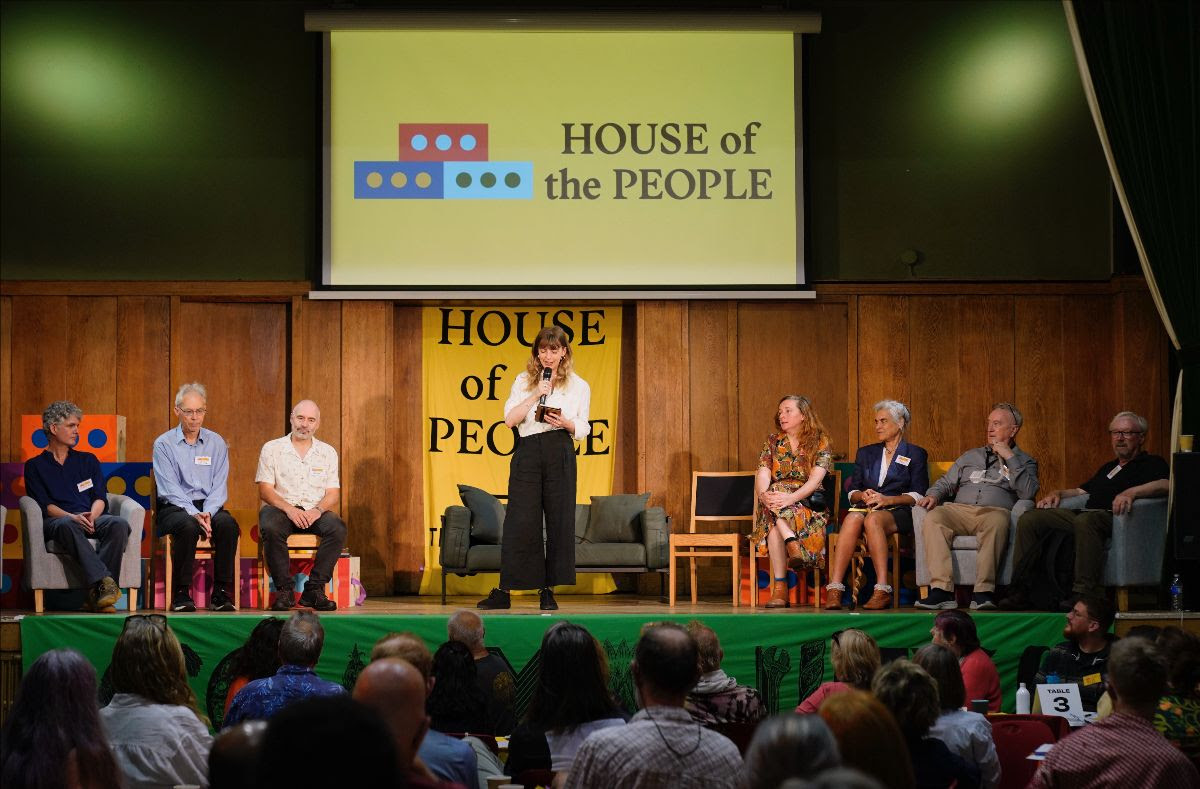

Read our Monthly Magazine
And support our mission to provide fearless stories about and outside the media system
The first sitting of the House of the People, a citizens’ assembly initiative by the group Assemble has recommended a “People’s Charter” of citizen-led policy proposals.
These include a wealth tax, strengthening anticorruption laws to prohibit lobbying, an immediate arms embargo for all countries acting in violation of international law, the “long term decommodification of housing”, and the creation of a Future Generations Act to ensure that Government policy takes into account those not yet born.
The House of the People gathered over three days in London this week to deliberate, debate and generate policy ideas after discussions with experts, such as the economist Richard Murphy, the head of policy at Greenpeace, Doug Parr, and Leigh Evans, a nurse who has worked in Gaza. Around 100 people attended.
Some 1,500 have participated in Assemble’s local assemblies over the past two years. 50% of the “members” of the House of the People, which the organisers call a “parallel parliament”, were drawn by sortition from those assemblies, with the remainder remaining recruited from the public.
At this week’s assembly, members debated four themes – democratic renewal, unjust war and genocide, wealth inequality and climate breakdown – which were generated through local assemblies where people were asked what the problems are in their area, and what changes they want to see in the UK.
Ishana Atkinson told Byline Times the assembly had been “an incredible experience, I feel like I’ve learnt so much”.
She continued: “I feel like I’ve gone in with a bit of understanding about the main topics we’ve been looking at; democracy, and unjust war and genocide, the environment and climate and also wealth inequality. I knew a little bit about each thing, but I feel like I’ve been learning a lot and also about how to synthesise a lot of information and turn it into actionable policies that we could recommend to the Government”.
Assemble intends to use the proposals generated by the sittings to provide a policy platform that campaign groups can coalesce around and to put pressure on the Government, and push for change. This will include a “rush on parliament” in the style of the Suffragettes.
Small political formations across England, such as Southport Community Independents and Majority, a party run by Jamie Driscoll, the former Mayor of the North of Tyne, are working with Assemble to run local assemblies and generate policies that they believe are more likely to resonate with the electorate, because they’ve come directly from them.
ENJOYING THIS ARTICLE? HELP US TO PRODUCE MORE
Receive the monthly Byline Times newspaper and help to support fearless, independent journalism that breaks stories, shapes the agenda and holds power to account.
We’re not funded by a billionaire oligarch or an offshore hedge-fund. We rely on our readers to fund our journalism. If you like what we do, please subscribe.
The first House of the People sitting attracted a more politicised, progressive-leaning section of the citizenry, but Assemble intends to make assemblies more representative.
Yaz Ashmawi, a facilitator at the assembly told Byline Times that he hopes people with different beliefs join the assemblies, arguing that they could play a vital role in combating the far-right: “The whole point of this kind of work, is that there is so much disillusionment with the political system which is certainly feeding this cynicism, and the rise of conspiratorial thinking and the rise of the far right and Reform UK as a political force.”
Our current political system offers those people no alternative that they believe is credible or includes them or is even worth considering
Yaz Ashmawi, a facilitator at the assembly
Ashmawi continued: “The whole proposition of citizens’ assemblies and deliberative democracy at a local level and a national level is that ordinary people are given far more influence and power in a way that’s fair, which provides an alternative to the far-right path that the UK is destined to go down unless we adopt these alternative forms of democracy. It is a sign of a really well-done assembly if it brings together people outside their bubbles.”
A second sitting of the house involving a different group of citizens will take place in February 2026 in Liverpool.