

Brian Frydenborg looks at the possibilities open to the Ukrainian Army if they succeed against Russian forces on the Kherson front, leading to an isolated Crimea and pushback in the Donbas
 Newsletter offer
 Newsletter offer
Subscribe to our newsletter for exclusive editorial emails from the Byline Times Team.
Back in April, I noted the possibility that both Western weapons in Ukrainian hands could be a huge threat to the Russian Navy and that Kherson could fall to Ukraine. Both would threaten Russia’s eight-year occupation of Crimea.
Fast forward to now and every day, there is more and more reason to believe that Ukraine should take Kherson—city and oblast—relatively soon. Once this happens, then the rest of the Russian-occupied territory in the south of Ukraine opens up to that continuing major counterattack by Ukrainian forces.
When Russia should just play defence and conserve manpower in the south, it has been engaging in attacks that have failed and cost them lives, only weakening their defensive capabilities against Ukrainian forces.
In recent weeks, Ukraine has even damaged the vital bridges near Kherson enough that Russia cannot use its military vehicles or heavier equipment on them, cutting off its troops on the north/west bank of the Dnipro River. After precise strikes against these key regional bridges using the High Mobility Artillery Rocket System (HIMARS) systems provided by the United States, thousands of Russian troops low or soon-to-be-low on supplies are thus now practically cut off by advancing Ukrainian forces.
Kherson How the City Fell to Russian Forces
As Ukrainian forces mount a counteroffensive towards the occupied city and its mayor is abducted by Russian soldiers, Elena Kostyuchenko has early eyewitness accounts of resistance, propaganda, abductions and protests. Translated from Russian by Ilona Yazhbin Chavasse

Kherson is only about sixty miles from Crimea’s northern border. Unlike the war-torn east with its separatist enclaves, Crimea was formally annexed (illegally) by Russia in 2014.
Russia has been moving large numbers of troops to Kherson from the Donbas front and also from whatever was left in Crimea. It has also been moving troops to Crimea (perhaps just as a staging area or perhaps because they fear its loss too—as they should), and, indeed, there have now been multiple wildly successful Ukrainian strikes against major Russian targets inside Crimea. The Russians have also been moving some of those troops into neighbouring Zaporizhzhia Oblast, recently increasingly coming under heavy Ukrainian fire, a sign of its inclusion in the general Ukrainian southern counteroffensive.
If Ukraine can take Kherson, it can easily cover the short distance from Kherson city to the Crimean border. Once this happens, that means Ukraine will have sealed off the isolated Crimean Peninsula’s few land routes north with ease, cutting it off entirely from land reinforcement routes… except for one special bridge.
A personal vanity project of Putin’s and a boast of modern Russian engineering, the Kerch Strait Bridge (also known as the Crimean Bridge) is not only the longest bridge ever constructed in Russian history – it is the longest bridge in all of Europe, some twelve miles long. Using HIMARS, Ukraine could render it inoperable as it has made the bridges around Kherson city.
Russia’s Problem in the Black Sea
When that border is sealed off by Ukrainian forces and the Kerch Strait Bridge to Russia is damaged enough to prevent resupply and reinforcement to Crimea, the Siege of Crimea could begin.
A minimal number of troops are needed to protect the few routes north into Kherson Oblast. HIMARS, Harpoons, and other Western-supplied weapons systems can keep Russia’s Black Sea Fleet at bay or even destroy more of its vessel, as it did with the flagship Moskva (whose destruction I predicted in early April). Accordingly, it seems Russia has already evacuated a significant portion of its fleet from Sevastopol to a port in Russia (Novorossiysk).
With advanced Ukrainian weapons systems right on the northern border of Crimea after Ukrainian forces establish themselves there, any Russian naval resupply of Crimea would be risky for Russia.
Cut off by land and sea and with air supply vulnerable to Western-supplied Ukrainian air defence systems, Ukraine can dig in, boxing whatever troops remain in Crimea while the bulk of the Ukrainian forces in the south push on through Zaporizhzhia Oblast to Donetsk and the southern portion of the major front line of the war in the east. As is the case with the territory between Kherson and Crimea, there is not particularly strong defensive terrain helping any Russian defenders in Zaporizhzhia, just more relatively flat and treeless coastal steppe plains—almost entirely open fields—with a particularly low-lying corridor right on the coast and going all the way through to Donetsk oblast in the east.
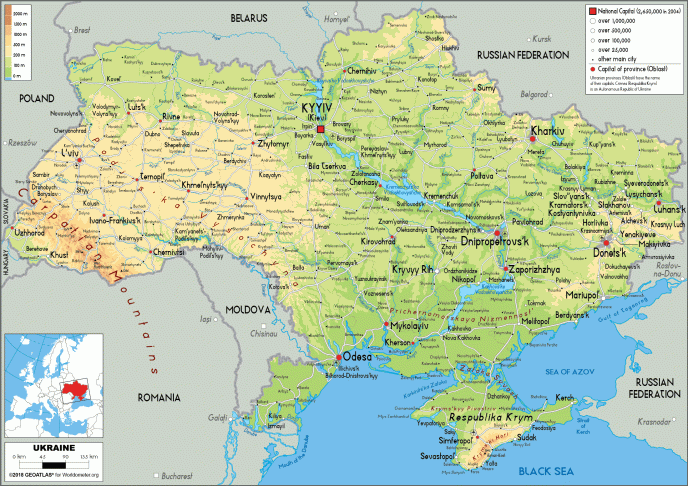
Russia keeps attacking the areas around the major city of Kharkiv close to the border in the northeast but has little to show for it. It does not seem like Russia is poised to make any major gains on the eastern Donbas front either. For the reasons outlined in my last piece, the dynamics of this phase of the conflict are pretty set and they overwhelmingly favour Ukraine, with Russia not having the ability to alter them significantly.
Putin’s Unenviable Choices
The last month has seen the end of one phase of the war and the beginning of another. Russia had little choice: if it did not reinforce the south, it risked having almost all of its position there being steamrolled rapidly by the coming Ukrainian onslaught. Such is the dilemma—the trap—in which Russia has found itself: choosing how quickly or slowly to lose on one front or another
When it comes to this reinforcement effort in the south, consider that most of those troops are in units that have been fighting in the east for a long time and have taken many casualties. Those coming from the Donbas have to travel in a long radius around the front line to get to the south and any reinforcements may be (and some have been) coming under fire in transit. They will be fighting in more exposed, less defensible terrain with fewer fortified positions than in the Donbas and with longer supply lines to maintain than that front.
The moment of truth will come when Ukrainian forces attacking in the south push their way to the point of being able to join forces with their fellow soldiers who have been manning the line in Donetsk Oblast at the southernmost area along the north-south Donbas axis.