
Read Our Monthly Magazine
And support our mission to provide fearless stories about and outside the media system
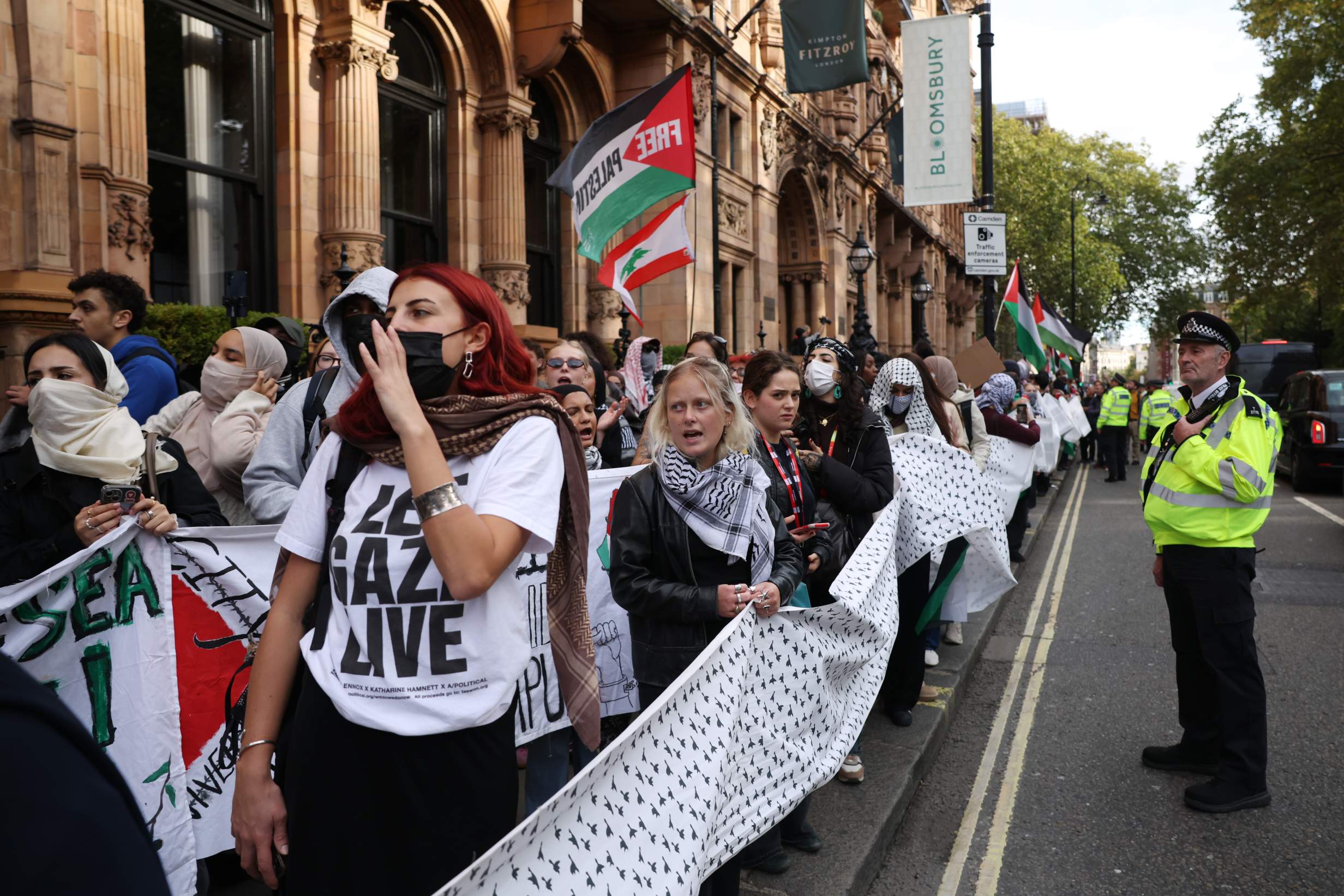
A raft of UK universities have restricted solidarity with Palestinian people amongst students and academics, including speech that could be perceived as critical of Israel, according to a new report from Amnesty International.
The Silencing Dissent report finds that universities have cancelled meetings and events, framed peaceful protest as ‘disruption’, shut down encampments and taken pre-emptive punitive measures. It presents 26 case studies across nearly two dozen universities, covering 7 October 2023 to 30 September 2025.
Amnesty found that the restrictions often did not meet the high bar in international and UK law for interfering with political speech and peaceful assembly.
Sanctions have included suspensions, campus bans, threats to withdraw degrees, visa statuses being jeopardised, in moves “often causing great personal harm.”
In several cases, sanctions were imposed before disciplinary hearings had concluded, “effectively transforming precautionary measures into punishments and contributing to the chilling effect.” Some universities prolonged investigations without clarifying timelines, outcomes or routes of appeal, which – combined with campus bans and restricted access to services – had “severe impacts on people’s education, mental health and future prospects.”
ENJOYING THIS ARTICLE? HELP US TO PRODUCE MORE
Receive the monthly Byline Times newspaper and help to support fearless, independent journalism that breaks stories, shapes the agenda and holds power to account.
We’re not funded by a billionaire oligarch or an offshore hedge-fund. We rely on our readers to fund our journalism. If you like what we do, please subscribe.
Some universities relied on overly broad disciplinary codes, characterising protests as ‘disruptive’ or ‘offensive’ despite what the NGO says was “no apparent evidence of targeted harm”. Others treated peaceful protest as trespass, even in campus squares, foyers and union buildings used for protests for decades. Some now require advance approval for protests, while others have sought court injunctions imposing blanket bans across large parts of campus, exposing students and staff to the risk of fines and imprisonment.
Kerry Moscogiuri, CEO of Amnesty International UK, said: “This is an attack on our freedom of speech and the right to protest from the very institutions who are supposed to encourage free thought.
“Students and academics care about the victims of Israel’s genocide in Gaza. It’s beyond belief that some of our prominent universities see this as a threat that requires punitive measures like court injunctions, and harsh punishments that leave students with their lives turned upside down.”
She said the findings were “part of a wider crackdown on communities coming together to make their voices heard on Israel’s genocide of Palestinians in Gaza and other issues they care about.”
Amnesty is asking universities to commit to its ‘Defend Dissent Charter’.
Don’t miss a story
According to the human rights body, some universities have shared legal strategies, received instructions from the Department for Education, and shared security planning, with the effect of clamping down on those perceived to be showing support for the victims of Israel’s apartheid and genocide in Gaza. The authors argue Palestine-related expression frequently came under greater scrutiny than other student protest, with Palestinian, Arab, Muslim and other racialised students and staff, as well as non-British students, experiencing “particular and disproportionate impacts.”
Usama Ghanem, a 22-year-old student, was suspended by King’s College London in 2025 over his involvement in pro-Palestinian activism, and told to “return to [Egypt] during this period of suspension”, where he had previously been detained and tortured. His suspension was lifted after review in September 2026.
Usama said: “I left an authoritarian regime in Egypt to find one at King’s College London. For protesting a genocide our university was funding and demanding divestment, I was indefinitely suspended, monitored, and threatened with deportation to the very authoritarian regime I had fled. As a lead negotiator for our Palestine encampment, I saw King’s discipline 25 other students too. This was about more than punishment, it was an attempt to intimidate us into silence.”
Following this article’s publication, a spokesperson for King’s College London said: “We do not discipline students for lawful affiliations, including pro-Palestine views, lawful protests or freedom of expression, and any implication otherwise is inaccurate.” The university claims Mr Ghanem was not suspended for expressing his beliefs.
Attack at Edinburgh Protest
At the University of Edinburgh, on 28 March 2025, a peaceful protest organised by the Edinburgh Justice for Palestine Society was “violently disrupted when a man assaulted a student with a knife”, the report says. The attacker, a local resident unaffiliated with the university, had been seen loitering near the protest site, and students later heard him chanting ‘**** Palestine’ as he approached. Students told security that he shouted Islamophobic and racist slurs and tried to pull off Muslim women’s hijabs.
Ben Law, a student at the protest, was slashed in the face. “Bloodied and shocked, Law warned others and sought help from campus security. Students who were there allege that, despite the visible presence of a weapon and the attacker’s escalating aggression, security officers refused to intervene directly, saying they needed to consult a line manager. The attacker left the scene after student protesters calmed him down, without intervention from university staff,” the authors write.