

Read Our Monthly Magazine
And support our mission to provide fearless stories about and outside the media system
Andy Burnham’s statement that Russia interfered in British elections over recent years caused a huge amount of controversy. However, what commentators objecting to his observation have forgotten is that Boris Johnson, when Foreign Secretary in 2017, said very much the same thing. In an extraordinary joint press conference in December 2017, Johnson crossed swords with Russian foreign minister Sergei Lavrov on the issue. Lavrov told reporters that Johnson had told him that Russia did not interfere in the EU referendum. “Not successfully,” Mr Johnson shot back.
At the time Sky News reported that the then UK Foreign Secretary also insisted there was “abundant evidence” that Russia had attempted to influence polls in the US, Germany, Denmark and France.
As was often his way, Johnson is now saying exactly the opposite when it is politically expedient for him. However, successive Conservative ministers settled on a collective policy that there had been no “successful” interference in UK elections, including the Brexit Referendum. How they determined whether interference was “successful” or not was never made clear.
What has changed now is that we have a Prime Minister who appears to welcome an open, frank and honest consideration of what has actually been going on around our elections in the past decade. In that time, elections in our liberal democracies have resulted in profound, often unexpected, change. Brexit and the presidencies of Donald Trump are examples. Trump’s election in 2016 marked the start of a profound reordering of politics worldwide and the assumptions which underpinned post World War II diplomacy no longer apply. The NATO alliance is under threat in a way never previously experienced during the Soviet military build ups between 1945 and 1989.
We know from the independent Congressional Mueller Commission in the United States that Russia interfered in the US Presidential Election in 2016 – a position that is accepted across the political divide in the US. Russian policy in the Putin years – territorial expansion coupled with online and offline interference in democratic processes across the globe – has been hugely successful in undermining opponents’ alliances. Division, uncertainty and distrust permeate relations between what had previously been close allies.The European Union and NATO are just two organisations shaken to the core by the events of the last decade.
When, as a member of the DCMS Select Committee’s inquiry team on disinformation in 2018/9, we heard evidence from technology company Cambridge Analytica’s executive Alexander Nix, it was very clear that its work in the 2016 Presidential election was being used by Nix to promote it worldwide for use in other elections. The advent of targeted online campaigning was what appeared to be a novel “silver bullet” which could have the capacity to sway elections in liberal democracies.
For the first time in history, technology platforms could collect information on individual voters’ opinions and motivations by tracking their computer use and use that information to target them with political messages. This could influence opinions on a scale and with a specificity never before available. Not only could arguments be put to individual voters, they could be put in private, as political opponents were not aware of the arguments made online as they had no access to them. Democratic debate on the arguments made was excluded, eliminating a key aspect of the process.
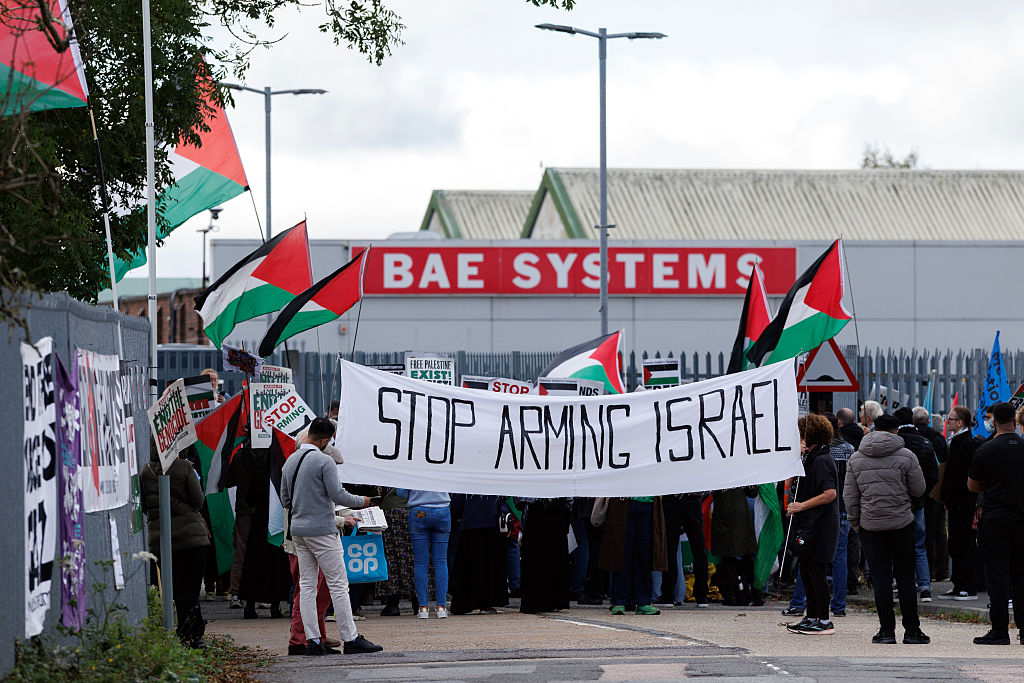
Reform UK’s Crypto Billionaire Donor Could Profit From Military Exports to Israel Approved After Arms Suspension
British Defence firm QinetiQ, which Christopher Harborne owns a large stake in, received a military export licence involving Israel long after the UK suspended certain arms sales to the country
Furthermore, the ultimate source of messaging to voters was not constrained in any way: it could come from any country, from individuals, businesses, even governments. Lack of regulation meant that though overseas interference may be technically illegal, electoral policing authorities had no powers to investigate the multinational companies facilitating that interference. In any event, as I established in questioning Facebook executives in the 2018 Disinformation Inquiry, those tech giants did not see preventing interference as their responsibility.
The House of Commons Disinformation Inquiry reported Russian Interference in UK elections as long ago as 2018 and 2019 and recommended an independent inquiry into the UK Election of 2017, the UK Referendum of 2016 and the Scottish Referendum of 2014, a recommendation which the then UK Government rejected.
Of course, when the Disinformation Inquiry first presented evidence in 2018/19, it presented it to a Conservative Government determined to suppress any evidence which called into question the Referendum result. This was despite the Salisbury nerve gas attack by Russia on British soil and the evidence produced of Russian bot factories being used against us. The concept of Russian asymmetric attacks in Europe was not taken seriously at that time and evidence from other countries across mainland Europe was largely disregarded.
The UK political climate was dominated then by seeking to resolve the Brexit issue and any diversion from that was not countenanced by Johnson as Prime Minister. Clear evidence of this came with the suppression of the UK Parliament’s Intelligence and Security Committee Report on Russian Interference before the 2019 General Election. My own frustration at this was expressed in a Newsnight interview on the eve of Johnson’s landslide win when I argued that it was essential that we should look at evidence of Russian interference in previous elections before the 2019 General Election took place.
Regrettably, it was only when Russia invaded Ukraine in 2022 that the press in the UK finally began to take the Russian threat seriously.
For my own part, I stood down from Parliament in December 2019 to write my book ‘Digital Gangsters’ which looked to highlight the scale of transformation in political campaigning that had happened as a result of online, targeted campaigns.
The explosion of spending in UK politics over recent years has been used for targeted advertising, unprecedented in our political culture, where the UK ban on TV advertising for elections and in our politics generally, had, in the past, prevented the sort of excesses seen in the US.
At the same time, the advent of partisan TV news channels such as Russia Today and GB News, permitted until after 2022, in the case of Russia Today, by an anodyne Ofcom and permissive Conservative Governments, meant that elected politicians such as Nigel Farage were allowed to peddle their views on TV in their own shows.
The Guardian reported in March 2014 that Farage had appeared 17 times on Russia Today since 2010. My own research showed that Farage’s income to his company “Thorn in the Side”, used generally for his media payments, increased from just £9,737 in 2012 to £548,573 in 2018. In 2013, Putin had said: “Russia Today is funded by the Russian Government , so it cannot help but reflect the Russian government’s official position…” It was free to do so to UK voters until the 2022 invasion of Ukraine.
It is quite remarkable that, in such a transformed political campaigning environment, electoral law in the UK has failed to keep up. Even the Elections Bill now in the House of Lords fails to address the fundamental questions about whether we want polarising targeted advertising in our democracy and whether we think the massive increase in political spending is welcome. This is even before we consider the question of the sources of huge political donations – whether from foreign states and organisations or crypto millionaires.
The lack of activity from the Conservatives was perhaps understandably, hobbled as they were by their Brexit obsession. Less easy to explain was Labour’s failure to act when it came to power in 2024. Evidence of Russian interference was mounting daily