
 Subscriptions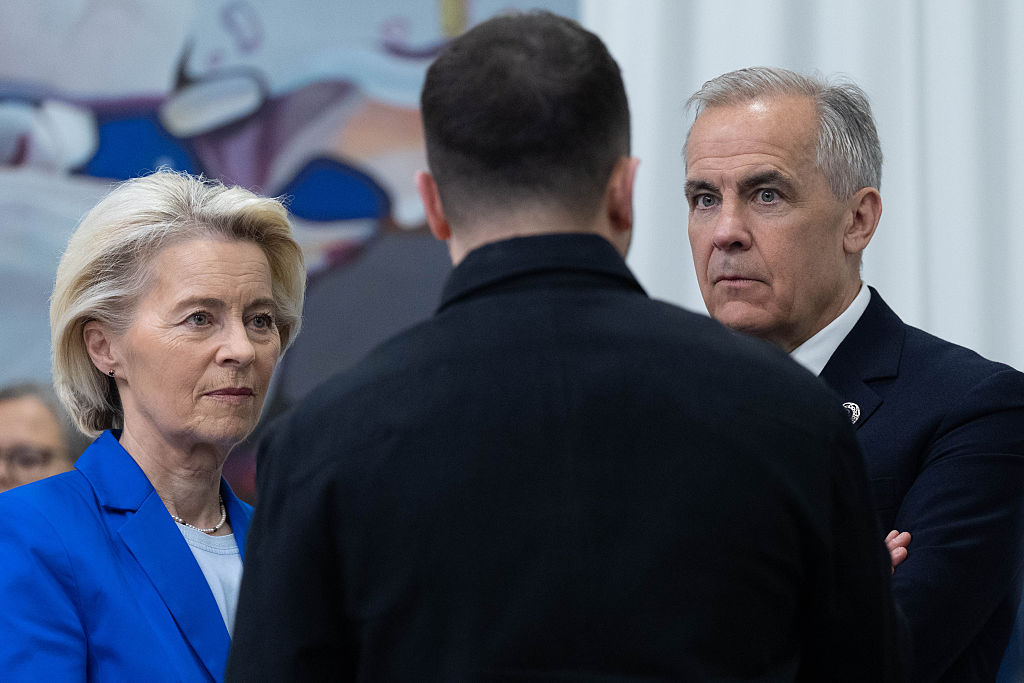
Read our Monthly Magazine
And support our mission to provide fearless stories about and outside the media system
This week EU Commission President, Ursula von der Leyen, declared that the EU was willing to invite Canada to become the first associate member of the EU.
This announcement was groundbreaking.
The EU does have many close relationships with countries outside the EU – such as Iceland, Norway and Switzerland – including strong economic alignment and access to the single market, as well as slightly looser free trade arrangements with countries such as the UK. It also has association agreements enabling political and economic cooperation with countries which aspire one day to become full EU members, such as several Balkan and Eastern European countries. However, there has never been a category of associate membership, where a country potentially is allowed to enjoy many of the benefits of membership, without ever becoming, or being on the path towards, full membership.

‘Europe and Canada Must Forget Trump and Form a Coalition of the Willing to Defend Ukraine’
Senior politicians, military leaders and experts send an open letter calling on Europe and Canada to join forces in defending Ukraine from Russian aggression
What Might Associate Membership Entail?
It remains to be seen what such an associate membership with the EU might entail, or whether it will ever come to fruition. It seems that von der Leyen made her announcement before the European Parliament in Strasbourg, without seeking prior agreement or even properly consulting the existing EU members first.
Some member states were quick to express caution – with a German Government spokesman quoted as saying that his country was open to discussing new models of partnership, but that more thought needed to be given to the label of “associate member.”
Other commentators have noted that ten EU countries have not yet ratified the bloc’s free trade agreement with Canada, CETA, which was signed almost a decade ago, suggesting that it might be even harder to get a significantly more ambitious pact with Canada over the line. Since Associate Membership would be an entirely new category of partnership with the EU, it would also be likely to necessitate an amendment to the EU’s treaties, requiring unanimous agreement.
Many are likely to worry that the new concept of associate membership could open up a Pandora’s Box of wider troubles for the EU. For example, some Eurosceptic existing members might be tempted to see if they could obtain a looser arrangement with the EU. From the other direction, more committed EU members will fear that it will lead to further attempts to unravel the core commitments and obligations of membership, including the ever sensitive obligation of freedom of movement.
Furthermore, any attempt to open up the EU treaties to amendment always runs the risk of member states using the opportunity to pursue completely unrelated treaty changes, based on other pet peeves about the existing arrangements. This could lead the whole process to become bogged down in interminable negotiations.
The Canadian Response
Perhaps recognising these dangers, and to avoid being branded a Trojan horse, the Canadian Government itself has shied away from endorsing the concept of associate membership per se. Instead, Prime Minister Mark Carney’s office has confined itself to reaffirming Canada’s desire to move relations with the EU towards a “far stronger, more ambitious alliance.” He also has to be mindful of domestic businesses which might resist being required to open up their markets in return for greater access to the EU market. Many Canadians might also chafe at the prospect of having to abide by burdensome EU regulations, over which they would not have much say. Preserving sovereignty could be an issue for Canadians.
Nevertheless, there are strong motives and incentives on both sides to develop a closer relationship. Following US President Donald Trump’s trade war on Canada, and demeaning remarks about making Canada the 51st state, Carney has made it clear that he views the US-Canada relationship as irreversibly damaged, and that Canada needs to look for new partners.
For its part, the EU has also taken a series of beatings from the Trump administration, including hefty tariffs, repeated political interference in its domestic politics, particularly in support of far-right movements, and hostility regarding its attitude towards matters such as climate change, AI, tech companies, and immigration. Being courted by a country like Canada is probably also a welcome boost to EU morale, after the disaster of Brexit and recent rebuff by Iceland.
From a strategic perspective, Trump’s ambivalence towards NATO and the war in Ukraine, his affinity for dictators such as Putin, his outlandish claims on territories such as Greenland, and his disregard for the international rules-based order, have also eroded Canadian and European trust in the US as an ideologically-aligned, democratic, security partner. In today’s challenging geopolitical environment, it makes sense for medium powers to club closer together.
Seeing the World ‘With the Same Eyes’
So, it is not surprising that both von der Leyen and Carney went out of their way to emphasise the ideological reasons for seeking closer relations between the EU and Canada. In her speech before the European Parliament, von der Leyen pointedly observed that the EU and Canada “see the world with the same eyes” through shared democratic values, and common approaches to many global challenges, such as AI, climate change, the Ukraine war and geopolitics. Carney tweeted that “Canada and the EU are natural partners, united by shared values.” The implicit contrast with, and rebuke of, the US was unmissable.
If the concept of associate membership does take root, it would mark a major shift in how the EU presents itself – moving beyond its geographically limited status to becoming an explicitly ideological bloc. In theory, it would imply that the EU is open to allowing associated membership with any country anywhere in the world which shares its democratic values. Australia, New Zealand, Singapore and Japan might all be eligible future candidates for such membership.
The significance of this is hard to overstate. The EU would effectively be throwing down a gauntlet to the US, and seeking to take over its mantle as the leader of the free world.
Many commentators have also speculated whether the UK could seek a similar associated membership status with the EU. But EU officials have reportedly already moved quickly to rule that out, by stressing that the model is only intended for countries that cannot join the bloc. One senior EU official was quoted saying “Unlike Ukraine, Moldova, Georgia, Norway and the UK, Canada is not in Europe” and “cannot join the EU.”
ENJOYING THIS ARTICLE? HELP US TO PRODUCE MORE
Receive the monthly Byline Times newspaper and help to support fearless, independent journalism that breaks stories, shapes the agenda and holds power to account.
We’re not funded by a billionaire oligarch or an offshore hedge-fund. We rely on our readers to fund our journalism. If you like what we do, please subscribe.
Carney ‘Gets’ the EU in a Way British Politicians Don’t
Even if the EU had not already slapped down this idea, on its merits, the EU would be unlikely to want to grant the UK associate membership status anyway, given the current state of British politics.
As reported by the Wall Street Journal last week, Carney has gone out of his way to cultivate closer relations with the EU and its individual member states, and identify areas where closer collaboration would be in their mutual interest. He has approached the EU with respect, making clear he seeks an ambitious relationship, but also displaying an understanding of the potential constraints and concerns on the EU side. This is in complete contrast with the UK, which still seems to believe it can cherry pick from the EU, and displays irritation when the EU sets out its own terms.
Unlike many British politicians, particularly those guilty of completely botching the Brexit negotiations, Carney has not conveyed the attitude that the EU “owes” Canada anything, or that Canada “holds all the cards.” Where British politicians have repeatedly liked to boast about what they have “got” from the EU, Carney has made clear he is seeking win-win outcomes. Unlike too many British eurosceptics, who seem to gloat over challenges facing the EU, and relish the prospect of its failure, Carney understands that a strong EU is in Canada’s interests.
Moreover, unlike the political right in the UK, which still clings on to the fantasy of the US-UK special relationship, Carney understands that the US has fundamentally changed, and can no longer be fully relied upon as either a political ally or economic partner.
Perhaps most importantly, unlike many British politicians and commentators, Carney fully understands that the EU is far more than just an economic bloc, but an ideological one as well, forged out of the ashes of World War 2 and the Cold War, and committed to its democratic foundations. Hence the numerous references to shared values. He “gets” the EU, in a way that too many British politicians still don’t.
Given the enormous political hurdles, the associate membership status plan for Canada may well end up coming to nothing. But, on the merits, Canada is displaying all the right attitudes and attributes to make it an attractive partner for the EU.
And if I had to put money on it, I believe Canada could succeed in achieving even closer ties than that between the EU and the UK, for as long as so much of the current British political establishment retains its high-handed, disrespectful, and entitled approach towards the EU.