
 Subscriptions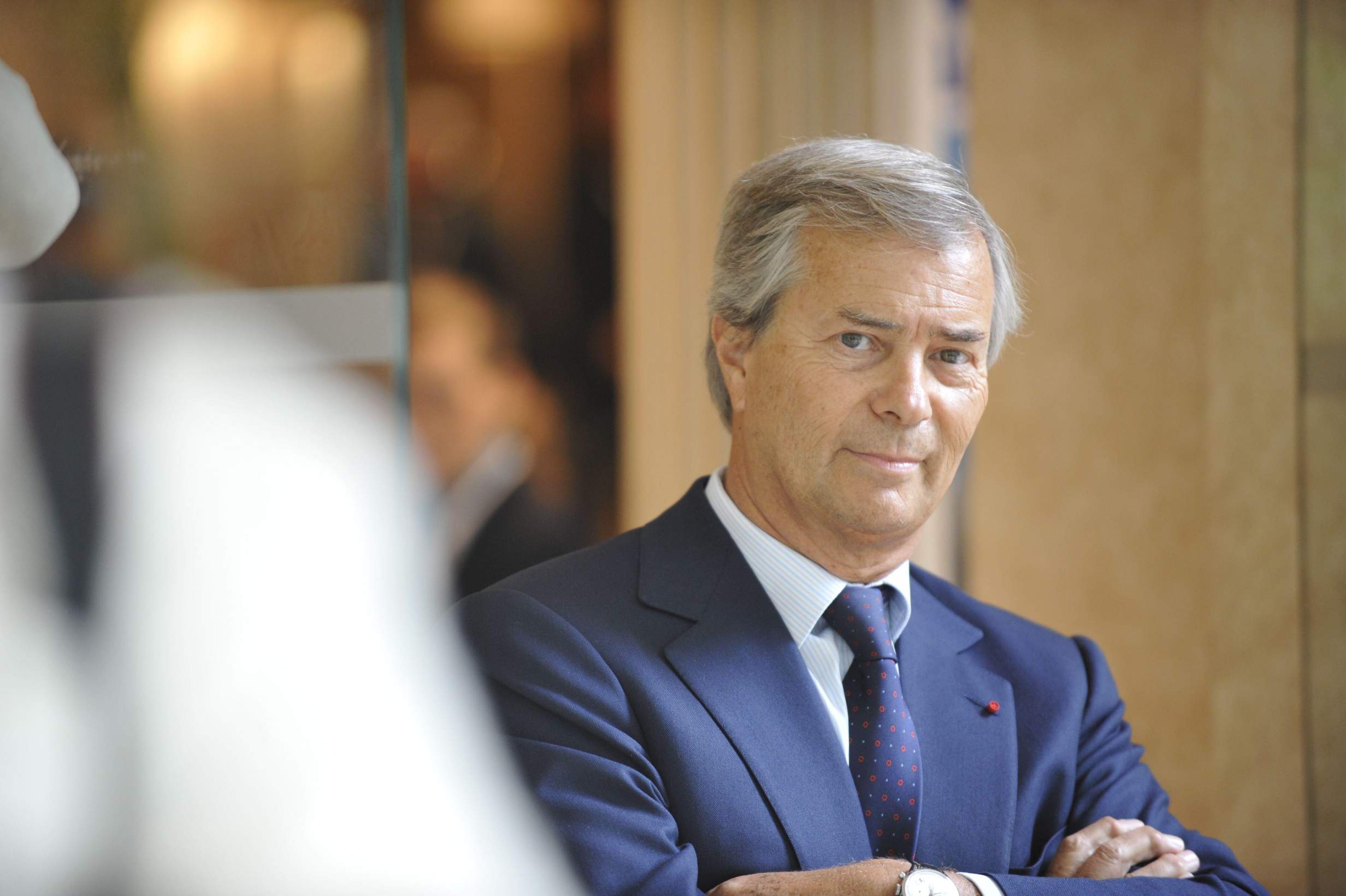
Read Our Monthly Magazine
And support our mission to provide fearless stories about and outside the media system
Walk into a Relay (the newsagent that is equivalent to WH Smith in every airport and train station) in France, and you will likely see a wall of right-wing politicians smiling back at you from the bookshelf.
You might be able to find a couple of centre-left politicians – when Byline Times checked at the Relay in Paris CDG, there was a book by former PS presidential candidate Ségolène Royal and current Place Publique presidential hopeful Raphaël Glucksmann – but the majority of portraits on the covers of the books will be those of far right presidential candidate Jordan Bardella, the right wing former president Nicholas Sarkozy, the leaders of far right microparties like Marine Le Pen’s niece, Marion Maréchal, Nicholas Dupont-Aignant and Éric Zemmour and a handful of Macron’s right wing ministers.
Far-right media mogul Vincent Bolloré bought the Lagardère group, which owns Relay, in 2023, and since then, the chain’s shopfronts have become part of his political project. They were recently described by the Observatory of Multinational Corporations as the “front line” of Bolloré’s “political crusade”, and evidence of declining pluralism recently became apparent when an order of 400 copies of a new book titled Bernard Arnault: His Ruthless World, which was critical of Bolloré’s friend and fellow media oligarch, Bernard Arnault, was cancelled by the chain without explanation.
Bolloré adheres to an identitarian Catholic worldview that understands France as experiencing a clash of civilisations as a result of Islamic immigration. According to a 2021 investigation by Le Monde, he is surrounded by “yes men”, including some who spent their youth as members of ultranationalist groupuscules and were close associates of Jean-Marie Le Pen.
Relay is not the only front in the multipronged culture war being waged by Bolloré and like-minded billionaires such as Pierre-Édouard Stérin, who funds a small conservative theme park and hosts charity events that critics argue reinforce a moralistic, right-wing Catholic worldview.

How Far-Right Billionaires are Destroying French Politics – and What the UK Must Learn
The French media have boosted the far-right National Rally party. Are the British media doing the same in the UK?
Bolloré controls an empire of media outlets, including the far-right television channel CNews, and formerly moderate newspaper the Journal Du Dimanche, as well as streaming services and publishers, including a publisher that produces school textbooks, which he puts in service of his worldview .
This does not always mean straightforwardly backing the National Rally; often, it means using the media to advance the preferred political themes of the far right.
Victor Mallett, a Financial Times journalist and author of Far Right France, told Byline Times that Bolloré is engaged in a concerted move “to push the far right, though he’s not always narrowly focused on Marine Le Pen and Bardella. He’s also given time to Éric Zemmour [a far-right politician and journalist who has been convicted multiple times for racial hatred] and Sarkozy and anyone else on the hard right that he’s quite keen on. You could say that he’s hedging his bets”.
In 2023, he bought the Hachette group, including the prestigious publishing house Grasset, which sparked fears about political control among the authors. These fears came to pass earlier this year when, in April, Olivier Nora, the beloved editor of Grasset who had headed up the publishing house for 26 years, was fired without warning.
His firing ignited a wave of protest, prompting over 100 authors as diverse as the feminist author of King Kong Theory Virginie Despentes and Bernard-Henri Lévy, the philosopher with neo-conservative leanings, to quit the publishing house in solidarity with Nora.
Laurent Binet, the author of several books including HHhH, was one of the authors who quit Grasset following Nora’s exit.
He told Byline Times that there were no questions of Nora’s competence before he was fired.
“Bolloré wrote an extremely petty and small-minded article in the Journal du dimanche, raising the question of his competence because Grasset supposedly had very poor financial results. This is false in relation to the wider world of publishing. Grasset was profitable and not loss-making, which in the current climate of publishing is a result in itself”.
“Grasset is an old publishing house with a lot of symbolic capital… Its great claim to glory is that it published Proust for the first time. For the three years after Bolloré bought Hachette, the threat was plain. We all had the impression that what protected us was Olivier Nora, and as long as he was there we felt that the publishing house continued as before. With the same editorial policy as before”.
He added that once Nora had been fired, the decision of the authors to quit was “fast and unanimous” because they knew what was coming.
“There was a precedent with Fayard [another publishing house under the Hachette umbrella]. Bolloré really decided to make that a propaganda tool, the books he publishes now are mostly by far-right or hard-right authors like Sarkozy, Zemmour, Bardella, etc.”
The process of “Bollorisation”, as the radicalisation of cultural institutions has become known, has extended well beyond the left. “What’s interesting”, Binet said, “is that neoconservative authors left with us. Even for them this was too much”.
The Grasset affair was not the only instance of cultural workers starting to push back against Bolloré’s increasing control of culture. The Bolloré family took a controlling stake in Canal+, France’s biggest sponsor of cinema, a decade ago, but it was previously understood to be insulated from the politics of its owner, until this summer at the Cannes film festival, a row broke out when Maxime Saada, the head of Canal+ threatened to blacklist over 600 artists who had signed a petition warning against French cinema’s reliance on the far right mogul.
Canal has committed almost half a billion euros to fund films until the end of 2027; after that, filmmakers fear that Bolloré may start applying political pressure and only finance films that are ideologically aligned.
Canal has already made steps in this direction, distributing the documentary adaptation of far-right politician Éric Zemmour’s book French Suicide, which famously downplayed the role of Vichy France in the Holocaust.
Bolloré’s offensive in cinema is occurring alongside threats from the far right party the National Rally to cut state subsidies to the art form.
Archibald, a campaigner with the Earth Uprising group against Bolloré’s media dominance, told Byline Times that the result of Bolloré’s consolidation of media is that “racist ideas are now available in every venue”, pointing to the fact that earlier this year CNews defended the right of one of its contributors to compare Bally Bagayoko, the black mayor of Saint-Denis, to a monkey.
A backlash to Bolloré is starting to emerge.
According to Archibald, Bolloré’s hostile takeover of cultural institutions has largely happened by stealth, but groups like his are banding together to raise awareness of what the billionaires Bolloré and Stérin are doing to culture, and trying to support alternative institutions.
In the political sphere, the left parties have started to hit back against the far-right billionaires.
Olivier Faure, the leader of the centre-left Socialist Party, accused Bolloré of trying to “lobotomise publishing” in response to the Grasset affair, and the populist left party France Unbowed has vowed to break up media oligopolies if leader Jean-Luc Mélenchon becomes president.
There has also been something of an institutional backlash. One of Bolloré’s channels, C8, was closed down for breaching broadcast rules. “That was pretty interesting”, Mallet said: “There’s no sign of that sort of spine in the British system”.
Although CNews has been fined several times for breaching broadcast rules, including for broadcasting discriminatory outbursts, Mallet doesn’t think that Arcom, the broadcast regulator, will “dare” to act ahead of the election despite an outstanding case against CNews, because “it would be like a red rag to a bull” allowing the far right to claim political interference.
According to Laurent Binet: “The cultural battle against Bolloré taking place in France is the mirror of the global political battle. It’s important to say that Grasset was not a left-wing publishing house. We are trying to defend the very notion of pluralism”.
ENJOYING THIS ARTICLE? HELP US TO PRODUCE MORE
Receive the monthly Byline Times newspaper and help to support fearless, independent journalism that breaks stories, shapes the agenda and holds power to account.
We’re not funded by a billionaire oligarch or an offshore hedge-fund. We rely on our readers to fund our journalism. If you like what we do, please subscribe.