
 Subscriptions
Read our Monthly Magazine
And support our mission to provide fearless stories about and outside the media system
The BBC’s announcement that it proposes to cut 550 jobs in news, nations, and TV and radio content as part of the first stage in its plan to save £500 million across the corporation over the next two years will have wide-ranging ramifications, not least because people will lose their livelihoods.
In terms of content, the BBC has outlined proposals including ending Radio 4’s The World Tonight; and reducing the number of permanent presenters on Today from five to four from September, with a single anchor on Saturdays.
According to recent reports in the Guardian, there is also disquiet on Today about a BBC News edict that the corporation’s correspondents should in future prioritise platforms such as TikTok and Instagram over traditional TV and radio franchises, including Today. Mark Lawson has pointed out (also in the Guardian) that the BBC’s proposals will lead to a lack of diversity in Today’s presenting team.
We should not let the concern about the impact of the cuts deflect from an issue hiding in plain sight: where are the black presenters and non-white editors on the corporation’s prestigious programmes on its leading speech station?
In October 1948, Any Questions? went on air from the Guildhall in Winchester. Its presenter was Freddie Grisewood, a white man. In March 2026, the programme was presented by Alex Forsyth, a white woman. In the intervening three-quarters of a century, the show has had six permanent presenters. All of them have been white.
That is only the beginning of the story.
Across the full roster of BBC Radio 4’s flagship news and current affairs programmes – Today, The World at One, PM, The World Tonight, The World This Weekend, Broadcasting House, The Westminster Hour, Any Questions?, and Any Answers? – the picture that emerges from their combined presenter histories is one of a striking and sustained absence of black presenters.
Across all of those programmes and their decades on air, it is not possible to identify a single black British person (someone whose cultural heritage is Afro-Caribbean or African) who has served as a main or lead presenter.
These are not obscure programmes. They are the central architecture of British public service radio. Today sets the political agenda each morning for politicians, journalists, and citizens alike. The World at One reached four million listeners at its peak. Any Questions? has hosted every prime minister since Harold Wilson. These programmes have helped shape how Britain understands itself, week after week, decade after decade.
Yet, throughout that entire span, the voices carrying that authority have been overwhelmingly white.
The irony is sharpest when the programmes themselves discuss the problem without recognising it.
The final Today programme edited by Owenna Griffiths in March featured an interview about media consolidation in Hollywood. The actress and producer Eva Longoria warned that intense consolidation leads to “less diversity of thought and less diversity of thought leaders”. She described how the old studio gatekeeping system locked out talent: “You had to go through the studio system; you had to go through these proper channels.”
Here was Today – which has never had a non-white permanent editor in its nearly 70-year history and has had no regular black presenters at all – broadcasting, via Longoria, a warning about the dangers of closed systems that shut out diverse voices.
The Today programme has had 15 permanent editors going back to its launch in 1957. All of them white. The editorship of Today is one of the most powerful positions in British journalism – determining which questions get asked to which politicians, which stories are pursued, and what tone the programme takes. The absence of non-white editors is not just a symbolic failure. It is a failure across almost 70 years of power, authority, and leadership.
The farewell tribute to Griffiths in her final programme made this failure visible in an uncomfortable way.
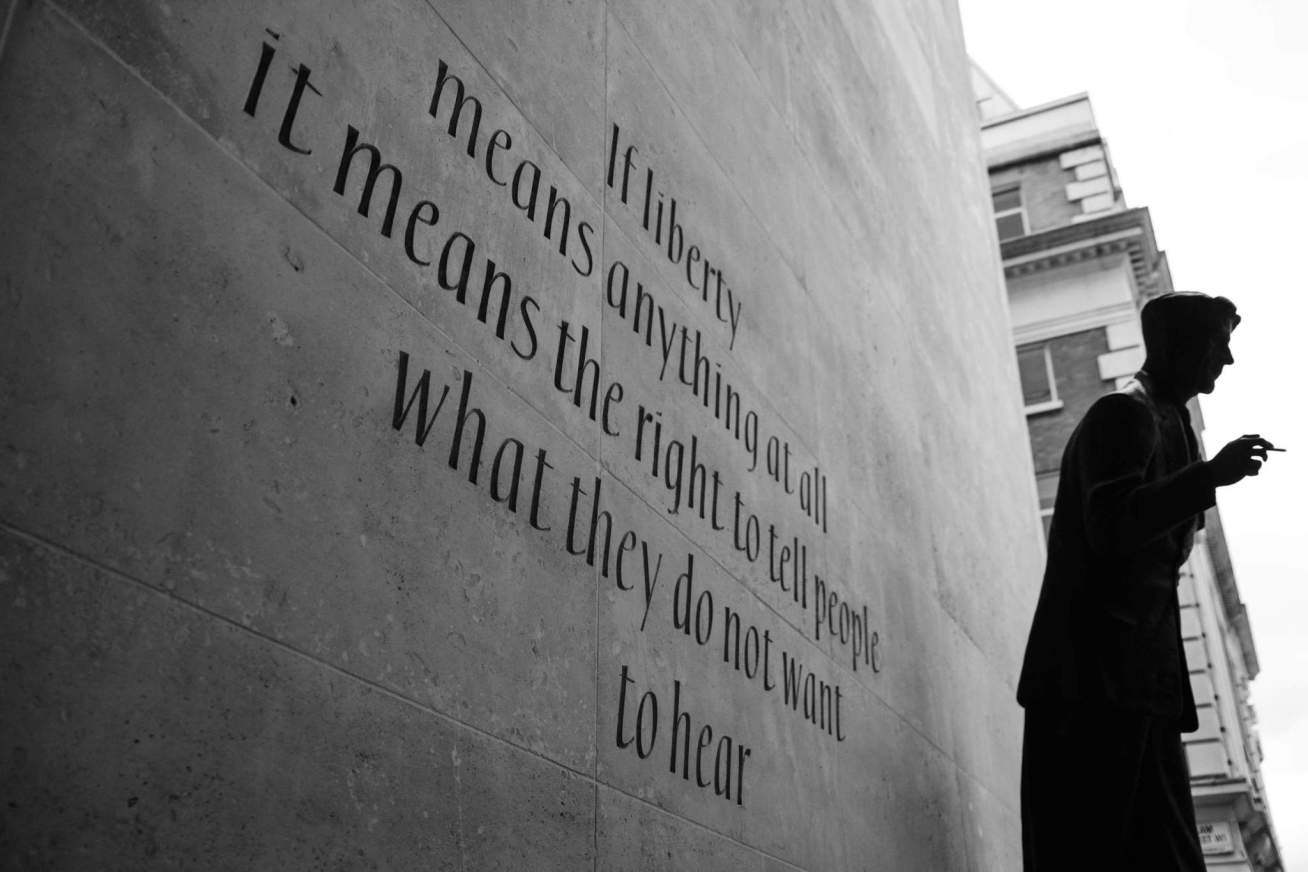
The tribute was conducted by Nick Robinson, Justin Webb, and Jeremy Bowen – three white men – alongside Mishal Husain, who had already left for Bloomberg. Robinson observed that it is editors, not presenters, who deserve the real credit. He is right. But the observation sits awkwardly coming from a public face of a programme that has never had a non-white editor.
The most striking passage came from Husain herself: “I think we have these assumptions about what authority looks like and sounds like. And frankly, I’m in a room with three men. I think many of them are derived from images of male authority – big, bold statements, grand gestures, plans. And I think Owenna’s authority comes from her power of thought.”
Husain – the only non-white person in that tribute, having left the programme 15 months earlier – could equally have been describing the culture that has kept Today‘s presenter and editor chairs looking the way they have for seven decades.
There have been a handful of excellent presenters from South Asian backgrounds on Today and other flagship news and current affairs programmes on Radio 4. That is to be welcomed, but we should not ignore what we don’t see or hear.
BBC insiders have suspected for years that it has an issue with career progression for those from diverse backgrounds.
Alex Strangwayes-Booth spent 27 years with the BBC as a broadcast, then senior broadcast, journalist. Her job was to create content on religious issues for all 39 BBC Local Radio stations. She argues that the BBC introduced many diversity programmes in news during the past 30 years and has not stuck with any of them long enough for them to make a difference.
“I was involved in one back in the early 2000s which was a great way of getting people from different communities involved in BBC Local Radio – it was introduced by Greg Dyke [then Director General] and dropped literally the day after he resigned,” Alex says.
“I know because I was the producer working on it and my job changed overnight. Imagine if they’d stuck with it for 25 years? They’d have loads of amazing talent – presenters, journalists, producers – from a grassroots level from all parts of England.
“It’s always made me very cross. I also remember going to a daily news meeting in the BBC main newsroom in around 2018. I counted 32 white men, four women, and one person of colour. ONE!”
That anecdotal evidence has been backed up by academic research by Birmingham City University.
Nina Robinson examined “Diversity of Senior Leaders in BBC Radio News” for the Sir Lenny Henry Centre for Media Diversity. She concluded that “structural inequalities in recruitment and progression should be urgently addressed” and that “faith in the current system is very low and a radical plan is needed to change a process which has been widely abused. The time has long passed to get it fixed”.
That report was written five years ago.
Back to the Today programme.
Nick Robinson (no relation to Nina Robinson), in that farewell to Owenna Griffiths’ edited programme, wondered aloud whether journalists have failed to grasp the “dissatisfaction, indeed misery” of large parts of the population.
As he closed the programme, he said: “We live in an era in which people, when they talk about the media, they mean that flickering, scrawling screen, don’t they, which demands that we like, or we share, or we shout at its content. It is radio. It is this programme. It is the Today programme, which is the country’s biggest breakfast programme. What does radio offer? Intelligence, curiosity, empathy?”
That begs the questions. Whose lives are being failed? Whose perspectives are absent? Whose voices are not in the studio or in the presenter’s headphones? Whose truth isn’t being told?
And is that the best we can do today?
Jaldeep Katwala is the director of the Sir Lenny Henry Centre at Birmingham City University