
 Subscriptions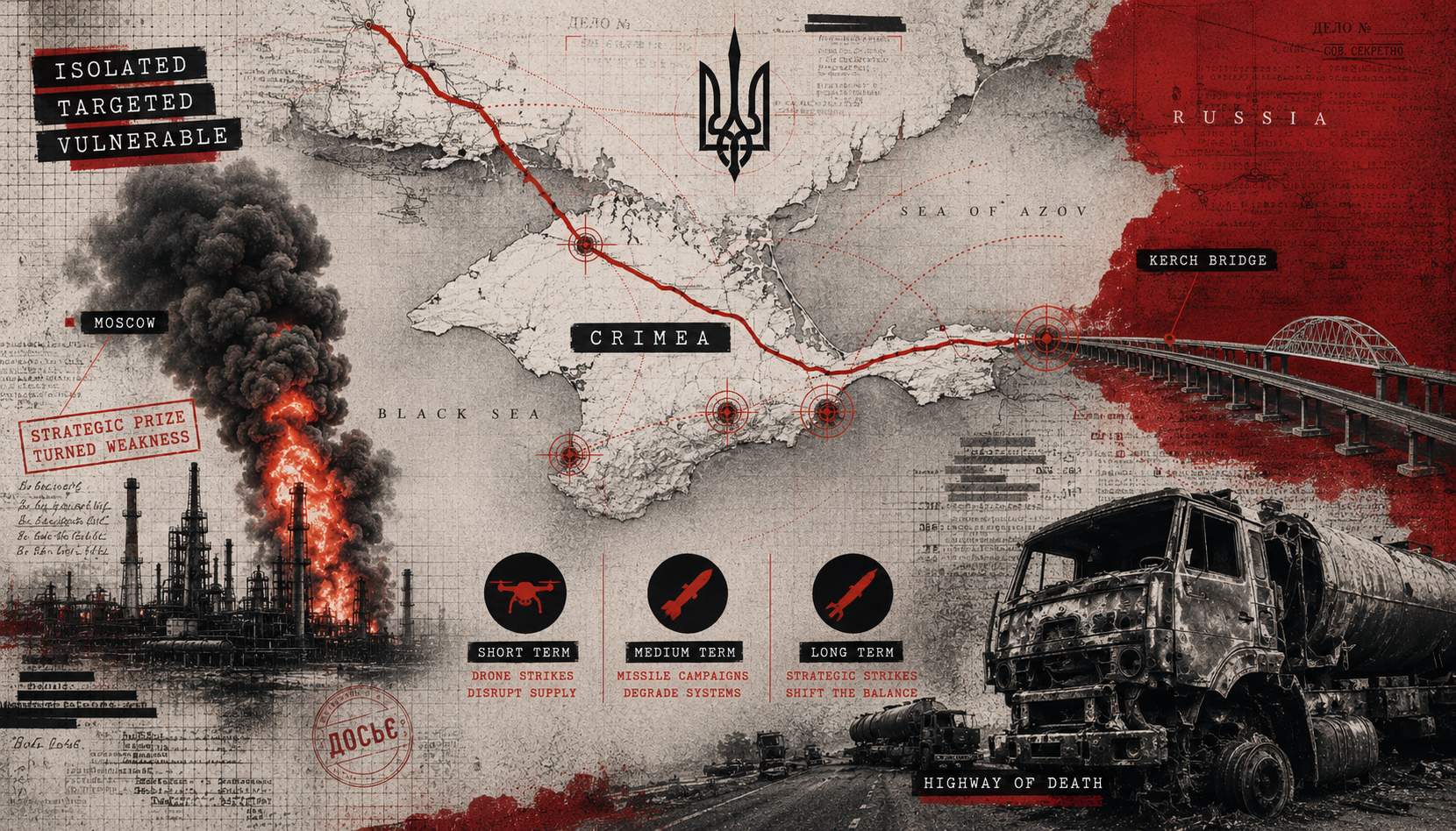

Read our Monthly Magazine
And support our mission to provide fearless stories about and outside the media system
For most of the past four months, the war with Iran has shifted attention away from Ukraine. Conventional wisdom has long held that the Ukrainian conflict is at best a stalemate, and at worst a situation where Russia can simply grind Ukraine down over time with “meat wave” tactics that rely on superior numbers.
However, several months ago, the balance of power shifted towards Ukraine because of their more numerous and higher-quality long-range drone, an advantage that was likely to start causing major problems for Russia…and now it is, in the worst ways possible for Vladimir Putin.
Over the past two months, Ukrainian long-range drones have been taking a fearful toll on the Russian petroleum industry, which accounts for roughly 20% of the country’s GDP. This came to a head in mid-June when Ukrainian drones severely damaged the Kapotnya oil refinery only 15 km from downtown Moscow in full view of an ethnic-Russian populace that had been carefully shielded from the realities of the war.
After years of wartime boom, the Russian economy is facing a recession. Despite high oil prices and easing of US sanctions, despite having been a “gas station masquerading as a country”, Russia has become a net importer of refined petroleum products.
As Russia throws itself at Konstantynivke, Russian front-line casualties have continued to remain high. They averaged roughly 1300 per day throughout the spring. Most are due to drones, with about two-thirds killed in action and one-third wounded.
These numbers are unsustainable for Russia; combat losses now consistently outpace recruiting replacements. They also eat significantly into the Russian defence budget, as recruiting and death bonuses constitute a major (and growing) portion of spending. There are now plausible rumours of another unpopular mass-mobilisation in the fall, after elections for the Duma are over.
Far behind the Russian front lines in Ukraine, medium-range drones are increasingly on the prowl for Russian military trucks, fuel tankers, and trains. Russian logistics are being significantly disrupted. Larger drones and munitions have also been targeting vital bridges that form the arteries linking Russia to occupied territories.
There had been speculation as to what the goal of Ukraine’s interdiction campaign was, and now it’s become clear: Ukraine’s targeting strategy makes it obvious that they intend to cut off Crimea, making it untenable for Russia to hold.
Ukraine has been systematically targeting air defences, electrical infrastructure, fuel supplies, fuel transportation, and Russian means of transporting fuel and goods into the Crimean Peninsula. There are only a few effective avenues to supply goods and fuel there, and Ukraine is making all of them largely impassable.
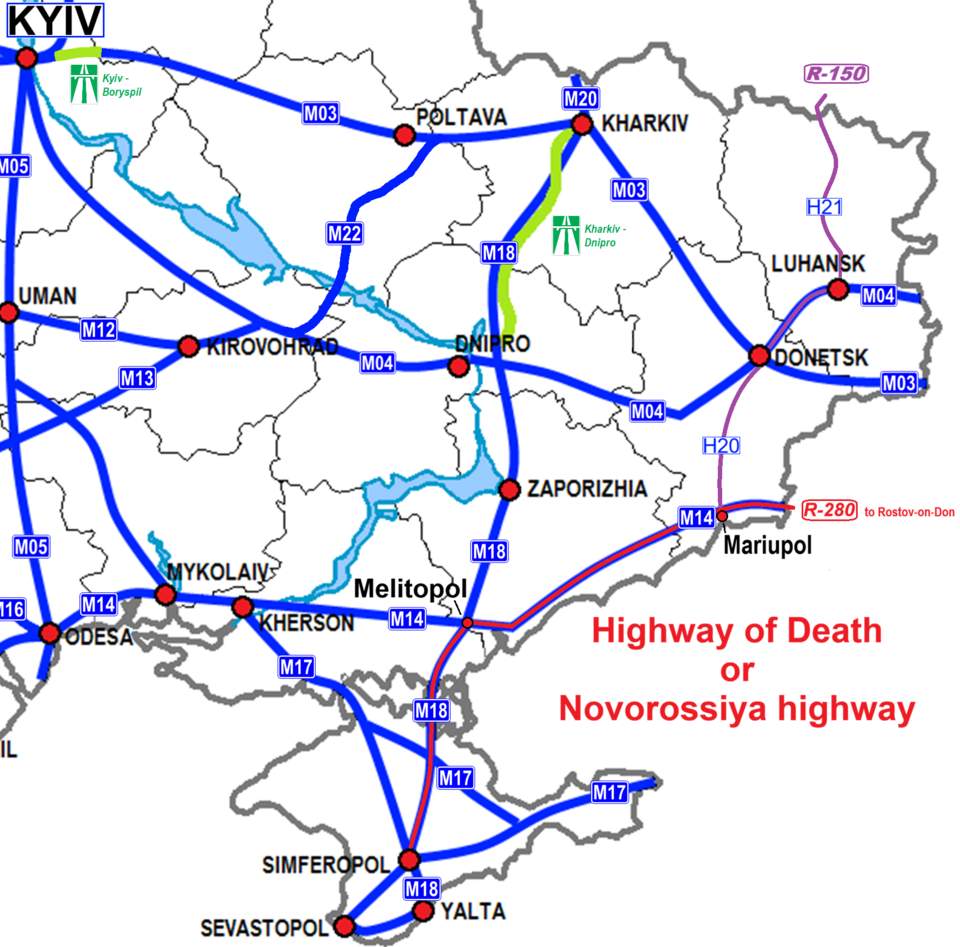
The R-280 highway connects Crimea to Rostov-on-Don in Russia through occupied Ukrainian territories (Mariupol and Melitopol), down into Crimea. The highway is under intense, round-the-clock Ukrainian drone and artillery fire, earning it the nickname as the ‘Highway of Death’ due to heavy damage to military logistics, fuel convoys, and civilian traffic.
Ukraine has destroyed the few rail and vehicle bridges to Crimea along the northern route, near the towns of Armiansk, Chonhar, and Henichesk along the M17 and M18 highways.
Crimea could be supported by sea, but that has also been cut off. Ukrainian air and naval drones have turned any attempt to enter or leave ports in Crimea into a virtual suicide run, and the Russian navy has pulled all the way back to Novorossiysk in Russia. Additionally, Ukrainian drones have now disabled the last of the ferries long used by Russia to move large vehicles across the Kerch Strait.
Moreover, Ukraine has been destroying the bridges across the North Crimean Canal. After Russia destroyed the Kahovka Dam in 2023, crossing this waterway without using bridges is well-nigh impossible. This adds to Russia’s logistic misery, making resupply of units west of the canal and south of Kherson very difficult. There is already evidence of this working: Russian units have withdrawn from untenable positions on the Kinburn Spit.
Crimea is now effectively cut off, and the severely degraded Russian air defences leave it open to further attacks.
Prior to declaring a state of emergency on Friday, Russian authorities had alreadt implemented a curfew and banned civilians from purchasing gasoline. Most of the peninsula is experiencing electrical blackouts, brownouts, or rationing.
Water, already scarce after Russia destroyed the Kakhovka Dam and dried up the North Crimea Canal, is now being actively rationed after electricity power well-pumps were knocked out.
This has led to Russian civilians fleeing Crimea via the Kerch bridge. This bridge was truck-bombed by the Security Service of Ukraine in 2022 and can only handle light vehicle traffic, with trucks and trains prohibited from crossing the partially-repaired span.
Satellites show 10 km-long traffic jams as people wait to be allowed onto the bridge. With Russian air defences depleted, Ukraine has been warning Russian civilians to leave before they bring the bridge down again.
Russia was faced with a similar logistical nightmare in 2022, in Kherson on the right (northern) bank of the Dnieper River. They chose to withdraw south, blowing up the Kakhovka dam behind them. But now, retreating to a more advantageous position in this case is no longer an option.
First, taking Crimea was the entire strategic point of invading Ukraine all the way back in 2014. Since then, it has been used as “The Russian Riviera” where wealthy ethnic Russians go to spend their summer holidays. It is the crown jewel of the Russian occupation: Crimea holds deep strategic and symbolic value for Russia.
Similarly, Russia cannot give up its positions along the left side of the Dnieper River either. The river forms a natural barrier to advance by either side.
Since 2022, the river has mostly been a barrier keeping Russia out of the Kherson Oblast. Today, with logistics under severe pressure on the Russian side, it is increasingly a barrier keeping Ukrainians out instead. In short, Russian defences are built around the river, and it’s usually a bad idea to abandon your defensive strong-points without a fight.
Ukraine isn’t left with great options either, however. Simply trying to starve Russian occupiers of fuel, food, and water until they leave almost certainly won’t work, given the value of Crimea.
The sieges of Stalingrad and Leningrad (Saint Petersburg) in World War II also demonstrate how willing Russians have traditionally been to absorb “pain points” to hold ground they deem valuable, even if it’s just symbolic. Ukraine also cannot count on maintaining this state of drone superiority for more than a few more months, given the rate of Russian innovation, adaptation, and the looming mass mobilisation.
Mounting an assault across the river into heavily fortified Russian positions is almost certainly a bridge too far, even with Russian troops weakened by months of logistic isolation. Going around the river and fortifications for some sort of amphibious raid or assault is a possibility, but it is extremely daunting. Amphibious attacks can be interdicted at sea, are technically challenging tactically, and keeping them supplied is daunting even for the U.S. military.
Ukraine lacks the ability to move large numbers of troops and supplies over water from the Mykolaiv Oblast, unsupported light infantry is extremely vulnerable to counter-attack by heavier forces, and the whole attempt could easily turn into a Bay of Pigs Invasion fiasco very quickly.
Ukraine has been adamant that it will take back Crimea since the war began, repeating it even when things looked bleak overall. Given all of the factors enumerated above, Ukraine likely believes it has a window of opportunity in the coming months.
Given the importance of Crimea to Russia, and the possibility of ending the war with a strategic victory, I believe it is not a matter of “if” they try to exploit it, it is a question of “how” and “when”.