
 Subscriptions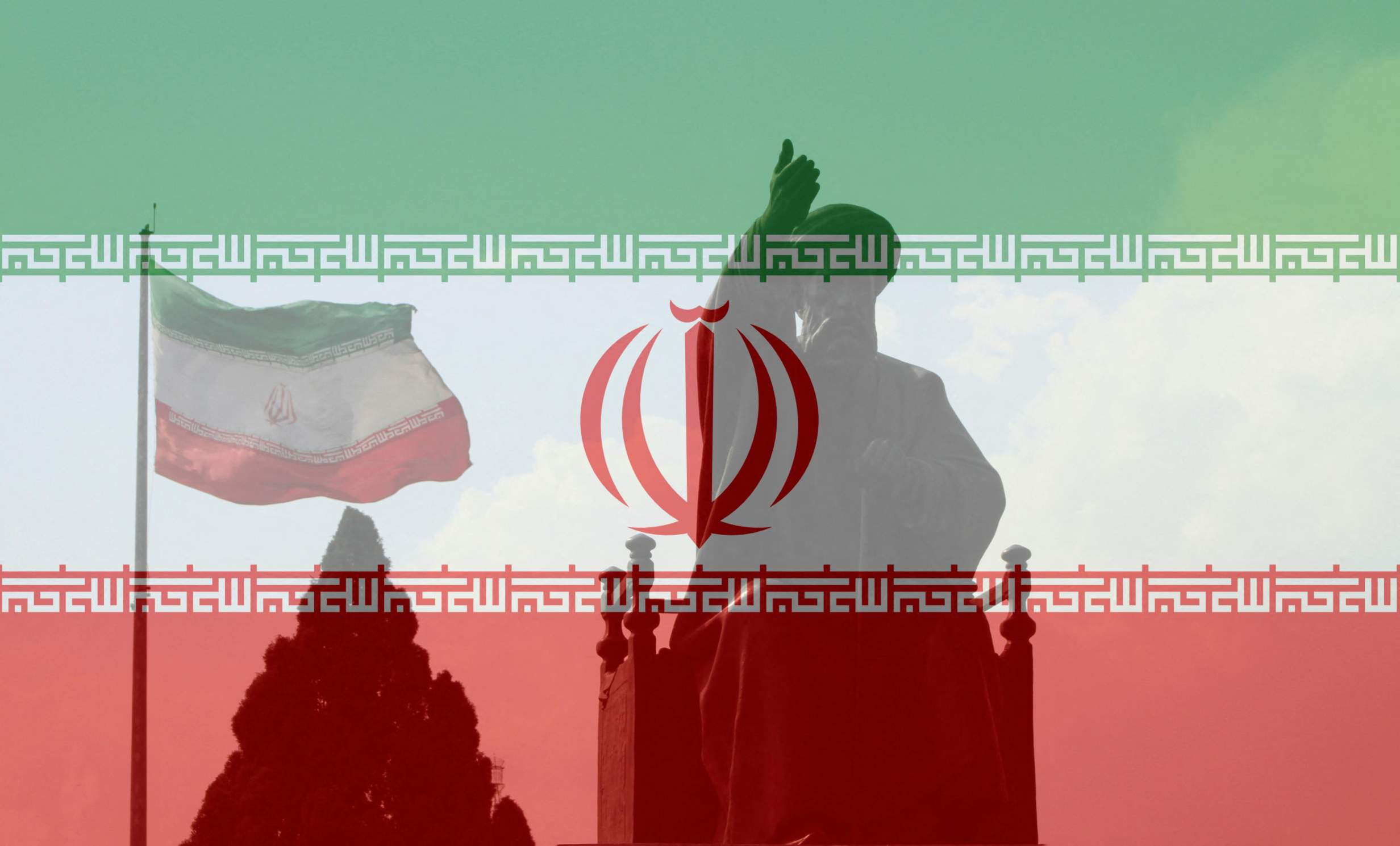
Read our Monthly Magazine
And support our mission to provide fearless stories about and outside the media system
In January 2026, things looked exceedingly grim for the Iranian Government. After a decade of US sanctions, its economy was in a perpetual state of collapse. It had high inflation, high unemployment, and no way to get back on top of the problem. Years of drought and water mismanagement were threatening not just its agricultural industry, but literally its ability to provide its citizens with water to drink.
The citizens, for their part, were fed up to the point of staging mass demonstrations. This led the Government to kill thousands of its own people to retain its hold on power.
Then the Islamic Republic of Iran’s Government was single-handedly saved by the United States under President Donald Trump.
Trump led off by killing its sclerotic clerical leadership, which paved the way for the Iranian Revolutionary Guard Corps (IRGC) to take full control. The public that had been screaming for revolution largely rallied around the Iranian flag as US bombs fell. Iran’s new leaders responded by flexing their military muscle, sending waves of drones and ballistic missiles against nations across the Middle East and shutting down the Strait of Hormuz, the shipping chokepoint through which around a fifth of the world’s seaborne oil passes.
The new Iranian Government hunkered down and fought a war it had spent years planning and preparing for. American stockpiles of interceptors and cruise missiles proved insufficient to defeat it, or even to protect America’s allies. Iran absorbed the best punch the Americans could throw, and emerged with a peace deal that guarantees it will rule over its people with an iron fist for the foreseeable future.
A War Of Choice
During the course of the conflict, it also learned that it could withstand whatever the US could throw at it. Iran was able to close the strait down, and the US was unable to open it. The US administration was not willing to take the steps to win the war it had started: deploying ground troops, using nuclear electromagnetic pulse (EMP) weapons, or destroying water and electrical infrastructure.
Because of this, Iran was able to threaten its Gulf state neighbours with the destruction of their own desalination plants, energy production and petroleum products. It worked; no one was willing to take the risk of joining the US against Iran, and the US itself was unwilling to strike Iranian critical infrastructure.
In other words, the US was a bully, but it was not willing to fight to the death – and Iran was. It was a war of choice for the US, and a war of survival for the Iranian regime. American politicians had not learned the lesson from Ender’s Game about how to fight strategically: “Knocking him down won the first fight. I wanted to win all the next ones, too.”
Iran also learned what every other US adversary has discovered in the past: the US will only fight for as long as it does not hurt the chances of the incumbent party in the next election. When US politicians think a war is hurting their chances, and the public loses the will to fight, US leadership will declare victory and go home. This happened in Vietnam in 1973, in Afghanistan in 2020–2021, and now with Iran. Americans, with their gas-guzzling vehicles, get tetchy when gas prices rise above $3 a gallon, and with the strait closed for months they were set to keep climbing at least through November. It rapidly became clear that US leadership had no idea how to get out of the mess it had made, and that it wanted – nay, needed – a peace deal far more than Iran did.
ENJOYING THIS ARTICLE? HELP US TO PRODUCE MORE
Receive the monthly Byline Times newspaper and help to support fearless, independent journalism that breaks stories, shapes the agenda and holds power to account.
We’re not funded by a billionaire oligarch or an offshore hedge-fund. We rely on our readers to fund our journalism. If you like what we do, please subscribe.
A One-Sided Deal
All Iranian leadership had to do was stick to its maximalist demands and wait. It worked, beyond its wildest dreams of avarice. The US achieved none of its major goals, while Iran achieved virtually everything it had demanded since day one. The highly ambiguous wording of the Islamabad Memorandum of Understanding (MOU) favours Iran at every turn, and every one of its 14 points can be exploited for long-term advantage.
The agreement commits the US to reining in Israel, but says nothing about Iran ceasing to support proxies such as the Houthis in Yemen or the Shia militias in Iraq. It requires the US never to attack Iranian soil. It commits the US to lifting the blockade and removing forces from the “surrounding areas” – wording so ambiguous it could mean leaving the entire Middle East. At the same time, it places no requirement on Iran to reduce its stockpile of missiles and drones.
Economically, Iran is being showered with manna from heaven. It will receive up to $24 billion in frozen Iranian assets, conditional on compliance, and is promised at least $300 billion more in “reconstruction” funds. The MOU leaves it effectively in charge of the strait in perpetuity, and allows it to charge whatever fees or tolls it wants for passage either in or out. A $2 million toll on ships is another $14 billion a year. It removes the sanctions that had crippled the Iranian economy, while allowing Iran to sell all the oil it wants. After months of selling oil via covert means and stockpiling the rest, Iran is about to deluge an oil-starved world in a sea of black gold. What is coming is nothing short of economic salvation, delivered by the US on a platter.
The one thing Iran supposedly gave up was the pursuit of nuclear weapons, which it was not doing in the first place. Having won this war, it has even less need of them. It is rather like promising to give up skydiving when you have never been on a plane, never intended to board one, and someone is now promising you $325 billion not to do it in future.

All US Options for Ending the Iran War Are Terrible, Warns US Defence Analyst
Every realistic path to reopening the Strait of Hormuz and ending the war in Iran would be catastrophic, argues Brynn Tannehill.
Locked In
The deadline for the peace deal can be renegotiated, and Iran will keep kicking issues such as the fate of its nuclear material into the long grass indefinitely. Should the US object to anything it does, Iran has the option of shutting down the strait again. It also knows that the US is unwilling to take the next step required to win – eradicating Iran, which the US could do with EMP and strikes on water infrastructure – making any American threat entirely hollow.
The US knows all of this too, and the odds of it resuming bombing are essentially zero. The agreement also locks the US into obtaining UN approval to withdraw, which Russia and China will never allow for as long as the deal is making the US suffer. Future administrations will not be able to back out of it as Trump backed out of the 2015 nuclear deal, the Joint Comprehensive Plan of Action (JCPOA).
In turn, Iran will make the lives of American negotiators hell over the coming months. Everything will be up for debate, and nothing stays agreed or finalised any longer than Iran needs it to be. If the US objects to anything whatsoever, the MOU is so vaguely worded that Iran can claim the US is already in violation of it – why are your ships still in the Gulf? – and threaten to close the strait again until it is satisfied the US is complying.
Whether Iran believes anything it says is beside the point: everything from here will be about exploiting the leverage it holds. It knows where it stands, it knows where the US stands and, as it has decisively proved, it “has all the cards”, to borrow one of Trump’s favourite phrases. Trump is not willing to fight a war to win it. He, and the US as a whole, will accept abject humiliation to avoid further conflict.
Don’t miss a story
What Comes Next
With money pouring in, national honour upheld and the IRGC in full control, any public opposition to the Government will either dissolve or be effectively put down. The danger of the Government being overthrown has passed, and there is no foreseeable future in which it returns.
The trillion-dollar question, literally, is this: what will Iran do with the windfall? Much of it will be siphoned off in graft, corruption and self-dealing. But if the IRGC is not completely stupid, it will use some of it to address the water infrastructure problems that previously threatened the regime’s survival. It will prop up public support with subsidies and low-paid jobs that keep people employed and too occupied to plot revolution.
A great deal of the money the US gives Iran will go towards building up the military capabilities it knows will work: drones, mines, ballistic missiles and small explosive-laden boats. Iran knows the limits of US capability to find and destroy these weapons, and will use that knowledge to disperse and protect the assets that let it repeat the strategy: close the strait and threaten Gulf states with massive, unstoppable economic – and worse – ruin should they target desalination and petroleum infrastructure. The future of the Iranian military lies in the weapons of an extortion empire: the mob running a gas station.
Other than Iran, the biggest winners are Hamas, Hezbollah and the Houthis. They will receive much of the largesse, on the condition that it is used against Israel to drive a deeper wedge between Israel and the US. Well-funded and well-equipped Iranian proxies will launch attacks; Israel will want to respond; and Iran will declare that Israeli action against its proxies violates the MOU, allowing it to close the strait again.
If Israel responds without US permission, Iran has only to close the strait for a few days to persuade the US to yank Israel’s choke chain. After several rounds, taking Iran’s side will become an automatic reflex for the US. It is hard to see how US relations with Israel can survive this MOU, which is set to alter the balance of power in the Middle East in Iran’s favour for decades.
Had the US left sanctions in place and waited for the Iranian Government to collapse under the weight of its own mismanagement of water, a successful revolution would likely have taken place within three to five years. Instead, the US declared war and saved the Iranian regime, ensuring that it will dominate the region for many decades to come.
If I were Iran, I would send Trump a gift basket. Build statues of him. After all, they are probably happy to praise a useful idiot who turned out to be their unwitting saviour.