
 Subscriptions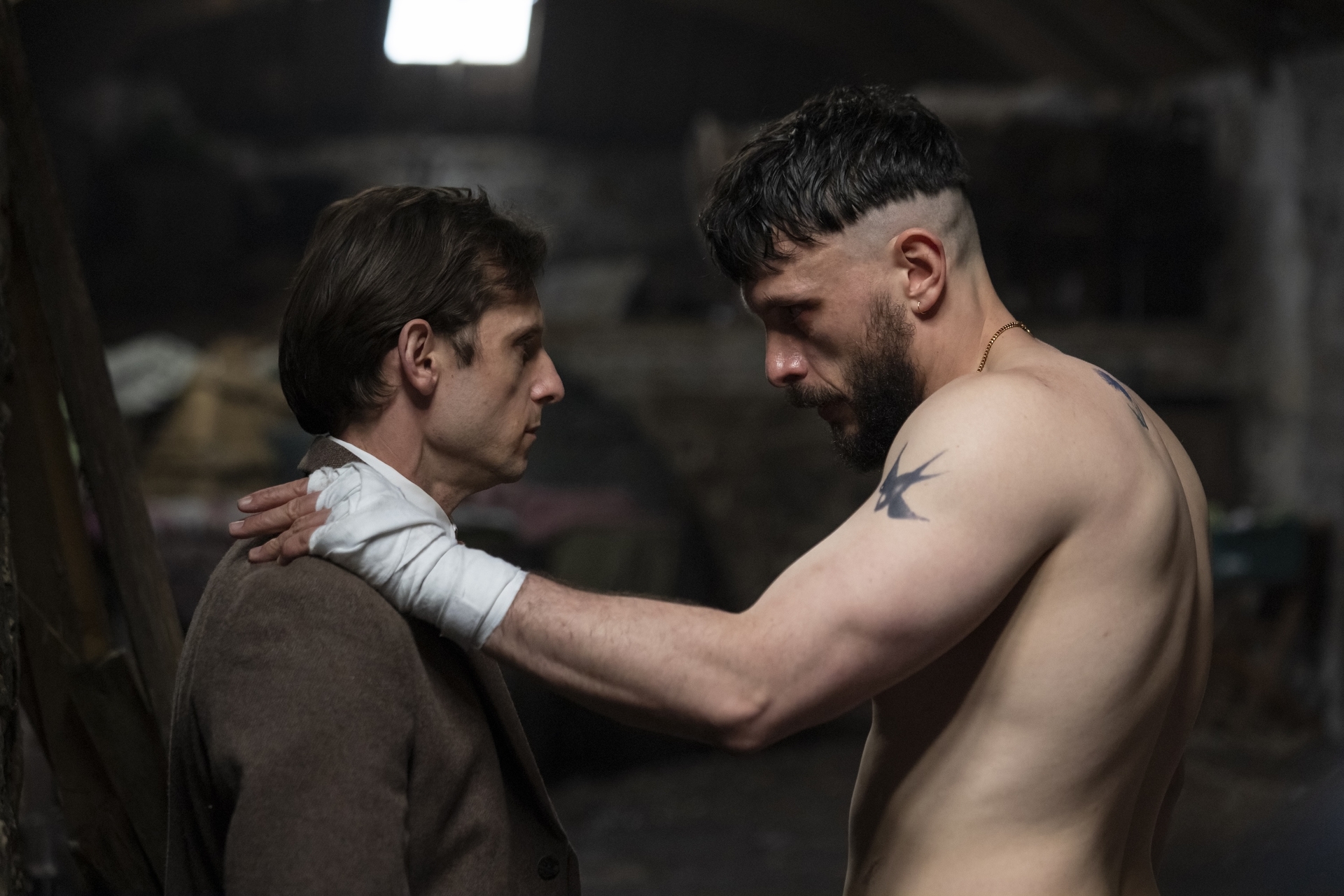
Read our Monthly Magazine
And support our mission to provide fearless stories about and outside the media system
EDITORIAL NOTE:
This interview contains discussion of male sexual abuse and trauma
HM: Where do you think society is now at with the conversation on men and masculinity – both in terms of misogyny and violence against women and girls; and understanding vulnerability and abuse as it relates to men and boys?
DC: It feels like we are at the beginning of the end of an intense, acute, response to some horrific news reports, experiences, and events of male violence against women and girls – the acute response was ‘toxic masculinity’, and it was the wrong conversation. Now, finally, even some politicians who were using ‘toxic masculinity’ are saying ‘actually, we need to stop that’ – because it has been a baton that has been used to beat young men with. We’re now thinking more about toxic gender norms – I’ve been saying for donkey’s years that that’s where we should be at – because we have to think about the whole gender spectrum.
We’re beginning to get a better, much more nuanced, understanding. We’re beginning to understand that behaviour is toxic and that we need to put responsibility and accountability on individuals, and that ‘yes, it’s not all men’ – but it definitely has been [in the vast majority of cases] all women as victims. Even the term ‘victim’ has had an evolved understanding: that the woman who is raped has an experience, but so does the woman walking down the street who is wolf-whistled at. We have to recognise all experiences – and that has finally led us on to thinking about men as victims.
What happened at the beginning was such an important reaction to Wayne Couzens murdering Sarah Everard. It’s really important that we acknowledge that. Of course it was a tragic loss of a life, but I get a bit annoyed when I hear people talking about it as a ‘tragedy’ – only because, to be really clear, it wasn’t an accident: this was a serving police officer, a man who was toxic, and he raped and murdered a woman abusing his status as a way of getting her. That’s horrific. The conversation [following that] started off in a more 3D, 4D form when it came to understanding women as victims – but it was very two-dimensional about men as perpetrators, and it [developed into the narrative] of ‘all men’.
I understand why it happened. I’m just really glad we’re now thinking about females as victims in a really 3D, 4D way; but we’re also beginning to think about men as victims in a 3D, 4D way; and because we’re doing that, we’re beginning to think about men as perpetrators in a 3D, 4D way – rather than this binary, 2D, ‘good and bad’ [analysis]. That’s really useful because, if we can continue that, we can get a better understanding of why those selective men have caused that much harm, and maybe if we get right underneath it, we can prevent it happening again to other people.
December 2025 saw the launch of the new Tackling Violence Against Women and Girls strategy, and a strategy – although not in name – about how we think about men and boys. It has a terrible title, it’s called an ‘Explanatory Note’ – I told the Government that you might as well have written ‘afterthought’ on it – but the actual content of that document is the start of something really good.
With the success of shows like last year’s Netflix hit Adolescence, this is an issue that seems to have begun a cultural – as well as a political and criminal justice – conversation…
I do think it’s a cultural conversation. Also, the very fact that we now have community leaders from different ethnic minorities having conversations about ‘us too’ – it’s not just a ‘white man thing’, it’s the ‘black man thing’, and the ‘South Asian man thing’, it’s the ‘Buddhist man thing’, it’s the ‘gay man thing’… That’s what I mean about our understanding being ‘3D’. It feels like, because all the sub-sections of men are laying down their arms [and speaking more openly about the male experience and masculinity], it’s giving the world a little bit of a better opportunity to just talk.
There’s also the sub-section of men who are not laying down their arms, the Andrew Tates of this world, the manosphere-types, HSTikkyTokky… the harm that has been caused, particularly by those manosphere men, who have really targeted disenfranchised, vulnerable young people to say ‘this is how you are a man’. Those vulnerable young men do not understand that they’re caricatures, these people, they’re pantomime villains – and I think the rest of us who have laid down our arms are now the majority. And that’s made that tiny minority of silly manosphere men look ridiculous, which lowers the temperature for women, LGBT people, communities of identity, for ethnic minorities. I’m delighted that they’re a tiny minority that are now being seen for who they are.
I volunteer at death and grief cafes where strangers come together to speak about their feelings around death, dying, and bereavement, and it has struck me how many of the male attendees still talk about the societal expectation of ‘the British stiff upper lip’ or how they are told to ‘just man up’ and ‘be strong’. To what extent is vulnerability a part of the masculinity conversation now? It still seems to be a relatively novel concept to be talking about openly, which is strange as the human condition is essentially one of vulnerability: to hurt, to pain, to death – but also all the joys life has to offer when we can let our guard down in a safe way…
I would argue that, yes, men are still saying those things, but they don’t believe them anymore. I don’t think they do believe them – we just haven’t yet developed our conversational language to be able to talk about it [more widely]. But there’s the advent of so many more men’s talking groups. Men are really beginning to recognise the disproportionate number of men who die by suicide – 104 men die by suicide every week in the UK; a decade ago that number was 84 a week, so we’re getting worse not better. You walk past building sites now and, whilst you’ve got all the [safety regulations on display] for the brickies, electricians, and labourers, there’s also something about mental health which says ‘men that work on building sites are four times more likely to die by suicide than the national average’. It’s so much more of a conversation. I think vulnerability is a part of masculinity now.
I was watching the TheTinMen Podcast [‘Are We Living In a Patriarchy?’] recently and Jordan Stephens, one half of hip hop duo Rizzle Kicks, was on it as a guest, who has spoken a lot about masculinity. He said something which I found interesting – that we’ve had first wave, second wave, third wave, fourth wave feminism, whereas ‘masculism’ has just been flat, it’s just been ‘this is how you are as a man, and if you don’t meet that then you’re not a man’. I don’t think we have fully got there to answer that question of ‘what is a man?’ – but we know what it isn’t: it isn’t about ‘stiff upper life’, it isn’t ‘pull your socks up’, it isn’t this alpha thing. We know that it is about vulnerability, connectivity, about not having to be the binary hunter-gatherer. Thankfully, we’re into conversations now about paternity leave and paternity pay.
The actress and activist Jameela Jamil has said that we should be ‘calling men up’ instead of ‘calling them out’ to dismantle the patriarchy and toxic elements of masculinity in a more empathetic way because, ultimately, we are all victims of it. So that more nuanced, open, approach is developing…
Absolutely. Men have to be invited. One of the pieces of work I always ask my team to do is to give their clients permission to speak about the thing that they have carried for in excess, on average, of 20 years – because they might not know they can do that as we haven’t conditioned men to do that. We’re getting much better at it, but we are dealing so often in my service with men who haven’t spoken out as they just didn’t know they were able to. One of the statements that’s always stuck with me from my work with male survivors was an answer to the question: why did you stay silent for so long? One of them said: “if you don’t have the language to speak, sometimes silence seems the only option”. It is one of the most profound things anyone has ever said to me.
The danger of the blanket ‘all men are bad’ is that men haven’t necessarily – and this is a bit of a sweeping statement – in society evolved the language yet and therefore the ability to push back on that conversation and that label and that behaviour in a narrative way. So we keep pushing them into corners and I think there’s an element of that cornered animal then biting. It’s something about the human condition – if you tell someone they’re bad enough times, let’s not be surprised when they are bad. If we tell someone enough times that their behaviour is bad and we don’t help them change it, let’s not be surprised when they lash out. It’s not okay to lash out, of course it’s not, but what do we expect?
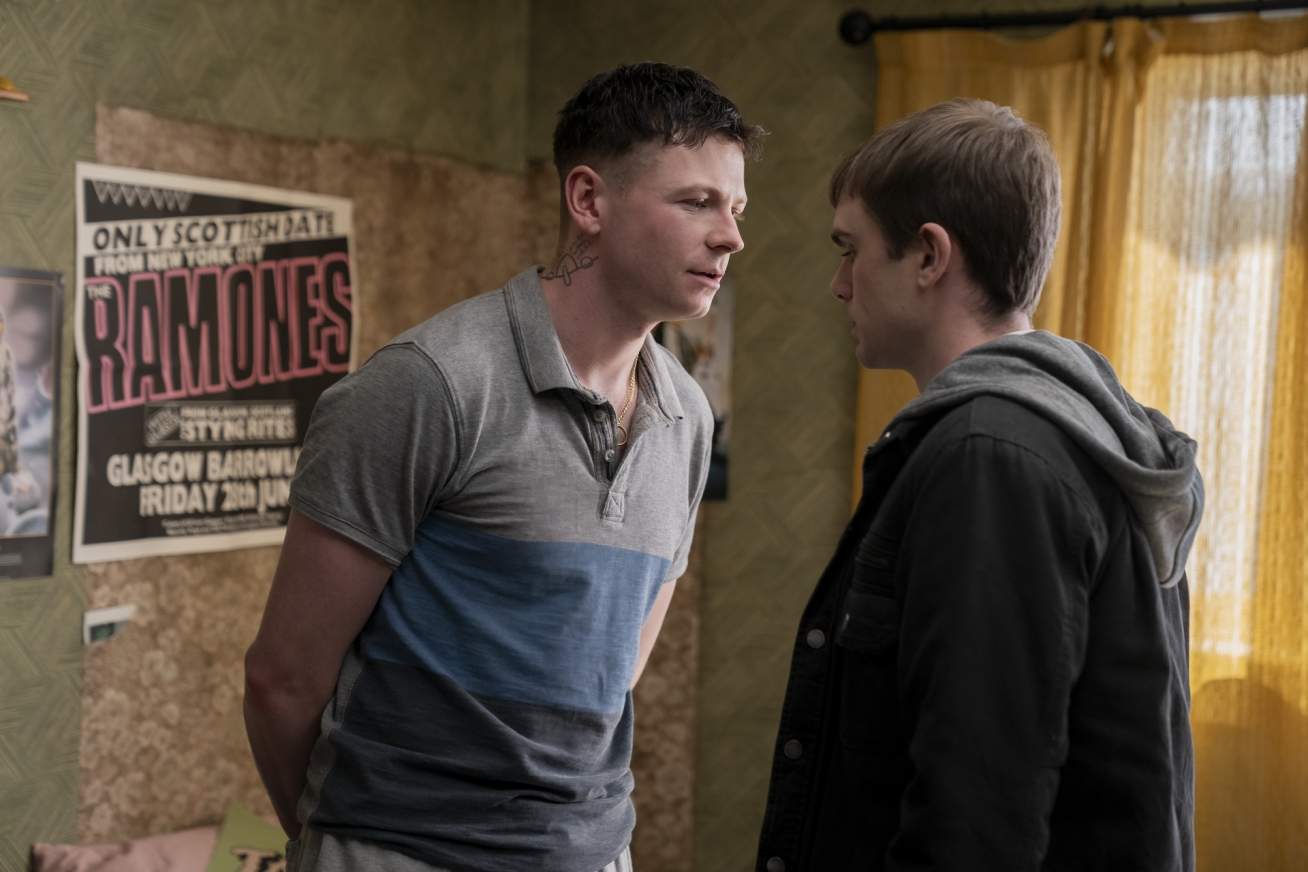
Richard Gadd, who wrote and starred in the critically acclaimed 2024 Netflix hit Baby Reindeer, is an ambassador for We Are Survivors. When we’re considering men in public life today who embody a notion of masculinity which is vulnerable, nuanced, very human and deep, and very male as well, he seems to be a striking example of it. His new series, Half Man, is very thought-provoking in a similar but different way to Baby Reindeer. It follows the trajectory of two “brothers from another lover” coming of age in 1980s Glasgow, Niall Kennedy and Ruben Pallister, in a fascinating story exploring men’s relationships with each other, and how trauma and questions of coming to terms with oneself, and the inability to do this, plays out through their unhealthy but compelling dynamic.
Richard Gadd has said previously that, for something to be toxic, it is often intoxicating – and the series explores how this difficult dependency between Niall and Ruben evolves in their younger years and as they get older. We don’t often see this on the screen – we tend to see men and masculinity explored in relation to the impact on women, and rightly so, but not in relation to what it does to men. What struck you about the series?
Richard is one of the best and beautiful examples of using your lived experience, your knowledge and awareness, what you feel, what you think, just the authenticity – not the cleaned-up version, just the messiness of authenticity – to make art that is really showing that.
Baby Reindeer is very different from Half Man, but there’s also a similarity in that it is telling these 3D, 4D stories of men and relationships. Half Man is astounding. It’s showing the relationship between these two brothers and what’s really interesting is that they’re not blood brothers, but chosen family. It’s a love story. These two men have fallen in love with each other – and, whenever I say that, people automatically jump to something sexual, but why can’t we think about this in a bigger sense? Niall and Ruben are pulled together and, like a big bang, there’s this explosion and a fusion happens, and at that point, they become inseparable. I think they are two sides of the same coin.
I saw it originally back in October 2025 in the edit suite and I remember then, as I did when I watched it on telly now, I kept flitting between Niall and Ruben – one minute I hated Niall and I loved Ruben; the next I hated Ruben and I loved Niall; the next minute I didn’t even know where I was at. That’s the messiness, and that’s what Richard does so authentically well because, in real life, sometimes I love people and sometimes I hate them, and whatever’s in between as well.
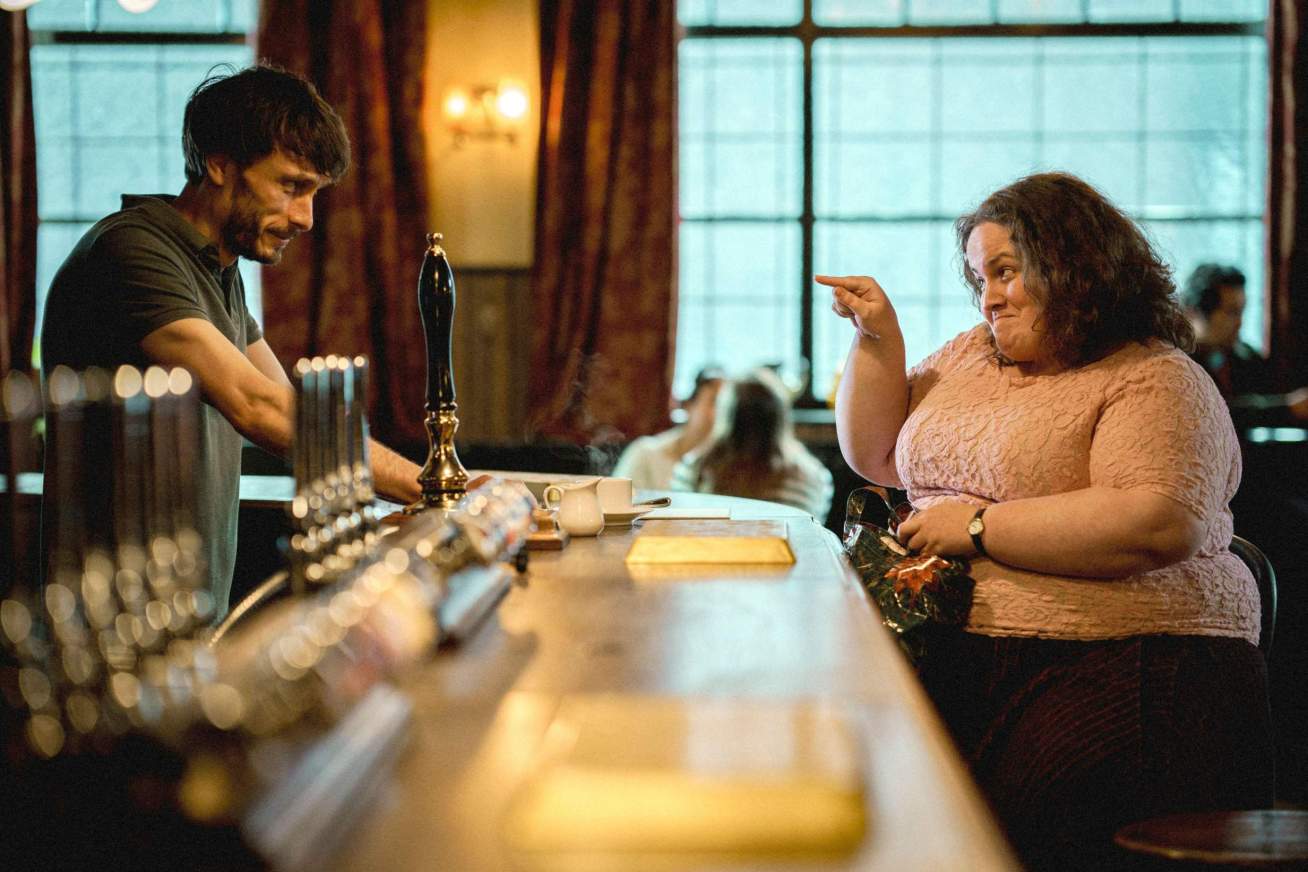
As with the character of Donny Dunn in Baby Reindeer, Half Man tells a more complex story about trauma and victimisation: that people can absolutely objectively experience this in life-altering ways, but that they can also have forces within themselves that can contribute to their situations; internalised notions and core beliefs about us that we carry around to begin with without giving voice to them. In the series, Niall is given opportunities to transform his life that he can’t step up to – he’s always doubting and questioning himself, in a way that Ruben doesn’t struggle with at all. But for Ruben, his lack of self-worth finds its form in uncontrolled violence and a simmering rage that’s ever-present.
I think what Richard is so good at is writing about shame. Presenting shame to us in all of its horribleness and impact. One of the really powerful parts of the series is the episode when Niall finds out that Ruben hasn’t got a job anymore – he doesn’t spell it out like this, but the shame that Ruben is feeling about not being able to be the provider is so toxic. Likewise, when Niall tells Ruben that he’s gay. The [covert and risky] sex that Niall is having is sex that is wrapped up in shame. The impact of shame is written all the way through it.
Another significant moment is when Ruben tells Niall that he was sexually abused by someone in a position of trust who he knew and says, in some ways, it’s the closest he has ever been to a person and that his body would react to it. I found the depiction of the confusing emotions of pain, connection, love, and abuse, all sitting together inside Ruben, and the effect that has on someone, to be profound. Trauma is such a complicated thing.
Whenever I’ve seen elements of the experience of confusion of the actuality of physical touch and automatic response [in one’s body] in film, it’s on the big screen – so it often feels a bit taken away from real life. [In Half Man], I’m hearing accents I’m very familiar with, I know it’s based on this island, in Scotland. It’s dirt under your fingernails, it’s not polished Hollywood manicure. It’s articulating what so many survivors have never really been able to articulate.
For the past 12 years, on a regular basis, I’ve run a training class for police officers and, as part of it, I have always done a tongue-in-cheek [depiction] of automotive responses to touch. Without a shadow of a doubt, some of them will always say, ‘I never thought about or realised that before’. It gets them thinking about how often the perpetrator of sexual abuse will tell their victim ‘see, you must like it because look’. There’s no getting away from the fact that we all have this belief, from teenage – because we don’t do sex and relationships education properly – this binary way of thinking that an erection equals pleasure, that I must like the person and that’s why it’s happened. What Ruben in Half Man articulates is just something we have never been able to articulate before.
The psychology of the impact of trauma is beginning to be more widely understood now, with more survivors coming forward in many different realms of life and society: the understanding that it really does have a long-lasting, complex impact on people’s lives and the reality of how psychologically difficult it can be to have to live, and come to terms, with such contradictory and conflicting thoughts, feelings, and behaviours…
Completely. I’ve been an out survivor for 20 years, and I remember saying back then to my therapist that it feels like these experiences have infected every cell in my body. Over the years, I’ve thought ‘that was a bit dramatic Duncan’, and actually now, in a much more mature way and with 20 years of experience and nearly 18 years since we founded We Are Survivors, I understand that, yes, that was true – it is the infection of every cell. But now I wouldn’t use the term ‘infection’, because it’s just presence in every cell – the impact [of abuse and trauma] is present in every cell. In some cells, it’s infected; in other cells, it’s just there; and in other cells, I am reducing the presence. ‘Infection’ feels like it has a hold over me. ‘Presence’ feels like it’s just there. ‘Infection’ gets to the harm of it. ‘Presence’ isn’t necessarily harmful, it just is.
You founded We Are Survivors – which provides therapeutic and advocacy support to male, trans, and non-binary victims of sexual abuse, rape, and sexual exploitation – in 2009. How has the organisation’s work developed?
We’re in our seventeenth year of being a registered organisation and we’re now the largest male survivors’ organisation in the UK. We see around 3,000 men every year. We are working in all 15 prisons across the north-west.
We are trying to respond to emerging threats – more people are asking for support, and people are in support for longer. On average now, the person who reports what happened to them to the police, even if it was 20 years ago, finds that the likelihood of them going to trial within the next few years is very slim – the likelihood of a trial in five years’ time is greater. The report to court has got longer, which means that people need support for longer, which means we’ve got to keep reconfiguring what we do. And that’s before we even begin to talk about new threats: online harms, sextortion, dating apps. I was reading a report by the Internet Watch Foundation, who we’re now doing some work with, which said that 98% of confirmed UK-based victims of sextortion cases seen by it involve male victims, which surprised me.
We have also got a service working with loved-ones – the mums, girlfriends, and wives of male survivors – because we’re thinking about it in a much more systemic way. It isn’t just him, it’s also who he lives with who is impacted by this, and it’s not just the direct emotional impact of you knowing as a wife that your husband’s been abused and what that must feel like, but also that might mean that he has problems with alcohol or drugs or has depression, and those things have an impact too.
The other thing we have started doing is the one that no one really wants to talk about – which is asking: what do we do about the small minority of survivors who have also sexually offended? As a society, we know what to do with sex offenders – we lock them up. We know what to do with victims – we give them support. But what about those who are the victim and perpetrator? In a criminal justice sense, what they have done is looked at, but ask victims’ services to deal with what happened to them, and often they see just what they did. I made a commitment that this organisation is going to ensure that no male survivor is left behind. Do these men forfeit their victimhood because of their perpetrator status? One of the men who I’d supported myself while he was in prison – not for sexual offences, but for serious violence – he said to me: ‘if we’re going to say no male survivor [is left behind], we’ve got to mean it’. He was right. And so the whole organisation, including our expert reference group, who are people with lived experience who advise me on thinking, we all said: we are not dealing with what he did, we are dealing with what happened to him.
For information and support about the issues raised in this interview, visit www.wearesurvivors.org.uk
‘Half Man’ is available to watch now on BBC iPlayer and HBO
Duncan Craig OBE is a survivor of sexual abuse, rape, and sexual exploitation. He is a psychotherapist, and Honorary Senior Research Fellow in the School of Criminology at the University of Manchester. He has worked extensively with the Government, NHS, Crown Prosecution Service, and police forces across the UK
Hardeep Matharu is the Editor in Chief of Byline Times