
 Subscriptions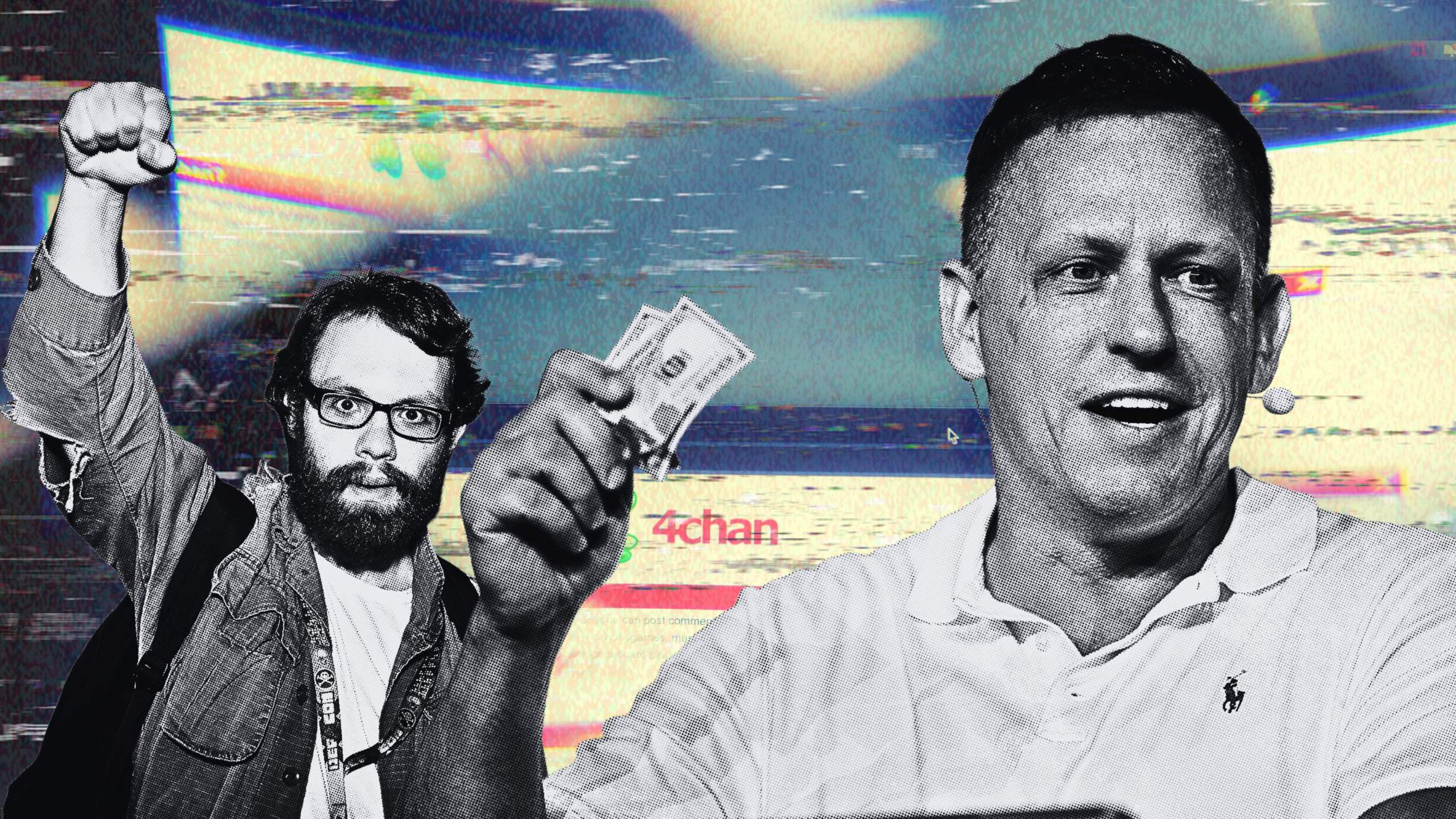

Read our Monthly Magazine
And support our mission to provide fearless stories about and outside the media system
General Michael Flynn, Trump’s former National Security advisor, boasted to the Young America Foundation soon after Trump’s first election victory in 2016, that the President’s campaign had been a quasi-military “insurgency” run by “digital soldiers”.
That same year the NATO Strategic Communications Centre of Excellence’s official journal StratCom, published a paper entitled ‘It’s Time to Embrace Memetic Warfare’.
Its author was Jeff Giesea, an investor and political operative, who had run companies on behalf of pro-Trump billionaire Peter Thiel, co-founder of defence surveillance giant Palantir and business partner of convicted sex offender Jeffrey Epstein.
At the time Giesea defined memetic warfare, a term he coined, as “a subset of information operations or psychological warfare tailored to social media”.
To illustrate its applications, he drew on the expertise of a co-contributor he described as “an annoying gadfly or guerrilla warrior, depending on one’s perspective”: far-right activist and disinformation operator Charles C. Johnson.
The paper proposed methods by which to undermine ISIS: “systematically lure and entrap” recruiters; subvert its messaging via “fake ‘sockpuppet’ accounts” – online personas manufactured to simulate grassroots support or opposition – and “expose and harass people” within its funding network, “including their family members”.
To the editors of the NATO journal, these may have appeared as novel strategic prescriptions. In fact, they had already appeared – in a different context entirely.
In 2011, hackers breached the servers of HBGary Federal, a private US intelligence contractor, and leaked internal documents revealing a proposed operation – developed with involvement from Thiel’s data company Palantir – to deploy near-identical tactics against trade unions, journalists and left-wing activists on American soil.
This reporter was among those who covered the breach at the time, and who first drew public attention to Palantir’s role in it — the beginning of more than a decade tracking the network this piece describes.
The proposal included fabricating fake online personas, planting false information, and running coordinated harassment campaigns to discredit targets. Palantir suspended the employees involved and issued an apology, but the documents had already established that this tactical repertoire existed, was operational, and ran through Thiel’s own firm.
Those tactics had been developed and deployed over years by a loose network of far-right organisations – funded, in part, by figures directly connected to Thiel.
That infrastructure centred on a cluster of white supremacist and hard-right online platforms – among them the neo-Nazi publication Daily Stormer — covertly funded, according to participants, by Giesea. The same platforms served as testing grounds for the harassment campaigns, disinformation operations and memetic tactics that Giesea would later present to a NATO-affiliated journal as a respectable strategic toolkit.
Connecting those platforms to Thiel’s wider network was a single figure: Andrew Auernheimer, a hacker and neo-Nazi provocateur known online as “Weev”. His ties to Thiel had been rumoured in leaked Epstein correspondence, but had never previously been corroborated. They can now be established — through Auernheimer’s own private statements and a decade of documented network activity — for the first time.
Auernheimer was, in effect, a bridge. He moved between the anarchic image-board subcultures of the early internet and organised white supremacist movements. He connected the PayPal and Palantir milieu around Thiel to the alt-right he helped create and harness. And he linked the first generation of online harassment operations to the contemporary influence networks that today increasingly shape mainstream political discourse.
ENJOYING THIS ARTICLE? HELP US TO PRODUCE MORE
Receive the monthly Byline Times newspaper and help to support fearless, independent journalism that breaks stories, shapes the agenda and holds power to account.
We’re not funded by a billionaire oligarch or an offshore hedge-fund. We rely on our readers to fund our journalism. If you like what we do, please subscribe.
Jeff Giesea, Charles Johnson
In Discord server logs – a messaging platform used widely by gaming and political communities – as first reported by journalist Luke O’Brien in his 2020 investigation into Thiel’s development of the alt-right, Auernheimer described Giesea as “a major investor providing help to racists”. O’ Brien reported that an online alias used by Giesea had encouraged donors to give money to white nationalist and neo-Nazi organizations.
Giesea initially denied this. When confronted with evidence of a $5,000 donation to the white supremacist organisation led by notorious neo-Nazi Richard Spencer, he replied: “No comment.”
Giesea’s financial support for the neo-Nazi platform Daily Stormer along with other associated projects run by Auernheimer and Johnson has since been claimed by other participants in those far-right networks.
One identified Epstein attorney Alan Dershowitz as another Epstein associate involved in the Giesea project during his producing role on Mike Cernovich’s 2016 documentary Silenced: Our War on Free Speech – a film featuring Auernheimer, Johnson and Milo Yiannopoulos.
Giesea denied the claims by participants in these neo-Nazi networks, telling Byline Times: “I have never supported Weev or the Daily Stormer. I have always found the Daily Stormer and its orbit vile and reprehensible.”
However, he confirmed that he had engaged with Aurnheimer. He said that this was limited to a single occasion: “My only interaction with Weev was a single, brief exchange while conducting research for a NATO paper on memetic warfare. At the time, I barely knew who he was, only that he was a notorious internet troll. I asked how he would approach trolling ISIS. That was the full extent of it. There was no funding, no relationship, and no alignment of any kind.”