
 Subscriptions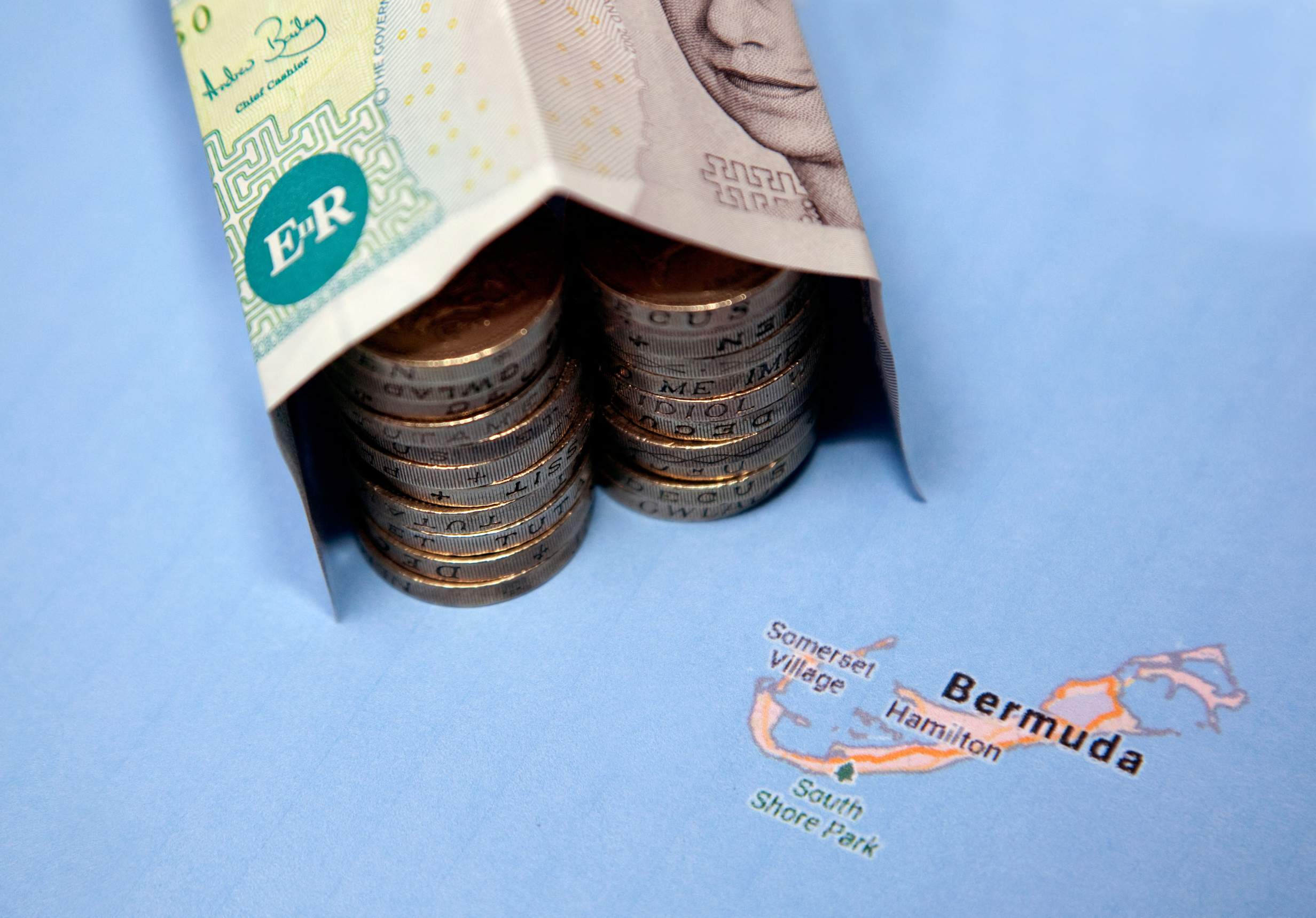

Read our Monthly Magazine
And support our mission to provide fearless stories about and outside the media system
As Trump’s war in Iran pushes European crude oil prices towards $150 a barrel for the first time ever, Byline Times can reveal how British territories are helping oil companies protect record profits from taxes around the world.
Shell and BP – the two British-based oil ‘supermajors’ – are predicted to see combined extra-profits because of the war of around £5 billion, while US oil companies can expect a $63 billion boost, and other companies throughout the industry will similarly benefit.
This investigation – co-published by Byline Times, the Abolish Westminster newsletter, and The Ecologist – reveals the extent to which Britain and its network of offshore territories are playing a central role in shielding those profits from tax collectors and regulators around the world.
Global Britain: Protecting Tax Abuse Worldwide
The Tax Justice Network ranks Britain itself as the 19th biggest enabler of corporate tax abuse in the world. The worst two jurisdictions, by the same rankings, are the British Virgin Islands and the Cayman Islands. Bermuda is fourth, Jersey is eighth, the Isle of Man 12th and Guernsey 13th.
These are all either British Overseas Territories or Crown Dependencies. In other words, seven of the top 20 facilitators of corporate tax evasion are British jurisdictions. Also in the top 20 are Singapore, Hong Kong, UAE, the Bahamas, Cyprus and Malta, all of which have complex historical and not-as-historical-as-you-might-think connections to the UK.
Many other British Overseas Territories – Anguilla, Turks and Caicos, and Gibraltar, for example – are relatively low on the list (32nd, 40th and 48th) only because their overall global role isn’t vast, while they still have their own niche as part of Britain’s network of offshore jurisdictions.
Together this network – including the UK itself – forms by far the world’s most important system of offshore spaces, and is responsible for a third of corporate tax abuse, according to the Tax Justice Network.

The Oil Lobby Is Using the Iran War to Revive North Sea Drilling but Official Data Shows It Won’t Cut Bills
Fossil fuel funded think tanks, petrostate-linked policy institutes and oil market insiders are all being presented as impartial observers by the media, reports Nafeez Ahmed
Shell Games
When considering the way the oil industry takes advantage of this network, the most obvious example in recent years is Shell. For more than a century, the company was known as Anglo-Dutch. Its full name, Royal Dutch Shell, wasn’t a reference to the House of Windsor, but to the House of Orange – the Netherlands’ royal family.
From 1917, its global headquarters had been in The Hague. But in 2022, it abandoned that history. The Shell Centre, on the south bank of the River Thames, became its International HQ. Now, it’s just Shell plc. And now, legally at least, it’s just ‘Anglo’.
Experts in both the Netherlands and the UK said that tax was a key reason Shell made its move.
Alison Schultz from the Tax Justice Network said: “It just makes perfect sense as a company. If you really want to dodge taxes, it makes sense to locate to the UK. Even coming from the Netherlands – which [also] allows you to pay little tax and to hide things.”
The main driver of Shell’s move, she said, was something called dividend withholding tax, a tax companies are charged directly whenever they pay out dividends. In the Netherlands, the rate of this tax is 15%. In Germany, it’s 26%.
“This is something most countries do,” said Schultz, “but in the UK, it is zero. Usually, this is based on where the HQ is. That’s what made it useful for Shell to move its HQ – now it is based in the UK, the UK is not taking any of these dividends as taxes.”
Vincent Kiezebrink, a researcher at the Dutch think tank SOMO who has looked closely at Shell’s affairs, also highlighted dividend withholding tax. Specifically, he says, Shell had stayed in the Netherlands over the previous years because the Dutch government had been planning on scrapping the tax.
This idea was met with a backlash from opposition parties, and was abandoned, leading Shell to relocate to the UK. Indeed, Ben van Beurden, who was Shell’s CEO at the time of the move, told the Cleaning Up podcast in 2025 that this was a major factor in his decision to make the shift.
As well as paying dividends out, Shell is also a major recipient of dividends – from its subsidiaries around the world. “Usually as an HQ – the global ultimate owner – you will receive dividends from some of your subsidiaries,” Schultz said.
Around the world, it’s common for these to be exempt from tax if, say, the HQ owns 100% of the shares in another company. But often a giant like Shell will have smaller toeholds in a lot of companies, and the rules around whether and how these are taxed vary by country. Britain’s rules, Schultz confirmed, are particularly generous to vast conglomerates when compared to those of other countries.
The detail of Britain’s tax regime for companies extracting North Sea oil is also complex, and again ultimately works to protect oil company profits above all else.
A report in 2020 calculated that, in 2016, oil production in the north German region of Schleswig-Holstein was around 2% of the UK’s, “but the region received $57 million from the companies, while the UK paid $322 million to the companies”.
The report calculated that the UK had missed out on £250 billion ($323 billion)in tax revenue over the previous 13 years because of this generosity towards the industry.
While headline tax rates have increased since the price spikes caused by Russia’s invasion of Ukraine in 2022, the underlying framework is still much more geared towards industry profits than in other countries.
“The UK is a major tax haven,” Schultz concluded.
ENJOYING THIS ARTICLE? HELP US TO PRODUCE MORE
Receive the monthly Byline Times newspaper and help to support fearless, independent journalism that breaks stories, shapes the agenda and holds power to account.
We’re not funded by a billionaire oligarch or an offshore hedge-fund. We rely on our readers to fund our journalism. If you like what we do, please subscribe.
Big Oil and Offshore Britain
Beyond the UK itself, British territories around the world also play a central role in helping oil companies preserve their soaring profits.
Shell’s latest annual report shows eight different companies listed in Bermuda – Britain’s longest-standing territory outside this archipelago, and its tax contribution report says it has £1.8 billion ($2.33 billion) in capital there.
In addition, The Shell Overseas Contributory Pension Fund, estimated to own assets worth around $5 billion, is registered on the island. Shell employs only three people there. Similarly, the conglomerate has seven companies registered in the Cayman Islands, also a British Overseas Territory.
This is, however, piddling, compared to the company’s use of the Bahamas. According to its own 2024 tax contribution report, Shell declared revenue of $33 billion in the tiny Caribbean country, which has no known oil or gas reserves. That’s 11% of its global revenue. The company employs just 45 people there.
The Bahamas has been an independent country since 1973, having become a tax haven while still a British colony; it remains part of the British offshore network. It retains important constitutional connections to the UK – including that Charles is its king, and legal appeals are, technically, to the king and, in practice, to the judicial committee of the Privy Council.
Gibraltar is a British Overseas Territory. In an interview with this reporter for his forthcoming book Abolish Westminster, Gibraltar’s business minister explained how the peninsula’s various links to the UK are crucial to its ability to attract businesses. It can be exclusively revealed that one key fact he cited – something he said they often advertise to potential investors – is that the highest court of appeal there is also the judicial committee of the Privy Council.
If business deals go wrong, he said, investors are reassured by knowing that their cases will be heard in London, by British judges. In other words, while the Bahamas is an independent country, Shell’s multibillion-dollar presence there is ultimately protected by a British court. And it seems likely that this is an important reason why Shell is there.
BP has three subsidiaries in the British Virgin Islands, and part-shares of nine companies registered in the Cayman Islands.