
 Subscriptions
 Subscriptions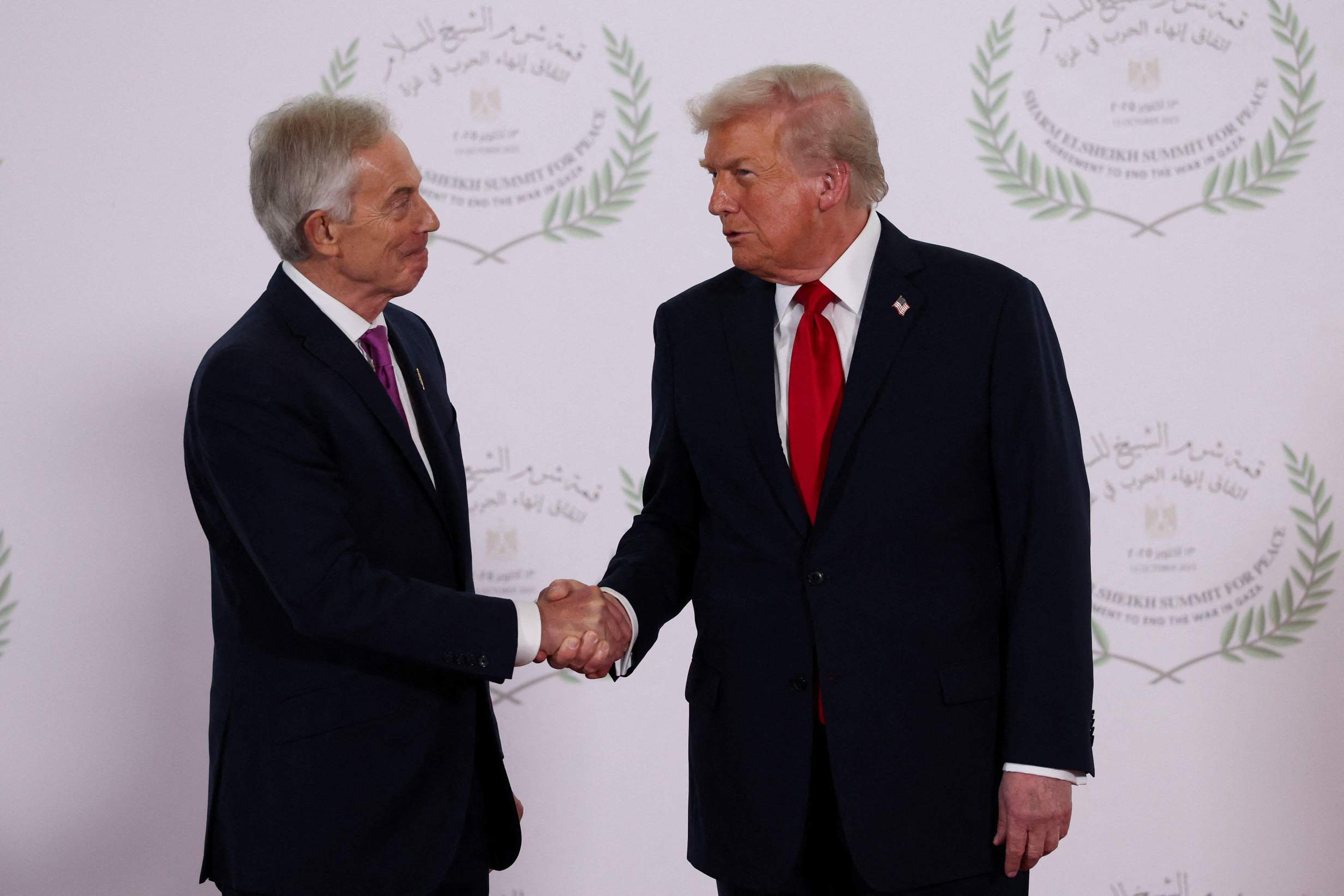
Read our Monthly Magazine
And support our mission to provide fearless stories about and outside the media system
Donald Trump’s Iran war plan was influenced by a lobby group advised by Pete Hegseth, chaired by a member of the Bush family, and informed by flawed analysis produced under former Prime Minister Tony Blair, a Byline Times investigation has found.
The plan was based on the assumption that Iranians would rise up once the US attacked.
In a recorded video announcing the February 2026 strikes, Trump told Iranians: “When we are finished, take over your government. It will be yours to take. This will be probably your only chance for generations.”
The next day, he called on the Iranian public to “seize the moment” to take back their country.
At a Pentagon briefing on 4 March, Secretary of War Pete Hegseth echoed the call: “To the people of Iran, this is your moment.”
This assumption that bombing would spark an uprising sufficient to collapse the regime can be traced to a Bush-linked lobby group whose war plan called for “psychological operations” to “embolden the Iranian people’s democratic aspirations”, a “military defector programme”, a “democratisation fund” using frozen Iranian assets, and a social media campaign targeting Iranian audiences in real time.
Yet this “100 Day Plan” prepared in January 2025 by United Against Nuclear Iran (UANI) for the incoming Trump administration appears to have been at least partly premised on polling data promoted by the Tony Blair Institute, which survey experts have criticised as deeply flawed. Trump’s Secretary of War Pete Hegseth is an advisor to UANI.
Among other things, the UANI plan advised the Trump administration to demand that Tehran accept “zero enrichment or reprocessing” on Nuclear material – an ultimatum effectively guaranteeing confrontation.
Five months later, the US and Israel launched strikes on Iranian nuclear, military and intelligence targets in the 12-day war of June 2025. In February 2026, a far larger assault followed, killing Supreme Leader Ali Khamenei.
UANI is chaired by Jeb Bush, son of former US President George H.W. Bush and brother of former President George W. Bush, whose 2003 invasion of Iraq was backed by then Prime Minister Tony Blair. Its CEO is Mark Wallace, former Ambassador to the United Nations under Bush.
From Blair’s Advisor to the War Lobby
The analyst who now leads UANI’s research on Iran’s Revolutionary Guard Corps (IRGC) and fed into its war plan for Trump is Kasra Aarabi, who spent six years as Blair’s personal advisor on Iran at the Tony Blair Institute for Global Change (TBI) where he built its Iran programme. In a LinkedIn post marking his departure in September 2023, he thanked Blair for “his mentorship and his dedication to the people of Iran”.
During his premiership, Blair strongly backed the 2003 US-led invasion of Iraq. A UK Government inquiry concluded in 2016 that his decision to join was made on the basis of flawed intelligence about Saddam Hussein’s weapons of mass destruction, which did not in fact exist.
Byline Times can reveal that TBI not only cited questionable polling to build the regime change case against Iran, but actively inflated the data’s significance, with Blair personally endorsing it as proof “beyond doubt” of widespread Iranian regime change sentiment. Its analysts recoded Iranian attitudes towards secularism as evidence of an explicit demand for the regime’s overthrow.
Aarabi authored several TBI papers supporting “regime change” and “the end of Khamenei’s regime”. Another TBI staffer, Jemima Shelley, also now works at UANI as a senior research analyst.
Their perspective on an Iran on the brink of facing popular uprisings moved into UANI when Aarabi moved there in 2023.
At UANI, Aarabi produces the IRGC analysis that informs the organisation’s policy output, briefing US senators directly. After the 28 February strikes, UANI published analysis by Aarabi and his colleague Saeid Golkar on Iran’s succession crisis and the case for regime change.
Trump’s Iran War Is Pushing the Post War International Order to Breaking Point
The US President’s reckless actions risk destroying the global political order, but could something good emerge from the wreckage, asks Alexandra Hall Hall
Flawed Polling Behind Blair’s Iran Regime Change Plan
In previous years at TBI, both Aarabi and Shelley cited survey data produced by Netherlands nonprofit GAMAAN to claim that Iranians were desperate for “regime change”, urging “Western governments” to “consider basing their decision making on the realities on the ground”.
The most rigorous polling available tells a different story. The IranPoll/University of Maryland series – nationally representative telephone surveys of approximately 1,000 adults across all 31 Iranian provinces – found deep dissatisfaction but not a mandate for the regime’s overthrow. In its October 2024 wave, 52% said government officials did not care what people like them thought, and 54% wanted Iran’s election law changed. When asked their top priority, 48% chose making Iran “more economically prosperous”. Only 6% chose making it “more democratic and free”. Gallup pointed in the same direction.
GAMAAN’s findings depart sharply from that baseline. Its February 2022 survey – an online poll using “multiple chain-referral sampling” through the Psiphon VPN platform and social media – found 41% wanted the Islamic Republic overthrown, with another 21% preferring structural transition away from it. Its December 2022 survey, conducted during the Mahsa Amini protests, reported that 81% of respondents inside Iran would vote “No” to the Islamic Republic in a hypothetical referendum and 60% described themselves as proponents of regime change.
Polling experts have extensively criticised GAMAAN’s methods as unscientific. Daniel Tavana of Penn State, principal investigator for Princeton’s Iran Social Survey; Kevan Harris at UCLA; Sunghee Lee at the University of Michigan’s Survey Research Centre; and Stanford social psychologist Jon Krosnick all say GAMAAN’s approach cannot be generalised as representative.
Approximately 66% of respondents participated via the Psiphon VPN platform, which means that even with especially large sample sizes, they do not represent a random representative sample of the Iranian population. This method suffers from “coverage bias”, failing to reach Iranians who do not use the internet, VPNs or encrypted messaging.
GAMAAN’s respondents are disproportionately urban, with 93.6% living in cities compared with approximately 80% of the general Iranian population. They are disproportionately well-educated, with 70.9% holding a college degree compared with 27.7% of literate Iranians aged 19 and older. And they are disproportionately wealthy – 54% reported a household monthly income above 13 million rials, compared with 40% of Iranians at that threshold among the wider target population.
As Professor Daniel Tavana told independent journalism platform Noir News: “[F]or that inference that GAMAAN is making to be true, that this sample represents the Iranian population, the adult age population, we would have to assume or believe that Psiphon users are reflective of the Iranian population as a whole, which… just could not possibly be true.”
TBI’s papers overseen by Aarabi, however, claimed that the GAMAAN survey findings “reflect the views of literate Iranian residents aged over 19 who comprise 85% of Iran’s adult population.”
GAMAAN was contacted for comment.
A spokesperson for the Tony Blair Institute told Byline Times the think-tank stood by its use of the GAMAAN polling:
“Your ‘sequence’ smacks of a desperate search for clickbait and is absurd,” they said.
“TBI stands by all its Iran-related published analysis, what UANI decides to publish is a matter for them and does not necessarily reflect TBI’s views. TBI deliberately chose GAMAAN because of their use of VPN and social media access to participants because it is the only safe way to poll opinions inside Iran while protecting the identity of participants. Traditional polling methods – face to face or via phone call – are not considered safe and therefore reliable in Iran.”
According to Tavana, who ran the Iran Social Survey at Princeton University, GAMAAN’s data is not public, not scientifically reproducible, and not “generalisable to the entire adult population.”
GAMAAN’s independence is complicated by its funding ties. Its widely cited 2020 survey on Iranian religious beliefs was “financially supported by and carried out in cooperation with” Ladan Boroumand of the Abdorrahman Boroumand Centre – an organisation that received substantial funding from the US Government’s National Endowment for Democracy (NED), of which the Centre is a formal partner. Boroumand has held multiple NED positions, including Reagan-Fascell Democracy Fellow and editorial board member of the NED’s Journal of Democracy.
Former New York Times foreign correspondent Stephen Kinzer has described the NED as “a conduit through which the US Government has given millions of dollars to political and other protest groups in countries from Albania to Haiti” as part of a “regime change mission” that does what the CIA used to do covertly decades ago.
Ironically, the Trump administration’s own Office of Management and Budget recommended eliminating NED funding entirely. Republican Representative Eli Crane introduced legislation to defund the organisation, accusing it of “regime change politics”.
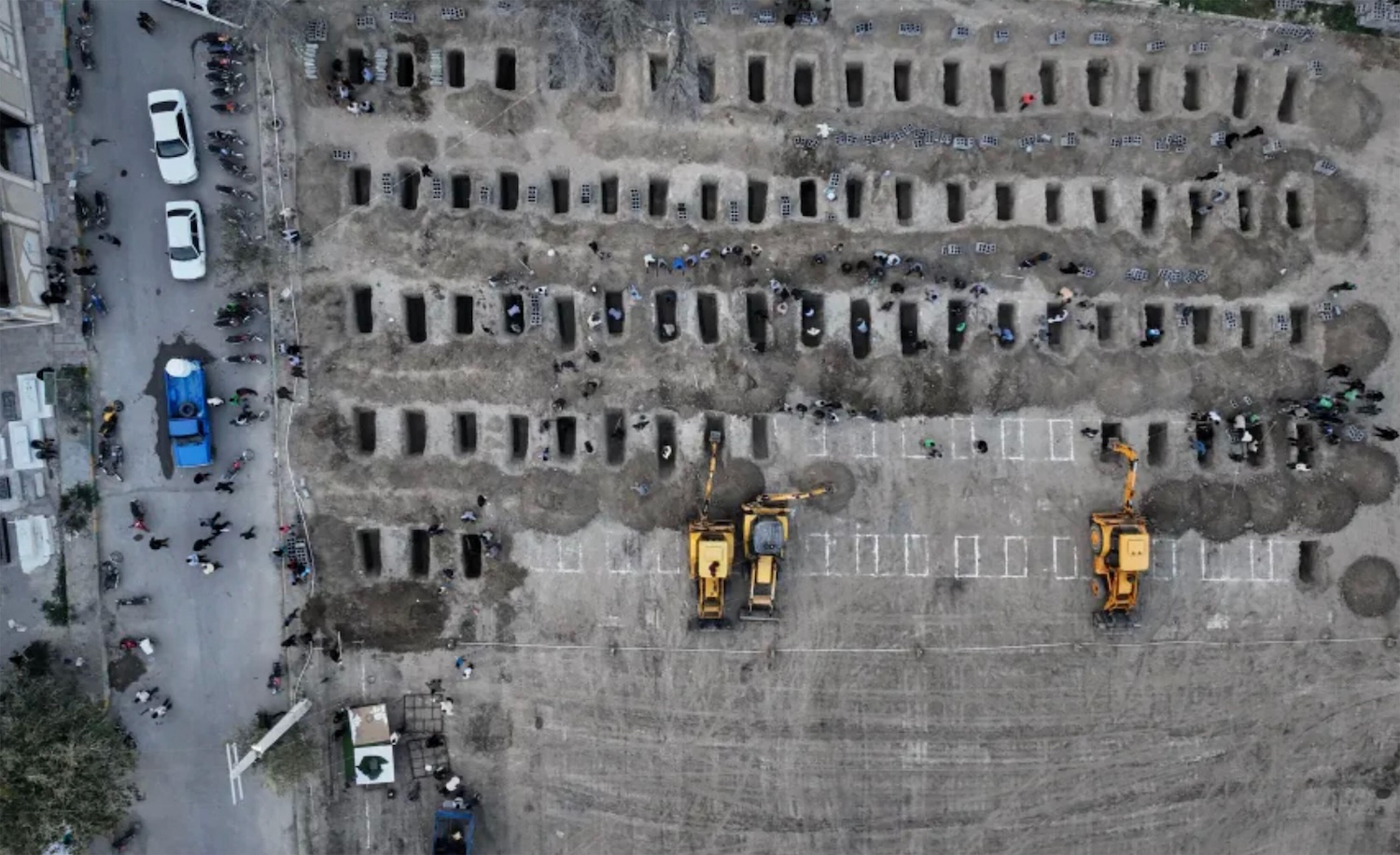
UK-Linked Components Traced to Tomahawk Missile That Struck Iranian School
Debris analysis and US procurement records reveal British links to the weapon that killed over a hundred school children in Iran, reports Isa Osman and Iain Overton
How the Blair Institute Inflated the Case
In his foreword to TBI’s November 2022 paper, Tony Blair said the new TBI/GAMAAN survey series would “confirm beyond doubt” that the protests were about far more than the hijab. The paper described GAMAAN’s approach as “cutting-edge digital-polling methods” and a “modern and innovative approach” to generating reliable data.
The paper then argued that 84% of those against compulsory hijab also wanted to live in a secular state, and made an interpretive leap: because “a secular state is impossible under the Islamic Republic, regime change is the only route”, anti-compulsory-hijab sentiment was “inextricably linked to regime change”. This language effectively recoded support for secularism as evidence of a demand to overthrow the regime.
By October 2023, TBI had moved from inference to declaration. The headline was “The People of Iran Are Shouting for Regime Change – But Is the West Listening?”
The piece described the protests as “anti-regime to its core”, argued that women had moved beyond gender equality to “demand complete regime change”, and urged Western governments to align with that reality.
A separate TBI paper called on the UK to proscribe the IRGC. The picture they presented – of a regime on the brink of collapse – then migrated into UANI via Blair’s Iran advisor Aarabi.
Hegseth and the UANI War Plan
Pete Hegseth, Trump’s Secretary of War, is one of three members of UANI’s Veterans Advisory Council and remains listed on its website. The advisory board includes a former Director of Intelligence of the Mossad, a former head of the Political-Military Bureau at Israel’s Ministry of Defence, and multiple former senior US intelligence officials.
In addition to calling for psychological operations in expectation that military action would precipitate a popular uprising, the UANI Iran plan prepared in January 2025 also specified weapons systems, delivery platforms and targets: “Strike IRGC commanders, Quds Force, and Intelligence Ministry assets inside Iran”; “Target the IRGC’s suppressive apparatus – via cyber and kinetic means”; “demand Iran accept the principle of zero enrichment or reprocessing”.
The GBU-57 Massive Ordnance Penetrator and B-2 bombers it recommended were central to both the June 2025 and February 2026 strikes.
Hegseth is now the official responsible for a war that followed many of these recommendations. His 4 March statement – “To the people of Iran, this is your moment” – echoed the UANI plan’s call to “embolden the Iranian people’s democratic aspirations” through psychological operations and social media.
UANI did not respond to request for comment.
Palantir’s Double Conflict of Interest in the War Against Iran
War was inevitable claimed the three most senior figures in the AI analytics firm which both provided the justification for US/Israeli strikes and profits from the conflict
Blair’s Proximity to Trump
All this sits within a broader alignment between Tony Blair and the Trump administration on Middle East strategy. Blair was the only figure named by Trump when the President announced his 20-point Gaza peace plan in September 2025, with Trump describing him as a “very good man”.
In January 2026, Blair was named to the executive board of Trump’s Board of Peace alongside Jared Kushner, Secretary of State Marco Rubio and Middle East envoy Steve Witkoff. All three were deeply involved in influencing Trump’s decision to go to war with Iran.
At a private Jewish News event in early March, Blair criticised Prime Minister Keir Starmer for not supporting the war, saying that he “should have backed America from the very beginning” and “let the Trump administration use British airbases.”
TBI’s biggest financial backer is Larry Ellison, co-founder and executive chairman of Oracle, whose personal foundation has donated or pledged at least £257 million to it since 2021.
In 2017, Oracle hired former director for intelligence programmes in Trump’s first National Security Council, Ezra Cohen, as a senior executive for national security issues. As of 2025, he was serving as Oracle’s Vice President of Strategic Initiatives.
Cohen has long been a key proponent of the idea of using “American spies to help oust the Iranian government”. On 28 February, he tweeted: “To our Persian brothers and sisters: Prepare to take back your country from the Islamic Regime occupying Tehran. This is your time.”
Oracle also maintains a strategic global partnership with Palantir Technologies, whose predictive AI model generated the contested intelligence that Iran was weeks away from a nuclear bomb, used to justify military strikes.
ENJOYING THIS ARTICLE? HELP US TO PRODUCE MORE
Receive the monthly Byline Times newspaper and help to support fearless, independent journalism that breaks stories, shapes the agenda and holds power to account.
We’re not funded by a billionaire oligarch or an offshore hedge-fund. We rely on our readers to fund our journalism. If you like what we do, please subscribe.