
 Subscriptions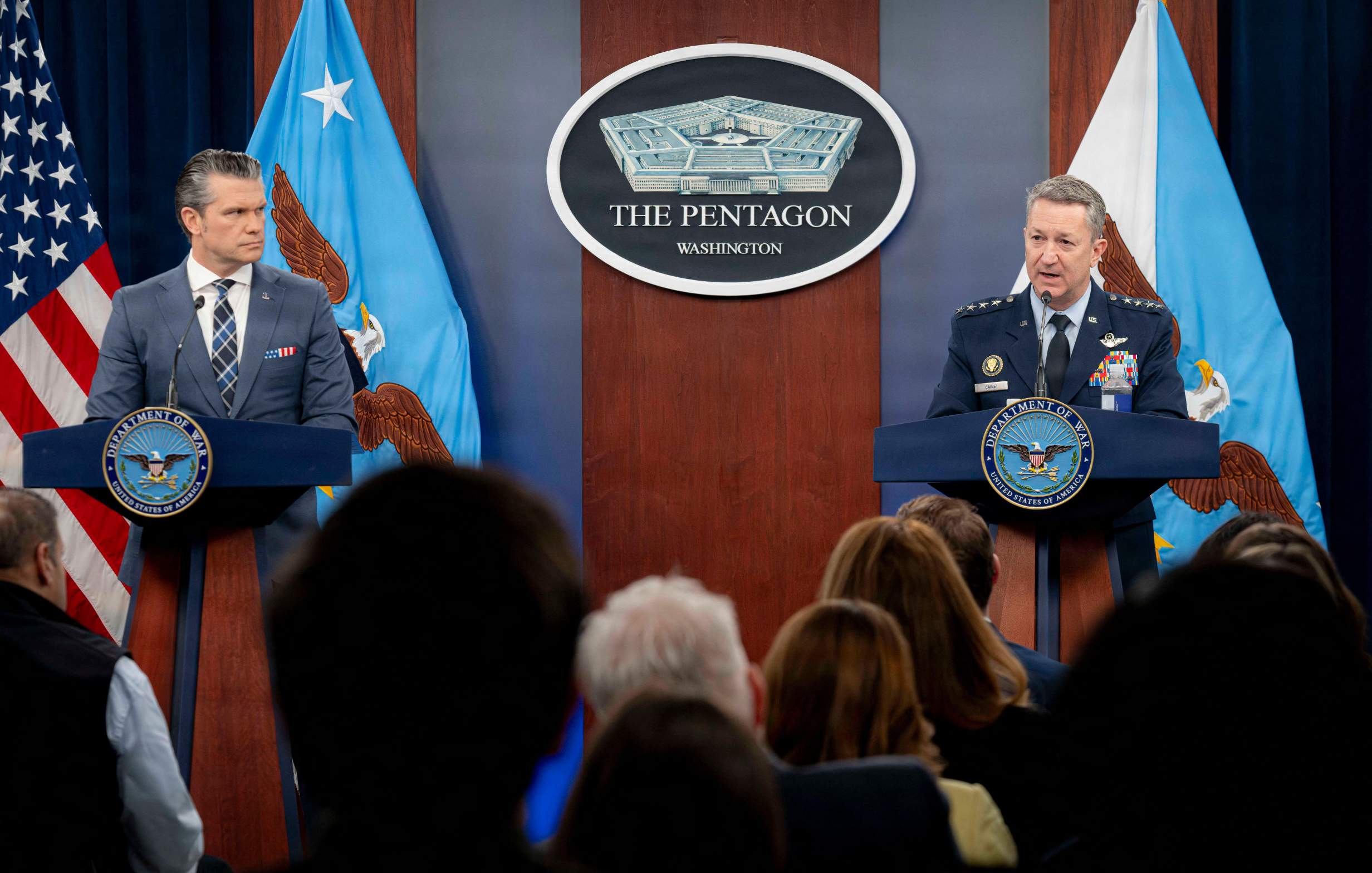
Read our Monthly Magazine
And support our mission to provide fearless stories about and outside the media system
Oil prices have been spiking since the closure of the Strait of Hormuz, leading reporters and analysts to ask when the war will end. They generally ask President Trump, whose answer varies from “very soon” to “four to five weeks”. Defence Secretary Pete Hegseth says it is anywhere between three to eight weeks. But whatever the date given, the assumption is that the war ends when the United States says it is over.
However, this assumption ignores the reality of warfare, where “the enemy also gets a vote”. Both the US and Iran have their own theories of victory and their own “termination conditions” for the war – and those conditions are mutually exclusive. If the United States declares victory but Iran keeps the Strait of Hormuz closed with mines and Uncrewed Surface Vessels (USVs), the war is not over. Both sides appear to fundamentally misunderstand the situation, and this analysis concludes that the conflict will likely go on for far longer than either side wants.
Theories of Victory
A theory of victory is the broad plan for how a country will end a conflict and get its adversary to agree to favourable terms. A 2024 study by the RAND Corporation – a US defence think tank – defines it as “a causal story about how to defeat an adversary” that identifies the conditions under which the enemy will admit defeat and outlines how to create those conditions.
The authors highlighted five general types of victory: dominance, denial, devaluing, brinksmanship and cost imposition.
Dominance (such as unconditional surrender) means comprehensively defeating the enemy, leaving it physically unable to defend against further attacks or mount counterattacks.
Denial means convincing the enemy that it cannot win, even if it cannot be decisively defeated.
Devaluing means convincing the enemy that any victory will be Pyrrhic – not worth the cost.
Brinksmanship convinces the enemy that the risks of vertical escalation – responding to an attack with an even greater counterattack – are too great.
Finally, cost imposition convinces the enemy that continuing the war will cost too much to justify.
Each adversary creates a theory of victory from one or more of these, to convince the other side to sue for peace on favourable terms. It is cost imposition that both the US and Iran are pursuing, in different ways.
A nation’s goals and objectives for a war are about what it wants to achieve; its theory of victory is about how it plans to achieve them. Therein lies the problem for the United States.
The United States’ Theory of Victory
The Trump administration’s stated goals have been constantly shifting, but appear to have settled on destroying Iran’s navy, eliminating its ability to launch and produce missiles, preventing Iran from supporting proxies and ensuring Iran can never produce a nuclear weapon. These are goals, however, rather than a plan for how they will be achieved.
President Trump has called for Iran’s “unconditional surrender”. The last two countries that unconditionally surrendered to the United States were Germany after Berlin fell and Japan after Hiroshima and Nagasaki.
Inducing unconditional surrender with only a conventional air campaign seems highly unlikely without extreme vertical escalation – use of a nuclear weapon, destruction of Iranian freshwater infrastructure, or a massive land invasion – none of which the United States has shown any inclination for.
Instead, the US appears to be following a cost imposition strategy. It has targeted much of Iran’s military capabilities and leadership, but has not yet broadly attacked oil production, electricity or water resources.
It is unclear how much destruction Iran is willing to endure, but the threshold is likely very high: the leaders making decisions are not beholden to the people, nor greatly affected by the conflict aside from the risk of dying in an air strike. So far, Iranian leadership has made it clear it is uninterested in returning to the negotiating table.

Trump’s Iran War Threatens a Refugee Crisis on a Scale That Dwarfs Syria
A former senior US defence analyst warns that the assault on Iran risks causing a refugee crisis up to four times larger than what happened during the Syria conflict
Iran’s Theory of Victory
Iranian demands for a peace agreement were posted on X by Iranian President Masoud Pezeshkian, who wrote that “the only way to end this war – ignited by the Zionist regime & US – is recognising Iran’s legitimate rights, payment of reparations, and firm international guarantees against future aggression”. “Legitimate rights” presumably include Iran’s right to develop nuclear power. Both demands are non-starters for the United States and Israel. Like the US, Iran’s theory of victory is one of cost imposition – but it differs in the details.
Iran has imposed cost in several ways. It has destroyed expensive equipment, such as the AN/FPS-132 ballistic missile radar worth roughly half a billion dollars. It is forcing the US to expend costly Terminal High Altitude Area Defence (THAAD) and Patriot interceptor missiles against targets that cost far less to produce – the US reportedly used around 800 interceptors in the first week alone – and the US has burned through 10% of its total inventory of Tomahawk cruise missiles in the opening days.
Iran has also closed the Strait of Hormuz, attacking at least 16 vessels, while still moving about 1.5 million barrels of its own oil per day, mostly to China. The Wall Street Journal reports that Iran is selling more oil than before the war, reaping the benefits of high prices caused by the conflict. It has also mounted attacks on Gulf states friendly to the United States, costing their neighbours additional revenue.
The strategic logic suggests Iran believes it can drain enough US military assets, and cause enough economic damage, to encourage sufficient external and internal pressure on the United States and Israel to end the war.
Iran appears to assume that the US military will also want the conflict to end, given the rising costs and slow production of the high-end munitions being used. Tehran likely hopes that high fuel prices and a worsening economy will cause the American public to demand an end.
Iranian leadership appears to believe it can sustain this pressure indefinitely using cheap, easily produced munitions – sea mines, Uncrewed Surface Vessel (USV) suicide drones, similar to those Ukraine used to bottle up Russia’s Black Sea Fleet, and Shaheds – as long as the US does not escalate vertically.
Iran also retains the potential for asymmetric attacks that force the United States to stay engaged, and would likely regard assassination of US leadership figures as horizontal escalation following the killing of Ayatollah Khamenei.
ENJOYING THIS ARTICLE? HELP US TO PRODUCE MORE
Receive the monthly Byline Times newspaper and help to support fearless, independent journalism that breaks stories, shapes the agenda and holds power to account.
We’re not funded by a billionaire oligarch or an offshore hedge-fund. We rely on our readers to fund our journalism. If you like what we do, please subscribe.
The Evidence in Real Time
Real-time evidence supports this reading. For the most part, both sides have left each other’s oil infrastructure intact. Iran wants to court its Gulf neighbours into supporting a negotiated end to the war, where a blockade is more forgivable than destruction of oil infrastructure. The US has avoided striking Iranian oil capacity, presumably to prevent further price spikes – or with a plan to seize the revenue as it did with Venezuela. With the 31st Marine Expeditionary Unit inbound, the US may also be planning to seize Kharg Island and wants it intact.
When Israel struck the South Pars gas field on 18 March, Iran quickly retaliated against oil refineries and natural gas facilities in Saudi Arabia and Qatar. The US quickly disavowed foreknowledge of the Israeli strike (which Israel denied, claiming the US was part of the planning process), producing a rare public rebuke of the Netanyahu Government. Israel subsequently promised not to strike further oil production capacity if Iran does the same – underscoring how the US wants to keep oil prices down, while Iran perceives high prices as a source of internal pressure on Washington.
Historically, wars lose public support over time, and this one started with a low level of support. Iran likely believes the Republican Party will suffer in the 2026 elections if the war significantly damages the US economy.
That is a reasonable assumption: the economy has traditionally been one of the biggest determinants of election outcomes in the United States. If the economy suffers, the US public is likely to lose the will to continue before Iran does, unless something in the equation changes dramatically.
Can the Trump administration declare mission accomplished and go home while Iran is still laying mines, hitting tankers with suicide drones and launching sporadic attacks? Not likely. To extricate itself, the US will have to offer Iran some sort of concession.
Iran, for its part, can always accept a deal it has no intention of honouring – dispersing missile production, developing nuclear capabilities covertly as Pakistan did, or continuing to funnel money to proxies. Iran is incentivised to drag the conflict out, maximising economic pain through closure of the strait to secure the most favourable terms possible.
The energy crisis created if the closure drags on for months will inevitably hurt the global economy. Even if the strait were reopened, the US Navy lacks the capacity to escort normal shipping volumes, and de-mining would take considerable time.

The Oil Lobby Is Using the Iran War to Revive North Sea Drilling but Official Data Shows It Won’t Cut Bills
Fossil fuel funded think tanks, petrostate-linked policy institutes and oil market insiders are all being presented as impartial observers by the media, reports Nafeez Ahmed
Both Sides Are Making Big Assumptions
Countries sometimes make a faulty assumption about their adversary that dooms their campaign from the start. The Japanese believed that if they hit Pearl Harbour hard enough, the United States would quickly sue for peace. Both the US and Iran may be making comparable errors.
The United States assumes that if Iranian leadership is bombed long and hard enough, it will be amenable to terms. The US and Israel have already killed Ayatollah Khamenei, who was replaced by his more hardline son. The Iranian sense of honour, deeply rooted in Shi’ite culture and Persian history, demands retribution after perceived injustice – a cultural imperative frequently amplified by the state, which frames retaliatory actions as a “badge of honour” or a necessary defence of the nation.
Iranian leadership is therefore unlikely to accept a deal it feels does not favour Iran, unless the agreement contains enough loopholes or lacks sufficient enforcement that Tehran believes it can renege almost immediately.
The US theory of victory does not account for this, or for the desire for retribution that Iran’s new leader might reasonably feel towards the country that killed his father. Both factors make it more likely that Iran would continue fighting even when it was not in its best interest – much as Japan was willing to do until Hiroshima and Nagasaki.
Iran, for its part, may be overestimating Washington’s vulnerability to pressure. US foreign policy no longer seems affected by disapproval, even from long-standing allies. Public opinion may prove ineffective if the administration believes it can retain control of Congress regardless – bills such as the SAVE Act, a voter eligibility law that critics say could suppress turnout, may give it the confidence to continue.
If the administration truly no longer cares what the public thinks, a long-term status quo of a closed strait – with the United States bombing Iranian leadership targets of opportunity almost at random for years – is an ugly possibility.
Iran may also be underestimating the probability that the United States will vertically escalate. Defence Secretary Hegseth has signalled his lack of enthusiasm for rules of engagement or mechanisms meant to prevent civilian deaths.
Targets such as electrical, oil and water infrastructure offer a tempting option for an administration desperate to change the calculus – and the destruction of Iranian freshwater production or storage could create a humanitarian catastrophe severe enough to force a collapse.
Iran’s theory of victory is more coherent than that of the United States, and Iran appears to hold greater control over when the conflict ends. Yet both sides are making faulty assumptions about each other and overestimating their ability to force favourable terms.
However, only one of them controls the Strait of Hormuz – and as long as it remains closed, it is Tehran, not Washington, that sets the price of peace.
For all of these reasons, this conflict is likely to extend towards the worst-case estimates offered by the Trump administration, and probably beyond them.