
 Subscriptions
 Subscriptions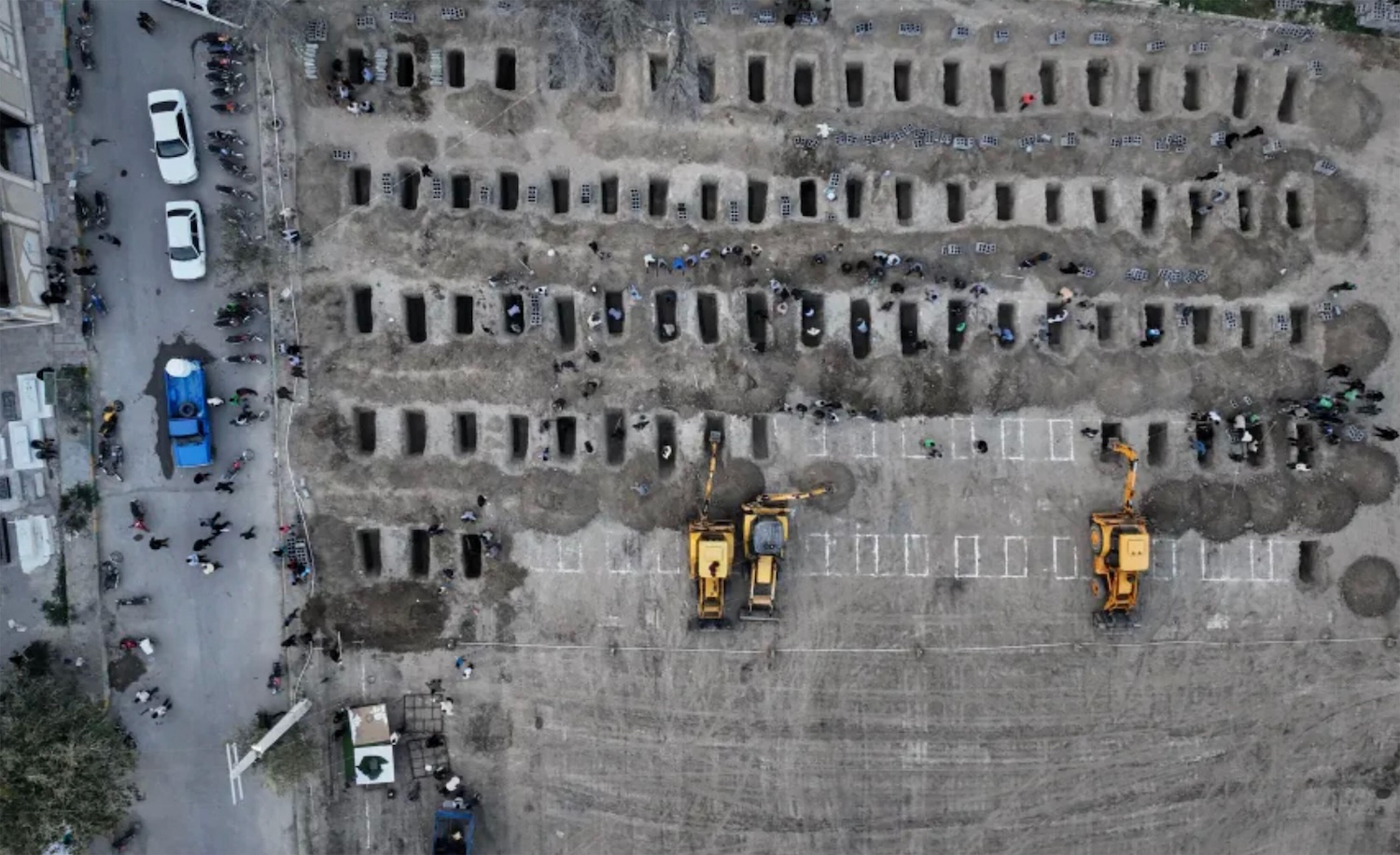
Read our Monthly Magazine
And support our mission to provide fearless stories about and outside the media system
Components linked to two defence companies linked to the UK – BAE Systems and Raytheon UK – have been identified in the Tomahawk cruise missile that struck a girls’ school in Iran, killing multiple children, Byline Times can reveal.
The findings relate both to a subsystem manufactured by Ball Aerospace, now owned by BAE Systems, and to guidance and electronic components produced at Raytheon UK’s facility in Scotland.
Analysis of footage of debris from the site by the London-based research charity Action on Armed Violence, combined with US Government procurement data, strongly suggests that firms linked to Britain’s defence industry played a role in producing subsystems for the weapon used in the 28 February attack on Shajareh Tayyebeh Girls’ School in the southern city of Minab.
Casualty figures vary, but consensus has since converged around between 165 and 168 Iranians killed, with the vast majority believed to be schoolchildren attending morning classes at the time of the strike.
The missile hit before 10:45am local time, when classrooms were in session, collapsing sections of the concrete structure and scattering debris across classrooms and the playground. Video recording of a missile strike in the vicinity and the aftermath of smoke rising from the school started circulating online immediately after the incident. Next door to the school was an Iranian military base, which was likely the intended target.
What the Debris Reveals
Footage released by Iranian state broadcaster IRIB and obtained by China Media Group shows missile fragments scattered among the rubble of the destroyed school. The wreckage bears markings consistent with the Tomahawk cruise missile system, a weapon widely used by American forces. The Pentagon has launched a formal investigation into the Iranian school blast since then.
The Iranian Government has a documented record of disseminating misinformation for propaganda purposes. There, therefore, remains a risk that material released by Iranian sources has been altered. However, independent analysis of video, satellite imagery and debris has consistently identified the munition as a Tomahawk cruise missile, a system used by the United States and its allies in this conflict, and no credible source has contested the origin of the recovered fragments.
One identified recovered component is marked “SDL ANTENNA”, part of the satellite data link system that allows the missile to receive mid-flight guidance updates. Manufacturer markings identify Ball Aerospace & Technologies Corp., a US-based contractor.
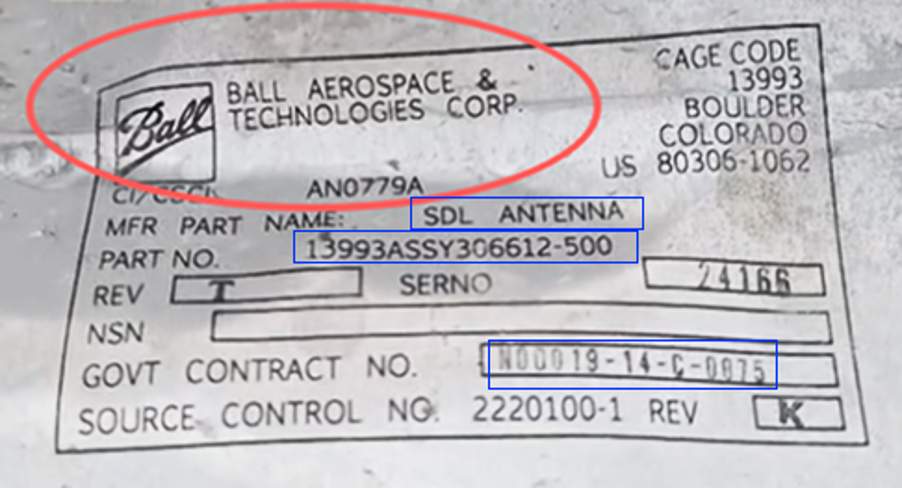
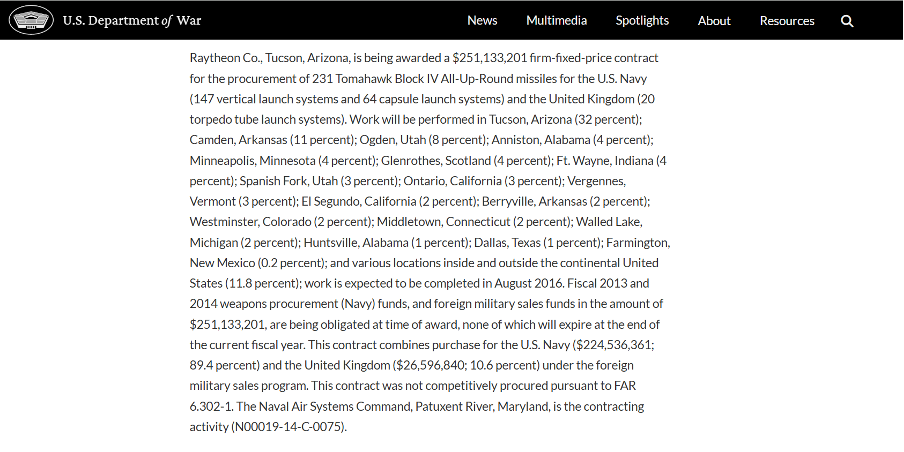
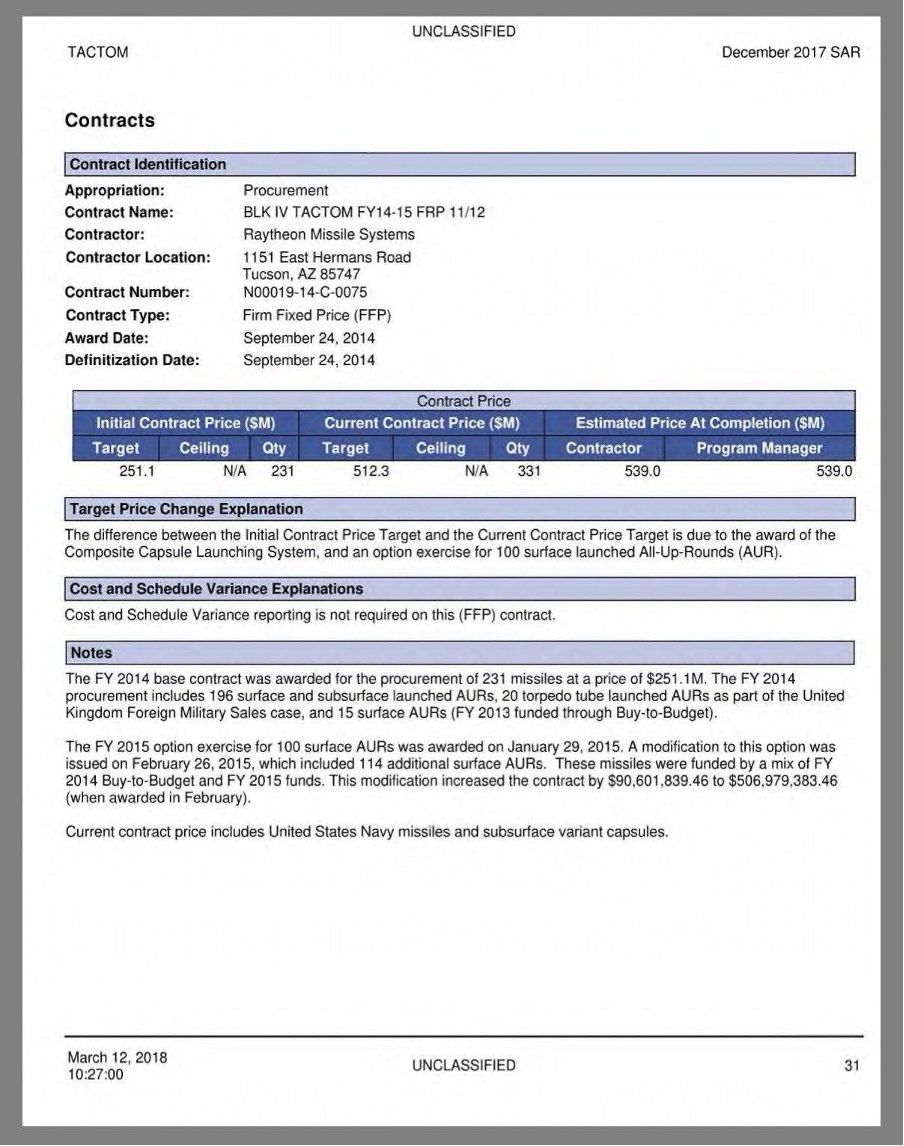
The fragment also carries a contract number, N00019-14-C-0075. Records from the US Naval Air Systems Command show that this contract was awarded to Raytheon in 2014 for the production of Tomahawk Block IV missiles, with subsequent modifications expanding the order. The recovered component can be linked directly to that production programme.
Wider procurement data seen by Byline Times also points to continuity in the UK’s role within the Tomahawk programme. Recent contracts continue to list Raytheon UK’s Glenrothes facility as part of that programme.
Although detailed information on current subsystems is partly classified, there is no evidence of any recent changes to the UK supply of core components such as antenna or guidance systems that were involved in the strike. Since acquiring Ball Aerospace in 2024, BAE Systems has retained its capabilities in Radio frequency (RF) and phased-array (multiple antennas) technologies, making it likely that similar components remain in production under UK ownership.
At the level of a single strike, attribution remains hard, but UK-linked components are a consistent feature of the Tomahawk system, even if it is seldom possible to tie them to an individual weapon used in a particular attack as we have managed to do in this case.
Why the Iran War Could Last Far Longer Than Either Side Wants to Admit
With the Strait of Hormuz closed and US munitions dwindling, it is Iran that will ultimately be able to set the price of peace, argues US defence analyst Brynn Tannehill
The British Connection
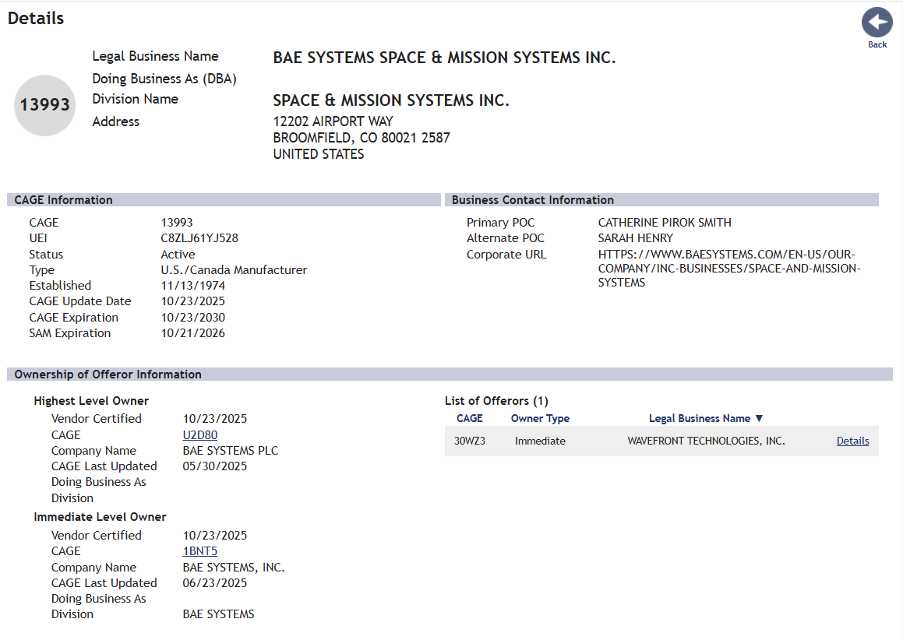
Ball Aerospace was acquired by BAE Systems in 2024. The UK-headquartered defence group now owns the company that manufactured the missile’s satellite communications antenna. The US issued CAGE (Commercial and Government Entity) Code 13993 seen both on the weapon fragment and in US public record makes this clear.
Overall, approximately four per cent of production workshare of the US Tactical Tomahawk programme is based in the United Kingdom. This work is carried out at Raytheon UK’s facility in Glenrothes, Scotland, which manufactures electronic and guidance components for missile systems.
Raytheon UK received more than $15 million for its contribution to this production lot according to public financial records (contract N00019-14-C-0075). UK parliamentary records have also previously confirmed that components produced at the Glenrothes site are exported to the United States for integration into Tomahawk missiles, indicating a sustained role in the programme.
This unclassified US Selective Acquisition Report (SAR), which provides public procurement and subcontractor-level data on defence contracts, also shows that the UK plays an official role in the Tactical Tomahawk programme.
The UK Government does not routinely disclose which British-made components are incorporated into weapons systems used by allied forces, nor does it publish information about how such systems are ultimately deployed. This contrasts with the United States, where detailed procurement data is publicly available and enables tracing of production histories at contract level.
Questions of Complicity
The identification of UK-linked components does not in itself establish legal responsibility for the Minab strike. British firms were not involved in the decision to fire the missile, and participation in a multinational production programme does not equate to directing a specific operation.
Even if the school strike were unintended, that would not necessarily resolve the question of legality. Oona Hathaway, a professor of international law at Yale and a former Pentagon lawyer, told the BBC that “a targeting error in and of itself is not a defence if not enough due care and attention has been taken”. The relevant test, she suggests, is whether those responsible “knew or should have known” that civilians were present and failed to adequately vet the target.
Such poor targeting has, in the past, had major consequences. Data compiled by AOAV, drawing on English language media reports, shows that in Iran, incidents attributed to joint US and Israeli air strikes since 28 February 2026 have caused at least 690 civilian casualties, including 487 reported deaths. Of these fatalities, 418 are recorded as having occurred in populated areas. More broadly, over the past decade, US-led operations worldwide involving explosive weapons have reportedly resulted in 7,526 civilian casualties, of whom 5,365 were killed. 90% of these civilian deaths occurred in populated areas.
The UK has long positioned itself as a responsible arms exporter, with ministers emphasising the robustness of its licensing regime. Yet components manufactured in Britain are routinely incorporated into weapons systems over which the UK exercises no operational control, raising questions about oversight and accountability in an increasingly integrated defence industrial base.
Byline Times approached the Raytheon UK for comment but they did not respond by the time of publication.
A BAE Systems spokesperson, said: “We are aware of the reporting around the Iranian school bombing and the ongoing investigation. The decisions about when and how these capabilities are used are made by government officials.
“We operate in accordance with all laws and regulations for the governments that we support.”
A UK Government spokesperson said: “We assess all licences against our robust Strategic Export Licensing Criteria. We keep all licences under review and can suspend or revoke any licences where exports are no longer in line with these criteria.”
ENJOYING THIS ARTICLE? HELP US TO PRODUCE MORE
Receive the monthly Byline Times newspaper and help to support fearless, independent journalism that breaks stories, shapes the agenda and holds power to account.
We’re not funded by a billionaire oligarch or an offshore hedge-fund. We rely on our readers to fund our journalism. If you like what we do, please subscribe.