
 Subscriptions
 Subscriptions
Read our Monthly Magazine
And support our mission to provide fearless stories about and outside the media system
The US and Israeli air campaign against Iran is likely to have numerous unintended consequences. One of the most significant is the potential for a massive humanitarian disaster and refugee crisis that spills over into Europe.
It has the potential to be far larger than the Syrian refugee crisis, which had a profound effect on European affairs and politics for more than a decade – straining the European Union (EU), fuelling the rise of far-right, anti-immigration political parties, forcing a tightening of border controls, and contributing to the UK’s vote to leave the EU in the 2016 Referendum.
The Syria crisis was exploited by far right groups to create deep divisions between member states over responsibility sharing that have never fully healed. The war with Iran could re-open these wounds with catastrophic implications for the EU.
The US Has No Plan
Most of the world has been focused on the military and economic aspects of the conflict. It is apparent that neither the US nor Israel has a real plan beyond:
1. Bombing Iran
2. Assuming good things will happen
The US does not appear to be concerned about the second and third order effects of this military campaign. Even a cursory analysis shows it is likely to cause a vast humanitarian crisis, one with global repercussions that could quickly spiral out of control.
When the conflict started, US leadership talked about it lasting a few days to a couple of weeks. This turned into “two to three weeks”. Which became four weeks, then “four to six weeks”. Now US Central Command (CENTCOM) is reportedly requesting funds and logistic support for 100 days of combat operations. The longer the conflict goes on, the more likely it is that something happens to trigger a humanitarian crisis.
Iran is far bigger than other countries in similar situations.
Iran is a diverse country the size of Alaska, with more than 90 million inhabitants. It is bigger in land area and population than Afghanistan and Iraq combined. Its population is roughly 2.5 times that of pre-war Ukraine. This explains why the US has no interest in putting troops on the ground in Iran: it simply does not have the manpower or money to invade, occupy, and pacify a country that large.
It is also why the US is no longer interested in the “you break it, you own it” philosophy when it comes to military operations there (unlike Iraq). US Defense Secretary Pete Hegseth has made it clear that there will be no nation building, and presumably no response to humanitarian crises triggered by US military actions.
Triggers for a Refugee Surge
There are innumerable ways that things could go sideways for the people of Iran, including the collapse of their economy; collapse of the Government and/or civil war; and destruction of water infrastructure that would create a critical lack of drinking water.
The Iranian state is, in many ways, fragile. It is in the middle of a prolonged drought. The country has mismanaged its water supply since the 1980s, building too many dams that make no sense, draining aquifers, moving away from the traditional qanats holding water underground, and engaging in government-sponsored agriculture without consideration of water supplies. The result is that the reservoirs supporting Tehran are at 12% capacity and falling – so low that the Government had been considering moving the capital elsewhere.
Iranian cities on the coast are also highly reliant on desalination plants. If something were to destroy or damage those plants or dams, urban and suburban population centres would have little if any drinkable water. Agriculture would also collapse, resulting in potential famine. Millions would potentially either perish of dehydration or become part of a desperate rush of refugees internally and externally seeking water.
There is also the threat of economic collapse. The Iranian economy has been experiencing high inflation rates of roughly 40–50% per year. Unemployment is high, and still rising. Sources say that youth unemployment in some areas runs as high as 50–63%. Jobs are scarce nationally, particularly for university graduates.
Iran is also highly reliant on oil revenue, which constitutes 23% of GDP. Approximately 90% of the oil that Iran produces goes through the Strait of Hormuz, where, right now, traffic is effectively zero. This has the potential to set off economic collapse: spiking inflation, and no revenue to buy increasingly expensive food.
One can envision Weimar-style hyperinflation, with nearly worthless Iranian currency pursuing scarce goods. Iran does not have the luxury of a cushion of food stores. Malnutrition is a growing crisis, with roughly 35% of annual deaths linked to dietary deficiencies.
Escalating poverty, which affected more than 36% of the population in 2023, has led to severe food insecurity. Roughly 800,000 people suffer from severe malnutrition, with, for example, 12% of children under six experiencing wasting. It would not take much more to plunge Iran into true famine.
Finally, there is the threat of civil war. The Iranian leadership is not popular, but it is supported by roughly 30% of the population. These leaders are also religious fanatics willing to kill as many people as needed to keep the country an Islamic theocracy. In January this year, the regime killed between 10,000 and 30,000 protestors.
The US and Israel are encouraging Iranians to rebel against the Government and have reportedly been providing arms to Kurdish separatists. If a civil war were to break out, it would likely be a catastrophic free-for-all, as the ethnically diverse regions of Iran splintered into autonomous rule or struggled to take control of the remaining Government.
What makes this worse is that these three outcomes are not mutually exclusive, or even independent. They are interconnected. Imagine that an economic crisis leads to a civil war as people try to overthrow the Government. As the country fights and splinters, individual ethnic regions battle to control scarce water resources vital to life, leading to worse water scarcity or even dams and desalination plants being destroyed.

Trump Went to War With Iran to ‘Seize Oil’ as US Shale Enters Major Decline
The United States launched a war on Iran, not to eliminate a nuclear threat, but to seize control of the world’s last major accessible oil reserves
Famine, Civil War and Displacement
Historically, the worst refugee crises of the 19th and 20th centuries have been driven by famine and civil war. When people cannot escape as refugees, it leads to massive death tolls. In 2010, pre-civil-war Syria had a population of about 22 million. After the war started, 23% of the Syrian population fled to other countries as refugees, while 27% ended up displaced internally. Applying such numbers to Iran, roughly 21 million people would be streaming out of the country in a very short period of time.
For those who cannot escape, the lack of available food and water would be lethal. During the Second World War, when the US was bombing Japanese cities and cutting off access to sea lanes with a naval blockade, starvation worsened throughout 1945.
Some estimates suggest that if the war had continued into 1946, up to 10 million Japanese people (out of a population of 72 million) would have starved to death. In the 1990s, North Korea experienced famine and tried to hide it. Estimates of the death toll range from 2.7% to 16.7% of the population.
If other countries sealed their borders against Iranian refugees, approximately 15 million people would be at risk of starvation. These numbers have not been seen since the Chinese Cultural Revolution, when 30 million people died – though China had a much larger population at the time (approximately 650 million, compared with approximately 91 million for Iran).
While these are worst-case scenarios, they are not out of the realm of possibility. There is a solid possibility that they will happen. It is easy to foresee how it would occur, and to predict the chain of events leading up to it.
Global Impacts
If they do happen, the effects would be global. The Syrian civil war produced more than five million refugees and 6.7 million internally displaced people – and the world was unable to handle such a flow. The backlash against Syrian refugees contributed directly to the vote on Brexit in the 2016 EU Referendum and the rise of far-right parties throughout the EU.
An Iranian refugee crisis at potentially four times the Syrian scale would place the European Union under unprecedented pressure. Turkey, which absorbed the largest share of Syrian refugees, is not prepared to deal with a wave of that magnitude – neither is the rest of southwest Asia (Azerbaijan, Turkmenistan, Pakistan).
A flood of refugees into Pakistan could also further destabilise an already volatile, nuclear-armed region.
It would likely accelerate frictions between the US and EU, as well as accelerating the rise of hyper-nationalist, xenophobic parties such as Reform UK and the Alternative for Germany (AfD).
Finally, any of these scenarios could take Iranian oil off the market for the foreseeable future, triggering a host of additional problems and creating long-term uncertainty regarding the Strait of Hormuz. Economists believe that a global recession is a near certainty if the strait remains closed for an extended period. Oil is predicted to rise above $150 per barrel.
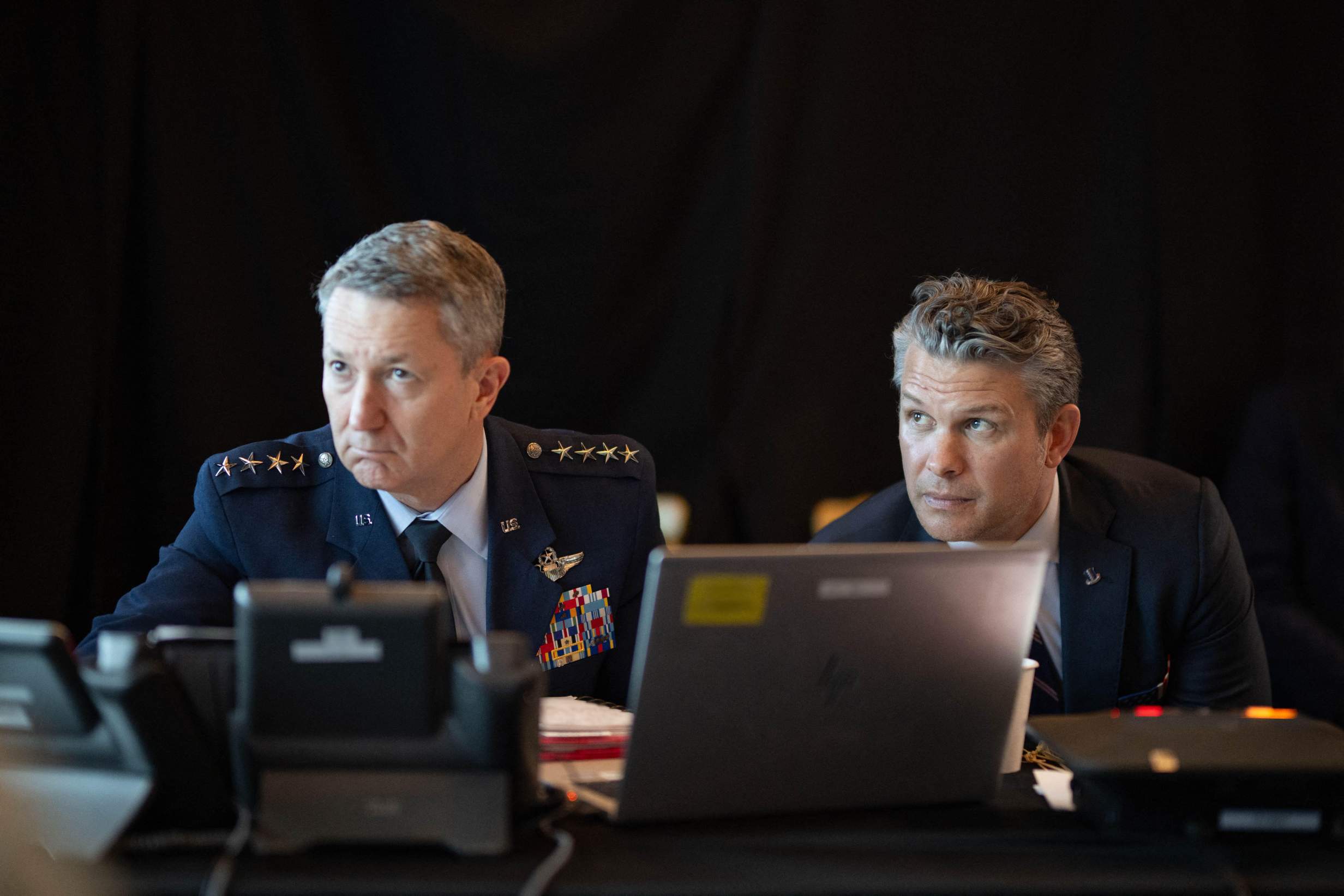
‘The Justification for the War against Iran Has Changed from Day to Day, with No Clear End Goal or Exit Strategy’
From Washington DC, former diplomat Alexandra Hall Hall assesses the arguments used to justify the attack on Iran
Chain Reaction of Catastrophe
The worst part is that once the chain of events gets started, no one will be able to stop it. It seems highly unlikely any country would be willing to send peacekeepers into the middle of an Iranian civil war or to prop up the despotic Iranian Government.
Nor will the Iranian Government, which the Trump administration seems content to leave in place if it bends the knee and gives him oil revenue – as in Venezuela – be willing to let in peacekeepers from most countries. Once one of these things begins to happen, it will spiral out of control, like a nuclear reaction with nothing to absorb the free neutrons.
If the US and Israel have considered these scenarios at all, they seem to regard them as someone else’s problem. Indeed, the US probably considers an EU ruled by far-right parties aligned with the Trump administration, Hungary, and Russia to be a favourable outcome.
The longer this conflict goes on, the more likely it is to trigger the initiating event that starts the chain reaction of catastrophe.
Liberal democracies need to come together and pressure the US to cease its air campaign: if not out of humanitarian concern, then at least out of self-interest.
ENJOYING THIS ARTICLE? HELP US TO PRODUCE MORE
Receive the monthly Byline Times newspaper and help to support fearless, independent journalism that breaks stories, shapes the agenda and holds power to account.
We’re not funded by a billionaire oligarch or an offshore hedge-fund. We rely on our readers to fund our journalism. If you like what we do, please subscribe.