
 Subscriptions
 Subscriptions
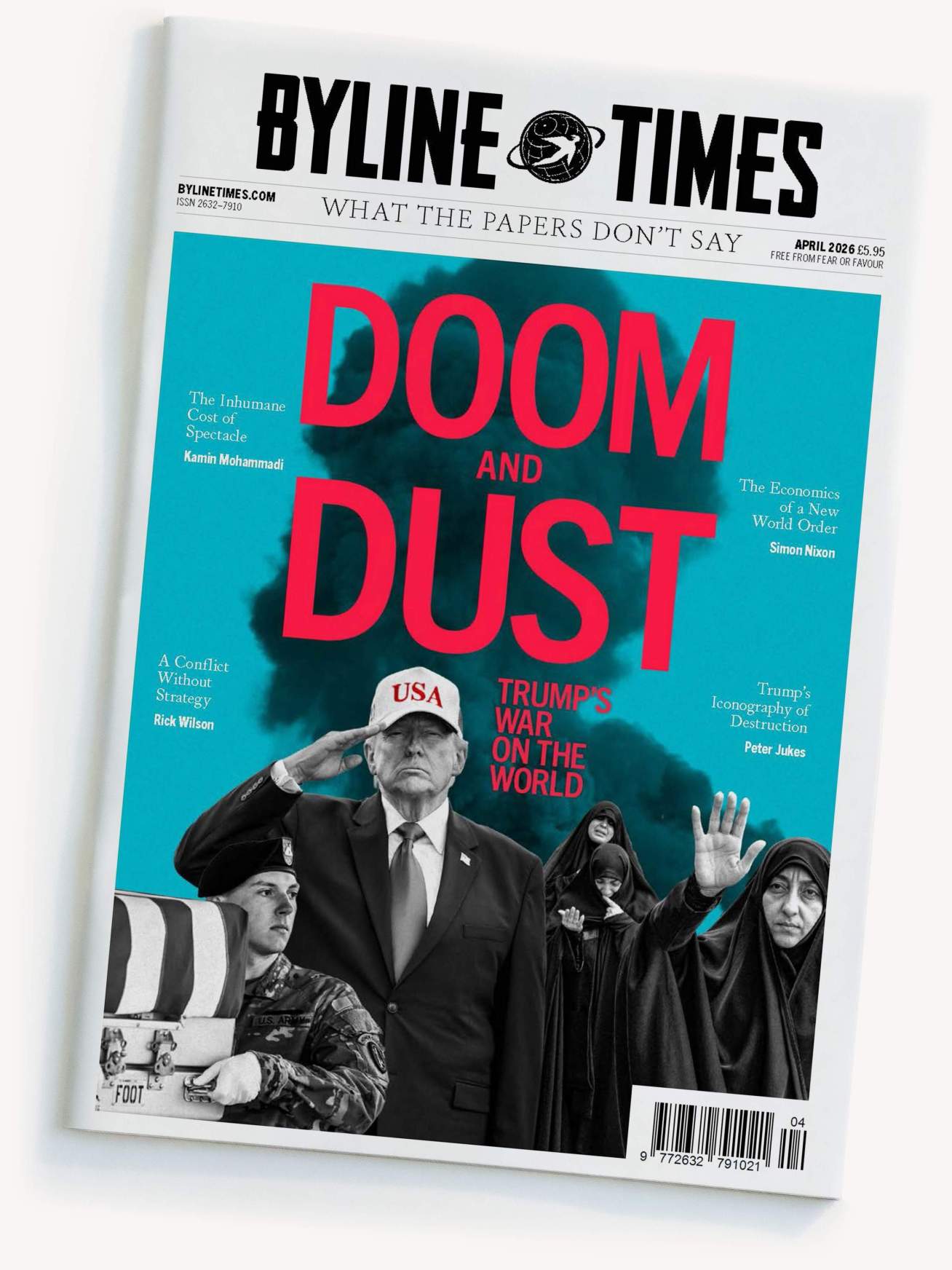
Read our Monthly Magazine
And support our mission to provide fearless stories about and outside the media system
With the congressional midterm elections just eight months away and his approval ratings slipping, President Trump has suggested the vote be called off. “When you think of it, we shouldn’t even have an election,” he told Reuters in January. “It’s some deep psychological thing, but when you win the presidency, you don’t win the midterms.”
Even with almost total control of the Republican Party, there is no reason to believe Trump could secure enough votes in Congress to prevent the midterms from happening. But some Republicans have been taking unprecedented steps to tilt the voting process in their favour, and some Democrats have responded in kind.
Redistricting
In August 2025, Texan Republicans approved a new congressional map which could flip five Democratic-held districts to the GOP. With the Republicans having a razor-thin majority in the House of Representatives, that could have been enough to affect the overall result.
The Democrats pushed back hard. California targeted five Republican-held districts there, triggering similar efforts by both parties throughout the country.
Some states’ redistricting measures are currently before the courts, and a few are being blocked by state-level politicians who don’t want to be so blatantly partisan. In Indiana, for example, Republican lawmakers refused to redraw the map in their favour, despite pressure from President Trump’s campaign to do so.
States where the arguments are unresolved include Virginia, where the state Supreme Court has approved a special election on a redistricting plan that could flip four seats in favour of the Democrats. Meanwhile, in Florida, Republican Governor Ron DeSantis has called for a special legislative session starting on April 20 to redraw congressional boundaries there, targeting three to five Democratic incumbents.

Trump’s Iran War Threatens a Refugee Crisis on a Scale That Dwarfs Syria
A former senior US defence analyst warns that the assault on Iran risks causing a refugee crisis up to four times larger than what happened during the Syria conflict
Voter Suppression
It is unclear which party will have benefited most from redistricting by the time the midterms happen. Current projections suggest neither will have secured a significant advantage.
Alongside the redistricting, voter suppression measures are making it more difficult for some groups of voters to cast ballots. Voting centres, for example, have been removed from university campuses in North Carolina, and Steve Bannon has said that next November ICE agents should surround voting centres. That could discourage voters who fear being misidentified as illegal immigrants.
President Trump is backing calls for stricter voter ID rules, and Congress is currently considering the Safeguard American Voter Eligibility or SAVE America Act which would require people to show documentary proof of citizenship when registering to vote and then to provide photo ID when casting ballots. The SAVE America Act has already been passed by the House of Representatives.
Trump has said the Act would mean Republicans won’t lose an election for 50 years. Critics say there is no need for stricter voter ID because very few ineligible voters cast ballots. The Act would have a significant but somewhat unpredictable outcome. The Brennan Center for Justice estimates that 21 million Americans lack access to the required documents, such as a passport, original birth certificate or naturalization papers. The ID requirement would also impact mail-in and other forms of early balloting.
It is far from certain the SAVE America Act will become law. It is currently before the Senate, where it’s unlikely to clear the 60-vote threshold to break a filibuster. Trump has said that in that circumstance he would enact the measure through an executive order. But that would face legal challenges.
The impact of voter suppression measures is uncertain. Under President Trump, the Republicans are backed by an increased number of relatively unengaged voters who are less likely to overcome obstacles to voting. Analysis of the 2024 election by the non-partisan Pew Research Center showed non-voters preferred Trump by a four-point margin. That compares with non-voters preferring Biden by 11 points in 2020. Some studies have shown that, contrary to what many think, increased mail or absentee voting during the COVID-19 pandemic did not benefit Democrats. Having said that, there is one way in which voter suppression might help the Democrats. In the past, the party has used fears that their voters will be prevented from casting ballots to mobilize its base to turn out.
With the possibility that redistricting and voter suppression measures could have relatively neutral outcomes, the biggest threat to the elections may well take place after the voting is over.
Seizing Voter Information
The administration is currently going to significant lengths to secure election-related documentation from each state. The best-publicized attempt to do this took place in Fulton County, Georgia, in February. Tulsi Gabbard, the Director of National Intelligence, personally accompanied FBI officials who seized 2020 election records there. Trump has long claimed that there were fake results in Fulton County. Officials in Georgia complained that the seizures amount to an unprecedented assault on states’ constitutional authority to administer elections and filed a lawsuit to force the federal government to return the seized material.
The controversy in Fulton concerns an election in the past. But some of the documents being sought by the Department of Justice concern future elections, including the midterms. When requested to do so by the DOJ, ten Republican-run states handed over their voter lists, but some Democratic-run states resisted, and in many cases the issue is before the courts.
Having possession of the voter lists could make it easier for officials to mount legal challenges to the rights of individuals on the list to vote. MAGA-aligned influencers are already casting doubt on the integrity of the lists by, for example, challenging the rights of homeless people to register to vote, even when there is no evidence that they have broken the rules.
Even if complaints about the voter lists are bogus, they undermine confidence in the electoral process, setting the scene for post-election legal challenges. And as January 6 showed, disputes about the validity of elections could become violent. There have already been cases of campaigning on electoral issues spilling over into physical intimidation. MAGA-aligned activists in Missouri have been accused of being paid to harass volunteers who were gathering signatures for a petition calling for a referendum on Republican redistricting proposals there.
Democratic Party lawyers are trying to persuade states to take some pre-emptive measures, such as banning the practice of challenges being made to the rights of individuals to cast a ballot. They are also anxious that partisan local election officials will not certify Democratic victories and are calling for laws to be updated with clear language that unambiguously defines certification as a duty, not an option. They also want to remove immunity from federal, state and local election officials for any action that interferes with a qualified voter’s right to have their ballot counted.
ENJOYING THIS ARTICLE? HELP US TO PRODUCE MORE
Receive the monthly Byline Times newspaper and help to support fearless, independent journalism that breaks stories, shapes the agenda and holds power to account.
We’re not funded by a billionaire oligarch or an offshore hedge-fund. We rely on our readers to fund our journalism. If you like what we do, please subscribe.
Interference from Moscow
As if all these vulnerabilities were not enough to worry about, there is another threat to consider. The Russian attempts to intervene in the 2016 and 2020 Presidential elections are now well established. At the very least, they were intended to undermine confidence in the American electoral system.
Back then, Moscow was reportedly constrained in the level of its interference by President Putin’s fear that Russia could get caught meddling in a US election. Since then, the international context has radically changed, and there is at least a possibility that Moscow’s election hackers will be given freer rein.