
 Subscriptions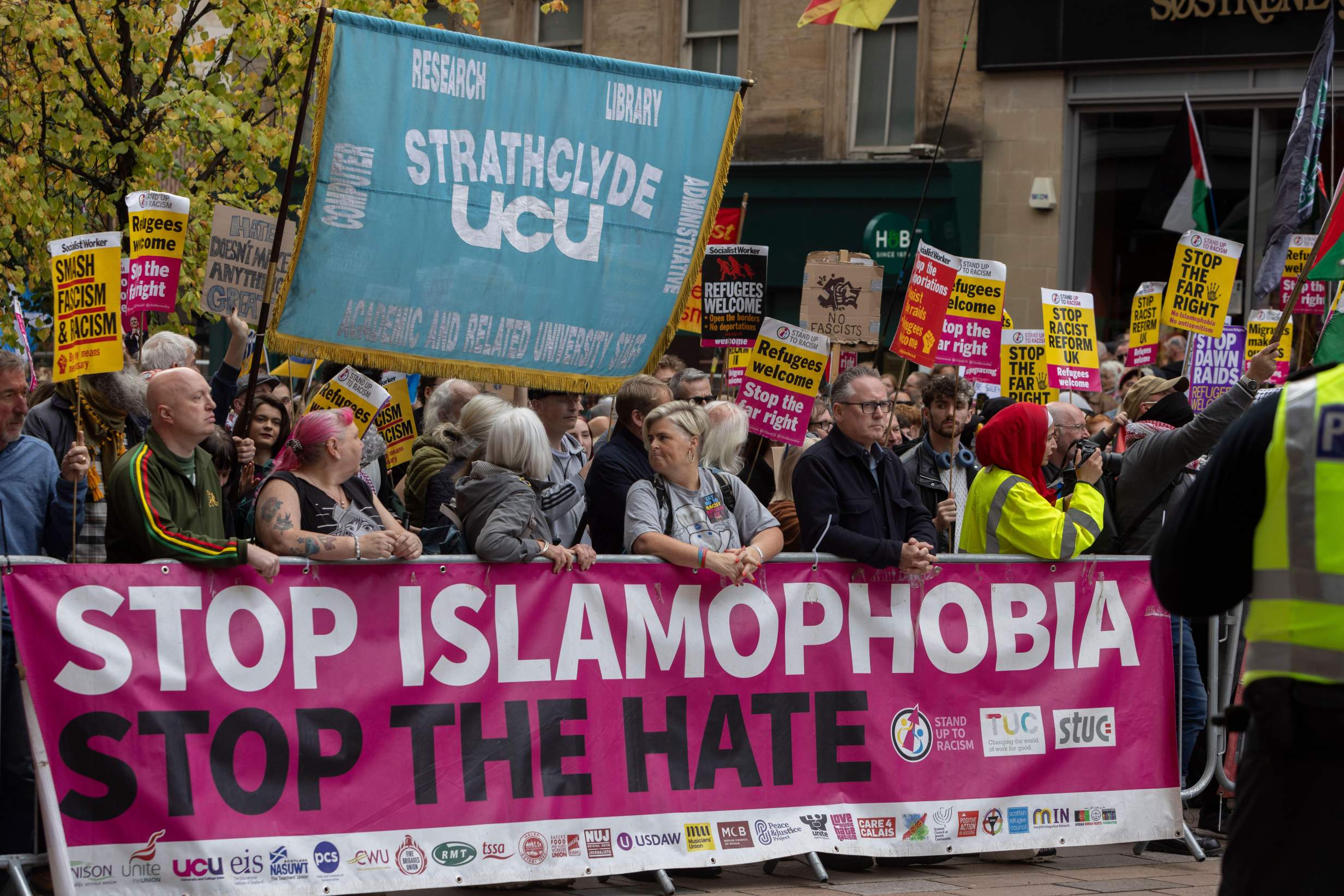
Read our Monthly Magazine
And support our mission to provide fearless stories about and outside the media system
After years of advocacy, the Government has released its definition of anti-Muslim hostility.
As chief executive of the Islamophobia Response Unit (IRU), the UK’s leading charity providing free legal support to victims of Islamophobia, I’ve reviewed it carefully. While I acknowledge positive elements, I’m concerned it won’t help most people we support and, more widely, it will not be embraced by Muslim communities.
Since 2021, the IRU has handled hundreds of cases and, with our new legal team, has recently enjoyed a 100% employment tribunal success rate. This experience shows how Islamophobia operates. That’s why this definition worries me.
My primary concern is the repeated requirement for intent. “Intentionally” or “intention” appears three times in the definition, creating an extremely high threshold for most discrimination cases. It will also mean that policymakers, politicians and others are likely to shy away from using the definition to call out discrimination against Muslims. This might happen because they do not understand the intention element. Further, they may simply use it as an excuse to reject clear examples of this behaviour because they cannot be sure of the perpetrator’s intent.

‘The Government’s Call for Evidence on Islamophobia is a Rigged Box-Ticking Exercise’
…to define Islamophobia/Anti-Muslim Hate from some of the very non-Muslim individuals and organisations who have not only denied Islamophobia in the past, but who themselves have stood accused of promoting…
A working group on anti-Muslim hostility was established by the then-Deputy Prime Minister Angela Rayner as part of the government’s “Plan for Change” safer streets mission, responding to 2024 data showing anti-Muslim incidents at their peak.
The working group spent six months developing its recommendations. I understand that the final definition departs significantly from what the working group proposed. Why weren’t expert recommendations fully adopted? What changed, and why?
Meanwhile, the Government’s call for evidence limited responses to 600–1,000 characters. How do you explain institutional barriers or racialised hostility in the space of a text message? This wasn’t a meaningful consultation.
And the timing? It was released during Ramadan, not far from Eid. Many in the Muslim community have noted this with concern.
The Positive Elements
I want to be fair: there are positive elements. The definition recognises that hostility can target people “perceived to be Muslim, including where that perception is based on assumptions about ethnicity, race or appearance”.
The guidance describes how “assumptions about dress, appearance, names” lead people to be “treated as if they belong to a collective group with fixed negative traits”.
This describes racialisation, although the Government missed a trick by not using that established term prominently. Nevertheless, acknowledging this mechanism is beneficial, even if the terminology could be clearer.

British Muslim Network Launches Amid Rising Far-Right Threat and Record High Islamophobia in the UK
…reduced Islamophobia through their public presence. Ahmed says Salah’s presence in the Liverpool team has “reduced Islamophobia among huge amounts of Liverpool fans.” A statement from the British Muslim Network…
The definition includes extensive free speech protections, explicitly protecting “ridiculing or insulting” Islam. I recognise the importance of free expression, but I’m concerned about balance.
The definition has a limited scope to address discrimination (because of the intent requirements). Meanwhile, extensive free speech protections may embolden hostile rhetoric. Muslims face rising hate crimes – 4,478 offences in the year to March 2025, up about 20%, representing 45% of all recorded religious hate crimes.
A definition that narrowly defines anti-Muslim hostility while broadly protecting hostile speech may not achieve its stated protective purpose.
I also note policy inconsistencies. Historical abuse networks involving prominent individuals – such as those revealed in the so‑called “Epstein files” – have not generated the sustained attention directed at grooming gangs with specific ethnic profiles.
Protective security differs too: Jewish sites receive streamlined support through established organisations, while mosques often face more complex bureaucracy, despite Muslims experiencing around 45% of recorded religious hate crimes in England and Wales.
What Happens Next
The IRU will monitor implementation and reserve comprehensive judgment pending supplementary actions: institutional guidance, educational materials and enforcement mechanisms. Our assessment will be outcomes‑based: does this framework tangibly improve how Islamophobia is recognised, prevented and addressed?
We’ll continue supporting victims through our free legal casework – around 70 volunteer caseworkers, 27 supervisors and more than 2,000 people supported since 2021. This work continues regardless of the definition’s limitations.
I must be honest: based on our experience, I’m concerned that this definition will fail to have the impact that was intended and that the working group’s expertise has not been utilised properly.
I hope I’m wrong. I hope the Government proves its genuine commitment through concrete actions. We’re watching. And we’ll measure results, not rhetoric.