
 Subscriptions
 Subscriptions

Read our Monthly Magazine
And support our mission to provide fearless stories about and outside the media system
Reform UK have been processing cryptocurrency donations through a Polish regulatory regime which previously housed a Cambodian crime syndicate sanctioned by the US Treasury for laundering $4 billion in illicit funds – including proceeds from North Korean state-sponsored cyber heists used to finance Pyongyang’s weapons programme, Byline Times can reveal.
A detailed legal analysis provided to Byline Times exposes fundamental structural weaknesses in Poland’s Virtual Asset Service Provider (VASP) registration system – the framework through which crypto firms, such as the one used by Reform, obtain regulatory cover.
Radom is the payment processor through which Nigel Farage’s party accepts crypto donations. The analysis, by leading Polish lawyer Robert Nogacki, managing partner and founder of Warsaw-based Kancelaria Prawna Skarbiec, confirms that UK authorities have no meaningful power to scrutinise the arrangement.
Responding to our findings, MPs called for the use of cryptocurrencies in political donations to be entirely banned.
Labour MP Ben Goldsborough, who has been campaigning for regulation of crypto donations, said: “Cryptocurrencies are opening a dangerous back door into our democracy, and as Byline Times has shown, our laws haven’t caught up with the threat.
Describing Reform as “the only party whose leader openly admires Vladimir Putin”, Goldsborough added: “If we’re serious about defending our democracy, we should close this loophole now and ban crypto donations to political parties.”
‘An Exportable Badge of EU Credibility‘
For a small fee and an electronic application, anyone can obtain a Polish VASP entry within 14 days. There is no minimum capital requirement, insurance obligation, inspection of actual business operations, or verification of who truly owns the company. The entire architecture rests on self-declarations – which, as Nogacki noted, “are worthless against organised crime”.
Poland did not build a supervisory regime for crypto firms, Nogacki told Byline Times, but rather “an automated registration roll – low-friction by design, high-risk by consequence – that turned a $150 formality into an exportable badge of EU credibility”.
Nogacki has practised tax, business and corporate law for over 15 years and was awarded four European Medals from the EU’s European Economic and Social Committee in recognition of his legal expertise.
As of early 2026, Poland’s VASP register contains more than 1,800 entries. In 2024 alone, approximately 740 new entities were added. The vast majority are not recognisable financial businesses but freshly incorporated companies with generic names and no commercial track record in Poland.
The most dramatic illustration of what this system enabled is the Huione Group, a Cambodian conglomerate that registered its crypto exchange arm as a Polish VASP, then processed at least $4 billion in illicit funds – including money stolen by North Korean state hackers for the rogue regime’s weapons programme.
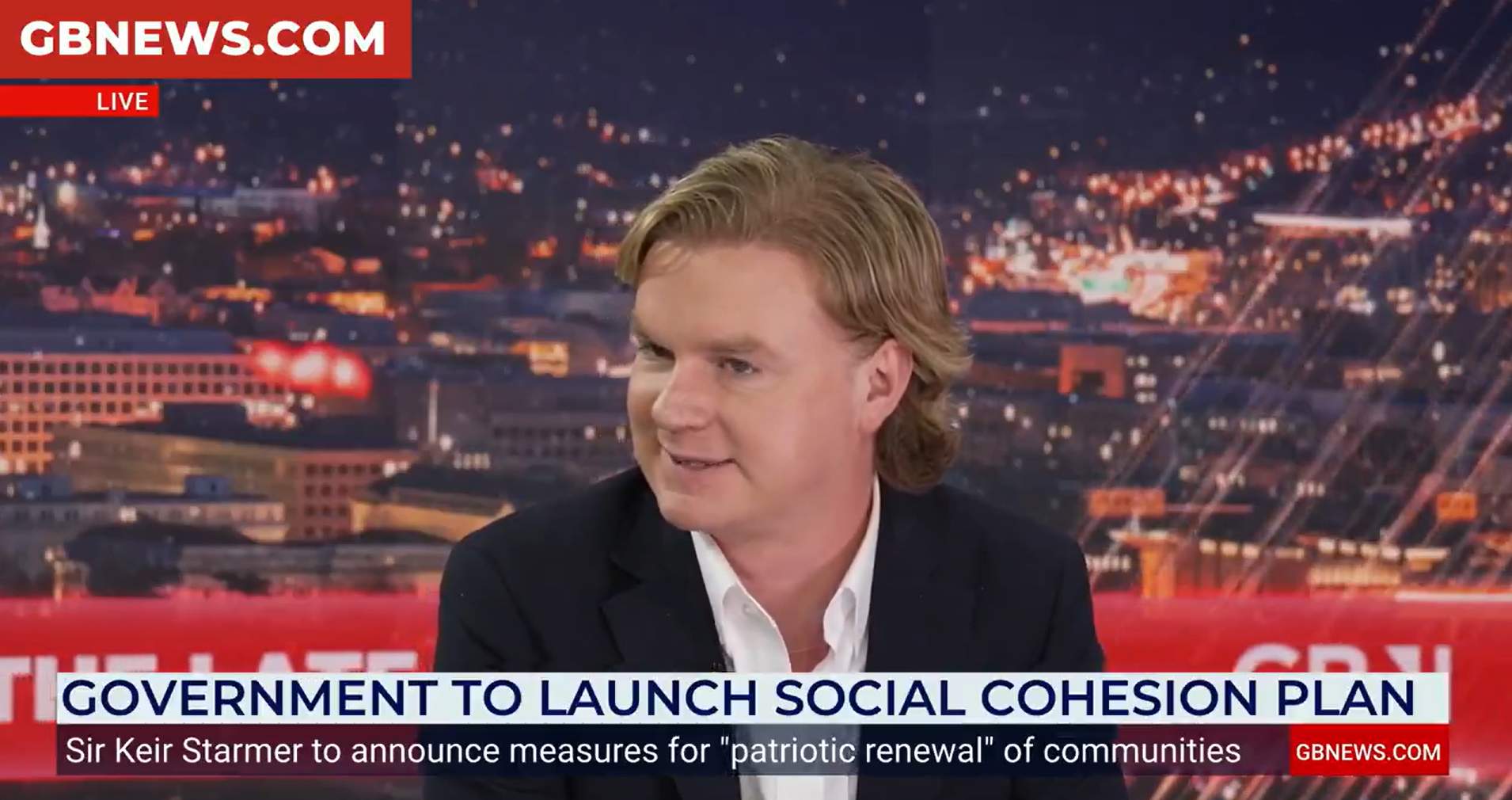
GB News Under Fire After Airing ‘White Genocide’ Conspiracy Theory From Former Boris Johnson Aide
Ofcom is under pressure to investigate after the channel promoted his claims that white Britons face demographic “genocide” by ethnic minorities who will “turn on” them
Radom and the UK Oversight Gap
Radom’s crypto operations are conducted through its Polish entity, Radom Pay, registered in Warsaw, which is not registered with the UK Financial Conduct Authority. All cryptocurrency services on the Radom platform are provided solely by the Polish entity, not by Radom Pay Limited, its English-registered company.
Spotlight on Corruption, the anti-corruption campaign group, has submitted written evidence to Parliament warning that Radom “is not answerable to a UK regulator” and “would not face sanctions in the UK if it was found to have acted in breach of its political financing laws”.
According to Spotlight’s Senior Advocacy Advisor Tim Picton:
Radom pools wallets from multiple clients – including Reform. While it is technically possible to trace money flowing into Bitcoin and Ethereum wallets, it is not possible to specify which donations belong to Reform and which go to other clients. This means that Reform does not have to declare its own crypto wallets because donations flow through intermediary wallets hosted by Radom. It is not currently clear whether the money is then converted to fiat currency and sent to Reform’s bank account, or transferred directly to a Reform crypto wallet.
While making clear he has “no specific information suggesting Radom is engaged in improper conduct”, Nogacki told Byline Times that as UK regulators have no authority over a Polish VASP, any efforts to exert oversight on Reform donations received via Radom would need slow and cumbersome efforts between multiple authorities in the UK and Poland.
Describing Poland’s VASP rules as far below the “regulatory minimum” expected for a company processing political donations, Nogacki pinpointed grave weaknesses in the UK’s Political Parties, Elections and Referendums Act 2000.
The Act mandates verifying the immediate donor, he said, but overlooks the sort of due diligence needed for cryptoassets – such as looking behind the immediate transaction to trace where the funds ultimately came from.
Byline Times’ findings have prompted cross-party demands for urgent reform. Labour MP Cat Smith, the party’s former Shadow Minister for Democracy, said: “It’s important, in a democracy, that the public can follow the money to see who funds UK political parties and politicians. A ban on cryptocurrency would go a long way to ensuring that those who are reported to be donating to politics are the same people who are putting up the money.”
Liberal Democrats party chair Lisa Smart MP, a Cabinet Office spokesperson in the House of Commons similarly called on the Government to do more “to tackle foreign interference in our politics and we’ll be pushing them to go much further and ban crypto donations for good.” She criticised Reform’s acceptance of crypto donations for opening “the door to anonymous, untraceable foreign money entering British politics. It is totally unacceptable to receive money with no real oversight on where the money is coming from.”
Green MP Sian Berry said: “These donations need to be banned immediately so we can see who’s backing Reform. We know that Reform UK has close links with Trump’s team, billionaires, the Russian state and climate deniers. This is how our politics gets corrupted by narrow private interests.”
ENJOYING THIS ARTICLE? HELP US TO PRODUCE MORE
Receive the monthly Byline Times newspaper and help to support fearless, independent journalism that breaks stories, shapes the agenda and holds power to account.
We’re not funded by a billionaire oligarch or an offshore hedge-fund. We rely on our readers to fund our journalism. If you like what we do, please subscribe.
What Good Practice Would Look Like
The Electoral Commission has no expertise or technologies to analyse cryptocurrency transactions, Nogacki told Byline Times. And as a UK entity, it has no automatic right to look at the data of a donor who might use Radom’s cryptocurrency services because it operates under a foreign VASP.
Nogacki outlined four ways Radom’s infrastructure could be exploited. Firstly, a foreign donor might fund a UK-registered individual or company through crypto, who then donates to the party as an apparently legitimate domestic contributor.
Secondly, a UK shell company might be secretly capitalised through crypto routed via Warsaw. Thirdly, multiple crypto wallets could make funds untraceable before they reach the provider.
Fourthly, cryptocurrency can be used to split a large sum into many small donations below £500 – which currently do not need to be counted as a donation under existing regulation.
To combat these risks, Nogacki said that any cryptopayments processor for political parties should operate a specific anti-money-laundering policy designed for political donations – including detailed checks on where each donor’s money comes from.
Regular independent audits, with summaries made public, should be conducted. The company should have formal cooperation agreements with UK authorities and share donor information on request.
Nogacki further called for all cryptocurrency donations to be converted into traditional currency within 48 hours, and for the provider itself to be responsible for publishing regular reports disclosing how many donations it processed, how many it rejected, and what warning signs it detected.
A provider meeting those tests, Nogacki said, “would look qualitatively different from a thinly capitalised VASP marketing a Polish registration and lightly controlled crypto rails into UK politics.”
Reform’s Wider Accountability Questions
These findings add to a growing body of Byline Times reporting on the accountability gaps surrounding Reform UK’s financial infrastructure.
Previous investigations have revealed Radom’s origins within pro-Trump Silicon Valley networks; that the party’s biggest donor, Christopher Harborne, profits from ties to a pro-Kremlin platform hosting a Russian intelligence-backed influence operation; and that Farage himself was paid by a Trump crypto advisor who collaborated with convicted fraudster Paul Manafort – the operative behind the Trump-Russia influence scandal who played a key role in crafting the American President’s crypto agenda.
Nogacki’s analysis raises the question of whether a British political party should be processing donations through a fundamentally inadequate regulatory regime – one that UK authorities have almost no power to scrutinise.
Neither Reform UK nor Radom responded to requests for comment.