
 Subscriptions
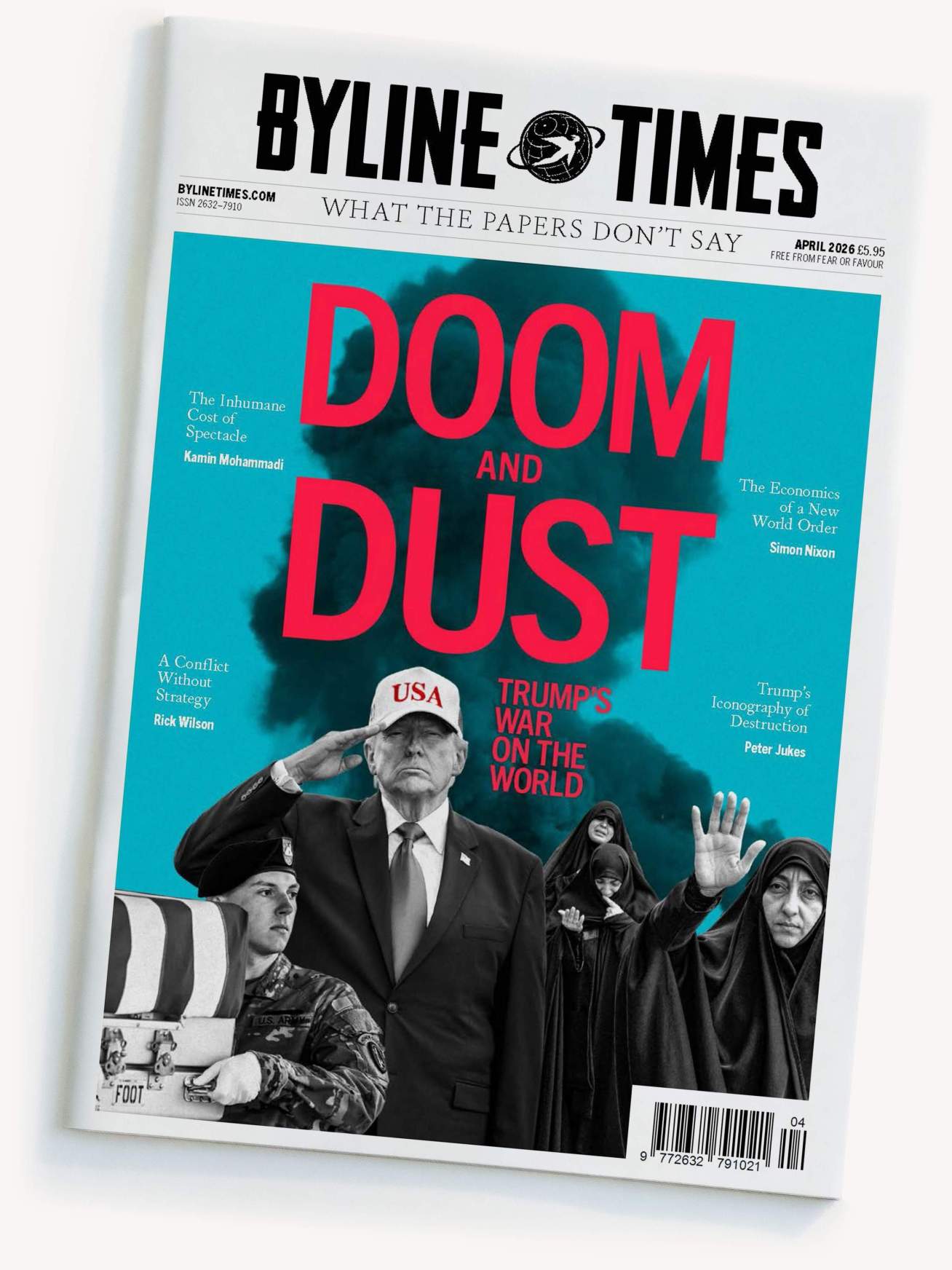
Read our Monthly Magazine
And support our mission to provide fearless stories about and outside the media system
When Sputnik was launched by the USSR as the first satellite in space in 1957, the West was caught flat‑footed by a moment of technical and cultural revolution which had gone largely undetected over the preceding decade.
In a 2013 email, Jeffrey Epstein used the Sputnik analogy with a senior Russian official, saying that “the same can now happen with Russia taking the lead in finance,” arguing that instead of merely copying Silicon Valley and chasing Microsoft, Apple and Google, Russia could “leapfrog the global community by reinventing the financial system of the 21st century” through a new kind of money and securitisation.
The Russian official was Sergey Belyakov. After graduating from the FSB spy Academy, Belyakov had been a senior advisor to one of Vladimir Putin’s most stalwart oligarchs and international operators, Oleg Deripaska — himself a close associate of Epstein and Labour peer Peter Mandelson. By 2013, he was Russia’s Deputy Minister of Economic Development.
Epstein reminded Belyakov that he had helped craft the derivatives markets in the United States in the 1970s, and that this was a prelude to a “more advanced disruptive securitisation scheme that is now made possible by technology.”
Russia, Epstein insisted, was “unique in its capability to execute on a grand vision” for “a new form of money, on a worldwide basis… much larger than any single project envisioned by any govt, and at its core not really that difficult to bring to fruition.”
He had reason to believe he would be listened to at the highest levels.
Writing on 22 May 2013, Epstein revealed: “Putin asked me to be in St Petersburg at the same time as his economic conference. I told him no. If he wants to meet, he will need to set aside real time and privacy.”
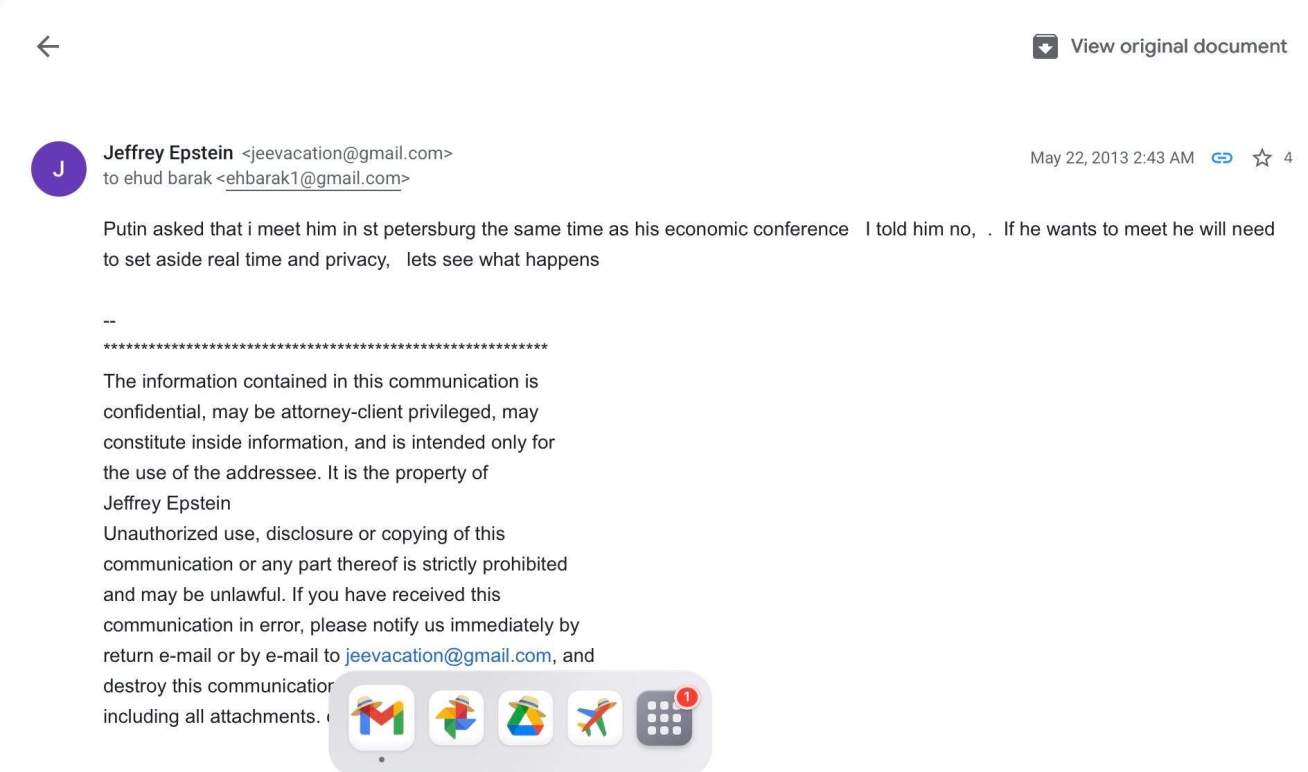
This wasn’t idle gossip. Epstein shared it with Ehud Barak, the former Israeli Prime Minister, who, weeks later, would meetPutin himself and could easily verify the claim through Kremlin channels.
In January 2014, Thorbjørn Jagland (then secretary general of the Council of Europe) wrote to Epstein that he was planning to meet the Russian President in Sochi. Epstein told Jagland to “explain to Putin that there should be a sophisticated Russian version of bitcoin,” calling it “the most advanced financial instrument available on a global basis”.
That is the lens for understanding the rest of the crypto network built around Epstein, Vladimir Putin, Peter Thiel and Steve Bannon.
ENJOYING THIS ARTICLE? HELP US TO PRODUCE MORE
Receive the monthly Byline Times newspaper and help to support fearless, independent journalism that breaks stories, shapes the agenda and holds power to account.
We’re not funded by a billionaire oligarch or an offshore hedge-fund. We rely on our readers to fund our journalism. If you like what we do, please subscribe.
Social Capital
The key figure, along with Elon Musk, in the so-called PayPal Mafia and the founder of Palantir, Peter Thiel, was a keen admirer of cryptocurrency and its ability to provide an alternative to government-controlled fiat money, once declaring, “Bitcoin is what PayPal should have been”.
He had long been in Epstein’s sights.
Back in 2012, Epstein received an email from fintech entrepreneur Ian Osborne, suggesting they “do Peter Thiel for drinks,” calling Thiel “best for currency” and tying him to Abu Dhabi’s sovereign wealth.
In 2013, Epstein was urging former Israeli minister Ehud Barak, urging Barak to “spend real time with Peter Thiel”.
By July 2014, Thiel and Epstein were emailing each other about Bitcoin regulation at the New York Stock Exchange. In September that year, Epstein was hosting back-to-back meetings with Thiel and William Burns, then deputy Secretary of State in the Obama administration and now the director of the CIA.
By 2015, Epstein floats Thiel as one of the people Belyakov should meet. Following Epstein’s suggestion, Belyakov was put in direct contact with Thiel, who asked his executive assistant to arrange an in-person meeting with him in July 2015.
Epstein had various interests here. The first is crypto. MIT emails show Joi Ito soliciting and accepting Epstein donations that helped keep Bitcoin Core developers on payroll after the Bitcoin Foundation collapsed. A separate thread shows that Epstein participated in the 2014 seed round for Bitcoin infrastructure development company Blockstream, raising his allocation from $50,000 to $500,000 after Ito asked for more room in an oversubscribed deal
But, just as Thiel was interested both in blockchain currencies and surveillance and data systems like Palantir, Epstein joined him with a $40 million investment in Thiel’s Valar Ventures, which, according to Ehud Barak, was ‘co-owned’ by Thiel and Epstein as they bought into the Israeli surveillance tech firm Carbyne.
(A spokesman for Peter Thiel has subsequently denied this, and said Epstein was just a “limited partner”.)
As Epstein and Thiel’s finances aligned, so did their politics. Both men were unusually important early backers of Donald Trump’s first presidency. A brief exchange from the emails captures the tone of the relationship. Epstein wrote to Peter Thiel, “I liked your Trump exaggerations, not lies,” before suggesting that Thiel “visit me [in the] Caribbean.”
Thiel broke with much of Silicon Valley to endorse Trump and pour millions into pro‑Trump PACs. Epstein’s correspondence shows close tracking of Trump–Clinton polling, campaign personnel, and appointments linked to Bitcoin and fintech.
At his Republican National Convention speech in 2016, Thiel used the platform at Trump’s coronation to attack “financial bubbles” and praise “new forms of money,” later telling audiences that Bitcoin could be a “Chinese financial weapon” or a hedge against the US dollar’s reserve status.

How Epstein Channelled Race Science and ‘Climate Culling’ Into Silicon Valley’s AI Elite
The Epstein files expose how racial hierarchy, genetic “optimisation” and even climate-driven population culling circulated inside Big Tech circles
As Russia’s interference campaign around the US elections geared up with major social media campaigns and hacking of Hilary campaign emails, Epstein was also arranging lunches at his New York townhouse between Trump backers Thiel and Tom Barrack and Russia’s UN ambassador Vitaly Churkin, a veteran Kremlin operator.
After Churkin’s sudden death in 2017, Epstein emailed Thiel: “My Russian ambassador friend died. Life is short, start with dessert.”
‘Brexit is Just the Beginning’
Epstein was a regular visitor to the UK, even beyond his connections to Ghislaine Maxwell and Andrew Mountbatten, and he kept a keen eye on UK finances and politics.
Across the recently released messages and emails, he treats Britain’s vote to leave the European Union in June 2016 as both a political realignment and a trading opportunity – something to be shorted financially and leveraged geopolitically. As he writes to Peter Thiel about the chaos caused by the referendum, “Brexit is just the beginning.”
To that wider end, beyond his Silicon Valley and Russian manoeuvres, Epstein was devoting considerable time and intellectual capital to a major project led by the former head of the Trump Campaign, and White House chief of staff, Breitbart publisher and Cambridge Analytica co-founder, Steve Bannon, who had lost his job as White House Chief of Staff and was looking for a new role.
He found it initially in a pan-European populist ‘Movement’, founded by Nigel Farage’s partner Laure Ferrari and allies like People’s Party leader Mischaël Modrikamen in 2017, and initially fronted by Bannon’s close friend — Nigel Farage himself.
It was registered in Brussels with a mission to unite “populist and conservative movements in Europe,” defending “national sovereignty” and “effective national borders”.
Behind the scenes, Jeffrey Epstein emerged as Bannon’s patron and strategist for the movement, providing financial advice on how to avoid financial scrutiny, offering transport and accommodation and introductions to key figures in Europe.
Throughout the turbulent Brexit interregnum, as Theresa May’s Government struggled to find a European exit which was acceptable to the Eurosceptic right, Bannon was flying into the UK, organising the opposition.
In 2018, Bannon told Epstein he was meeting Boris Johnson, Nigel Farage and Jacob Rees-Mogg, to corral them to topple Theresa May. The author Michael Wolff wrote to Epstein that he was an intermediary with leadership challenger Boris Johnson.
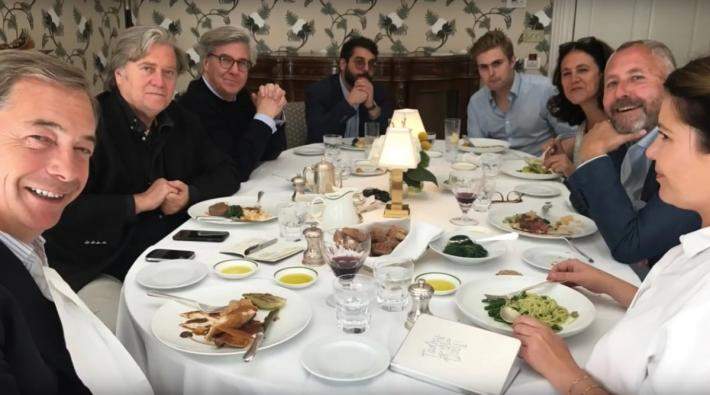
Dinner with Mr Brexit: Bannon’s European Revolution – Planned with Farage, Backed by Epstein
Nigel Farage was the figurehead and his partner Laure Ferrari started it. Steve Bannon and convicted sex offender Jeffrey Epstein were providing almost daily support
However, the United Kingdom was just one stopover in Bannon’s internationalist populist plans and he was soon texting Epstein about his wider European ambitions, claiming: “I am now advisor to the Front [National]; Salvini / League; AfD; Swiss People’s; Orban; Land and Freedom; Farage – next May is European Parliament elections – we can go from 92 seats to 200 – shut down any crypto legislation or anything else we want.”
By 2019, when Theresa May was replaced by Boris Johnson, Bannon was exultant: “May gone… We really did crush them….We’re rolling.”
Even then, cryptocurrencies were rarely off the agenda, with Bannon agreeing, “crypto is the currency, blockchain is the equivalent of internet 2.0”
The Legacy of Crypto Politics
Britain left the EU in 2020. Epstein was arrested and then died in prison. Farage’s UKIP was replaced by his more domestically focused Reform UK Party. However, these lessons in fintech and its ability to rewire or subvert democracy were not lost.
When Farage’s close aide, former UKIP MEP and leader of Reform UK Wales, Nathan Gill, was arrested on suspicion of taking pro‑Russian bribes in September 2021, he was actually en route to speak at a Kremlin‑backed forum on Russia’s DEG e‑voting system.
He was due to deliver a talk entitled “The Same Technology That Gives Us Crypto Currencies Also Will Change the Way That We Vote,” explicitly tying blockchain to election infrastructure.
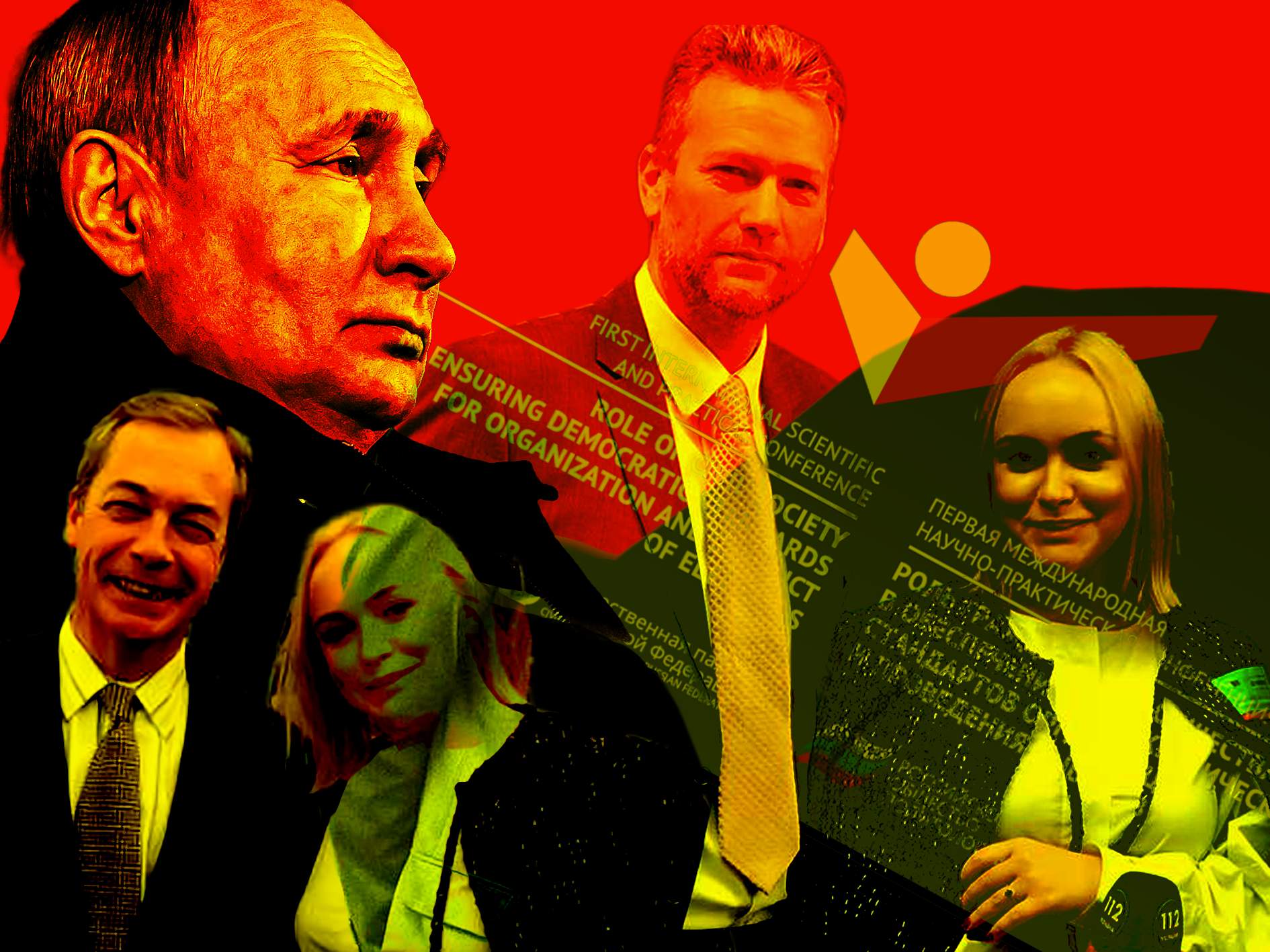
What Nathan Did Next: A Kremlin-Backed Forum on How to Subvert Western Democracy
The former Reform UK Welsh Leader Nathan Gill was due to give a talk on cryptocurrencies at a Kremlin-backed convention in Moscow when he was arrested
Farage’s Reform UK then became the first British party to solicit crypto donations, via an overseas processor outside full FCA scrutiny – exactly the kind of opaque funding channel anti‑corruption experts had warned about.
Meanwhile, Vice President J. D. Vance – whose Ohio Senate run was heavily bankrolled by Thiel and who has echoed his grievances about the “deep state” and globalism – now sits at the heart of Trump’s project as vice‑president and the most articulate advocate of national conservatism inside the administration.
Vance’s ascent hard‑wires Thiel’s worldview into the executive branch: a politics that treats technology, from surveillance companies like Palantir, to Bitcoin and other cryptocurrencies, as instruments of state power and civilisational competition rather than neutral infrastructure.
Set against Epstein’s 2013 Sputnik email to Moscow – urging Russia to “reinvent the financial system of the 21st century” by creating “a new form of money on a worldwide basis” the various layers of the crypto politics project are laid bare by the Epstein files.
Though Epstein has gone, the cryptocurrency infrastructure he helped to rescue, the ideological antipathy to regulation in Silicon Valley, and the dark, unaccountable influence of crypto politics in our democratic elections remain one of his most damaging legacies.
Updated on 5 February 2026 to incorporate a comment on Epstein’s role in Valar Ventures by a Thiel representative.