Free from fear or favour
No tracking. No cookies

Daily Mail Trial: ‘My Every Move, Thought or Feeling Was Being Tracked and Monitored Just for the Mail to Make Money Out of It’

As Elizabeth Hurley and Prince Harry give evidence at the Mail trial, some wider themes and personalities emerge beyond the claims of illegality

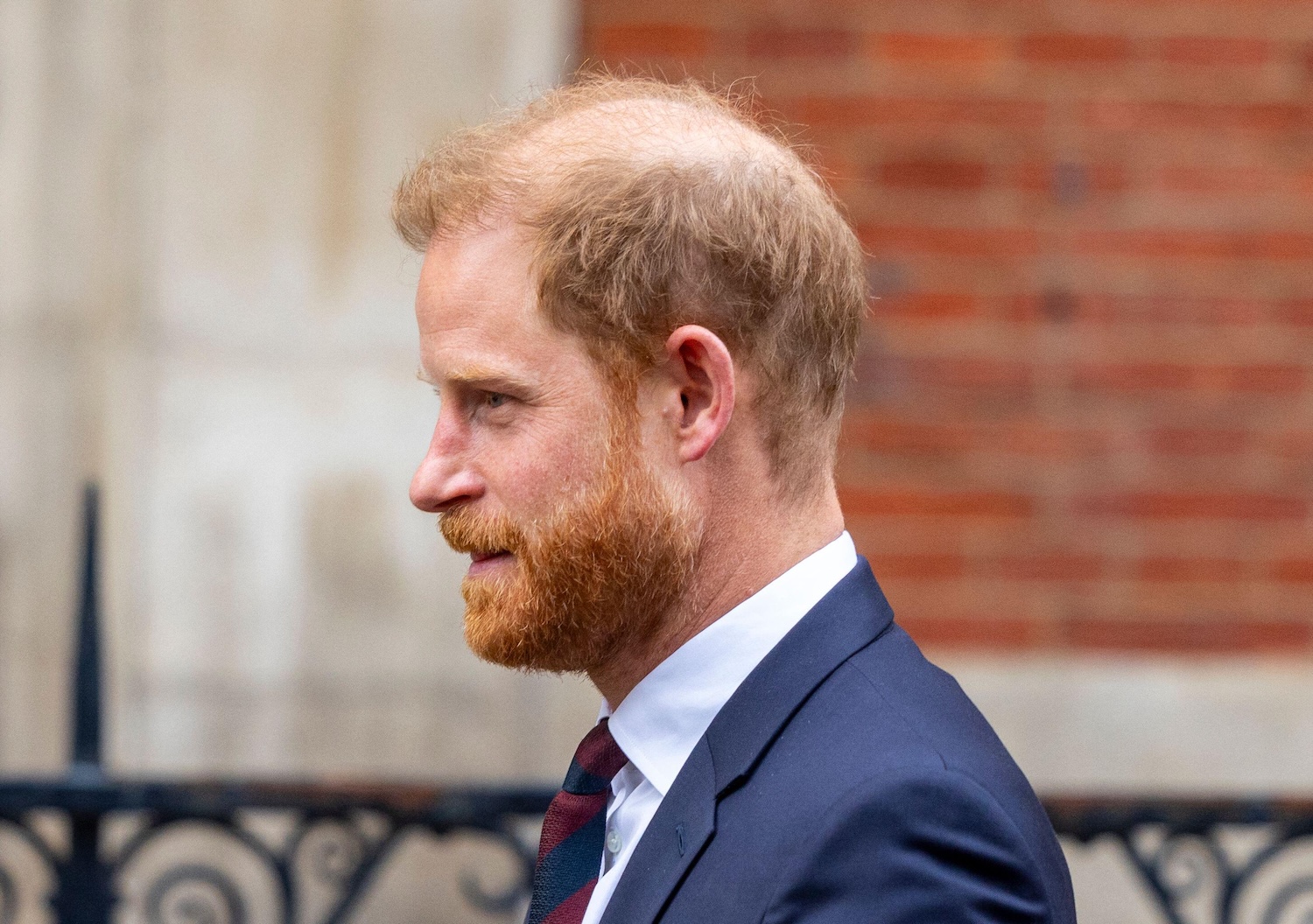
Elizabeth Hurley, actress and model, leaves the High Court. Prince Harry along with other celebrities are suing Associated Newspapers of using unlawful methods of snooping on them to create sensational headlines. Photo: Mark Thomas/Alamy

Read our Monthly Magazine

And support our mission to provide fearless stories about and outside the media system

Prince Harry and Elizabeth Hurley, each giving evidence at the Royal Courts of Justice earlier this week, have alleged that the Mail tore apart relationships, drove its targets to paranoia, and made life miserable for anyone caught in its crosshairs.

The publisher did so, they claim, by illegally spying on them, publishing their secrets, and invading the privacy of their families, partners and closest friends.

It was a bruising opening week for the Mail, whose publisher, Associated Newspapers Limited, is defending itself against litigation brought by Prince Harry, Sadie Frost, Sir Elton John, David Furnish, Sir Simon Hughes, Baroness Doreen Lawrence and Elizabeth Hurley.

The claims allege widespread illegality at the publisher, arguing that the Mail’s prolific use of private investigators known to use unlawful methods demonstrates that the publisher was illegally spying on its targets.

The claimants argue that private information about the lives of the claimants was obtained by listening in on voicemail messages and even live phone calls, and published in the newspaper – all to sell more papers and make the publisher more money.

The Mail’s defence is that there is no direct evidence of illegality, arguing that journalists got hold of private information through friends and other associates of the claimants.

They also argue that the claims have been brought too late, and should have been brought years ago – despite the Mail’s own heated denials of wrongdoing at the Leveson Inquiry – into the culture, practices and ethics of the press following the exposure of the phone-hacking scandal in 2011-12 – and since.
BREAKING

Daily Mail Trial: British People Say Press Standards Haven’t Improved Since Phone Hacking Scandal

As the Daily Mail goes on trial for alleged lawbreaking, a new poll finds seven-in-ten voters demand independent regulation of the press


The Wider Picture

The summary of the claimants’ case, published on Monday, threatens to suck other senior figures in the press into the litigation.

The current editor of The Sun, Victoria Newton, is alleged to have been a “habitual” user of unlawfully accessed information, while the editor of the Mail on Sunday, David Dillon, is alleged to have commissioned private investigators for criminal activity.

The findings in the case could have implications for the online and print news media more broadly. If it is found that yet another newspaper engaged in illegal behaviour, calls for the second part of the Leveson Inquiry are likely to intensify.

Hacked Off even came up once or twice during the course of evidence given by both Hurley and Prince Harry, with the Duke of Sussex generously praising the campaign for its “fantastic work”.

“Hacking of my voicemails, landline tapping, blagging, obtaining itemised phone bills, hardwire tapping, and obtaining private flight information for my former girlfriend, Chelsy Davy, amongst other criminal methods… was deliberately undertaken with the purpose of publishing articles about me in the Mail newspapers because it made them money.”


Witness Statement of Prince Harry

On Wednesday Prince Harry took to the witness stand and his witness statement, setting out his allegations in his own words, was published.

An object of relentless fascination to the press throughout the 2000s was Harry’s romantic life. In his statement, he highlights an article entitled ‘Harry’s Older Woman’, a piece which covered his relationship with a former girlfriend. He was 18 at the time.

At best, this was obsessive coverage of a teenager’s relationship. But Harry alleges that it was published as a direct result of phone hacking or “blagging” – the use of impersonation to get someone’s personal information. In other words, Harry’s claim is that the Mail was actively and illegally spying on the private communications of a teenager and his girlfriend.

Harry refers to the Mail’s behaviour as “creepy” on four separate occasions throughout the statement.

Writing about visiting Africa, and encountering certain reporters for the Mail at every major engagement, Harry remarks:

“They turned up everywhere. It felt like full-blown stalking and constant surveillance.”

The Mail’s behaviour was so relentless, Harry described it as a “campaign” to damage him, saying:

“It’s just one part of an endless pursuit, a campaign, an obsession of having every aspect of my life under surveillance so they could get the run on their competitors and drive me paranoid beyond belief, isolating me, and probably wanting to drive me to drugs and drinking to sell more of their papers.”

Prince Harry Takes a Stand for Us All: ‘If They’re Supposedly Policing Society, Who On Earth is Policing Them?’

The crisis and corruption in the British press is one of the biggest, ongoing scandals of our time. Byline Times tips its hat to Prince Harry

He later added, in reference to another article:

“The headline speaks to exactly how they wanted me to be: lonely, miserable, depressed.”

A second theme in Harry’s statement is his concern for his loved ones, and the impact the Mail’s alleged hacking had on his relationships. Every time an article was published with private information, he assumed it had been deliberately leaked.

Lamenting the circumstances of one break-up, he says:

“My relationship with Natalie broke down precisely because of the distrust and it led to me not speaking to her for years – it seemed as though someone was leaking these stories but I now believe that it will have come from listening in to our communications, voicemail interception and/or blagging.”

Describing the impact of one article on his relationship with Chelsy Davy, he says that it “had a hugely negative effect on our relationship. It added pressure and created a massive strain.”

He also refers to “vicious persistent attacks on, harassment of and intrusive, sometimes racist articles concerning Meghan, Duchess of Sussex”.

The other recurring theme in his statement is his commitment to exposing the truth about press behaviour. He acknowledges the risks for people seeking to assert their rights against the Mail, one of the most powerful companies in the country, which is accountable to no one but its owner, and has no reservations about using its influence to attack and abuse its opponents. But he finds there to be a sense of “public duty” in bringing his claim.

His time on the stand was brief, and added little to his written statement.

The Mail’s barrister put it to him that the articles might have been the result of leaks from his friendship group, which Harry denied. The barrister repeated the Mail’s overall defence: that there is no direct evidence of the Mail instructing an investigator to act unlawfully.

On Thursday, Harry was followed by Elizabeth Hurley in the witness stand.

“People should feel comfortable in their own homes, feel free to say personal things to their mother, family and friends, without those conversations being illegally taped and broadcast to the world by a national newspaper.”


Witness Statement of Elizabeth Hurley

Elizabeth Hurley is not new to asserting her rights against the press, and this is immediately obvious from her witness statement. Every time someone in the public eye seeks to defend themselves from unjustified intrusion, parts of the press resort to the well-worn line: that parts of your life are public, so you can’t complain when other parts are exposed.

Pre-empting this, Hurley explains the steps she takes to protect her privacy, and makes the case that the fact someone works in the public eye should not deprive them of their right to a private life.

Addressing the press’ inevitable attacks directly, she says:

“I believe that we should all be free to live with the expectation that what is private is private. People should feel comfortable in their own homes, feel free to say personal things to their mother, family and friends, without those conversations being illegally taped and broadcast to the world by a national newspaper.”

The End of the Mail’s Useful Legend? Doreen Lawrence Accuses Newspaper of Spying on Her

The case may shatter the Mail’s claims about its role in achieving justice for Stephen Lawrence, writes Brian Cathcart

Summarising her reasons for bringing her claim, she adds:

“I am not looking for sympathy. I am looking only for accountability.”

The Mail, she alleges, bugged her home and tapped her landline, as the newspaper listened in on every private interaction she had. These alleged activities occurred while she was carrying her son Damian, soon to become a single mother, and while dealing with the “hideous” behaviour of Damian’s father, Stephen Bing.

Victoria Newton, now editor of The Sun, is one of those reporters alleged to have used unlawful information in their coverage of Hurley.

Ms Hurley reflects:

“Looking at the unlawful articles, now armed with the knowledge that they had been illegally sourced, makes me feel as if my private life had been violated by violent intruders; that there had been sinister thieves in my home all along and that I had been living with them completely unaware.”

The article, bylined by Newton, reports on the paternity of Ms Hurley’s son Damian, and crudely suggests, given Mr Bing’s wealth, that the finding “could net £300,000 a year [for Ms Hurley]” in child support payments.

Hurley adds:

“Victoria Newton has become a familiar name to me. It has pained me to see her name turn up again and again on documents revealed through legal action I have taken. I know for certain that she was setting private investigators on me when I was pregnant with Damian and that she was intruding into my life and stealing my information in 2001 and 2002 when I was utterly besieged by what was happening with Stephen [Bing].”

Further articles cover the details of the exchanges between Hurley and Bing, and the difficulties Ms Hurley faced in encouraging Bing to take accountability for his son. The Daily Mail’s knowledge of every detail of these events was “degrading and humiliating”.

Although not explicitly relevant to Hurley’s claim, much of the coverage cited is profoundly misogynistic, with one article including a cartoon with a speech bubble speculating on the “worth of Stephen [Bing’s] DNA”.

Other coverage revealed and exacerbated tensions between Ms Hurley and her friends and other romantic interests. She describes herself as “mortified” when private conversations, in which personal thoughts were shared with the closest of friends, ended up in The Daily Mail.

Cross-examining her on the stand, the Mail’s lawyer put it to her that all of the quotes in the articles cited could have come from her friends, from comments she had made to other publications and journalists, or been leaked by her ex-partner Stephen Bing. In other words, that the Daily Mail could have got its information about her using lawful means.

Ms Hurley dismissed the idea that her friends leaked the comments as “preposterous”, although she noted that Stephen Bing has since passed away, and cannot answer for himself.

Emotional, Ms Hurley reiterated how difficult it was to come to court and go back over some of the most difficult periods of her life. But she, as with Harry, is determined to see that the Mail is held to account for the crimes she alleges were committed against her.

EXCLUSIVE

Daily Mail High Court Trial Casts Shadow Over Lord Rothermere’s Telegraph Bid

Allegations that the Mail engaged in phone hacking, landline tapping, burglaries, and the theft of medical records are threatening to derail its £500 million takeover of the Telegraph


One Consistent Theme

It is striking, on review of the two witness statements published this week, how profoundly intrusive, abusive and, in some cases, misogynistic the Mail’s coverage forming the basis of the claims is:

And that is before the question of illegality, the subject of this trial, even arises.

The Mail’s publisher, Associated Newspapers Limited, denies all of the claimants’ allegations of unlawful behaviour. The trial is expected to last up to nine weeks.


This article was filed under
, , ,