
 Subscriptions
 Subscriptions
Read our Monthly Magazine
And support our mission to provide fearless stories about and outside the media system
When the Trump administration recently announced visa sanctions against five Europeans involved in anti-hate and anti-disinformation work, the move was presented as a defence of the First Amendment in the face of alleged censorship by EU bureaucrats.
The more consequential story, however, is not about free speech but about money and power: who gets to regulate global tech platforms, who bears the cost of online harm, and who wins and loses when the United States takes sides in the global fight over tech regulation.
The beneficiaries of the Trump administration’s unprecedented sanctions are not ordinary Americans whose voices were supposedly silenced. Instead, they are the same US tech companies and billionaire executives who have spent years lobbying against the EU’s Digital Services Act (DSA), donating to Trump-aligned political causes, and promoting a narrative that equates platform accountability with censorship.
What makes the sanctions decision so extraordinary is not only the alignment of interests but the escalation of a long-running battle between US tech platforms and foreign regulators. The Trump administration has effectively adopted the tech industry’s worldview and used US diplomatic power to advance it — against America’s own allies.

Elon Musk Has Made X a Threat to Democracy and His War on the EU Proves It
Caroline Orr Bueno reports on how the billionaire X owner has turned Twitter into a tool for foreign interference which monetises and weaponises a global network of disinformation
Targeted Sanctions
The sanctioned individuals are not random Europeans expressing opinions about speech or content. They are people whose work has directly intersected with, supported, or strengthened enforcement of the EU’s Digital Services Act — the most serious effort anywhere in the democratic world to impose transparency and risk-mitigation requirements on large online platforms.
They include Thierry Breton, the former European Commissioner for the Internal Market and a central architect and enforcer of the DSA; Imran Ahmed, founder and chief executive of the Center for Countering Digital Hate (CCDH); Eva Maria Kirschsieper and Anna-Lena von Hodenberg, managing directors of HateAid; and Rashad Ali, a British counter-extremism expert whose work has focused on online radicalisation and Islamist and far-right propaganda.
Musk’s framing – research as censorship and enforcement as oppression – has now been elevated from a CEO’s grievance to US foreign policy.
Their work differs in scope, but it aligns in one crucial way: each has contributed — through regulation, research, or legal advocacy — to holding large tech platforms accountable for systemic harms.
That accountability is precisely what the DSA is designed to impose. The law does not ban political viewpoints or dictate acceptable opinions. Rather, it requires large platforms to assess systemic risks such as disinformation and extremism, curb illegal content, and provide transparency into how their systems shape public discourse. It also authorises fines of up to 6% of global annual revenue for non-compliance — amounts that can reach into the billions for companies such as X and Meta.
The Financial Stakes for Big Tech
For platforms whose profits depend on engagement-driven algorithms and minimal oversight, the DSA represents an existential threat to their business model.
Compliance with the DSA requires tech platforms to take steps such as expanding moderation teams, conducting internal audits, redesigning algorithmic systems, and meeting transparency obligations that make it harder to profit from a model that exports harm. More fundamentally, reducing the amplification of toxic but viral content risks lowering engagement — the metric that drives advertising revenue.
These risks help explain why tech companies and their trade associations have spent tens of millions of dollars annually lobbying against content-moderation mandates, algorithmic transparency, and platform liability — the same pillars the DSA enforces.
The argument that they’ve presented in courts and legislatures is familiar: that such rules violate free-speech principles, even when they regulate systems rather than speech itself.
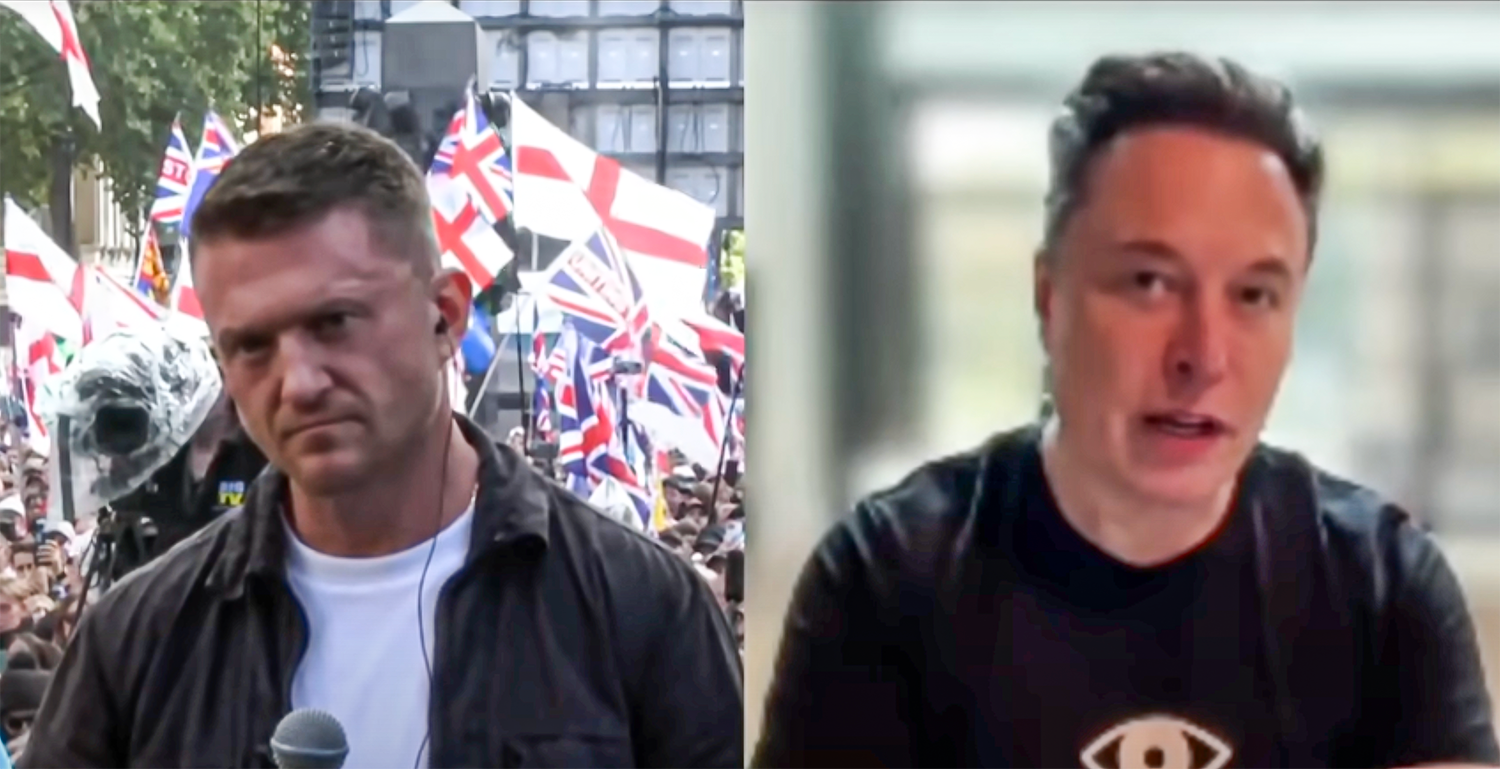
The UK Must Urgently Distance Itself From Elon Musk and Space X, Warns Parliamentary Report
The UK’s infrastructure has become far too reliant on the far-right billionaire, who could ‘politicise’ our reliance upon his companies, the report warns
As major platforms and tech billionaires aggressively lobbied against the exact kinds of regulations imposed by the DSA, many of them were also donating huge amounts of money to Trump’s political infrastructure around the 2024 election and 2025 inauguration.
Elon Musk alone spent an estimated $300 million to help elect Trump and other Republican candidates in 2024. Once in power, the Trump administration was quick to take up the causes championed by its tech industry donors. And when it did, it did so using the exact same “censorship” narrative long promoted by the industry.
Musk’s ‘Censorship’ Narrative
No figure has been more central to this fight than Musk, whose takeover of X (then Twitter) quickly turned a regulatory conflict into an ideological crusade.
After CCDH published research documenting sharp increases in antisemitic and extremist content on X, Musk publicly attacked the organisation, accused it of attempting to “destroy free speech,” and supported litigation efforts widely described by legal experts as retaliatory and weak on the merits.
Musk’s framing – research as censorship and enforcement as oppression – has now been elevated from a CEO’s grievance to US foreign policy.
In recent months, leaders at companies like Meta have repeatedly issued public statements equating platform regulation with censorship, even when the laws in question address transparency and systemic risk rather than viewpoint suppression. Meta has also recently taken a more aggressive stance against EU-style regulations and more closely aligned itself with the Trump administration, following in the footsteps of Musk and X
By politically attacking the DSA as “censorship,” and sanctioning figures associated with its enforcement, the Trump administration signals to platforms that the U.S. government is willing to contest, delegitimise, and potentially retaliate against foreign regulators. That weakens the credibility of enforcement, buys platforms valuable time to evade accountability, and sends a chilling effect to researchers, regulators, and civil society actors around the world.

Reform UK Treasurer Profited From Financial Ties to Elon Musk and Trump’s Silicon Valley Billionaires
Reform’s biggest donor and Treasurer Nick Candy held investments in a US venture fund tied to Trump-supporting tech billionaires, including Elon Musk
Turning Allies Into Adversaries
What makes the visa sanctions so consequential is not only who benefits, but who loses. The targets are not authoritarian regimes, but democratic allies acting through transparent legislative processes. The DSA was debated, amended, and passed by elected representatives across Europe, and its enforcement is subject to judicial review.
Yet the Trump administration has chosen to treat this democratic governance as a hostile act, while reserving its harshest tools for researchers and regulators rather than the companies whose systems cause harm.
In doing so, the administration has inverted longstanding US policy. For decades, the US has urged allies to strengthen democratic institutions and regulate powerful industries in the public interest. Now, it is punishing them for doing exactly that — on behalf of American corporations.
The Trump administration is not defending free expression by sanctioning researchers and civil-society actors. It is defending a set of commercial interests whose profitability depends on avoiding oversight, adopting their language, amplifying their grievances, and acting against democratic allies who dared to regulate.
If the US is willing to punish allies for regulating technology, the question is no longer whether tech companies are too powerful to govern, but whether governments are still willing to govern them at all.