
 Subscriptions
 Subscriptions
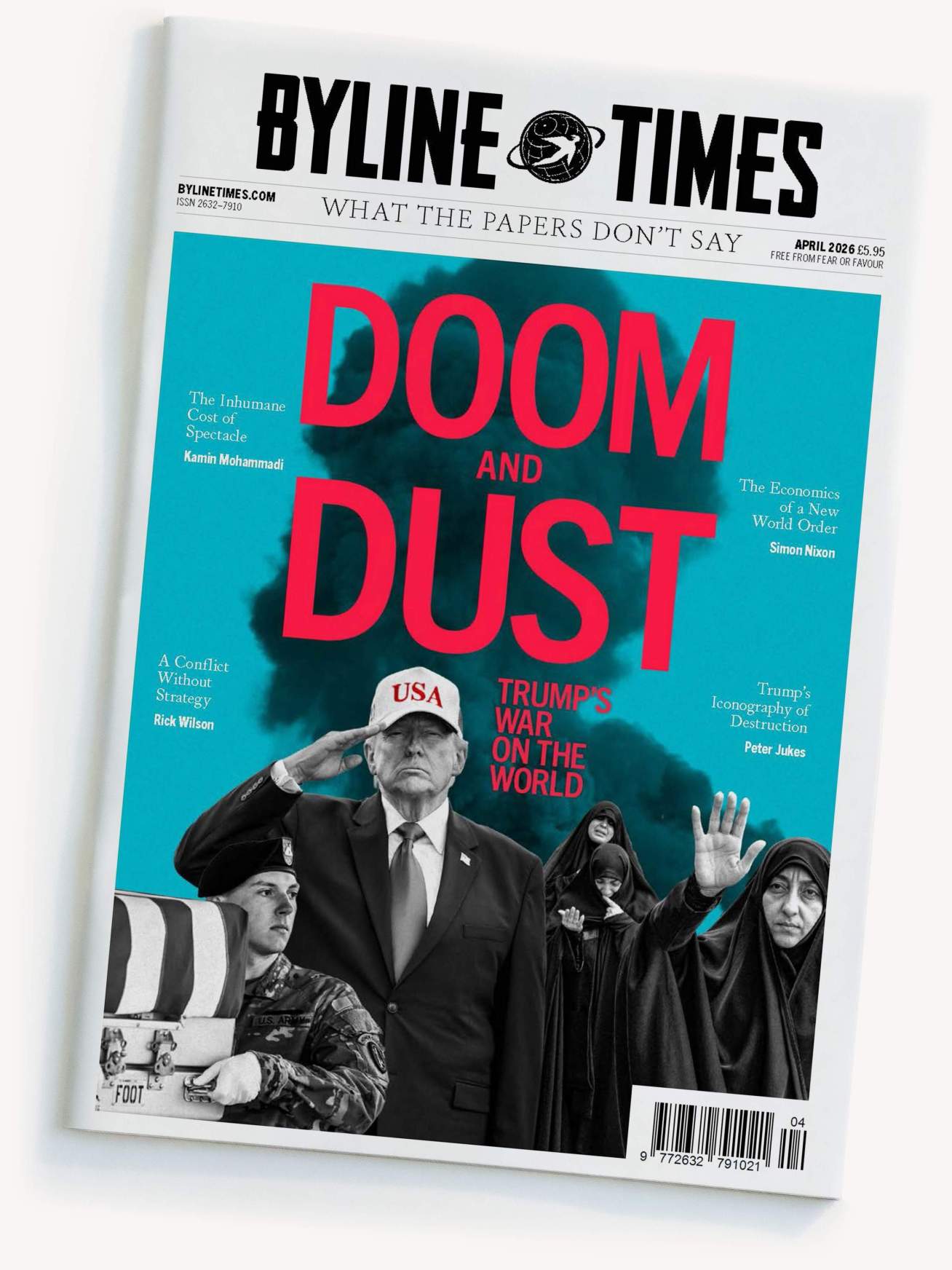
Read our Monthly Magazine
And support our mission to provide fearless stories about and outside the media system
Talks about negotiations over Ukraine have now become a daily fixture in the public sphere — not only among experts, but also in the media and in official statements. Dozens of analysts discuss diplomatic moves by Russia, the United States, Ukraine, and European leaders every day, closely tracking new meetings between special envoys, official drafts of peace plans, and the responses to them.
At the same time, frustration has been voiced repeatedly in the White House over the length and complexity of the negotiating process. Donald Trump himself has stated that the endless discussions are exhausting him. Meanwhile, the Ukrainian side has delivered to Washington its response and proposals regarding the latest draft peace plan developed jointly with European leaders. In Moscow, that response was evaluated instantly — even before it had been read. Vladimir Putin’s foreign policy aide and one of Moscow’s chief negotiators, Yuri Ushakov, commented that he was confident the document would contain no constructive proposals.
However, before even discussing the substance of a possible end to the war, it is essential to state a simple but uncomfortable reality upfront: Vladimir Putin is not negotiating in order to end the war. For him, negotiations have become a tool to lock in the results of his aggression, buy time, and restore a degree of international legitimacy — without abandoning his core objectives.

Trump Envoy Has Financial Ties With Former Adviser to Putin’s ‘Money Man’ Now Leading Kremlin Peace Talks
Steve Witkoff’s real-estate empire is bankrolled by a former adviser to Kirill Dmitriev, head of Russia’s sovereign wealth fund and a key architect of Moscow’s Ukraine negotiations
There is another equally simple reality that must be acknowledged: from the Kremlin’s perspective, negotiations are not a search for compromise, but a literal continuation of the war by other means, with diplomacy embedded directly into the military backdrop.
Not long ago, Vladimir Putin openly admitted that he is satisfied with the current state of affairs — referring to the war and all the consequences associated with it. I see no reason to doubt his sincerity here. The American administration appears increasingly willing to pursue compromises with the Kremlin in the hope of halting active hostilities in Ukraine.
This became even clearer after the publication of a leaked recording of conversations between Trump’s representative, Steve Witkoff, and Putin’s aide Yuri Ushakov. That recording offered a more explicit picture of Washington’s current approach to the process — one in which the U.S. representative appears prepared to accept virtually any compromise with the Kremlin in order to reach some form of outcome.
And today, against the backdrop of the bombardment of Ukrainian cities, missile and drone strikes on both sides of the front line, and bloody battles for populated areas, we hear less about any concrete progress and more about the fact that the parties continue contacts, working meetings, and diplomatic consultations. These are then presented as “results of negotiations” in and of themselves — even though they are not.
So What Does Putin Actually Want?
Putin’s primary objective is the recognition of a new status quo — which can be described as his minimum plan. This does not necessarily imply the formal, legal recognition of the occupied territories. The Kremlin likely understands all too well how toxic such recognition would be for Western governments. What matters far more is de facto acceptance of a frozen front line and the transfer of the remaining part of Donetsk region under Russian control without armed resistance.
Any ceasefire that locks in the current situation works in Russia’s favor. It allows Moscow to consolidate control over occupied territories, restore logistics, rotate troops, and prepare for a possible next phase of the war.
The second objective — also part of this minimum plan — is the easing of sanctions pressure, even if only partial or informal. The Russian economy is not on the verge of collapse, but it is increasingly dependent on costly and inefficient workarounds. Additional taxes and duties are being introduced inside Russia, and this is having a growing negative impact on the domestic political environment. Any signal of potential sanctions relief “in exchange for peace” would be presented by the Kremlin domestically as a victory, and internationally as evidence of Western fatigue — and, at the same time, weakness.
The third — and possibly key — objective belongs to what could be called Putin’s maximum plan: political normalisation, consolidation of territorial control, and the imposition of Russia’s political demands on Ukraine. The very fact of negotiations with the United States or European leaders already serves, in Putin’s view, as proof that Russia remains a global player and that its aggressive actions still force the world to sit down with it at the negotiating table. For the regime’s internal legitimacy, this is of fundamental importance.
Moreover, sociological surveys in Russia — both independent and Kremlin-aligned — indicate that almost any form of ending the war would be perceived positively by a majority of Russians and could even boost Putin’s approval ratings. At the same time, the Kremlin has sufficient resources to suppress potential discontent among the most radical supporters of continuing the war, whose numbers are shrinking month by month. In parallel, Moscow is attempting to use negotiations as a tool to undermine Ukraine’s sovereignty — by imposing limits on the size of its armed forces and demanding constitutional changes related to Ukraine’s military status.

Nigel Farage’s ‘Project 2029’: The Pro-Trump Lobbyist Pushing His Agenda Into the UK
A Trump-aligned anti-abortion lobbyist who hosted Nigel Farage’s meeting with a 6 January rioter in Florida has been funding and advising the Reform leader while pushing Project 2025’s hard-right agenda into Britain
What Does Trump Want?
The US position is far simpler and more straightforward. Officially, Washington — represented by the Trump administration — has repeatedly stated that this is not America’s war, and that if Trump had been President at the time, then the war would never have begun. This framing gives the White House constant room for maneuver: it can pause negotiations or exit them altogether without assuming full responsibility for the outcome.
If negotiations succeed in halting active hostilities, the Trump administration can claim the achievement as its own. If they fail, the war can still be presented as something for which the US bears no direct responsibility. It is a very convenient position — though even within this framework, moments of fatigue and irritation are increasingly visible.
The American administration seeks predictability. A frozen conflict — however morally problematic it may be — appears to parts of the US political establishment as a less risky scenario than a prolonged war with a constant threat of direct escalation between nuclear powers. In addition, there is a persistent desire to “close the file” on the conflict as quickly as possible, a drive that may be influenced in part by upcoming major elections in the United States.
In reality, however, such haste — in the absence of strong and credible security guarantees — would amount not to a full stop, but merely a comma in the war: a temporary pause that does nothing to address its fundamental causes. And below, I will explain why.
The Central Illusion
The core mistake made by proponents of negotiations — particularly on the American side — lies in the assumption that Putin would honor any agreements reached. Yet the entire history of engagement on Ukraine-related issues demonstrates the opposite. Russia violated the Budapest Memorandum, the Minsk agreements, and countless ceasefires during the war in Donbas between 2014 and 2022. From this experience, one clear conclusion follows: for the Kremlin, agreements are not binding commitments, but tactical pauses — easily entered into and just as easily broken.
Any deal based on Putin’s personal guarantees or on expectations of gradual de-escalation by Russia ignores the real nature of today’s Russian political system. War has ceased to be an inconvenience for this regime; it has become a governing tool — both in foreign and domestic policy. Through war, the Kremlin seeks to impose its will on the outside world and justify the deterioration of living standards at home.
Why a “Frozen” War Is Not Neutral
A frozen conflict is neither a compromise nor a neutral outcome. It is an asymmetric solution in which the aggressor gains a respite and partial recognition of a reality changed by force, while the victim is left with chronic instability. It is, in effect, a reward for the aggressor and a punishment for the victim.
Under such a scenario, Ukraine would be forced to rebuild not in conditions of peace, but under the constant threat of renewed attack — with destroyed infrastructure, fragmented territories, uncertain borders, and no real security guarantees. Any investment, any long-term planning would take place under a permanent risk: the risk that the war could return to a hot phase at any moment.
For Russia, such a pause would immediately be packaged as a strategic victory. The Kremlin would present it not as a halt to aggression, but as proof that coercive force works — that the West is tired and weak, and that Ukraine “could not withstand” the war. This would become part of the official myth: Russia allegedly imposed its conditions, defended the “new realities,” and forced the world to accept them.
Inside Russia, this scenario would not weaken the regime — quite the opposite. It would strengthen the propaganda narrative that the Kremlin “stood firm” against the collective West, that the country is a besieged fortress, and therefore that any restriction of freedoms is justified. Repression would not only continue, but would very likely intensify — under the pretext of defending “gained positions,” combating “internal enemies,” and preventing “revenge.” Any criticism of the war or its outcomes would be framed as a threat to national security.
In a recent publication, Valerii Zaluzhnyi — former Commander-in-Chief of Ukraine’s Armed Forces and now Ukraine’s ambassador to the United Kingdom — argued that the only measures capable of truly guaranteeing Ukraine’s security would be full NATO membership, the deployment of nuclear weapons, or the presence of allied military forces comparable in scale to Russia’s. At the same time, Zaluzhnyi acknowledged that these options are unrealistic and that “today this is not on the agenda,” meaning that the war, in one form or another, will continue even if there is a pause.
Thus, freezing the conflict does not create conditions for transforming Russia or for sustainable security in the region. It merely preserves an authoritarian system, entrenches a logic of impunity, and turns a new war into a matter of time rather than probability.
ENJOYING THIS ARTICLE? HELP US TO PRODUCE MORE
Receive the monthly Byline Times newspaper and help to support fearless, independent journalism that breaks stories, shapes the agenda and holds power to account.
We’re not funded by a billionaire oligarch or an offshore hedge-fund. We rely on our readers to fund our journalism. If you like what we do, please subscribe.
The Key Question
The question is not whether negotiations are possible — they always are. Negotiations take place at every stage of any conflict, even while weapons remain on the battlefield. The real question is under what conditions and at what cost they occur — and, most importantly, whom they actually serve.
If negotiations become a substitute for strategy, if they are driven by fatigue, electoral calendars, or the desire to lower media tension rather than by real leverage, they will not bring peace. They will only postpone the next phase of the war — likely on even worse terms. In recent weeks, we have seen how attempts to announce “diplomatic progress” were accompanied by new strikes on civilian infrastructure in Ukraine and new civilian casualties. This clearly shows that diplomacy remains a backdrop to military action — not the other way around.
Putin is not seeking peace. He is seeking time — to regroup forces, strengthen the rear, and fully transition the economy onto a war footing; legitimacy — to demonstrate to the world that his actions still carry political value; and the opportunity to consolidate aggression — so that any agreement becomes a tool for cementing territorial gains or political influence. Recent statements by Russian officials about the “need to obtain the entire territory of Donbas” clearly demonstrate that, for the Kremlin, negotiations are not a path toward ending the war, but a means of legalizing the results of occupation and creating a legal shell for continued pressure in the form of hybrid warfare.
Any serious diplomacy must begin with an acknowledgment of this reality — not with the hope that “this time it will be different,” a phrase increasingly heard from representatives of the American side. Real peace is possible only when negotiations are built on effective enforcement mechanisms, credible security guarantees, the restoration of sovereignty, and respect for international law — not on the desire to relieve the immediate discomfort of a political moment. Otherwise, any “pause” will merely be a breather before the next escalation, and the war will be passed on to future generations.