
 Subscriptions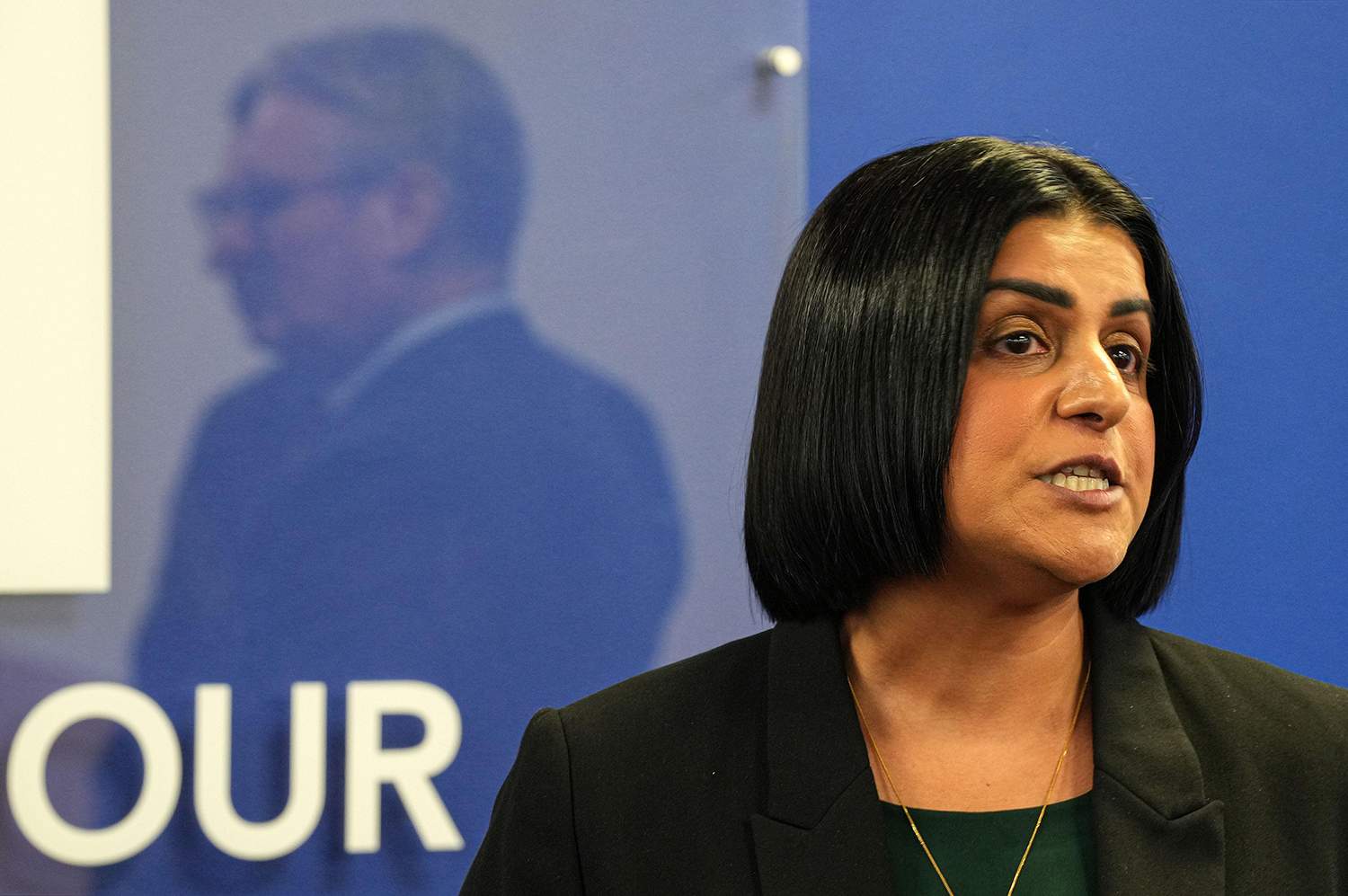

Read our Monthly Magazine
And support our mission to provide fearless stories about and outside the media system
The UK Government’s plans to house asylum seekers at two military sites have been delayed following opposition from affected Labour MPs, campaigners and local people.
Last month the Home Secretary, Shabana Mahmood announced that she would bring two military sites – Cameron Barracks in Inverness and Crowborough army training camp in East Sussex – into use.
The Home Office said it would move 900 people into the sites by the end of this year as part of its plans to close asylum hotels, amid far-right protests and disorder.
However, sources in the department have told Byline Times that local Labour MPs have refused to look at military sites in their constituencies, with one saying that they do not want to further inflame tensions within local communities. Sources added that there is also “an obvious tension” between the Home Office, which leads on asylum accommodation strategy, and the Ministry of Defence, which owns the sites.
In opposition, Keir Starmer had opposed housing asylum seekers on military sites as being costly and “inhuman”, with the then opposition leader accusing the Conservative Government of “lurching from one ridiculous proposition to the next”.

Crypto Investor Donates £9 Million to Reform UK as Nigel Farage Plugs His Company and Tells Industry ‘I Am Your Champion’
The Reform leader recently used media interviews to back Christopher Harborne’s company while promising to cut taxes and regulations on crypto firms
Despite pushing similar schemes in opposition, some local Conservative MPs have also resisted the current plans.
On Monday Nus Ghani, Conservative MP for Sussex Weald, met with Defence Minister Luke Pollard to raise her concerns regarding the security of the Crowborough site and her “lack of confidence in the Home Office and Wealden District Council in ensuring the site is safe, legal and compliant.” Pollard confirmed that the site will not be operational until at least the start of 2026.
Liberal Democrat MP Angus Macdonald also described the Government’s decision to house 300 asylum seekers at Cameron barracks in Inverness as “odd”. Moving asylum seekers from hotels in the city centre to the training camp, which is also in the city centre, was “effectively the same thing”, he said.
False Economies
Starmer’s Government hopes that moving people away from hotels in town centres to barracks, which tend to be in less populated areas, will save money and deescalate local community tensions.
But experts suggest that the use of military sites will exceed those of hotels. A report from the National Audit Office last year found that barracks would be £46 million more expensive than hotels over a decade.
In October the Home Affairs Select Committee said that the Home Office had “squandered billions” of pounds of taxpayer’s money on a “failed, chaotic and expensive system” with “flawed contracts” and “incompetent delivery”.
Campaigners fear that the use of military sites is a “sleeper issue”, which could cause significant tensions with local communities, similar to the riots and protests outside asylum hotels last summer and earlier this year.
“Our attention should absolutely be on planned use of large sites,” said Lou Calvey, executive director of charity Asylum Matters. “We know that warehousing vulnerable people without legal access or medical care won’t do anything to solve the problems in the system. It doesn’t reduce the costs – in fact it increases them. They need to be speeding up processing, not whacking a load of people on a bit of land in the middle of nowhere.”
In addition to military sites, the Home Office is looking at a range of alternative accommodation options, including student halls, pre-fabricated portacabins and Nightingale hospitals used during the Covid pandemic.
The Government already houses asylum seekers on two military sites in England. Wethersfield in Essex consists of modular buildings with men housed in containers. The barracks are far from the nearest town of Braintree and there are repeated protests outside. Last year the 800 men housed on the site were moved to hotels following concerns about unexploded ordnance and radiological contamination. The Home Office has since increased bed spaces to 1,245.
ENJOYING THIS ARTICLE? HELP US TO PRODUCE MORE
Receive the monthly Byline Times newspaper and help to support fearless, independent journalism that breaks stories, shapes the agenda and holds power to account.
We’re not funded by a billionaire oligarch or an offshore hedge-fund. We rely on our readers to fund our journalism. If you like what we do, please subscribe.
Humanitarian organisation Medecins Sans Frontieres ran clinics on the site until December 2024. In their recent report, they said that 62% of those who had accessed their services presented with severe mental distress and 30% reported suicidal ideation.
“You stay in your room not moving,” said Fadil, a resident at the camp who attended MSF’s clinic. “I don’t move, I don’t leave the room, I don’t have any desire, even going to the town. The soul is just locked.”
Napier Barracks in Folkestone has also been mired in controversy. During the pandemic, half – 197 of nearly 400 people – of those staying at the camp contracted Covid. Residents were found on hunger strike, sleeping on the basketball court outside. A man attempted to set fire to the dormitories. Those who remained at the site were left with no electricity, heating or potable water.
Earlier this year the Home Office cancelled the contract with the provider of the site, Stay Belvedere Hotels, following allegations of sexual harassment and staff pay and conditions. Asylum seekers are due to leave the site by the end of the year, before it is handed back to the Ministry of Defence.
Sabir Zazai, the chief executive of Scottish Refugee Council, said: “Housing people seeking sanctuary in remote or institutional settings, without meaningful engagement with local communities, risks fostering division and misunderstanding. Successful integration depends on engagement and connection — not isolation behind barbed wire or in disused facilities.”
A Home Office spokesperson said: “We are furious at the level of illegal migrants and asylum hotels. Moving to large military sites is an important part of our reforms to tackle illegal migration and the pull factors that make the UK an attractive destination.
“We are continuing to accelerate plans to move people into Crowborough and Cameron Barracks, when the sites are fully operational and safe. We will not replicate the mistakes of the past where rushed plans have led to unsafe and chaotic situations that impacts the local community.”