
 Subscriptions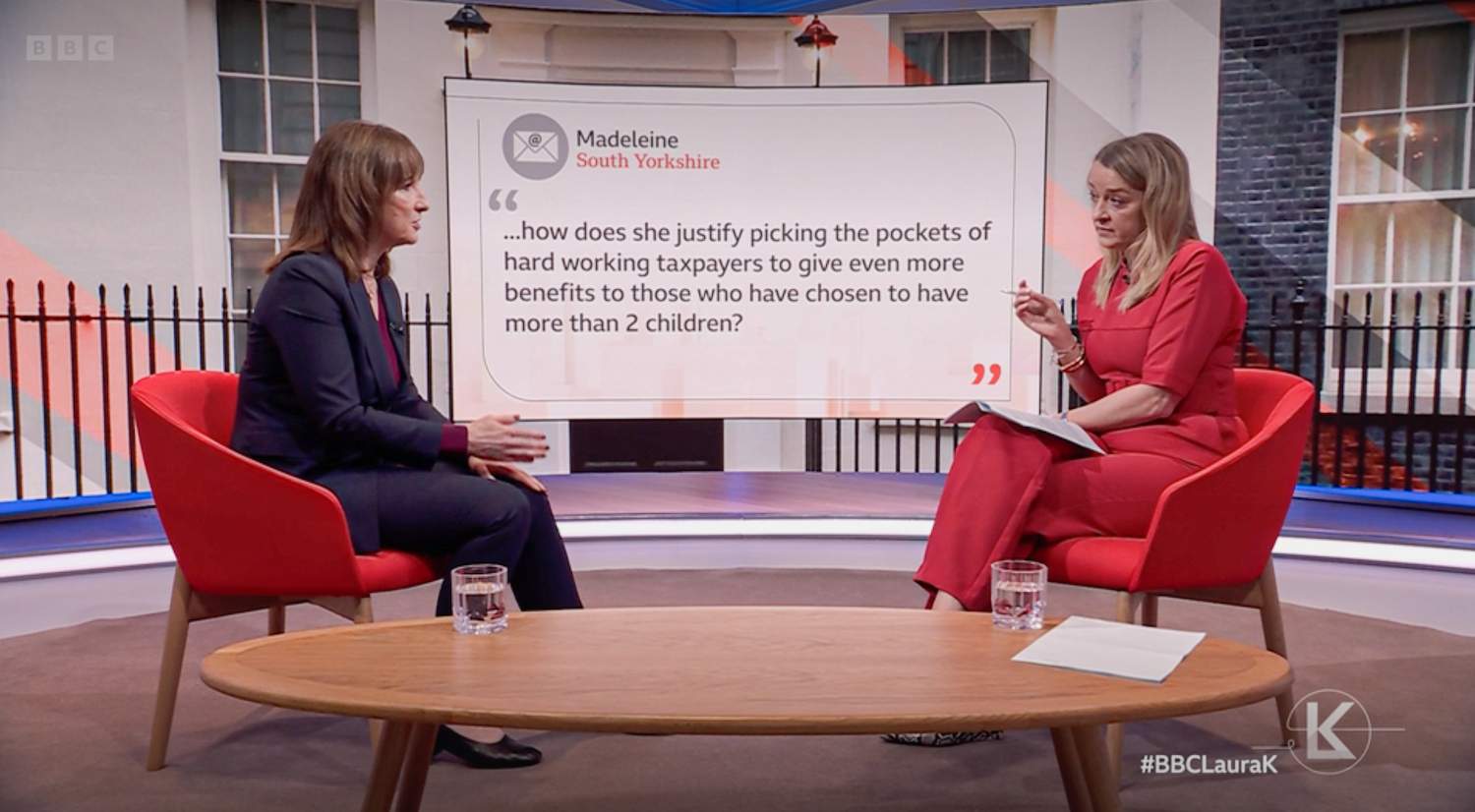
Read our Monthly Magazine
And support our mission to provide fearless stories about and outside the media system
For all the recent hand-wringing about its supposed “left wing bias”, the fact remains that the BBC’s political coverage has long been heavily-led by the agenda of Britain’s overwhelmingly right-leaning press.
On its flagship news and politics programmes, the presenters still routinely begin their programmes with discussion of what the “front pages” are saying, despite sales of print newspapers collapsing over recent years.
This editorial decision not only massively benefits the large majority of those publications which are owned by a handful of extremely wealthy Conservative-supporting owners, it also helps to frame the agenda for those shows from that same political perspective.
This could be seen clearly on the corporation’s flagship politics programme, The Laura Kuenssberg Show, on Sunday.

BBC Apologises for Failing to Challenge ‘Dark Money’ Climate-Denial Lobbyist
EXCLUSIVE: BBC faces fresh allegations of bias after corporation admits interview with ‘Net Zero Watch’ lobbying chief Andrew Montford ‘fell below usual standards’
Beginning, as ever, with a look at “the papers”, viewers of the show were shown front page after front page accusing the Chancellor Rachel Reeves of being a “liar” for the advance spin she put on her Budget last week. This was then followed by a lengthy panel discussion about Reeves’ alleged dishonesty, with Kuenssberg’s panel.
I’m not going to dwell too long on the merits of this allegation about Reeves, other than to say that it rests on a rather convoluted debate about the relative extent of the Chancellor’s fiscal headroom and whether the Government’s welfare plans should or shouldn’t have been included in that figure.
And while Reeves clearly did break her pre-election pledges not to raise taxes “on working people” the specific allegations about her pre-Budget spin over her “headroom” are far less clear cut.
In any case, it has been fascinating to watch the sudden conversion to concern about lying in public life from some of those politicians and publications who have spent most of the past 15 years repeatedly giving cover to it.
Chief among these is the Conservative party, whose last election-winning Prime Minister was a man forced out of office for repeatedly lying, and a newspaper, in the Daily Mail, which now pays the same man £1 million a year to continue those lies on their pages.
Another figure loudly accusing Reeves of deception is Nigel Farage, who has spent the past two weeks denying ever hurling racist abuse at his school, despite at least 20 people who were there at the time clearly recalling that he did.
On the weekend Farage demanded an investigation into the Chancellor’s “lies”, despite also spending recent weeks refusing any such investigation into his own racist comments, or his own party’s connections to Russia – none of which received anything like the level of coverage currently being devoted to Reeves’ comments.
BBC Laura Kuenssberg Show Accused of Anti-Green Bias After Cancelling Zack Polanski Interview
The new Green Party leader was the only major party leader not to have been granted a conference interview on the flagship BBC show
Now of course it is nothing new for opposition politicians to accuse their opponents of lying, or for partisan newspapers who support those politicians to loudly repeat those claims.
But what has been particularly striking over the past week is the willingness of the supposedly impartial BBC to go along with this agenda hook, line and sinker.
On Sunday’s show, Kuenssberg devoted almost all of her post-Budget interview with the Chancellor to repeating the “liar” allegations against her, with barely any real discussion of any of the actual measures in the Budget, beyond showing a text from a viewer accusing her of “picking the pockets of hard working taxpayers” in order to fund lifting the two child benefit cap.
This focus was continued on the airwaves this morning, with the BBC’s Political Editor, Chris Mason, telling listeners why he believed the Chancellor had “misled” the public based, not on the basis what she said, but “what she didn’t say”.
This was an allegation Mason repeated again to the Prime Minister at a press conference later on Monday morning.
Now there’s nothing wrong with Mason independently coming to the conclusion that Reeves was dishonest. However, the sheer level of attention the BBC has given to this story, at the same time as arguably much more serious questions about Farage’s dishonesty have been glossed over, shows how their coverage is still being largely dictated by the right-wing press.
Again, it is not that the BBC, or its presenters, are explicitly biased in favour of Farage. It’s welcome that the corporation, unlike most of the newspapers which still influence the news agenda of their political programmes, did at least take the time to independently verify the racism allegations against the Reform leader in its coverage.
ENJOYING THIS ARTICLE? HELP US TO PRODUCE MORE
Receive the monthly Byline Times newspaper and help to support fearless, independent journalism that breaks stories, shapes the agenda and holds power to account.
We’re not funded by a billionaire oligarch or an offshore hedge-fund. We rely on our readers to fund our journalism. If you like what we do, please subscribe.
However, simply covering a story is very different from allowing it to completely dominate your coverage and that is exactly what the BBC still routinely does when it comes to the stories that Britain’s largely Conservative-supporting press choose to focus upon.
By relentlessly framing its political programmes around that agenda, the BBC allows itself to be led by the nose by Britain’s deeply partisan and self-interested newspaper industry, even as the circulations of those papers go through the floor.
The result of all this is that big issues affecting millions of people go largely uncovered, while the misdeeds of politicians that have the favour of those publications, are still largely given a free pass.