
 Subscriptions
 Subscriptions
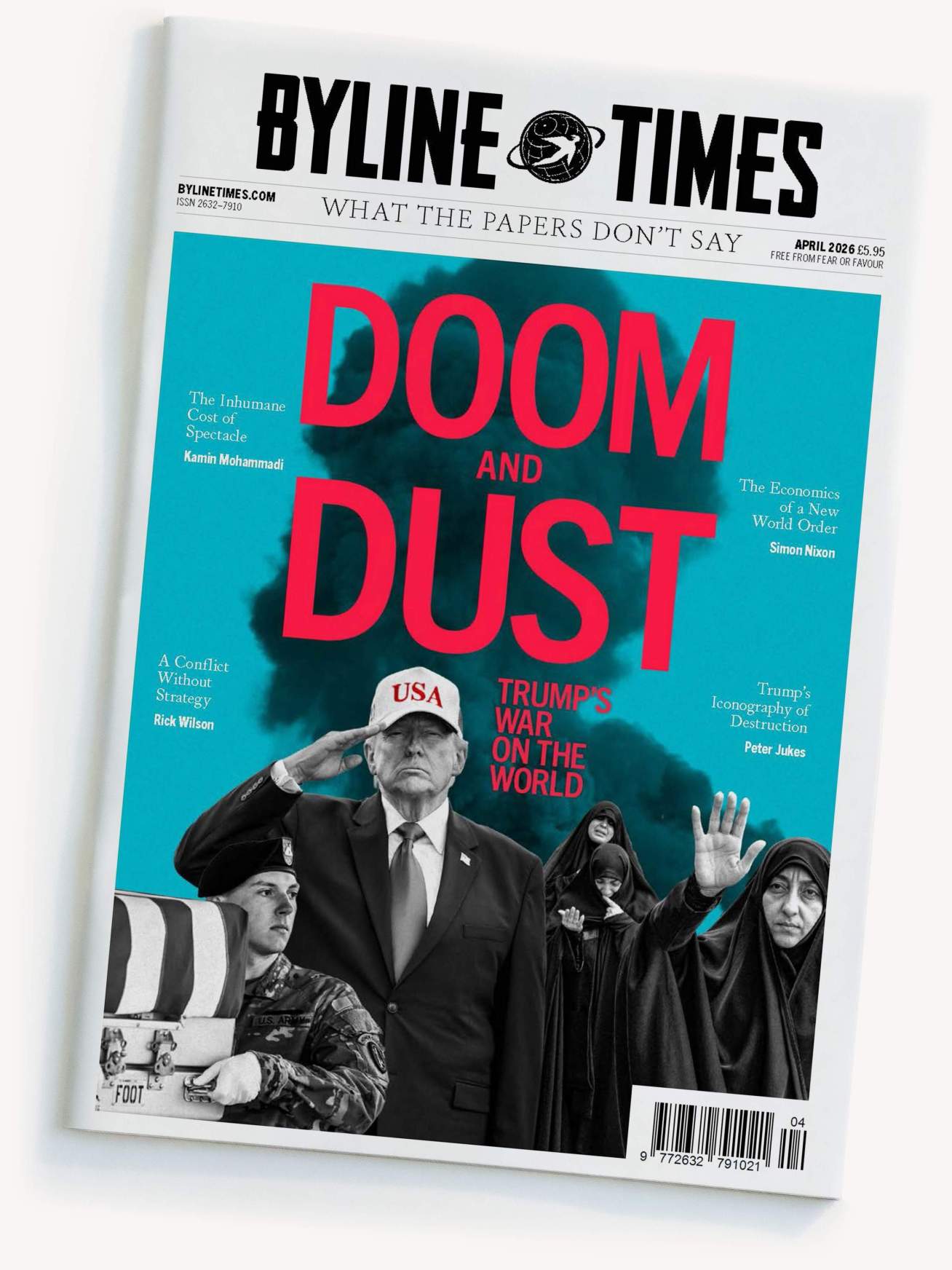
Read our Monthly Magazine
And support our mission to provide fearless stories about and outside the media system
Caroline Flack was ‘tried by The Sun newspaper and found guilty’ contributing to her mental health decline and suicide, as revealed in a new Disney+ docuseries led by her mother.
In Caroline Flack: Search for the Truth, the late Love Island host’s inner circle challenge assumptions about a December 2019 incident involving the TV presenter and her boyfriend Lewis Burton – showing how a tabloid feeding frenzy turned a private crisis into a public spectacle.
The film follows her mother, Christine Flack, as she tries to understand how a daughter who was once reality TV’s golden girl ended up dead at 40.
At the time of her death, Caroline was facing trial on one count of assault by beating, accused of smashing a lamp over Burton’s head during an argument at her London flat. The documentary sets out how this version of events was dangerously misleading.
Photographs later splashed across the tabloids depicted a ‘bloodbath’ scene – but the blood was her own, from self-inflicted wounds that required 12 hours of treatment; while Burton’s injuries were minor.
Christine’s questions cut to the heart of the case. “What I’d like to understand is, was Caroline treated the same as everybody else – or was she treated differently?” she asks.
Caroline’s agent, Louise Booth, describes how the presenter was commodified by the very newspapers that had once celebrated her: “We knew what the truth was but the newspapers, you can tell them until you are blue in the face. At this point, Caroline was worth more to them in print to be the villain than the hero that she was six months ago and she was hosting Love Island.”

What Kind of World Am I Leaving For My Children?
With the number of hate crimes, including offences motivated by race and religion, recorded by the police in England and Wales rising for the first time in three years, Nikesh Shukla reflects on the conversations we all need to be having around racism and the rise of the far-right
Christine told the documentary that she feels “sad” and “mad” to think that “something as awful as this” was going on in Caroline’s life and “she becomes not a person to the press, she’s expendable”.
Showbiz reporter and editor Paul Martin, who worked with Caroline for a number of years, describes the brutal mindset deployed by the tabloids: “Every time you put Caroline Flack in the newspapers they sold and, on the front page, a lot more.”
The turning point, Christine believes, came with The Sun’s New Year’s Day splash in 2020 – 20 days after Caroline’s arrest – under the editorship of Tony Gallagher.
“Over that Christmas Carrie seemed to be coping, and then on January the 1st this was the headline: FLACK’S BEDROOM BLOODBATH’,” her mother recalls.
“And it was complete and utter shock. The way this story reads is that Caroline had hit her boyfriend with a lamp and that was his blood. And that is so far from the truth. That was Caroline’s blood where she’d cut her wrists.”
Friend Mollie Grosberg, who spent time with Caroline in her final weeks, is blunt about The Sun‘s decision to publish those images: “Every single person that was there, that let that go to print, should be ashamed of themselves, because as far as I’m concerned, that is one of the main reasons why she isn’t here today.”
In the film, Christine pushes Paul Martin to explain how such a graphic image could ever have been cleared for publication. He replies that it would have gone through layers of senior scrutiny.
“From experience, that would have gone through three lawyers, the editor, the news editor conference where you have plenty of very intelligent journalists who are very able to speak for themselves, in all newspapers, debating whether or not they should use it,” he says.
When Christine asks whether anyone considered what effect this might have on her daughter, Martin offers a bleak summing-up of newsroom morality: “You’ll never be judged on a story that ruins someone’s life. You’ll never be judged on that.”
The cruelty did not stop there.
In one later story in February 2020, under the editorship of Victoria Newton, The Sun, highlighted a novelty Valentine’s Day card – based on the prosecution’s claim that Caroline had attacked Burton with a lamp – emblazoned with the words “I’ll f***ing lamp you”. Christine sees this as the final escalation.
“This is not journalism; its bullying and it was like another nail in Carrie’s coffin really,” she says.

Mollie Grosberg recalls the atmosphere of fear in those last days: “We were more scared of her going to hospital in a public environment because of what the press would do than getting her life saved.”
After Caroline died, Martin says, the priority in at least one newsroom was not reflection but damage limitation: “I do remember moments after she had died, I got a phone call from an editor saying: shut down, don’t talk about it, don’t mention anything about Caroline’s death, any articles you’ve written, any articles we’ve written, its complete shutdown.”
“The only other time that I’ve ever been ordered by anyone in a position of power and influence in the newspaper to not talk about anything was when the Mirror phone-hacking was exposed,” he adds.
But Caroline’s mother has never received a front page apology from The Sun or any other tabloid. To this day, she says, inaccuracies about the case are still being printed.
On The News Agents podcast, Christine turned her anger towards politicians who have failed to deliver the second part of the Leveson Inquiry into press standards and, referring to the state of journalism, she said “I think it’s got worse, I really do”.
She described meeting Culture Secretary Lisa Nandy with other victims of press abuse, with the campaign group Hacked Off, only to see no progress at all. As she put it: “I’m so sad about it. [The Labour Government] are just as scared of the press as the previous.”
More than four years on from Caroline Flack’s death, Christine’s search for the truth is no longer just about one woman or one case. It has become a stark indictment of a press culture that prizes sensational front pages over accuracy, accountability, or basic humanity.
Emma Jones is a board director of the campaign group Hacked Off for press accountability. She has been an editor, reporter, and columnist for Smash Hits, The Sun, the Sunday Mirror, and the Mail on Sunday