
 Subscriptions
 Subscriptions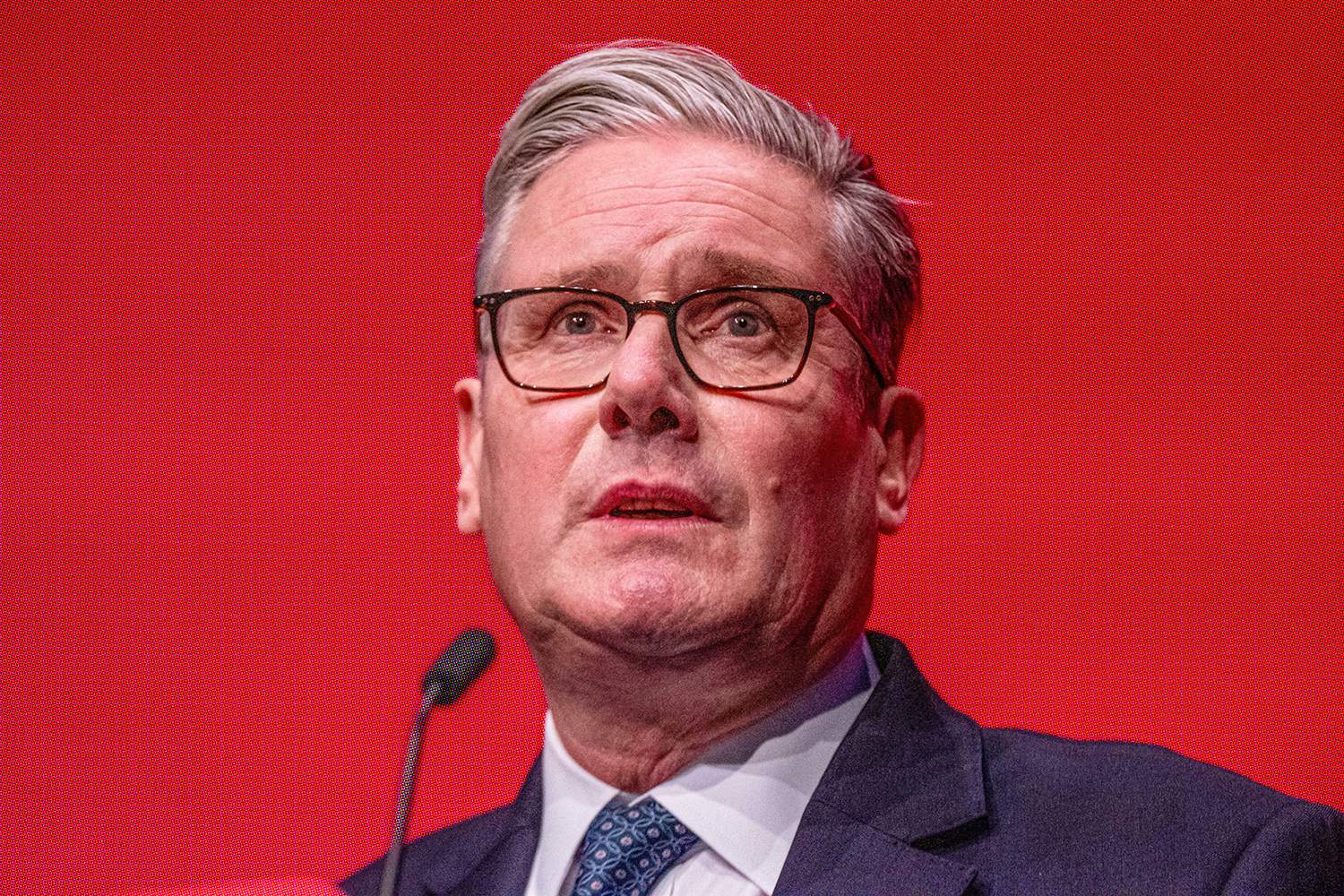
Read our Monthly Magazine
And support our mission to provide fearless stories about and outside the media system
There are still four years to go until the next general election, but for anyone attending Labour’s conference in Liverpool it has often felt like Nigel Farage is already comfortably in Number 10.
At fringe events and on the conference stage Cabinet Ministers have spoken endlessly of the Reform leader and his four Members of Parliament, while the thoughts and wishes of Labour’s 400 elected MPs have firmly taken a back seat.
In her first conference speech Labour’s new Home Secretary Shabana Mahmood declared that she would have to get “tough” on migrants in order to fend off Reform, telling Labour party members that they “may not like” what she had to do.
So just days after the Prime Minister declared that Farage’s mass deportation plans were “racist” and “immoral”, Mahmood instead unveiled her own toned-down version of those plans, in which migrants will now be forced to wait ten years and conduct compulsory “voluntary” work, in order to avoid also being expelled from the country.
Unveiling what was billed in the press as a “major crackdown on migration” Mahmood announced that migrants would also be barred from claiming any benefits whatsoever if they wanted to ever be given leave to remain in the country.
The only way to beat the racists in Reform, we seemed to be told, was to give them almost everything they wanted.
And yet while the threat of Reform was repeatedly raised on stage, the Prime Minister himself appeared to reserve an almost greater level of disdain for what he described as the “extreme” left, who he labelled “snake oil merchants” who hated their country.
Speaking on Sky News, the Prime Minister’s right hand man in Downing Street, Darren Jones, warned that “the progressive movement outside of the Labour Party” must understand that “populism on the left… risks taking us down a much darker path for our country”.
When Downing Street briefed the press last week that he would launch a “progressive fightback” it wasn’t clear that what he really wanted to do was to launch a fightback against progressives.
ENJOYING THIS ARTICLE? HELP US TO PRODUCE MORE
Receive the monthly Byline Times newspaper and help to support fearless, independent journalism that breaks stories, shapes the agenda and holds power to account.
We’re not funded by a billionaire oligarch or an offshore hedge-fund. We rely on our readers to fund our journalism. If you like what we do, please subscribe.
An Alternative Path
Not everyone appeared to agree with this strategy. Across the conference fringes Labour’s Mayor of Manchester Andy Burnham beguiled Labour members with the suggestion that, just perhaps, the Government could be doing a few things that they, rather than Nigel Farage, wanted them to do. Perhaps it would be possible for a Labour Government with a huge landslide majority and several more years to play with, to actually cut living costs, change the electoral system and move back towards the EU.
Such “snake oil” was not warmly received, however, with Cabinet Ministers and Downing Street aides pouring bile into journalists’ ears about Burnham’s preposterous suggestion that a Labour Government could actually do some things that Labour MPs, members and voters wanted.
In his speech, the Prime Minister strongly resisted such calls for what he described as “unfunded tax cuts or unfunded spending” saying that the “fiscal rules” holding them back from doing the sorts of things Burnham and others were calling for were “non-negotiable”.
Instead Starmer offered vague promises to “rewire the economy” in order to give voters “agency over the state” at some indeterminate point in the future. Unlike back in the Blair era, when ministers used conference speeches to announce and promote popular new schemes and policies, there was not a single new substantive policy announcement in Starmer’s more than hour long headline speech.
There were some significant rhetorical shifts, with Starmer using his strongest language yet to condemn the racists that have spread fear and violence on Britain’s streets over the past year, saying that “we will fight you with everything we have”.
Yet for many Labour members here in Liverpool, this is a fight that has come far too late.
“He always just seems to come to the right position about two weeks later than he should”, one senior Labour adviser told Byline Times following his speech.
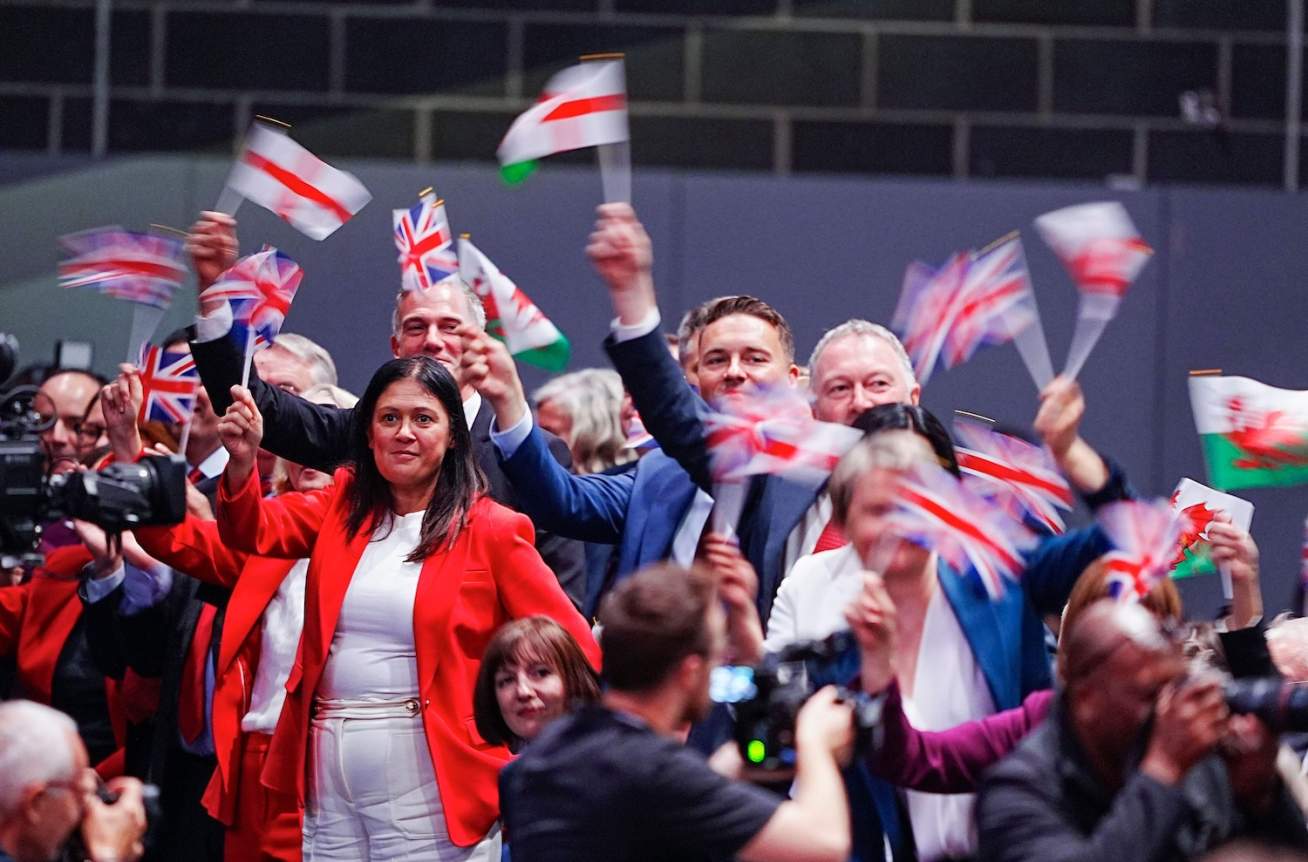
In the absence of big new policies, Starmer’s speech was instead filled with appeals to patriotism in an attempt to “reclaim the flag” from Reform. Across the conference hall activists were handed small national flags for the UK, England, Wales and Scotland, with Starmer insisting that “I’m also proud of the Saltire and of the Red Dragon”.
“Thank you conference” he eventually closed his speech by saying, before instructing his party to “fly those flags”.
Of course there is nothing wrong with such appeals to patriotism. The strongest part of Starmer’s speech was his attacks on Farage for pretending to love this country, while openly holding the reality of modern life in the UK in contempt.
Yet love of one’s country comes primarily from the conditions upon which its people are asked to live in and the moral standards upon which they are asked to live by.
Over the past 15 years, those living standards for most Britons have either stagnated, or declined, while a once open and tolerant nation has driven itself down an increasingly intolerant and nativist direction. And while Starmer and his Government did much this week to condemn both of those problems, they have yet to do much to actually address their causes, or to turn them around.
With up to four years to go until the next general election, this week’s Labour conference was a real opportunity for the Prime Minister and his party to set aside the politics and priorities of Reform and to instead forge a new, more progressive path for the country.
Yet while the rhetoric may be shifting, the politics so far are not. Despite condemning the racist and divisive rhetoric of Farage and his followers, Starmer’s Government continue to accept the central premise of his message that the biggest problem facing the country is the amount of people who want to come and live here.
By accepting that premise, Starmer is failing to offer the sort of alternative vision for the country as a more open, tolerant and equal society, that most Labour voters believed they were voting for back in 2024.
And by failing to offer that alternative, the possibility of what they label the “darker path” of a Reform Government, is only drawing nearer still.