
 Subscriptions

Read our Monthly Magazine
And support our mission to provide fearless stories about and outside the media system
Nigel Farage’s “billions of pounds worth of unfunded spending commitments” comes out top in analysis of weak spots which could hit support for the party hardest in future elections, according to a new mega-poll of voters.
YouGov research for progressive group Best for Britain found that potential Reform backers rated a message criticising Farage’s spending plans and economic credentials as the ‘most convincing’ almost 3-in-5 (57%) times.
Best for Britain note that Farage has “previously voiced strong support for Liz Truss’ disastrous 2022 minibudget, [while] Reform UK [have] made billions in un-costed spending commitments.”
In June last year, the Institute for Fiscal Studies noted that Reform UK’s plans implied spending an extra £141 billion a year on tax cuts and other pledges, paid for by a supposed £156bn of savings in Government spending, and assuming vastly increased tax revenue from economic growth. The IFS thinktank said the party’s plans were based on “extremely optimist assumptions” and the sums “do not add up”.
Farage’s hints about moving to a privatised health care system, and his push for a hard Brexit are also effective messages, among those considering or intending to vote Reform but who are most likely to be persuaded to vote for other parties.
The findings also signal a potential roadmap for the Conservatives to win back support from Reform UK, progressive group Best for Britain says.
It comes as the Labour Party and Keir Starmer appear to be taking a tougher line on Reform UK in recent weeks following discontent from members and their MPs, and as the party meets in Liverpool for its annual conference – amid rumblings of a potential leadership challenge to PM Starmer in future from Greater Manchester mayor Andy Burnham.
Over the weekend, Keir Starmer told the BBC he believes Reform’s plan to scrap Indefinite Leave to Remain was “racist” and “immoral”. ILR is the settled status allowing people many who have come here and already been granted permission to stay, and Reform’s plans would place hundreds of thousands of those who believed their position here was secure at risk of deportation.
The YouGov polling did not test whether this was an effective line of attack for opponents of Reform.
The YouGov survey of over 3,000 people who said they were intending or considering voting for Reform UK commissioned by Best for Britain presented respondents with a random pair of messages from a selection of eight, criticising Nigel Farage and his party on separate issues.
Respondents were asked to select which of the two messages they found most convincing and presented with another randomly selected pair until they had seen all eight messages.
Among those considering or intending to vote for Reform UK, a message suggesting Reform UK would do away with employment rights was almost as effective (56%) as that of the economy, as were critiques of Reform UK’s plans to cut social security and public spending by £140 billion (55%), and highlighting Farage’s previous comments on moving the NHS to a US-style insurance-based system (54%).
The findings are the latest from a major ongoing study into people who are considering voting for Reform UK at the next general election.
Last month, YouGov polling for its ‘Decoding Populism’ investigation revealed five distinct groups among prospective Reform UK voters each with diverse backgrounds, motivations, beliefs and policy priorities.
The polling found slight variations among Reform’s least committed supporters: 3 in 5 (59%) of the so-called ‘Melancholy Middle’, who represent a fifth of all prospective Reform UK voters, were most convinced by criticisms tied to Farage’s plans for the NHS (59%) and his voting against greater employment rights (59%) including Labour’s landmark Employment Rights Bill going through now.
‘Civic Pragmatists’ meanwhile, also representing a fifth of all Farage’s support, were most convinced by messages on the economy (59%), employment rights (52%) and reminders of Nigel Farage’s role in Brexit (52%), with Britain’s departure from the EU – led in no small part by Farage – estimated to have wiped 4% from UK GDP.
The findings also suggest a potential roadmap for Kemi Badenoch to claw back some of the voters the Conservatives have lost to Reform UK. The ‘Traditional Conservatives’ segment is the most receptive of any group to an economic critique of Nigel Farage (66%) and more than half (58%) said they would consider backing the Conservatives at the next election when polled in the first phase of the Decoding Populism study.
ENJOYING THIS ARTICLE? HELP US TO PRODUCE MORE
Receive the monthly Byline Times newspaper and help to support fearless, independent journalism that breaks stories, shapes the agenda and holds power to account.
We’re not funded by a billionaire oligarch or an offshore hedge-fund. We rely on our readers to fund our journalism. If you like what we do, please subscribe.
Naomi Smith, Chief Executive of Best for Britain, said: “[Last] week, Nigel Farage unveiled plans that if realised, will tear countless families apart in the UK and deliver unprecedented economic misery for millions more…
“Avoiding this could come down to the finest of margins and so identifying the messaging that is most likely to persuade those Reform voters who remain persuadable is absolutely crucial.”
Labour’s Liam Byrne MP added: “It’s time to reset Labour’s strategy for exposing Reform and now take ruthless aim at the weak centre of their offer – the economy, living standards and the public services we all rely on.
“The reality is Nigel Farage is Liz Truss 2.0 – a false preacher of patriotism who would leave Britain poorer but the richest richer.”
Byrne said: “He flirts with US-style health insurance, he cheered on the Truss mini-budget, and now he’s peddling billions in unfunded promises that mean one thing for working families: higher mortgages, higher bills, weaker rights at work, and longer NHS queues.”
The wording of the most effective messages against Reform UK were (on the economy): “Nigel Farage has made billions of pounds worth of spending commitments without any idea of how to pay for it. That risks putting up mortgage rates, food and energy bills even more. When prices are already high, we can’t let that happen again.”
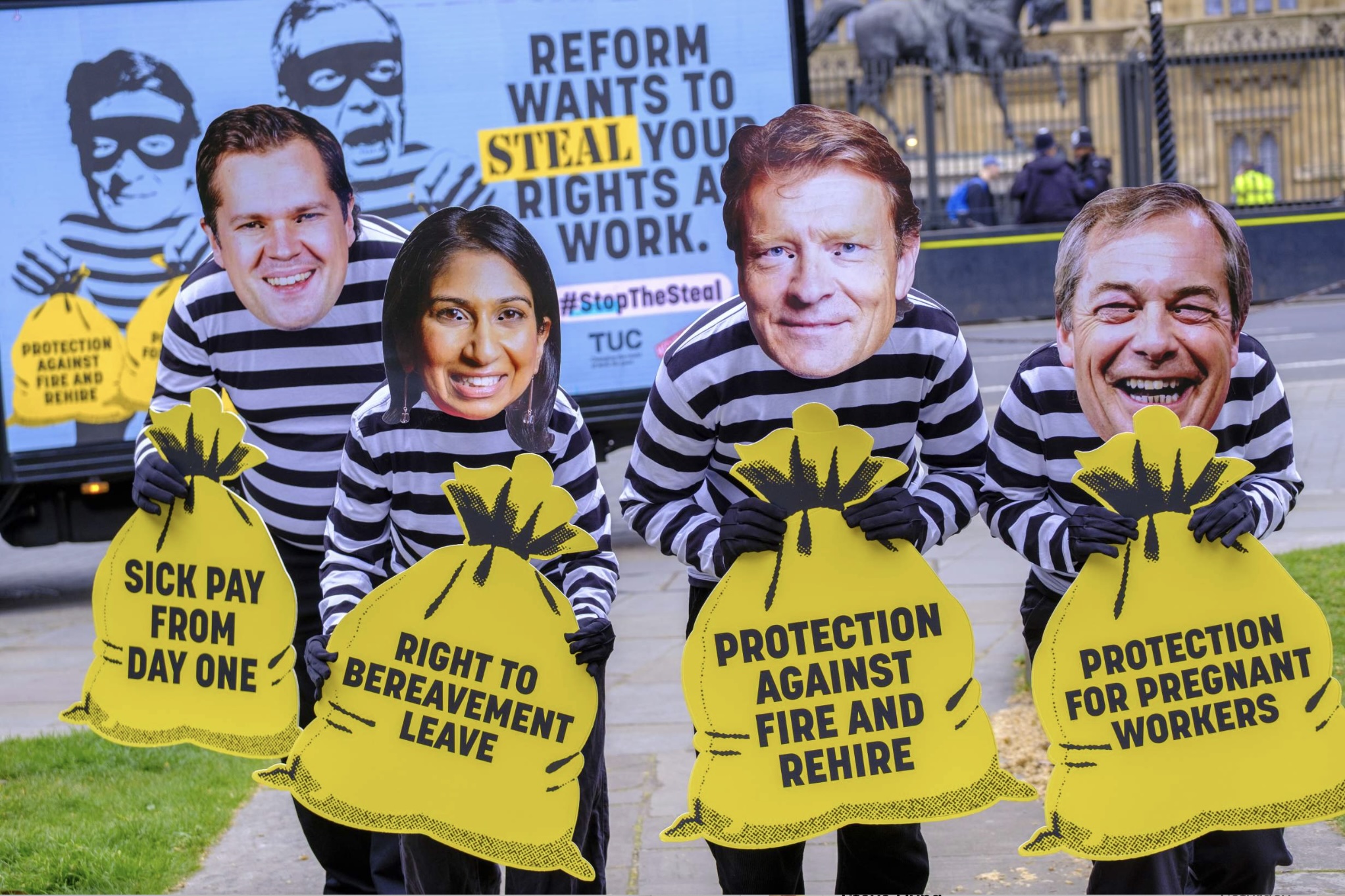
On employment rights: “Parliament tried to pass a law to ban exploitative zero-hours contracts, protect sick pay, and guarantee fair hours. Reform UK voted against it. They want to scrap employment protections and cut health and safety rules. Farage talks about standing up for working people – but he’s voting to take their rights away.”
holding farage to account #reformUNCOVERED
While most the rest of the media seems to happy to give the handful of Reform MPs undue prominence, Byline Times is committed to tracking the activities of Nigel Farage’s party when actually in power


 Contribute to our #ReformUncovered crowdfunder
Got a story? Get in touch in confidence on josiah@bylinetimes.com
 Subscribers Get More from JOSIAH
 Subscribers Get More from JOSIAH
Josiah Mortimer also writes the On the Ground column, exclusive to the print edition of Byline Times.
So for more from him…
