
 Subscriptions
 Subscriptions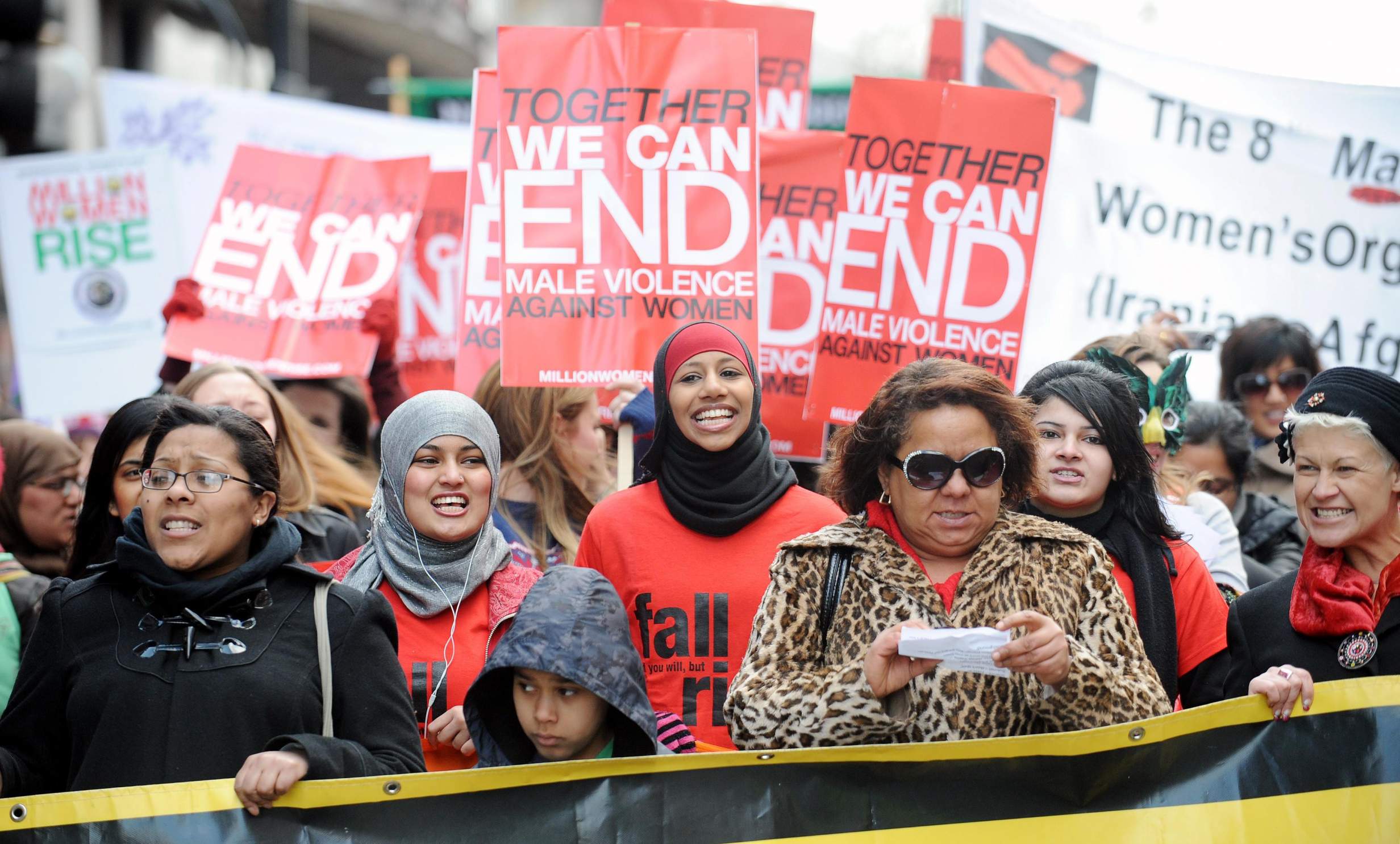
Read our Monthly Magazine
And support our mission to provide fearless stories about and outside the media system
A key part of the successful scapegoating of an entire group is to create fear. Nigel Farage and his Reform party supporters have been following the scapegoat playbook by pointing the finger at immigrants, and blaming them for the very real crisis of women’s unsafety.
It’s a path well-trodden: point to a group, say they’re a threat, and present yourself as the defender of the threat. But if this path is so well-trodden, why can’t our media seem to see it?
At a press conference in August, Reform MP Sarah Pochin suggested that migrants and refugees have a “warped view of their right to sexually assault women”. She claimed that men from “predominantly Muslim countries like Afghanistan” hold a “medieval view of women’s rights” and that “women are at risk of sexual assault and rape from these men”.
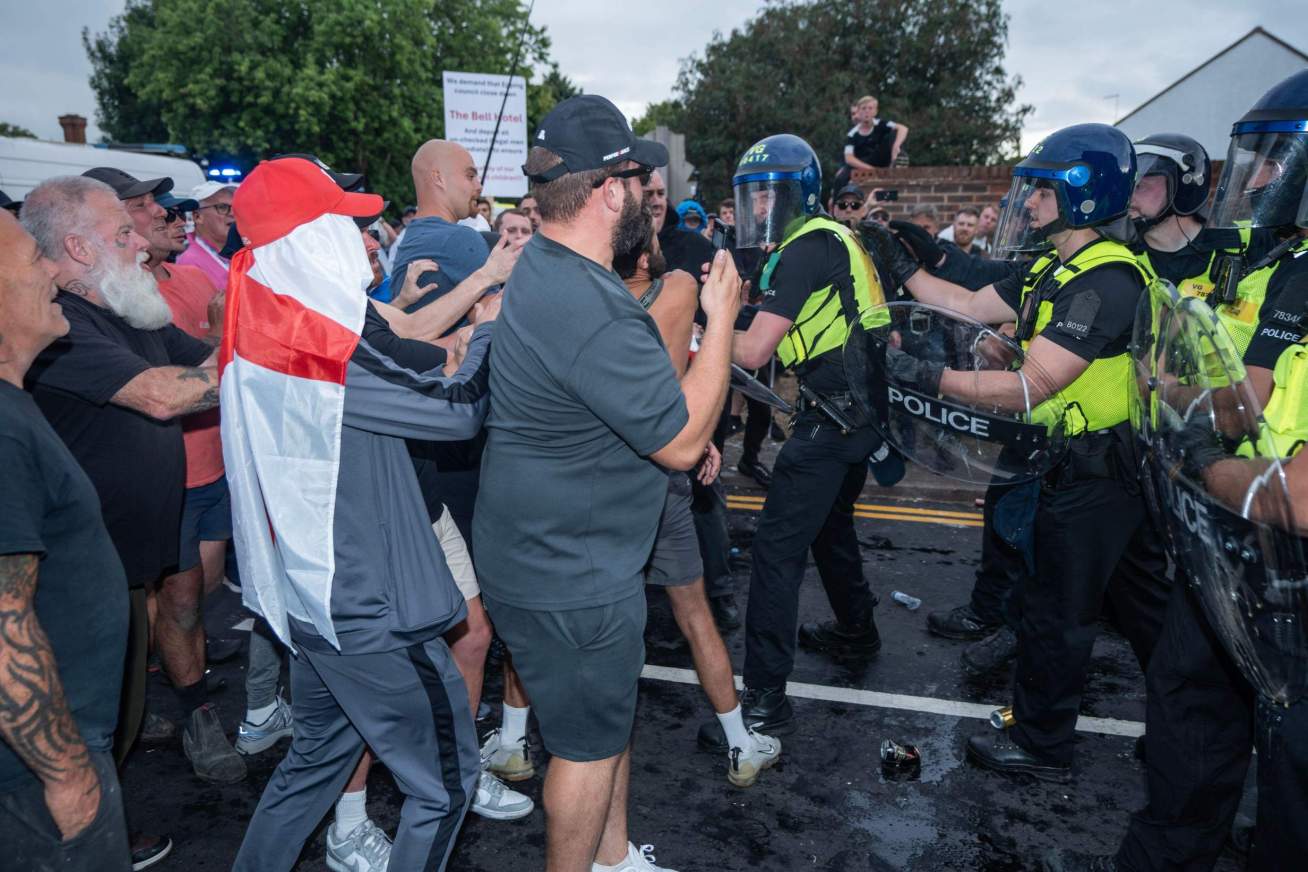
There is no evidence to suggest that asylum seekers are more likely to harm women and girls than British citizens. Most studies find they are not overrepresented among perpetrators.
But facts and stats rarely break through in a news cycle of manufactured outrage. Unless, of course, the stats come from the Centre for Migration Control, a think tank run by the Reform UK activist Robert Bates, which successfully managed to get their muddled figures onto BBC Radio 4’s Today programme, parroted by the shadow justice secretary Robert Jenrick (no, 40% of sexual crimes in London last year were not committed by foreign nationals).
These long-held myths are of course, racist, and harm communities of colour – especially Muslim communities. But these myths also actively harm women and girls, by perpetuating the ‘stranger danger’ narrative of sexual violence.
The idea that sexual violence is only committed by scary, foreign, evil men who jump out of bushes and attack women is a convenient narrative to believe in. But the truth is much darker, one that many people struggle to rectify internally.
In reality, most rapes are carried out by former or current partners, and 90% of femicide killers are known to the victim. And children? The vast majority of children who experience contact sexual abuse are abused by someone they know.
When Farage and his MPs use attacks on women to stoke an anti-migrant agenda, they are ignoring, and actively diverting away from, the real crisis of violence against women in the UK. It is the media’s job to recognise this and call it out – but our ingrained societal views of gender-based violence are stopping this from happening.
“As a society, we fail to understand that domestic abuse is a public health problem,” says Janey Starling, co-founder of gender justice organisation, Level Up, on Media Storm. “So much of domestic abuse is about power and control, and that’s psychological. These things are less easy to put in a picture. You can’t take photos of someone constantly belittling their partner, somebody checking their partner’s phone, having access to their emails. And the end goal, ultimately, is to have total control over another person”.
Level Up created the Dignity for Dead Women campaign, which aims to change the way the press reports on fatal domestic abuse. They developed media guidelines, backed by press regulators, for newsrooms to follow when reporting on gender-based violence. Because the way news organisations report on the deaths of women directly influences public understandings of domestic abuse – and how we can prevent it.
“There are very strict media regulations on the reporting of suicide, because the media knows that it has a preventive duty when it comes to suicide”, Starling explains.
The press understands that if they report on, for example, a celebrity death, they’re not allowed to report the methods used or excessive detail because they could influence people to take their own life. However, the logic doesn’t extend to fatal domestic abuse
Janey Starling, Level Up
Every week, two women are murdered by a partner or ex-partner. Yet in the press, femicides are reported as out of the blue, isolated incidents, rather than situated in a national and international context.
Take Donald Trump earlier this month, downplaying the seriousness of domestic abuse, saying that if it were not for “things that take place in the home they call crime”, the administration’s deployment of National Guard troops in Washington DC would have resulted in a bigger statistical reduction in crime.
“If a man has a little fight with the wife, they say this was a crime.” While we wouldn’t expect anything less from a man who openly bragged about sexual assault before his first presidency, this is a reflection on the worldwide deprioritisation of domestic abuse.
Trump’s views are “echoed in the UK”, says Eliza Hatch, founder of feminist platform Cheer Up Luv, on Media Storm. “These perceptions run deep, and they run deep in our justice and criminal systems as well.”
Indeed, leading criminologist Jane Monckton-Smith’s research shows that men on trial for killing their partners are likely to get a lighter sentence if they reference “love”. And why wouldn’t they, when sympathetic headlines describe perpetrators of violence as ‘jilted lovers’, ‘hubbies’, and one of the most common – a devoted ‘family man’.
“It’s an outdated and quite disturbing view on one of the biggest issues of crime,” says Hatch, “that affects over half the population.”
Other campaigns, such as Take It As Read, launched this month by non-profit This Ends Now, question social media, as well as legacy media. They’re calling on people to pledge to call out misogynistic language wherever they encounter it.
ENJOYING THIS ARTICLE? HELP US TO PRODUCE MORE
Receive the monthly Byline Times newspaper and help to support fearless, independent journalism that breaks stories, shapes the agenda and holds power to account.
We’re not funded by a billionaire oligarch or an offshore hedge-fund. We rely on our readers to fund our journalism. If you like what we do, please subscribe.
“Language isn’t neutral”, says Holly from This Ends Now on Media Storm. “You’ll notice that we say ‘male violence against women and girls’ instead of ‘violence against women and girls’. There is an epidemic of male violence happening, and if we can’t name it, how can we possibly begin to solve it?”
Our media would be wise to take the lead from the platforms promoted this week on Media Storm. If journalists are equipped to understand the realities of gender-based violence, they can be part of the solution to a violence that is pervasive – but preventable.
Tackling media misogyny: Cheer Up Luv and This Ends Now is out now.