


Read Our Monthly Magazine
And support our mission to provide fearless stories about and outside the media system
“Everybody knows the bio is where it gets sticky”, reads Levi Davis’ OnlyFans account landing page. Through the lens of what followed, the gambit is triple-loaded.
Levi’s header image sets the tone of what – for $24 a month – he would be sharing. The strategically placed bottle green boxing gloves say enough. “Take a look and see what else you can find” invites a strapline with five suggestive emojis.
What the intro didn’t tell people, though, is that “doing OnlyFans” had been at the front of Levi’s mind for a long time. And in the end, when he did, it was an act of defiance.
But was it also a motive for murder?
According to three primary sources Byline Times has tracked down during a 17-month special investigation into the rugby player’s unexplained disappearance, Levi had been coming under pressure for at least a year to perform on OnlyFans in order to earn money for a “sex trafficking” outfit.
But when on 28 October 2022 he eventually posted content, the hashtag said something else: “My First Nudes #takeitback.”
“This is me taking my power back,” Levi had told Instagram a couple of days earlier. “I understand that they have videos of me. Hence why my OnlyFans makes sense.”
Cries For Help
The Instagram post itself was, on one hand, an act of rebellion and, on the other, a cry for help.
A few days later, on 29 October 2022, Levi stepped off a ferry from Ibiza to Barcelona and disappeared, apparently without trace.
He had given every impression of loving life during a brief jaunt up La Rambla for a pint at the Old Irish Bar. Seven hours after that, a man was seen stricken out to sea – four kilometres from the ferry gates, in a shipping lane, clothed, screaming for help, in the dead of night.
The Catalan police believe it was Levi Davis. They said as much in their official report, right before icing his case. How he got there, they do not know – and they have not asked.
But Byline Times has independently found powerful evidence to suggest that he could not have got there on his own.

The Media Scandal the Media Didn’t Want to Touch: Byline Times Will Keep Exposing the ‘Dark Forces’ in the Shadows
This newspaper will continue its special investigation into TV presenter Dan Wootton and expose wrongdoing in the established media – without fear or favour
Key Individuals
Byline Times has further identified several key individuals who may have more information about what was happening in Levi’s life in the lead-up to his disappearance.
Among them is an unnamed Brazilian trans woman who was “a fixture” at a number of the parties Levi was attending in London in 2020, and who is thought to have further knowledge of his lifestyle and the people he was encountering.
Another is a television industry figure Levi claimed was targeting him in the UK, whose activities are examined in detail in a further part of this investigation.
And a third is a person in whom Levi confided much – a friend in Ibiza who helped him set up his OnlyFans account. That person, Richard Squire, was also the last person to confirm seeing Levi before he left unexpectedly for Barcelona.
Squire has given statements to the Catalan authorities about Levi’s disappearance and was prominent in the unsuccessful search for his friend. He is understood to be keen to assist the authorities and has said as much to Levi’s family.
Julie Davis, Levi’s mother, said: “There are lots of loose ends and leads the police have never looked at and which I am calling on them to look at now.”
Between Calm and Chaos
When Levi first brought up his OnlyFans idea late in 2021, friends thought he was just being madcap.
“It seemed incompatible with the music career he was trying to build and the sport that paid his bills,” said one former teammate and mentor. “I hoped he was joking.”
By October 2022, however, the sport had suffered and the music was a long way from profitable. Rugby clubs had come and gone. Income dried up. But the blackmail seemingly remained. Under its weight, Levi’s life oscillated between calm and chaos; drugs and sobriety.
By his own admission, his mental health was knocked.
On Instagram he described a recent post-drugs psychosis diagnosis. He had been prescribed medication – also for depression and anxiety. Levi rejected the diagnosis and had travelled without his meds.
“I have never seen him so deluded that he is imagining things,” said one close female long-term friend, “but he was vulnerable.”
In that last video, Levi Davis looked haunted.
Yet two years earlier, the athlete was on the very definition of an upward trajectory: scoring mazy tries from the wing for Bath, getting an ITV1 X Factor: Celebrity judges’ ovation for his soulful ‘No Diggity’, enjoying the attention his talent attracted.
Hard, then, to overstate the impact of sextortion.
Trap-House
The more the blackmail bit, the more it seems Levi sought distraction in drugs.
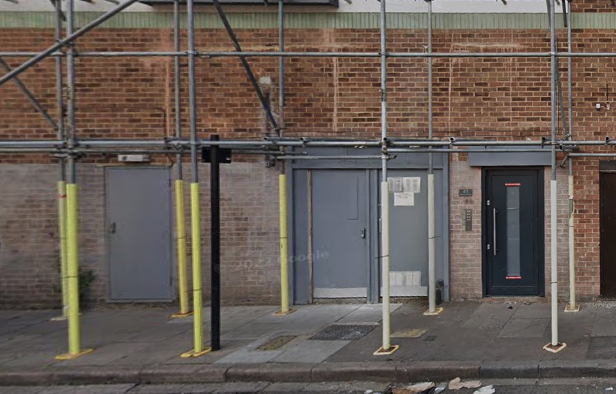
When he moved into his flat in West Ealing in July 2020, backing on to a well-known supermarket, with an anonymous entrance of nondescript brick, he quickly met local dealers, operating out of a suburban “trap house”.
At the time, Levi was enjoying success. He was playing for Ealing and appearing on TV. Outwardly, he was doing well financially. But, according to former colleagues, his money went as quickly as it came in. It has been a running theme in this investigation that Levi was often short of cash.
Whether this was due, in part, to having to service the alleged blackmail, Levi’s Monzo and Barclays bank accounts might tell. But their contents have never – yet – been examined by police.
Nor have the activities of the “trappers” – described as a “Somali county lines gang” – Levi got in trouble with. A friend said that “Levi was naïve about London” and “met these people in the street and thought they were friends”.
“They came around to use his [music] studio equipment at first in his spare room,” the friend told Byline Times. “They were low-rent – selling skunk [marijuana], heavily cut cocaine and ketamine mainly.”
Another source added: “It was easy for Levi to say ‘I’ll pay you back another time’. But that built up. Some things you just say have to learn to say ‘no’ to or they become too much to replenish.
“These Somalis were giving him things that he could not afford. They were doing it on purpose, I believe. The first favour is fine. He had got some things for free and, at some point, he had to compensate.
“They were just inconsequential figures from the street. It was obvious they were just using him. They stole his flatmate’s watch one time. They ended up taking over his flat to sell drugs from and hiring cars in his name and getting parking tickets and stuff and generally just being a problem.”
This phase of Levi’s life is significant for three reasons. Firstly, it has been speculated in the media that he was fleeing these people when he disappeared, allegedly owing more than £100,000. Byline Times has learned through underworld contacts that this was untrue.
“There are main suppliers whose job it is to know when someone owes a hundred grand for a drugs debt and Levi was not known to them,” according to a crime source.
Secondly, although Levi was being bullied over a much smaller and almost certainly falsely-inflated sum of money, this newspaper has found it to be independent of the blackmail Levi spoke of on Instagram.
And thirdly, it illustrates just how vulnerable Levi was.