
Read Our Monthly Magazine
And support our mission to provide fearless stories about and outside the media system
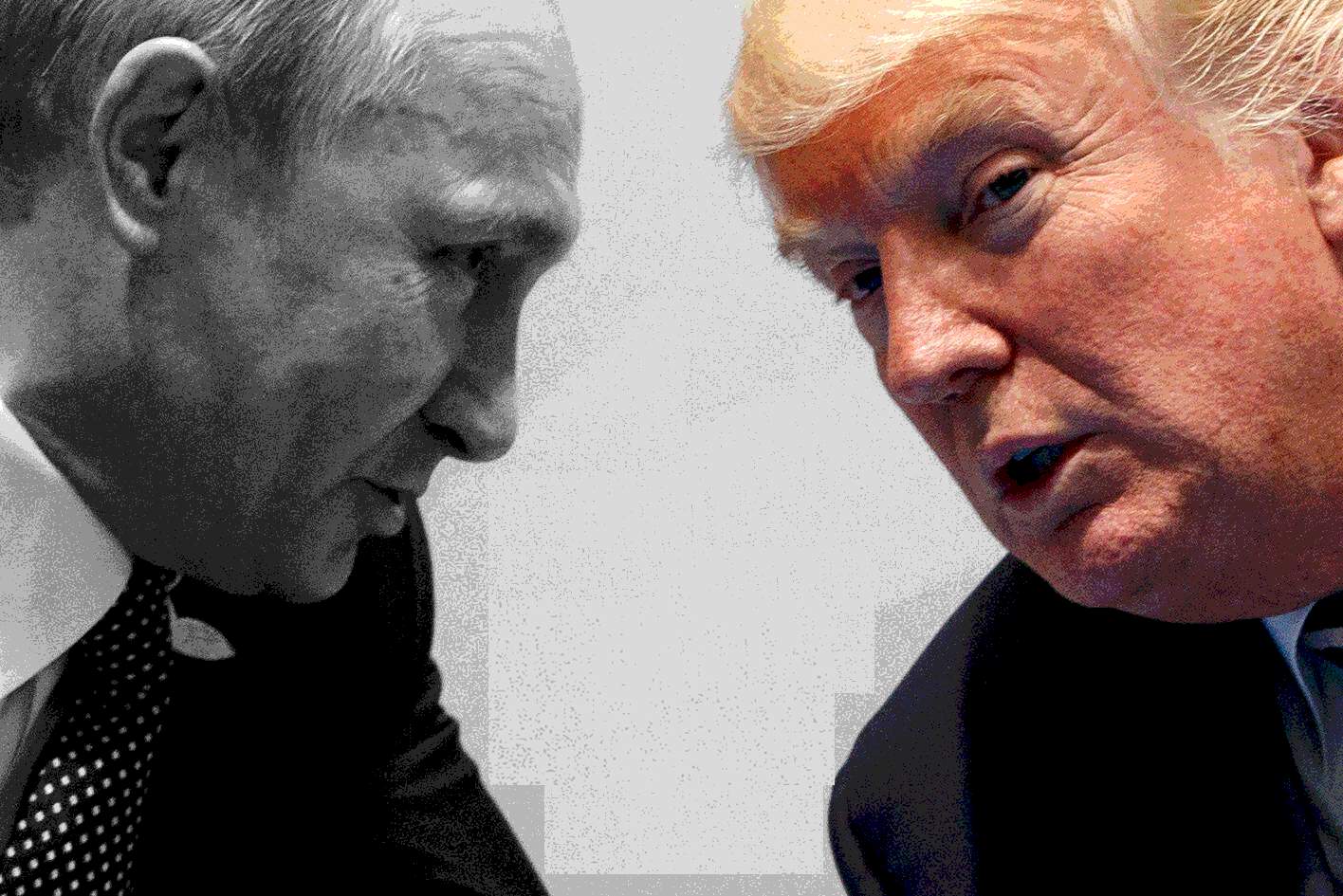
Three men at a table, carving up the world – sounds familiar? Now it’s not just history – it’s on the edge of happening again. A new, even darker Yalta is heading our way, and Europe is in deep, deep trouble. Putin, Xi, and aspiring autocrat Trump. On 14 November the White House confirmed it: the three will meet in Shenzhen on the sidelines of the APEC summit – on Thursday 19 November, according to the New York Post. No Ukrainian will be in the room. Officially, Ukraine is not even on the agenda; Washington says the discussion will be around nuclear weapons and Iran. Then Miami, where Trump’s own Doral golf course hosts the G20 in December – and where, The Atlantic has reported, the White House hopes a Ukraine deal will be signed.
At the very start of this month, the longest truce of the war – six quiet days around occupied Oleshky, secured, the White House says, by Melania Trump – came to an end. Within hours, Russian strikes resumed. On 2 November, Russian bombs hit a school in Komyshuvakha, in the Zaporizhzhia region, which was being used as a shelter and a place where humanitarian aid was handed out. At least 55 people were killed, amongst them rescue workers and police officers. The truce, President Zelensky said, had shown that possible next steps could have pointed towards peace but, “with these killings, Russia is sending an absolutely opposite signal.”
Two weeks earlier, on Monday 19 October, Ukrainian families were out with their children in the park at Nova Vodolaha in Kharkiv region. A Russian drone hit. Six people were killed, amongst them a baby in a pram – her name was Anhelina. A week later a seventh victim, twelve-year-old Artem Koval, died.
That same day, in America, Donald Trump stood outside the White House and told reporters, “Russia, frankly, has been fine on Ukraine. They haven’t been doing much.”

Money Can’t Buy You Love: The Lesson for Nigel Farage From Trump’s US Midterms Defeat
The Republicans’ hammering in these elections shows authoritarians around the globe that the support of Big Money and Big Tech only gets you so far, argues Adam Bienkov
In the same conversation, Trump said he was open to sitting down with Vladimir Putin and Xi Jinping. A meeting with no Ukrainian in the room, nor any of Ukraine’s European allies. But the meeting was not about Ukraine, Trump added – it would be about “nuclear weapons and denuclearization”. Then he went on, “I would do it, not so much for Ukraine, because Russia, frankly, has been fine on Ukraine.” A summit on Ukraine, without Ukraine, the attacker’s behaviour ‘fine’, and all rebadged as arms control.
Nine days earlier, on Saturday 10 October, Trump had called for Ukraine to “get a new president”. Ukrainian law forbids elections while the country is under martial law – as it has been since the full-scale invasion of February 2022. Zelensky, speaking on ABC on 11 October, called his bluff – give us 60 days of total ceasefire, he said, and we will hold elections. The Kremlin refused. They don’t want a ceasefire; they want a different Ukrainian. Or a Ukrainian with a different mindset.
On 12 October Dmitry Peskov, spokesman for the Kremlin, said, “either Zelensky assumes that responsibility and demonstrates that political will, or he does not.” By 19 October, he was saying a settlement was “impossible without the participation of someone from Kyiv who is prepared to take responsibility”. Responsibility for what? Being invaded?
President Trump, pressed on whether Ukraine would be attending the summit, declared he would do anything to end the war, “whether somebody’s there or not.”
Somebody. That is what the victim of the biggest war in Europe since 1945 has become in the President’s vocabulary. Then in the same breath Trump went on to say that it was time for “somebody else to negotiate on behalf of Ukraine”. The Kremlin wants a quisling. The White House is writing the job description.
The idea of the summit was Moscow’s. The Kremlin first floated it in September and, according to the Wall Street Journal, Putin pressed it again in his phone call with Trump on 9 October. On 25 October, the Kremlin said preparations had begun and that Moscow, Beijing and Washington were “in principle ready”. On 4 November, Beijing stated it was “maintaining communication with relevant parties”. On 8 November, Trump told reporters he expected to meet both Xi and Putin in Shenzhen – to talk about “a lot of things”. On 14 November, the White House made it official. Beijing, the host, did not mention it in its APEC briefing the day before.
No, Mr President, Russia is not ‘fine.’ The victim is not the problem. Yet the invader has been rewarded – with a diesel deal, a sanctions waiver, an invitation to the G20 in Miami, and now a seat at a three-power table in Shenzhen.
The peace of the 1930s did not collapse because of one great betrayal – a hundred small ones did the trick. Rationalisations made from fear and weakness, endless lies repeated by powerful men. At Munich in 1938, Czechoslovakia was not even in the room, and the aggressor drew the obvious lesson: a victim’s fate could be settled without the victim. It is the same lesson that sets the drums of World War III beating across Europe today.
The Kremlin, for its part, bristles at talk of Yalta. Whatever is agreed in Shenzhen, Peskov says, cannot be imposed on others. In the same breath he calls the meeting “extremely significant”.
Europe is offered no seat in Shenzhen, and pouting or begging for one won’t make a difference. Nor will phone calls. On 27 October, the leaders of Finland and Norway rang Putin, with Kyiv’s and Washington’s blessing. According to the Financial Times, a call meant to last less than half an hour is said to have run to ninety minutes. Moscow’s demand for the whole of Donbas moved not a jot.
ENJOYING THIS ARTICLE? HELP US TO PRODUCE MORE
Receive the monthly Byline Times newspaper and help to support fearless, independent journalism that breaks stories, shapes the agenda and holds power to account.
We’re not funded by a billionaire oligarch or an offshore hedge-fund. We rely on our readers to fund our journalism. If you like what we do, please subscribe.
In Abu Dhabi on 10–11 November, Ukraine’s negotiators sat with Russia’s for the first time in nine months. The result? A prisoner exchange that means a probable thousand individuals returning home – profoundly welcome, and no small things for the families – but nothing on the war itself. European officials travelled to Abu Dhabi but were kept outside the trilateral room. Vladimir Medinsky, the Kremlin’s chief negotiator, is said to have declared, “We don’t really understand in what capacity they are here.” He didn’t speak to them. At all.
From Abu Dhabi, Trump’s envoys Steve Witkoff and Jared Kushner went to Moscow, and on Thursday 12 November flew on to Dublin to see Zelensky. There is still no ceasefire in sight. “Putin personally does not support a ceasefire,” Zelensky said on 14 November. What Putin offers instead is “eternal peace” for Ukraine – and the Kremlin has named its price: “a new, long-term architecture of indivisible security and peace”.
In plain English, Europe’s security is to be overhauled to suit Russia. Moscow has revived its draft treaties of December 2021 – the ultimatum that would have barred Ukraine and Georgia from NATO for ever and rolled the alliance’s military infrastructure back out of central and eastern Europe. Two months after that ultimatum, Russia launched its full-scale invasion. Now Putin’s aide Yuri Ushakov promises to “add certain new considerations”. Kaja Kallas, the EU’s top diplomat, calls it a “trap” designed to “shift attention away from a ceasefire”.
Washington, meanwhile, has floated something new. “What if Ukraine joins NATO? Would Ukraine withdraw from Donbas?” the Americans asked, according to Zelensky. It is the first time, he says, that NATO membership has been linked to territory in these talks – and a reversal of Washington’s earlier line that membership was off the table. Moscow has always called Ukraine in NATO a red line; it was one of its pretexts for the invasion. This means that, in the same week, Washington has floated the possibility of Ukraine in NATO and Moscow has demanded that NATO pull back from central and eastern Europe. Two voices on European security – and neither of them Europe’s.
There are just three seats at the table in Shenzhen. The prospective carve-up there will feature the man who started a criminal war on a peaceful neighbour, and one who signed a “no limits” partnership with him three weeks before the tanks rolled in – and the third is their would-be friend, a man whose adoration for tyrants seems also to have no limits.
After Moscow, Witkoff indicated that Putin had agreed to European representatives joining the next round of Ukraine talks. But on Friday 13 November, the Kremlin hedged. A decision on a wider format would come, Peskov said, “once we understand their true intentions and their readiness to facilitate the peace process”.
Will Russia agree? What role will Europe have? And what voice? Now more than ever, it is Europe’s lack of political coherence that risks turning it from a participant into a prop. Russia comes to the talks with an insatiable imperial project. Ukraine comes to the talks with an existential struggle for survival. If Europe arrives speaking with a dozen different voices, it’s dead in the water. Perhaps it will be allowed into the room for the photograph and then be handed the bill for whatever has been agreed – without having had a say.
Ukraine may not be sold down the river in China, or signed away at a golf course in Miami. But if Trump’s Dark Yalta does prevail, the whole of Europe may find itself the prey of Russia’s tyranny, with Ukraine just the first victim.