


Read Our Monthly Magazine
And support our mission to provide fearless stories about and outside the media system
The UK Government is formally backing an Israeli trade chamber that counts among its members the arms firms profiting from the war in Gaza, and among its leaders a bank enabling illegal settlement construction, a Byline Times investigation has found.
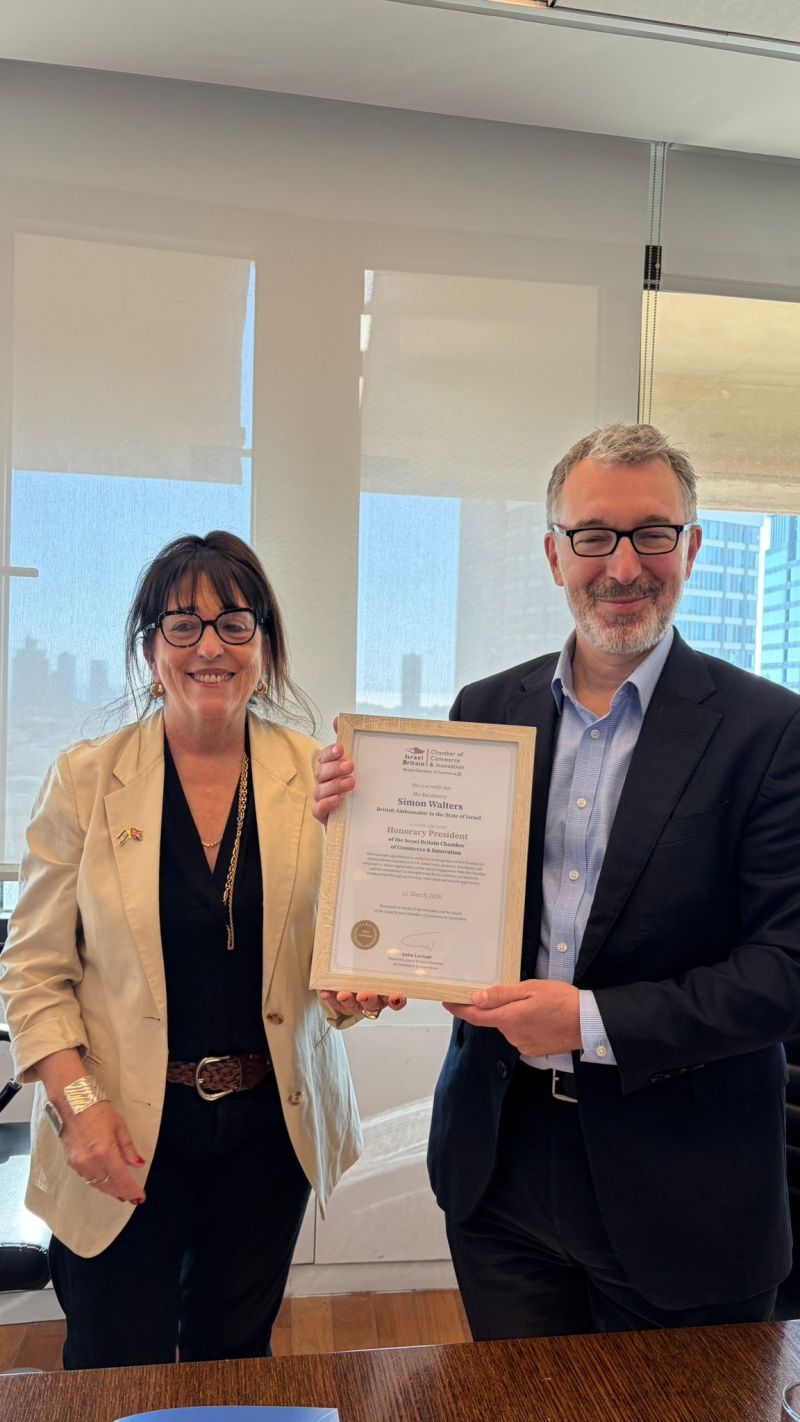
The British Ambassador to Israel, Simon Walters, was installed as honorary president of the Israel-Britain Chamber of Commerce & Innovation (IBCC) in July 2026, the first such appointment in its history. The IBCC names the British Embassy in Tel Aviv and the UK Department for Business and Trade among its key supporters. Chamber accounts also place the Government’s Trade Envoy to Israel, Lord Ian Austin, and its Trade Commissioner for Europe, Chris Barton, at events with Walters.
The appointment follows a policy set by the Foreign, Commonwealth and Development Office (FCDO) in March 2025, under which UK Ambassadors and High Commissioners become honorary presidents of British chambers in their host countries, formally tying Walters’s IBCC role to the UK Government.
In September, ministers announced a new settlement sanctions regime along with a ban on all export licences for arms and other exports that materially contribute to the occupation. Yet the chamber, of which the ambassador is honorary president, is listed as a collaborating partner for the forthcoming DefenseTech Week, an Israeli Government-backed defence-technology summit at Tel Aviv University on 2-3 December 2026, sponsored by 15 firms that include the arms manufacturers Elbit Systems, Rafael Advanced Defense Systems and Israel Aerospace Industries (IAI).
Iain Overton, Executive Director of the charity Action on Armed Violence (AOAV), said: “Britain cannot credibly claim it is restricting arms exports over its concerns about war crimes in Gaza while, at the same time, its diplomats help promote the very companies supplying Israel’s military.”
ENJOYING THIS ARTICLE? HELP US TO PRODUCE MORE
Receive the monthly Byline Times newspaper and help to support fearless, independent journalism that breaks stories, shapes the agenda and holds power to account.
We’re not funded by a billionaire oligarch or an offshore hedge-fund. We rely on our readers to fund our journalism. If you like what we do, please subscribe.
The IBCC’s partners and members include the 15 DefenseTech Week sponsors, among them some of Israel’s largest defence companies and foreign firms. Together they have secured approximately $12 billion in identified contracts with the Israeli Ministry of Defence for military operations in Gaza, with the real figure likely far higher.
This sum is equivalent to nearly two-fifths of Israel’s reported $31 billion in war-related expenditure on Gaza and Lebanon in 2024, although the contracts span several years.
The IBCC’s treasurer, Sidney Lyons, represents Mizrahi-Tefahot – Israel’s third-largest bank – which Norway’s sovereign wealth fund excluded in August 2025 over the financial guarantees it provides for illegal settlement construction in the occupied West Bank, including East Jerusalem.
Official Access
The IBCC offers its member companies business introductions, delegations and access to UK diplomats and policymakers, routinely supplied by the British Government, which has worked with the chamber for some 20 years.
At a roundtable in Tel Aviv in July 2026, Walters joined “leading Chamber members and partners”, including Elbit and Mizrahi-Tefahot, alongside the British Embassy team, to discuss “barriers and opportunities” and “concrete action points for the future”. Chamber president Anita Leviant presented Walters with a certificate confirming his appointment as honorary president. Elbit supports Israel’s operations in Gaza through armed and surveillance drones, bombs and guided mortars.
In 2025, the British Embassy hosted a chamber event about UK commercial property at the ambassador’s residence that was sponsored by Mizrahi-Tefahot’s London branch.
In May 2025, Walters hosted British and Israeli business representatives at his ambassadorial residence, with Barton attending. Discussions covered prospects for a future free trade agreement.
The chamber also convened a June 2025 roundtable involving Walters and Lord Austin, the Government’s Trade Envoy to Israel, alongside senior Israeli business executives. At the event, officials expressed their commitment to further expanding commercial and strategic ties between the two countries.
A February 2024 chamber roundtable on Israel–UK economic dialogue featured Walters and the FCDO’s chief economist, Adnan Khan, alongside industry leaders including Mizrahi-Tefahot representatives, according to the chamber’s annual review. A separate account of its 2024 discussions on UK relations names the bank among its members.
The chamber’s relationship with Mizrahi-Tefahot is longstanding: Lyons, an international private banking manager at the bank, has represented it within the IBCC since 2004 and served as honorary treasurer since 2006, according to his leadership biography.
Don’t miss a story
Bank Finance for Illegal Settlements
On 25 August 2025, Norway’s central bank, Norges Bank, excluded Mizrahi-Tefahot from the Government Pension Fund Global on the recommendation of its Council on Ethics, which found an unacceptable risk of contributing to serious violations of individual rights in war or conflict through support for settlement construction in the occupied West Bank, including East Jerusalem.
The Council’s assessment was that before receiving buyers’ payments for homes, developers need financial guarantees, which Mizrahi-Tefahot provides, enabling construction to proceed.
The chamber the British Government backs has been sponsored by the bank and works closely with one of its representatives. The UK Government stated in July 2025 that it did not encourage or support economic and financial activity in Israeli settlements.

Mod-Backed Drone Maker Bought by US Group Now Developing Attack Drones for Israel
The owners of the British drone maker, which has received UK Government funding, has put former Mossad chief David Barnea in charge of its defence arm.
DefenseTech Week
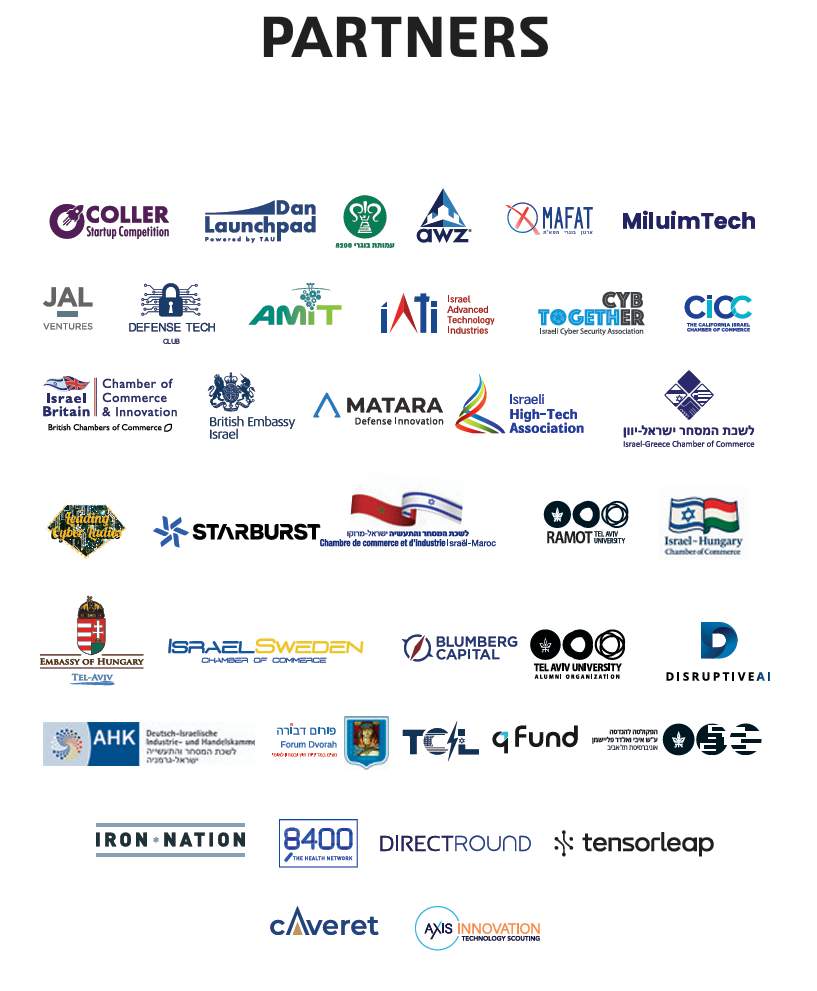
The British Embassy was listed as a partner in the official brochure for the 2025 DefenseTech Week, alongside Elbit Systems, Rafael Advanced Defense Systems and IAI, which are among the biggest arms suppliers for Israel’s military operations in Gaza. UK Government sources denied that the Embassy was a partner. The IBCC had supported the 2025 exhibition, which British Embassy officials attended.
Elbit’s promotional material documents its role in Gaza. A company article on its Iron Sting guided mortar describes troops using it to attack targets in densely built-up areas without waiting for aircraft or distant artillery. An Elbit investor presentation markets technologies developed or proven during the fighting.
Rafael’s Spike guided missiles are used to attack people inside buildings in Gaza, and Matador rockets made by its subsidiary Dynamit Nobel Defence are used to destroy buildings. IAI’s Heron drones are also conducting Gaza strike operations.
Amnesty International’s September 2025 briefing found that Elbit, Rafael and IAI supply weapons used to maintain Israel’s unlawful occupation and to commit genocide in Gaza. The human rights group called for these firms to be excluded from arms fairs and Government meetings marketing military products.
The UN Commission of Inquiry on the Occupied Palestinian Territory has concluded that Israel has committed genocide against Palestinians in Gaza, a finding it reaffirmed on 26 October alongside conclusions of war crimes and crimes against humanity.
Kristyan Benedict, Amnesty International UK’s Crisis Response Manager, told Byline Times: “Amnesty has found that Israel’s biggest arms companies, Elbit, Rafael and IAI, are deeply integrated into Israeli military and security operations in the illegally occupied Palestinian Territory and have publicly supported Israel’s military actions in Gaza. The genocide hasn’t stopped, so neither can the pressure on the companies enabling it.”

Gaza Three Years On: The Changing Politics of Genocide Denial
Martin Shaw, who argued that Israel was beginning to commit genocide in October 2023, examines the tensions between recognition and denial as the Burnham Government tries to reset its Palestine policy.
Supporting Israel’s Military-Industrial Complex in 2026
The Israeli Defence Ministry’s Directorate of Defence Research and Development (MAFAT) is also a major sponsor of the forthcoming 2026 DefenseTech Week, where the British Government-backed Israel-Britain chamber of commerce is listed as a collaborator.
The 15 sponsors for the forthcoming event – which British officials are expected to attend – span Israel’s military-industrial complex, from the arms manufacturers Elbit, Rafael, IAI and the US contractor Lockheed Martin, to the suppliers of sensors, drones, rocket propulsion, targeting software and robotic weapons deployed in Gaza.
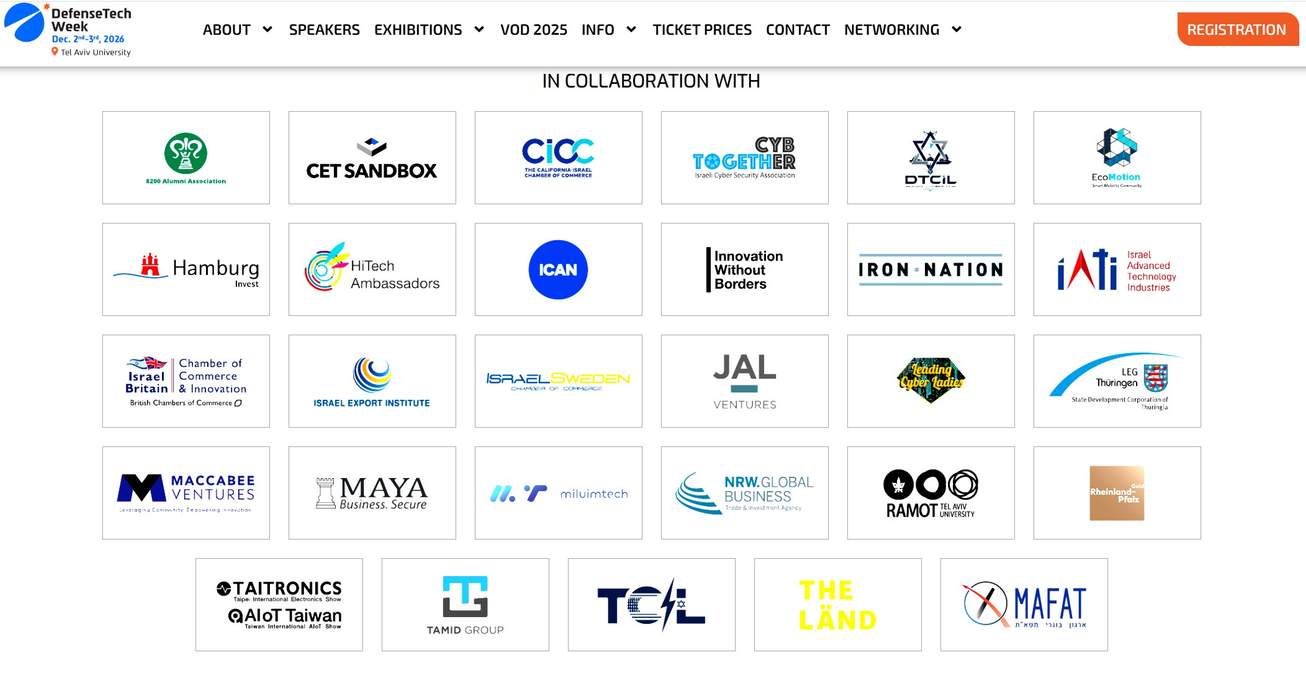
The UK Government’s longstanding institutional relationship with the chamber thus puts it in a collaborative role with the Israeli defence companies supporting military operations in Gaza.
Lockheed Martin, a platinum sponsor, supplies and services the F-16 and F-35 aircraft used in Israel’s bombardment of Gaza. Britain exempted components entering the international F-35 programme from its September 2024 suspension of export licences, except when exported directly to Israel.
Other sponsors of the forthcoming Israeli defence exhibition provide the systems for detecting targets, coordinating strikes and supporting ground combat in Gaza. They are the kinds of firms that appear to fall under the Government’s own arms suspension criteria.
Semi-Conductor Devices (SCD), a silver sponsor, supplies infrared sensors that detect targets by heat signature. In company-sponsored material, chief executive Kobi Zaushnizer said its detectors had been used extensively in Gaza over the previous three years, including in attack systems and target detection, describing the technology as essential to the military’s operational advantage and to the capabilities of Elbit, Rafael and IAI. SCD also lists a UK operation, IRIS Technologies.
Shield AI, the diamond sponsor, deploys the Nova 2 autonomous drone, which is used by Israeli forces for close-quarters indoor combat in Gaza.
TSG IT Advanced Systems, a platinum sponsor with IAI and Formula Systems as its main shareholders, has developed and maintained systems used extensively in the Gaza war, including real-time intelligence prediction and maritime imagery. TSG’s EarthSolver system, used in Gaza in 2014, turns sensor data into precise targeting coordinates and lets troops rapidly build target banks for fighter-jet attacks.
Aeronautics, a platinum sponsor owned by Rafael, produces drones used to support Israeli combat teams in Gaza through intelligence gathering, escorting ground forces and directing strikes.
TOMER, a platinum sponsor and Israeli Government-owned propulsion supplier to Elbit, Rafael and IAI, makes engines for the Bar rocket. The Israeli military confirmed on 28 April 2025 that it had fired Bar rockets at Gaza targets while providing artillery support to ground troops along the Morag Corridor.

IDF Lies About ‘Independent’ Army Investigator Ties to AI-Targeted Killing Technology in Rafah and Gaza
The head of Israel’s probe into the Rafah bombing helped create the cutting-edge drone technology disproportionately killing civilians across Gaza – and the IDF is lying about it
AITAN, another platinum sponsor, says its robotic weapons systems have accumulated more than 500,000 combat hours with the Israeli military and security agencies since 2023. Its September announcement describes a joint contract to provide command and control for the military’s next attack-drone fleet.
Another platinum sponsor, Kela, runs a platform integrating commercial and military systems. The startup has received an Israeli Defence Ministry contract to develop the autonomous control and management platform for the Israel Defence Forces’ future attack drone swarms.
Stratasys, also a platinum sponsor, supplied manufacturing support to Israeli forces in the field in 2023. Its sustainability report records providing 3D-printing technology and producing jigs, fixtures, chargers and adaptors for military units.
Regulus, a silver sponsor, supplies systems that disable hostile drones, protecting troops, tanks and infrastructure. Its investor F2 reported a surge in Israeli military orders after October 2023, following earlier supplies and testing with the Defence Ministry and the Israel Defence Forces.
The event also promotes silver sponsors LINE5, which markets autonomous defence systems, and Skapion, which develops technology to intercept drone swarms.
Altogether, Byline Times identified some $12 billion in contracts between these 15 companies and the Israeli Ministry of Defence for military operations in Gaza.
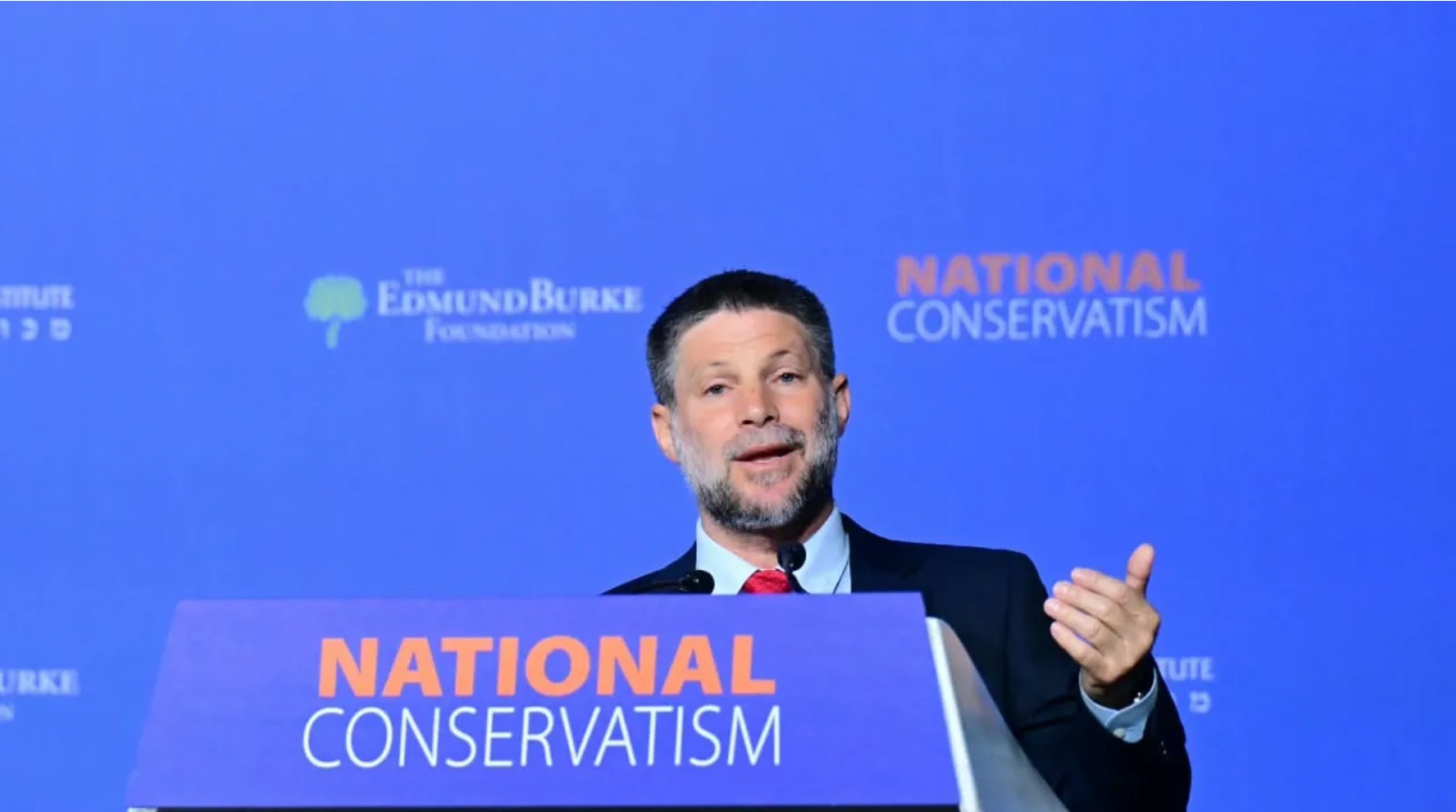
Reform UK’s James Orr’s Foundation Hosted Sanctioned Israeli Minister
The latest National Conservatism conference, held in Jerusalem, was co-sponsored by an Israeli NGO sanctioned by the EU and Canada
British Support Across the Occupied Territories
In its July 2024 advisory opinion, the International Court of Justice set out states’ duties not to recognise or assist Israel’s unlawful presence in occupied Palestinian territory, including preventing trade and investment relations that sustain it.
Britain’s business and human rights action plan implements the UN Guiding Principles on Business and Human Rights, which address diplomatic missions’ role in business risks. In conflict settings, the principles call for public support to be denied to businesses involved in gross abuses when they refuse to cooperate in addressing them.
A Government spokesperson told Byline Times: “The UK is committed to seeing an end to this suffering in Gaza and we work closely with international partners to support the humanitarian response and long-term recovery. The only route to security and safety for both Israelis and Palestinians is a two-state solution and we will continue to push for this as our best hope for a lasting peace.”
The statement did not address the ambassador’s role in the Israel-Britain chamber during its collaboration with DefenseTech Week and its sponsors, or the position within the chamber of Mizrahi-Tefahot, a bank enabling illegal settlement construction.
Government sources said that officials speak to the chamber, as they do with other embassies, about promoting bilateral trade and investment, that the Government supports trade with Israel within its pre-1967 Green Line borders, and that its sanctions regime will target illegal settlements and settlement expansion.
The IBCC did not respond to a request for comment.
Amnesty’s Benedict added: “The Government must make sure the UK lives up to its legal obligations and plays no part in Israel’s crimes. That means stopping these companies’ activities linked to those crimes, responsibly divesting and buying nothing from them.”
AOAV’s Overton said: “The Government must explain to the public exactly why British diplomatic support continues to benefit firms implicated in that devastation, and whether – in the end – commercial interests seem to be not just above international humanitarian law but also moral decency.”