
Read Our Monthly Magazine
And support our mission to provide fearless stories about and outside the media system
There are several ways to think about John Healey’s very boring budget. The first is that his “do no harm” approach was exactly the right way forward for a new government trying to navigate an extremely challenging fiscal situation against a highly volatile international backdrop.
The long list of mostly footling measures, amounting to barely £8 billion of extra spending funded by a tax raid on banks, was designed to give some “breathing space” to a country grappling with intense cost of living pressures. It was certainly a welcome contrast to the exhausting drama that surrounded the budgets of Healey’s predecessor. This Budget also bought time for the Government to bring forward more radical policies in the coming months when it presents its 10-year plan and spending review. At least, that is what the government would like us to believe.
Then there is the view held by much of the economics community, which would have preferred to see the Chancellor use the political capital of his first budget to take much bolder action to rein in an expected deficit of £133 billion this year, equivalent to 4.2 percent of GDP.
They worry that with debt to GDP at 92%, growth next year forecast at just one per cent, inflation above three per cent and the government paying 5.33% on 10-year gilts, it will eventually need to run substantial budget surpluses before interest costs, just to stabilise the debt. Yet the Government’s fiscal plans defer big spending cuts until 2028, the year before the next election is due, when most departments other than defence and health face real-terms cuts of 2.6% on paper. However, most observers consider cuts on such a scale politically implausible.
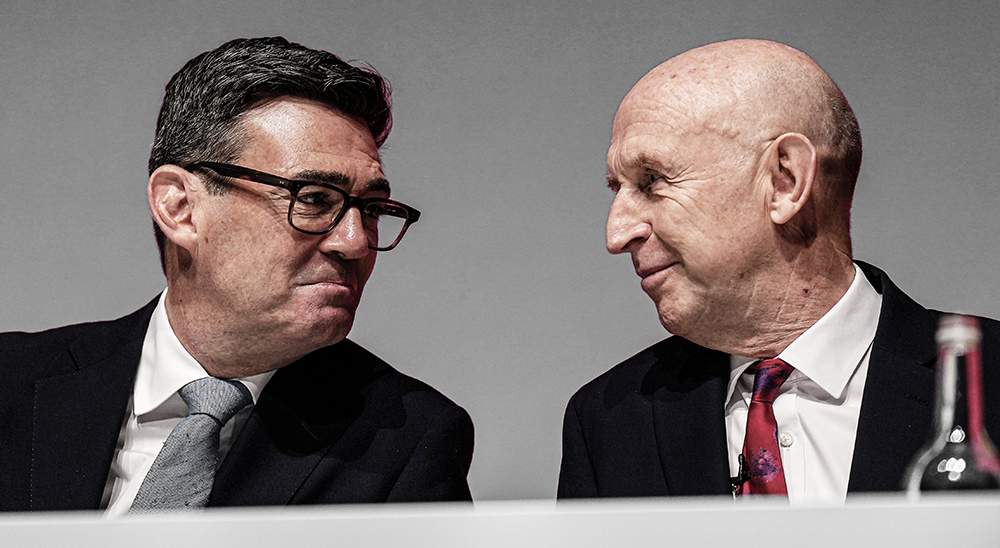
Andy Burnham’s ‘Breathing Space’ Budget Leaves Britain Holding Its Breath
The huge conflict between the Prime Minister’s bold promise to rip up ’40 years of neoliberalism’ and the modest Budget measures announced by his Chancellor, will ultimately prove difficult to sustain, argues Adam Bienkov
That points to the third view, held by many political commentators and identified by Kemi Badenoch in her budget response: that this budget was simply a holding exercise for a Prime Minister who plans to call an early election next year. On this analysis, Andy Burnham would seek a mandate for the tough fiscal choices needed to rein in the debt and deficit while meeting his pledges to raise defence spending to 3.5% of GDP by 2035 (and to three per cent by 2030, as confirmed by Healey) and to introduce a new National Care Service, unconstrained by Labour’s past manifesto commitments. Of course, this would require Burnham to win an argument for higher taxes against opposition parties that will claim to have found the magic money tree, or say they can make the deficit disappear with fantasy cuts to waste and red tape.
Personally, I would have preferred to see bolder action to rein in debt, rather than letting borrowing rise relative to previous plans so that headroom fell from £23 billion to £15 billion.
After all, as Healey boasted, the UK economy was the fastest-growing in the G7 in the first half of this year, so there is no need right now for a fiscal stimulus. Plus, any move to bring down debt could have led to a faster fall in gilt yields, which would have delivered its own welcome boost to the economy as lower yields fed through to borrowing rates. Nor is there any reason to expect conditions to ease markedly over the next year, if that was the Chancellor’s Micawberish bet. Much of the recent rise in global borrowing costs is being driven by the vast demand for capital to fund the AI build-out, which shows no signs of stalling.
Nonetheless, the initial market reaction suggests investors are willing to give Burnham and Healey the benefit of the doubt.
ENJOYING THIS ARTICLE? HELP US TO PRODUCE MORE
Receive the monthly Byline Times newspaper and help to support fearless, independent journalism that breaks stories, shapes the agenda and holds power to account.
We’re not funded by a billionaire oligarch or an offshore hedge-fund. We rely on our readers to fund our journalism. If you like what we do, please subscribe.
Perhaps, like the International Monetary Fund, they give the Government credit for at least having a plan to reduce the deficit, even if, in the absence of details, the plan remains, in the words of the Institute for Fiscal Studies, “a work of fiction”. It helps that Britain has been replaced as the chief source of market anxiety by its ugly sister, France, which has even higher debt, a wider deficit and no credible plan to bring down either. Perhaps, too, investors give Healey credit for resisting pressure to impose new wealth taxes that would have confirmed fears, as former Bank of England chief economist Andy Haldane put it, that this is “a traditional tax-and-spend socialist government with better TikTok videos”.
Even so, Healey won’t be able to duck the big fiscal questions for too much longer. And if the answers are to come after an early election, Burnham will need a strategy for winning it. Perhaps that is why he has been so keen recently to talk up the possibility of rejoining the European Union, which could help unify the left-wing vote while dividing the right. But as Burnham himself acknowledged in an interview last weekend, it would be hard to win an argument for rejoining until the outcome of next year’s French presidential election is clear. Indeed, the danger is that a French debt crisis could spread to Britain, which will be more vulnerable as a result of the decision to let borrowing rise in this budget.
Healey’s breathing space may turn out to be borrowed time.