
 Subscriptions

Read our Monthly Magazine
And support our mission to provide fearless stories about and outside the media system
In the final weeks before the US midterm elections, Donald Trump has made a number of concessions which benefit the Russian President Vladimir Putin.
These have included reported restrictions on the Ukrainian military’s use of Starlink and interruptions in US intelligence sharing, a diesel fuel deal with the Kremlin, the waiver of major sanctions and open confrontation with Ukrainian President Volodymyr Zelenskyy.
These steps raise questions about Trump’s relationship with the Kremlin, his political motivations, and the future of American democracy. Considering the Russian Federation is facing military and economic pressure, these questions gain even more urgency.
So does Putin hold leverage over Trump? The mind-blowing convergence of American policy with Russian interests made the global community wonder. The number of theories and conspiracies in both respected mass media and social media is endless.
Does Putin possess financial or personal kompromat on Trump, and could the Kremlin be threatening to release it before the midterms? Are there undisclosed financial obligations? Allegations of financial and business ties between Trump and Russian entities have been investigated by prominent journalists, including award-winning authors Craig Unger and Luke Harding. These investigations remain limited by a lack of direct access to Russian archives, but credible sources such as former intelligence officials have substantiated claims, urging public scrutiny.
Could Putin have offered electoral assistance as Trump faces mounting political pressure? In November 2024, numerous bomb threats targeting polling stations originated from Russian email domains, according to the FBI. US intelligence agencies identified Russian influence operations designed to undermine the electoral process.
Are there life threats involving Trump’s family? Any investigation into the Kremlin-linked activity must consider that modern Russia operates as a mafia-style state. Trump’s foreign policy positions that appear aligned with Russian interests raised questions about possible pressure for quite some time.
While these and other theories remain speculative, they gain particular significance in view of Trump’s lifelong history of ties with Russia, warm personal ties with Putin, and his administration’s softening on sanctions. The evolving dynamics of such foreign policy decisions warrant closer scrutiny of Trump’s long-standing connections to Russia. Understanding the nature of these connections is vital for assessing whether private interests may have influenced US foreign policy.
In this context, a timeline of Trump’s interactions with Russian entities offers valuable context.
Early Ties to Russia (1970s – 1980s)
Trump’s early business ventures reveal ties to individuals with connections to Soviet intelligence. In 1976, Soviet immigrants Tamir Sapir and Sam Kislin sold televisions on credit for Trump’s Commodore Hotel. Tamir Sapir had previously studied at the Ministry of Internal Affairs in the USSR, while Kislin’s electronics business served as a cover for KGB operations, according to former KGB spy Yuri Shvets.
Shvets claimed that Kislin worked as a recruiter and identified Trump as a potential asset. Kislin later issued mortgages to the buyers of Trump World Tower apartments.
In 1977, Ivana Zelníčková, Trump’s first wife, was surveilled by Czechoslovakian secret police (StB), which cooperated with the KGB. The StB’s records show that Ivana’s movements and communications were closely monitored during her visits to Czechoslovakia, including surveillance of her family. Unclassified documents show that by 1979, the StB ordered at least one annual wiretap of her phone calls with her father Miloš Zelníček and monitored their mail. The Trump children’s visits to their grandfather in Czechoslovakia were also observed by the secret police. A Prague-based secret police collaborator met numerous times with Ivana Trump during her visits to Czechoslovakia.
Moscow Visits & Alleged Recruitment (1980s – 1990)
Trump’s 1987 visit to Moscow, arranged by the Soviet tourism agency Goskomintourist, working under KGB oversight. Following this trip, Trump placed full-page ads criticizing NATO, raising questions about his alignment with Soviet interests.
Former KGB agent Alnur Mussayev and other former spies have claimed that Donald Trump was recruited as a Kremlin asset in 1987, referring to him as a “sleeper” agent.
In 1988, a Czechoslovakian source with the cover name “Milos” reported that Trump was being put under pressure to run for the US presidency. In 1989, the StB sent a spy to the US to monitor Trump, believing that if he was to succeed in becoming US President it could have a significant impact on Czechoslovak-US relations.
In 1992, Russian organized crime figure Vyacheslav Ivankov operated out of Trump Tower. In 1996, Trump’s connections to Russian business grew stronger when Howard Lorber and Ben LeBow brought him to Moscow for talks involving a joint venture with Moscow Mayor Yuri Luzhkov’s office.
Concerning a 1996 visit by Ivana Trump to the CSSR, the source says that “any false step of hers will have incalculable consequences for her husband’s position, who intends to run for President in 1996.”
ENJOYING THIS ARTICLE? HELP US TO PRODUCE MORE
Receive the monthly Byline Times newspaper and help to support fearless, independent journalism that breaks stories, shapes the agenda and holds power to account.
We’re not funded by a billionaire oligarch or an offshore hedge-fund. We rely on our readers to fund our journalism. If you like what we do, please subscribe.
The 2000s: Rising Ties to Russian Oligarchs
In 2007, Felix Sater, a Russian-American with alleged intelligence ties, worked with Trump through Bayrock Group and held a business card identifying him as a senior adviser to Trump in 2010. In 2008, Trump Jr. stated that “Russians make up a pretty disproportionate cross-section of a lot of our assets.”
Reuters’ 2017 investigation revealed that at least 63 individuals with Russian connections were found to have purchased over $98 million in Trump-branded properties in southern Florida
In 2013, Trump partnered with Russian oligarch Aras Agalarov to host the Miss Universe pageant in Moscow. Agalarov has close ties to Putin, and Trump was escorted to Moscow by members of the Sapir family, with whom he had previous business dealings since 1976 Commodore Hotel TV deal.
2016 Election Campaign and Ties to Russian Officials and Oligarchs
During his 2016 campaign, several of Trump’s associates had direct contact with Russian officials. His campaign chairman, Paul Manafort, had deep ties to pro-Russian Ukrainian President Viktor Yanukovych, while Carter Page, one of Trump’s foreign policy advisers, allegedly met with the Russian state-owned giant Rosneft sanctioned executives to discuss lifting the US sanctions.
Trump’s foreign policy adviser, Michael Flynn, attended a Moscow gala hosted by RT (Russia Today) in 2015, where he sat next to Putin. Flynn was later forced to resign after it was revealed he had discussed U.S. sanctions with Russian Ambassador Sergey Kislyak before Trump’s inauguration.
Trump’s relationship with Russia became a focal point of investigations during the 2016 election, with U.S. intelligence agencies concluding that Russia interfered to benefit his candidacy.
In 2026, questions about Trump’s ties to Russia persist and continue to fuel questions about potential influence on US foreign policy.
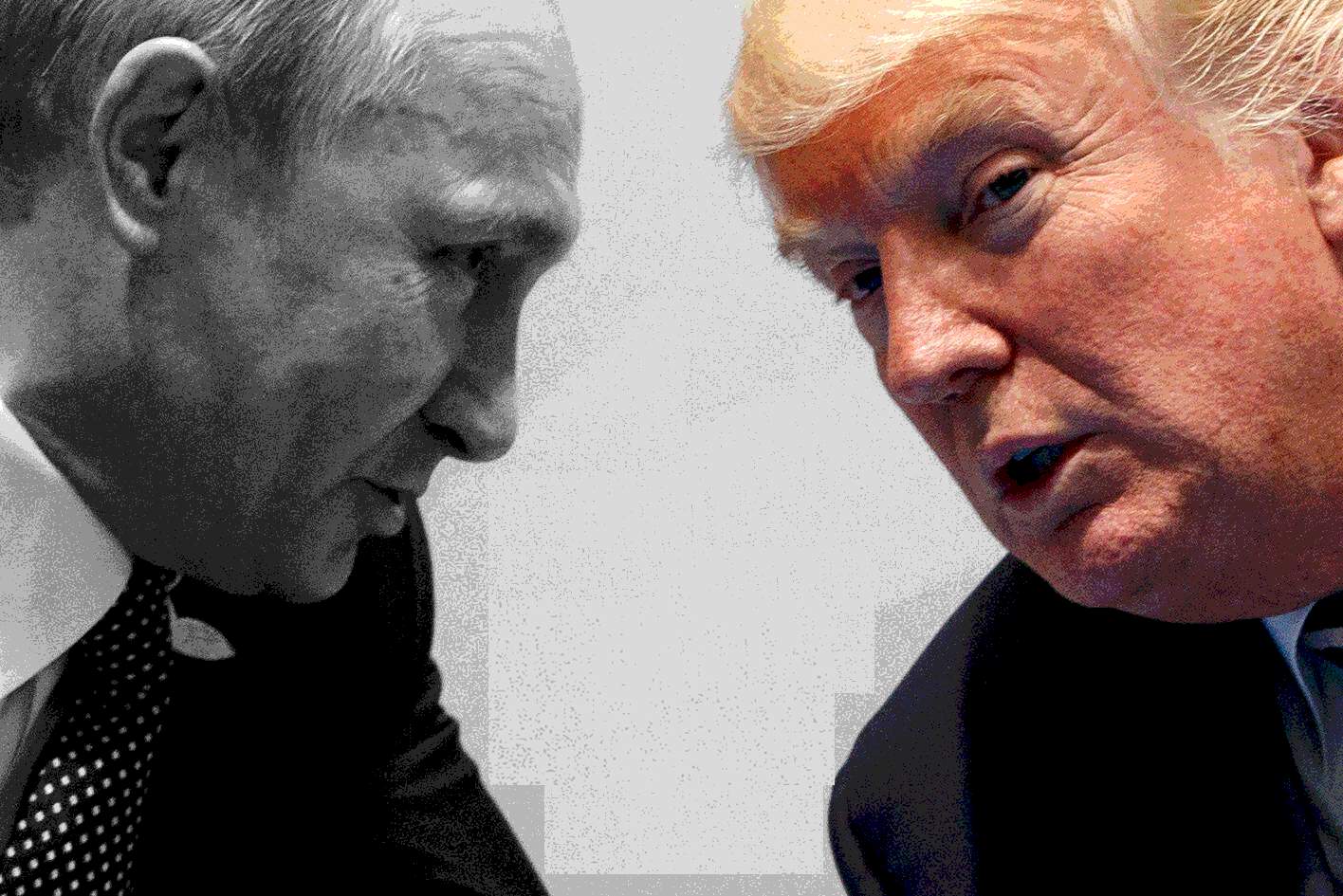
Lobbyists, Oligarchs and Power: The Pro-Putin Network Raising Fears of Foreign Influence in Trump’s Team
There is growing evidence of links between senior Trump appointees, associates, and Kremlin-linked entities
Importance of Independent Journalism and Freedom of Speech
The scrutiny of President Trump’s actions and their potential alignment with Russian interests is necessary for maintaining democratic values. It is essential to consider whether the President’s policies are influenced by foreign interests or simply a reflection of coincidental alignment.
In a true democracy, the people elect representatives to serve the public, not their own interest or foreign powers. Authority is delegated by the people, with the expectation of loyalty to the Constitution and the national interest. When that trust is compromised, the legitimacy of governance comes under question. The public loses its ability to make informed choices, institutions weaken, and democracy becomes vulnerable to manipulation from within and abroad.
In this context, freedom of speech and independent investigative journalism become necessary tools to expose foreign influence and defend democratic institutions. American journalists rely on these rights embedded in the Constitution and fundamental to the US system of checks and balances. Without them, investigations into national security threats, foreign interference, or abuse of power would be obstructed or suppressed.
Further independent research into Trump’s connections to Russian entities and public engagement is therefore crucial for understanding their implications on US foreign policy and national security.