
 Subscriptions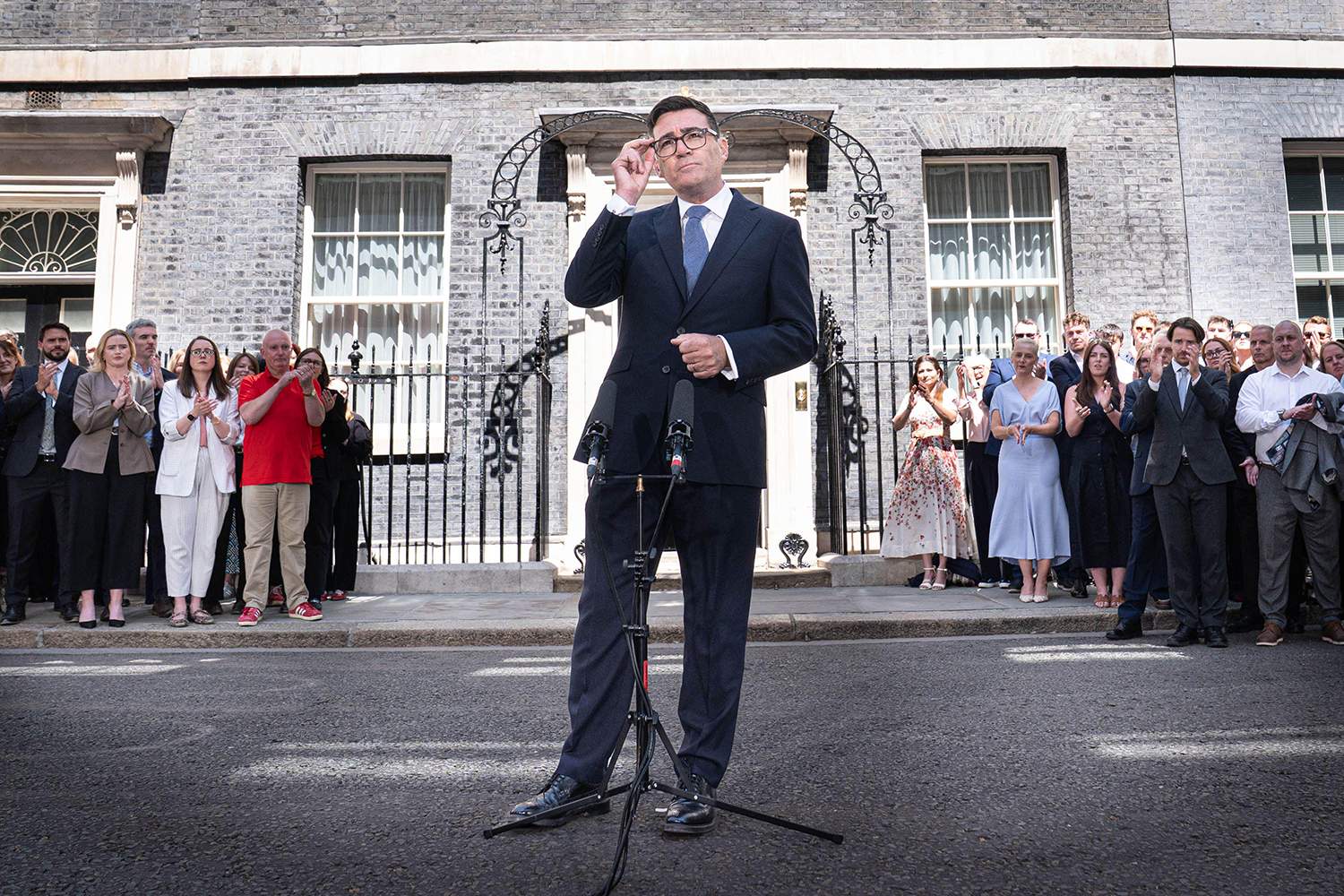
Read our Monthly Magazine
And support our mission to provide fearless stories about and outside the media system
On Friday 31 July, Andy Burnham made history, even if he did so in his trademark style. He triggered a process that points in a genuinely radical direction. Yet its destination remains unmapped and uncertain, leaving potential supporters broadly sympathetic yet sceptical.
He was speaking in Sheffield. The occasion was the launch of his far-reaching, seven-page Cabinet Statement that proposes to decentralise power across England. It promises legislation that will empower regional mayors to raise their own income as well as having a share of tax revenues as a right. Its ambition is to “fundamentally re-wire the way our country works”. The Prime Minister acknowledged that the Cabinet paper points towards “a new constitutional settlement” and “will increase the case for … a written constitution”, and “a new clear set of principles about how this country should be run.”
In saying this Burnham unlocked the safety-catch on the fundamental feature of British rule: that the totality of its arrangements remains uncodified and informal. A feature that ensures our government belongs to those who govern us and not to the people as citizens.
It’s important to say that Burnham did not pull the trigger. But until that July day, no British prime minister when in office has ever endorsed the possibility of a “written constitution” in a positive fashion – a fact which makes this a watershed moment.
Indeed, from what I can work out, no prime minister when in office ever used the phrase ‘written constitution’ until 1989, when Margaret Thather was obliged to respond to a letter sent to her from the constitutional and electoral reform campaign group Charter 88. Its lead signature was Lady Ewart Biggs. I should admit that I drafted it.

Burnham Wins in Makerfield: Can the ‘Politics of Place’ Now Offer an Antidote to the Poverty of Possibility?
Having been on Reform UK’s target list as a winnable seat, Andy Burnham’s new constituency is a microcosm of Brexit Britain and the failed legacies of Thatcher and Blair. Peter Jukes and Hardeep Matharu paid a visit ahead of its seminal by-election
Our request: “Basic rights to be entrenched in law; accountable and open government; electoral reform; regional power and a written constitution.”
Thatcher replied that, “The government consider that our present constitutional arrangements continue to serve us well…” with her unmistakable sense of a Royal ‘we’. She added: “the government does not feel that a written constitution in itself changes or guarantees anything: Everything depends on how constitutional guarantees, whether written or unwritten, are interpreted and applied in daily life.” An important observation I will return to.
Prime Minister Burnham faces a barrel-full of major issues: economic, diplomatic, military, environmental and social. Why should he add to these by unleashing the historic process of a written constitution? What is the problem to which it is the answer?
The problem has three parts: First, how do we decentralise the British state to release and empower regional judgment and creativity? Or, to put it negatively, how do we stop what is now the husk of an Empire State throttling our democracy in the all-too-familiar way it is programmed to do? Second, how do we protect and enhance our rights and freedom as citizens? Or, to put it negatively, how do we reverse the attacks on, for example, our right to protest, to privacy on the internet, and to vote? Third, and crucially, how do we restore popular consent to how we are governed?
All constitutions, whether written or not, contain the rules for changing the rules. In so doing they establish three things:
- Relations of power between different part of society: who can do what to whom
- The liberty and rights of citizens
- What kind of society the country aspires to be
The British state is undergoing a breakdown on all three fronts. Burnham seems most concerned about the first. Many activists care most about the second. It is the third that really matters. Only a new constitutional settlement, forged out of popular participation, can roll back the corruption of our public sphere and re-establish the legitimacy of the State, now an essential condition for its successful re-wiring.
In other words, it is just the sort of project that should attract a successful politician who aims to replace the market priorities of neoliberalism.
Forty years ago, Thatcher’s authoritarianism created a very different kind of crisis. Back then, Britain still had something that many countries with mere paper constitutions lacked: underlying public consent. The arc of the ruling institutions, the monarchy, the armed forces, the judiciary, as well as parliament, created an arena in which, despite deep conflicts, there was still an underlying loyalty and shared self-belief. Historically, this legacy saved the country from the fascism that swept almost all Europe. John Major, the son of a music hall artist and garden gnome entrepreneur, remains its last true representative.
Over the course of this century, public belief in the British system has cratered. There are many descriptions. One will suffice, the introduction to the Report on the UK’s Future, headed by Gordon Brown, that Keir Starmer commissioned and then binned. I like it because the authors don’t hide the shock they experienced on realising the gravity of the problem. “A clear majority in all places and supporters of all parties”, they report, “currently believe it doesn’t matter who you vote for, nothing will ever really change in Britain. Even more – a figure consistently above 60% – believe that Britain has a ruling class who will always rule the country no matter what happens”.
They headline this opening section “Loss of Trust”. A much-used formula that implies voters are responsible for losing something which a better-behaved government could help them re-find.
What has taken place is altogether more serious.
The public is right to withdraw its trust. It is the state that has lost its legitimacy. A process now actively reinforced by the privatisation of the public sphere and the penetration of politics by the super-rich, alongside social media consciously antagonistic to honest, democratic norms.
The mere promulgation of a written constitution cannot reverse this. As Thatcher’s letter said, everything depends on how things are actually carried out “in everyday life”. Nor is the difficulty one of composition. W Elliot Bulmer has just published a polished draft of an English constitution. In 2014, Graham Allen oversaw the publication by the House of Commons itself of a complete draft of a constitution for the United Kingdom, when he chaired its short-lived Political and Constitutional Reform Committee.
What matters was set out with unequalled brevity by the old song: “It ain’t what you do, it’s the way that you do it. That’s what gets results”. How we get to a written constitution will determine how it is lived. Which is more important than any actual words. The route to a democratic outcome has itself to be democratic, not top down. The process of writing the rules must itself be open and participatory, relying on citizens assemblies, which as Ireland has shown, can overcome party and media antagonism. While clear guidelines, such as clarity, simplicity and flexibility, are essential, it is now the turn of our governing elites to trust the public.
Why is there such resistance to something so apparently attractive? It is not indifference. Many politicians will tell you that “on the doorstep” voters are not interested their main concern being potholes. Don’t you believe it! When asked, millions mobilised to “take back control”, the most abstract of constitutional concepts.
One reason is that the Anglo-British elite fear anything that might give England a parliament. The national question lurks in Jonathan Sumption’s denunciation of Burnham’s interest in a written constitution as being “Fundamentally un-British”. Another is corruption. Which brings us to a third – the Labour Party itself.
ENJOYING THIS ARTICLE? HELP US TO PRODUCE MORE
Receive the monthly Byline Times newspaper and help to support fearless, independent journalism that breaks stories, shapes the agenda and holds power to account.
We’re not funded by a billionaire oligarch or an offshore hedge-fund. We rely on our readers to fund our journalism. If you like what we do, please subscribe.
Ten years on from the failure of Brexit, the country is ready for far-reaching, democratic change that works. But Burnham desires to govern as a Labour leader. And his Labour colleagues, many personally sieved by Peter Mandelson, will resist radical decentralisation not to mention an honest, citizen-based constitution. A stunning example of the Labour machine’s conservatism is how it has prevented a cap on the individual donations that now corrupt British politics. Apparently, nothing must threaten Lord Sainsbury giving the Labour Party more than £100,000 a year.
In this year’s Attlee Foundation lecture, John Major bears witness from the perspective of the traditional regime. “We need a spring clean”, he said. “Is political funding corrupted if ‒ with no qualifications other than money ‒ donors receive honours or preferential access to Ministers? Should political donations be capped to protect against undue influence? I believe the answer is – yes”.
It is not just a matter of preventing the limitless funding of the Reform Party or Badenoch’s Tories. The larger message envelopes Labour as well. If the Government continues to permit the unlimited exercise of private and corporate wealth to buy influence, it is not unreasonable for the public to conclude that ‘all politicians are alike’ and ‘politics is stolen’. Only a party entrenched in the existing regime and its privileges could fail to see the democratic consequences. It means that inside the Labour machine, the old Mandelsonian instincts remain intact.
If they are to be overcome, a mighty battle lies ahead for Andy Burnham.