
 Subscriptions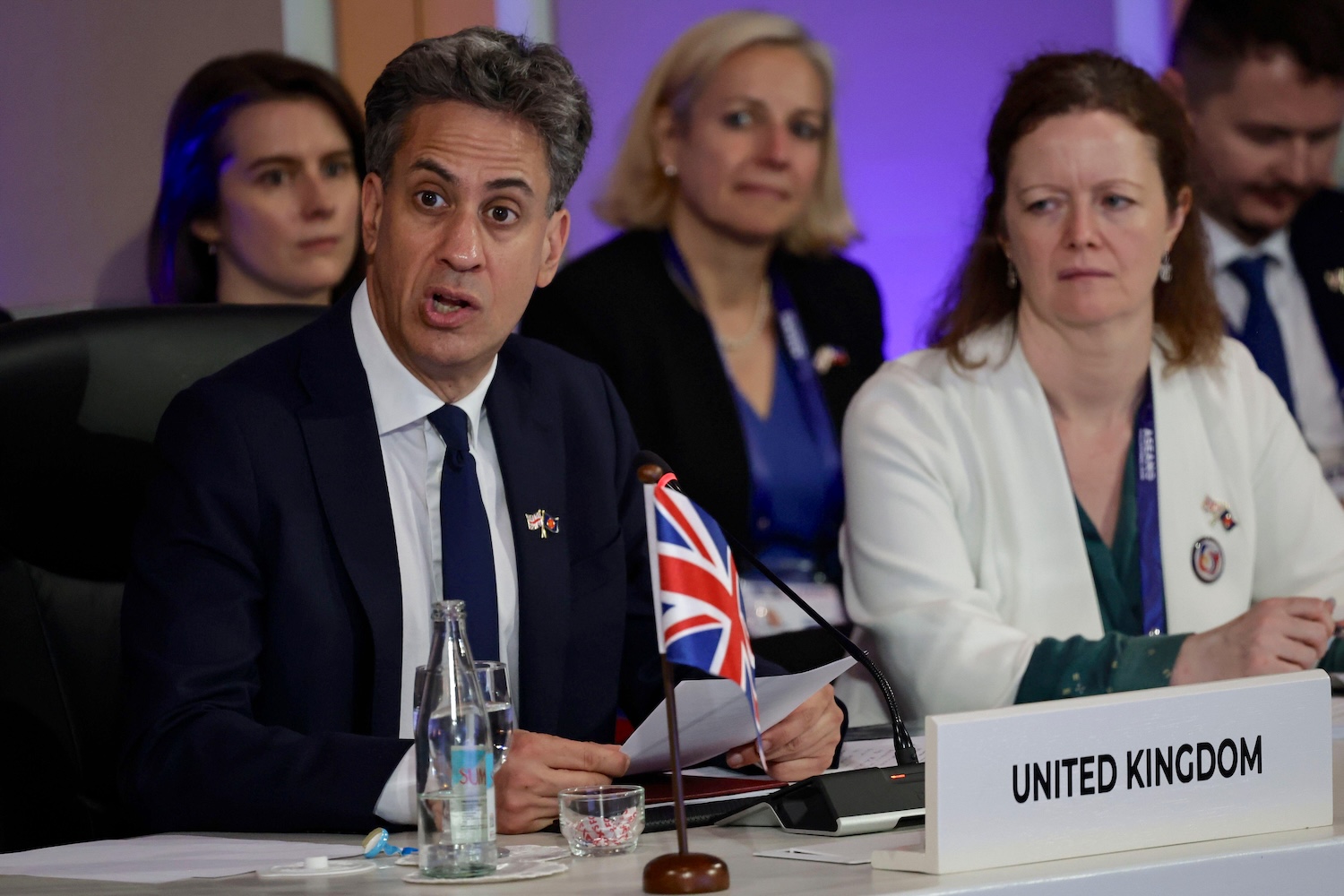
Read our Monthly Magazine
And support our mission to provide fearless stories about and outside the media system
Last week I listened to an interview with Nile Gardiner of the Washington-based right-wing think tank, the Heritage Foundation, discussing the impact of the appointment of Ed Miliband as the new Foreign Secretary on US-UK relations.
Gardiner listed a whole range of issues on which Miliband’s views were likely to clash with those of the US administration, including his opposition to the war in Iran, his support for Net Zero policies and opposition to North Sea drilling, his role as Labour leader in 2013 in blocking British action against the brutal Assad regime in Syria, and his reported support for the Chagos Island deal transferring sovereignty over the territory to Mauritius, whilst retaining use of the Diego Garcia military base.
Gardiner also cited Miliband’s long record of personal criticism of Donald Trump – even though many of these seemed admirably on point, and reflective of views shared by many American voters. In 2016, Miliband described the President as “a racist, misogynistic, self-confessed groper.” On another occasion, he said “We must do our best at home and abroad to resist the worst of Trumpism…These are dark days for America and the world.” In 2017, he said Mr Trump had “lowered the bar for idiocy.” He has also questioned the President’s “incredibly peculiar relationship with Russia” and accused him of lowering standards in politics.
It’s worth noting that many of Trump’s current associates have had unflattering things to say about him before, noticeably JD Vance, who is now Trump’s Vice President, despite fiercely criticizing him in the past. Zohran Mamdani, the new Mayor of New York, has been an outspoken critic of Trump, yet seemed to strike up a good rapport with the President when they met in person.
Elections Watchdog Assesses Reform UK’s £30,000 Private Flights Donation
Exclusive: Watchdog escalates inquiry into Nigel Farage’s party amid questions over whether the true source of the money was concealed
Nevertheless, Gardiner concluded that for all these reasons, Miliband’s appointment was both unwise and a big mistake.
Many British newspapers have echoed this message. For example, according to the Independent, citing associates of the President, Miliband’s appointment has gone down “like a lead balloon” in Washington, and he will have some “serious diplomatic repair to undertake.” In another example, the Telegraph ran a piece headlined “Foreign Brief for Miliband risks Trump’s Wrath” and quoted an administration official claiming that the appointment could become a “point of friction” in the UK-US relationship.
Legitimate questions can certainly be asked about Miliband’s record on foreign policy – particularly his opposition to action in Syria in response to Assad’s atrocities against his own people. The failure of the West to enforce its own redline in Syria arguably was a decisive turning point in Western credibility, and was a factor in emboldening Putin to believe he could move on Ukraine with impunity. I certainly remember the shock I felt at that moment, when it seemed that the West no longer had the mojo to stand up for its core beliefs.
However, what all the critics of Miliband’s appointment are overlooking is that it is not actually the purpose of the Foreign Secretary to appease Donald Trump. The job of Foreign Secretary is to stand up for British interests – as Miliband indeed set out in his first official statement following his appointment: “I will be a Foreign Secretary who fights for Britain’s interests and our values of democracy, freedom and the rule of law on the world stage.”
In previous times, one might have argued there was no contradiction between defending British interests and preserving good relations with the US President – because, in previous times, British and US interests and values were so closely aligned as to be almost inseparable.
It is harder to make the same case today – given the current US administration’s disdain for international norms and standards, cavalier treatment of its traditional democratic friends and allies, and its more tolerant attitude towards strongmen leaders.
It’s not the UK which is walking away from the democratic values and shared security perspectives which once underpinned the so-called “Special Relationship”, but the current US administration, which is busy dismantling democratic checks and balances at home, and seems increasingly unable to distinguish between democratic friend and authoritarian foe overseas, judging by its inconsistent support for Ukraine, tolerant approach towards Putin, and willingness to work with Israel on Iran, despite the latter’s repeated violations of international humanitarian law and gross record of war crimes in Gaza and Lebanon.
It’s not the UK which has weakened its commitment to the transatlantic alliance, though it certainly needs to up its game on defence, but the Trump administration, with its aggressive claims on Greenland and Canada, its weaponization of tariffs to try to bully partners in NATO and the EU, its erratic pronouncements on NATO, and its blatant meddling in European domestic politics, to try to promote far right political parties. Indeed, the hypocrisy of the administration in simultaneously decrying alleged Chinese interference in US elections, as claimed by the President in a recent prime time address, whilst actively championing favoured candidates in European elections, is breathtaking.
It’s not the UK or NATO allies which allegedly “let down” the US by failing to back its ill-advised venture in Iran whole-heartedly. It’s the US which let down all the countries now being negatively affected by the conflict, above all those in the region, by launching its war without a proper strategy or adequate consultation, and then blaming others for not coming to its help.
ENJOYING THIS ARTICLE? HELP US TO PRODUCE MORE
Receive the monthly Byline Times newspaper and help to support fearless, independent journalism that breaks stories, shapes the agenda and holds power to account.
We’re not funded by a billionaire oligarch or an offshore hedge-fund. We rely on our readers to fund our journalism. If you like what we do, please subscribe.
And it’s not the UK which is appointing manifestly ill-suited people to positions of high office, but the Trump administration – with its appointments of vaccine sceptics and medical science deniers to important health positions, climate change deniers to important energy and environment positions, blatantly partisan individuals to vital roles in the supposedly impartial Department of Justice, who are now using their position to pursue Trump’s political opponents, people with no intelligence or security background to vital national security roles, in which capacity they are busy firing anyone who dares to question current administration policies, and a mysogynistic, racist, rabble-rousing religious nut as Secretary of Defence.
Ed Miliband is not really the problem here.
The UK certainly has lost some ground in Washington in recent years. But, that’s because of its weak economy, unstable governments, never-ending churn of Prime Ministers, and poor record on defence. It’s also because of Brexit – the ill-advised decision to leave the EU, which the first Trump administration actively encouraged, and which has left the UK poorer, weaker, and even more unable to get a grip on its domestic challenges, as well as less influential or respected overseas.
Given the widening gap between British and American perspectives, whoever the new British Prime Minister, Andy Burnham, had appointed as Foreign Secretary would have a challenge on their hands to preserve good relations with the US. After all, former Prime Minister Keir Starmer bent over backwards to try to keep in Trump’s good graces, to little avail.
Of course, Ed Miliband should not go out of his way to offend the US. Of course, it remains a good idea to try to preserve as a good relationship as you possibly can with the administration. But this should not be at the cost of selling the UK’s own values and interests short. Perhaps a little more distance, a little more focus on problems closer to home, including rebuilding better relations with the EU, and a little more cool, might earn the new British government a bit more respect from the current US administration, than endlessly trying to suck up to it.