

Read Our Monthly Magazine
And support our mission to provide fearless stories about and outside the media system
When Boris Johnson was Prime Minister one of his senior advisers confided to me that one of the only things in politics his boss actually cared about was “killing off the BBC”.
Five years on, and it is a campaign that appears to be finally coming to fruition.
Just last week, as the corporation came under sustained attack by the combined forces of Donald Trump’s White House and the Conservative-supporting press in the UK, over its clumsy editing of a speech by the President, the former Prime Minister appeared to smell blood.
Taking to X, Johnson tweeted that “Until BBC boss Tim Davie either comes clean on how Panorama doctored Trump’s speech – or resigns – I won’t be paying my licence fee.”
He wouldn’t have long to wait.
Within days of Johnson’s ultimatum, the BBC’s Director General Tim Davie and its CEO of News Deborah Turness had announced their resignations.

BBC Bosses Draw Up Plans to Win Over Reform Voters by Changing News and Drama Output
The Director General Tim Davie and other executives discussed altering BBC “story selection” in order to secure the “trust” of supporters of Nigel Farage’s party
For some insiders at the BBC, their departure was a direct result of the “coup” set in trail by Johnson in Government.
“It was a coup, and worse than that, it was an inside job,” former Sun Editor David Yelland told Radio 4’s Today Programme, on Monday, reflecting the view of many inside the corporation.
“There were people inside the BBC, very close to the board … on the board, who have systematically undermined Tim Davie and his senior team over a period of [time] and this has been going on for a long time. What happened yesterday didn’t just happen in isolation” he told the programme.
One of the key figures in this internal “coup” was the former Conservative Communications Director and GB News executive, Robbie Gibb, who was appointed by Johnson to the BBC board in 2021, shortly after describing the corporation as having been “culturally captured by… woke-dominated group think”.
Although not formally in an executive role, journalists at the corporation report that Gibb became hugely involved in scrutinising those he perceived as being “biased” against the Conservative party and Brexit, leading to what some insiders described as a “culture of fear” within the corporation.
“There was a period which coincided with the aftermath of the 2019 General Election and the Covid pandemic when BBC bosses were absolutely terrified of Downing Street,” one former BBC political journalist told Byline Times last year.
“It got into the heads of a lot of bosses up to and including the Director-General himself – that we were all basically ‘metropolitan liberals’ who weren’t representative of anyone and that we needed to be bloody careful because, if we stepped out of line, then we knew what was going to happen.”
Other figures shoehorned into the corporation during this period included its former chair Richard Sharp, who was later forced to resign, after being exposed for facilitating a large secret loan for Johnson, while also funding third party lobby groups set up to undermine the BBC.
Another key figure in this story is the public relations executive Michael Prescott, who was reportedly appointed as an external advisor to the BBC following lobbying by Gibb, before penning the memo accusing the corporation of being anti-Trump, pro-Hamas and biased in favour of pro-Trans voices, which was then leaked to the Telegraph and found its ways into Trump’s feed last week.
A Policy of Appeasement
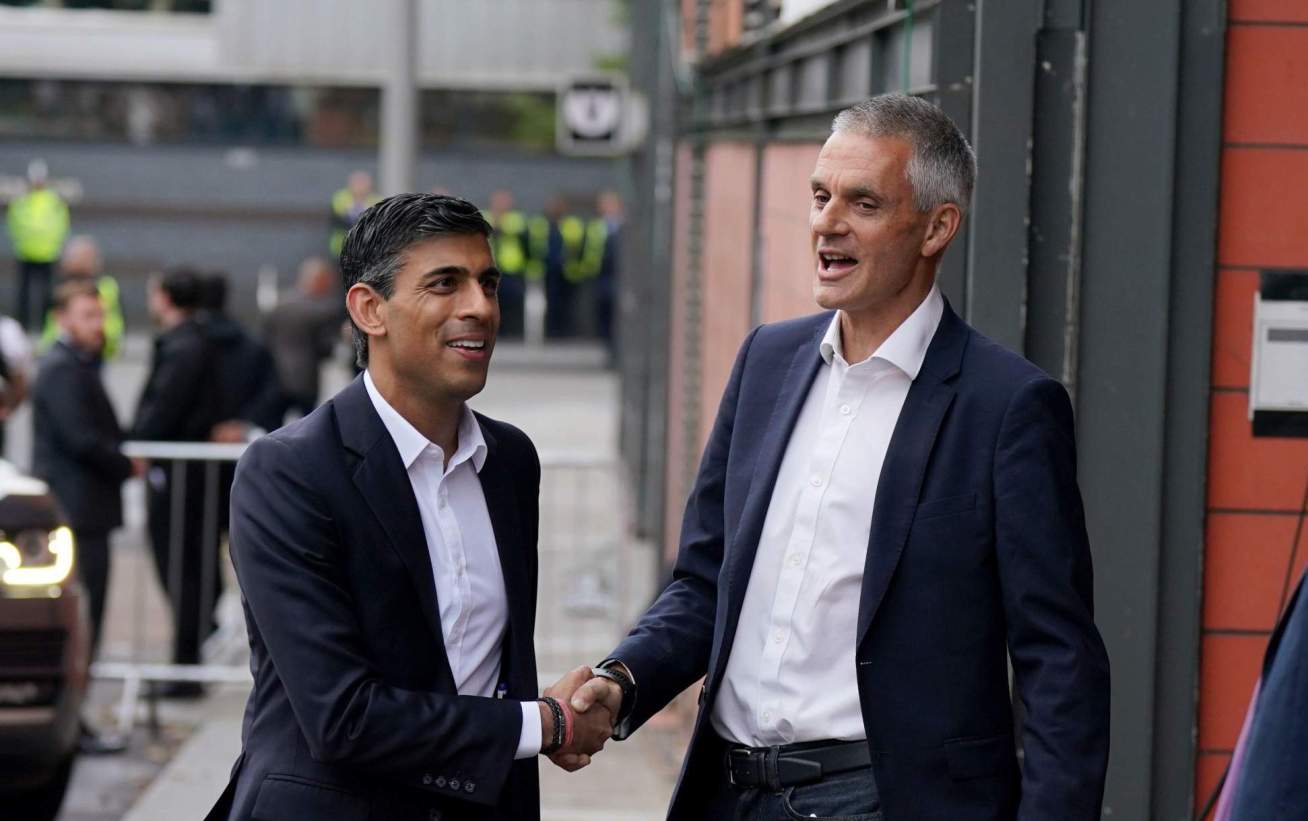
Of course at any point throughout this period, the BBC could have chosen to stand up against those forces trying to undermine them both from within and without.
Instead, under Davie, the corporation has become increasingly timid, second guessing every right-wing attack against them and trying increasingly desperately to appease those voices accusing them of left-wing bias.
This trend has continued, even after the Conservatives left office.
Faced with rising support for Nigel Farage’s Reform UK, the BBC again sought to appease its critics.
As Byline Times revealed earlier this year, at a meeting of the BBC’s Editorial Guidelines and Standards Committee in March, Deborah Turness gave a presentation to other BBC executives in which she discussed plans to alter the corporation’s “story selection” and “other types of output, such as drama” in order to win the “trust” of Reform voters.
Asked by this paper whether the committee, which also included Gibb, had ever conducted a similar process to win the trust of supporters of other parties, like the Greens, a spokesman declined to answer.
However, it is unlikely that any such process ever occurred. As one former BBC journalist put it to me: “I don’t remember anyone [in the BBC management] ever saying to us ‘oh I just don’t think we’re properly reflecting the Green Party view or the liberal-left view on this story’.”
“It was always just slanted in one direction – which was basically the nativist, authoritarian, Conservative direction. The pressure was always from the Conservative direction and never from the Labour direction.”
This imbalance means that although regularly attacked by its critics on both the left and the right, it is only the latter voices that ever appear to hold sway at the top of the corporation.