

Read Our Monthly Magazine
And support our mission to provide fearless stories about and outside the media system
Social housing providers responsible for nearly a million homes have either banned plug-in solar panels, or are yet to publish any policy approving them, Byline Times research has found.
From a straw poll of major providers, none of those that gave figures to this outlet had received a single request from a tenant to install one since the bill-cutting technology was legalised for installation without needing an electrician on 27 August.
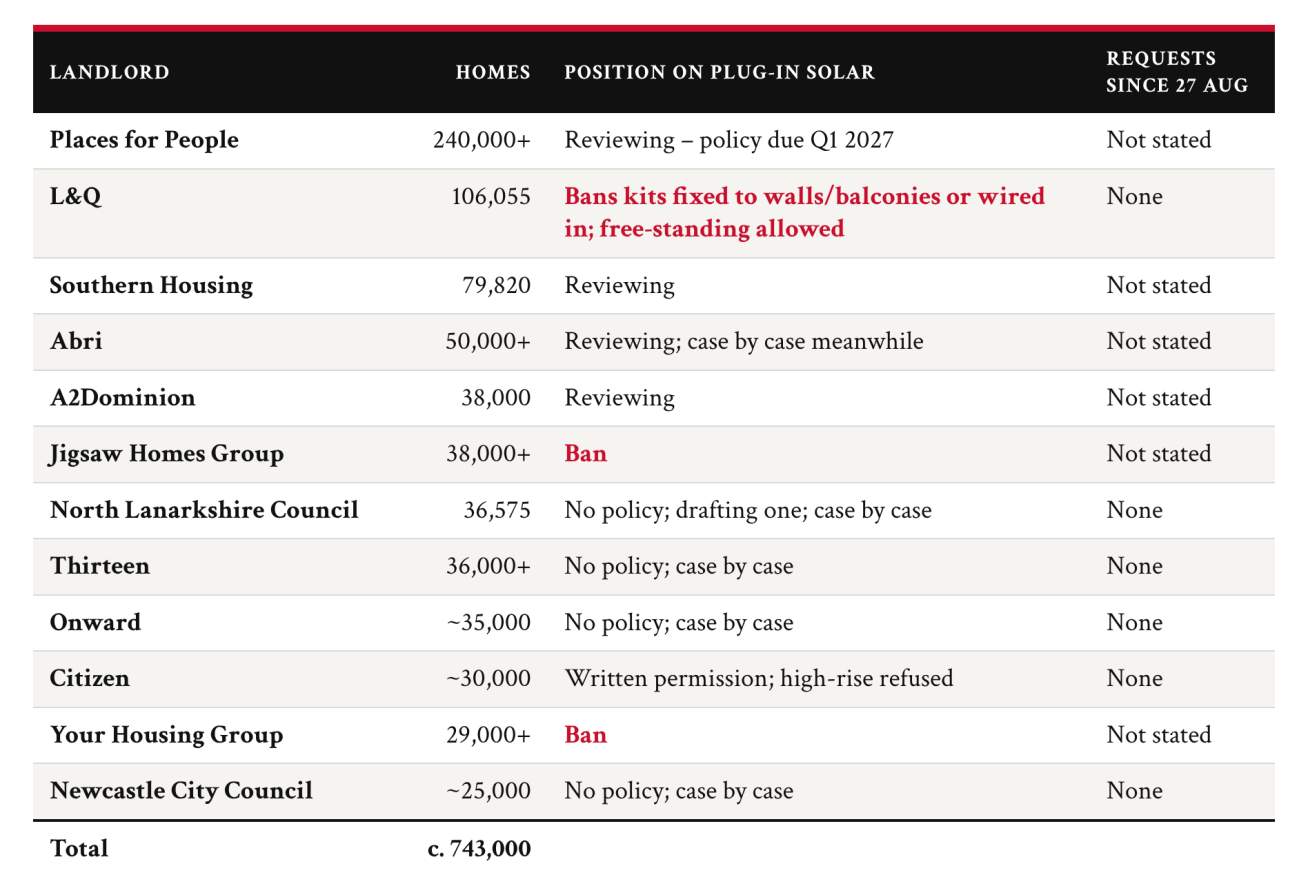
Of 12 social housing providers that responded to Byline Times’ requests on the record – which between them own or manage about 740,000 homes – three have barred or restricted plug-in kits. The three with bans have more than 170,000 homes under their responsibility,
Those providers are Jigsaw Homes Group (38,000+ homes) and Your Housing Group (29,000+ homes), which have banned them outright, while L&Q (106,000+ homes) bans any kit fixed to walls or balconies or wired into a home’s electrics.
Only one of the dozen, Jigsaw, says it has published a policy on plug-in solar. Most of the rest – accounting for more than half a million homes – have no dedicated policy and are either still reviewing their position or handling requests case by case under general alterations rules.
ENJOYING THIS ARTICLE? HELP US TO PRODUCE MORE
Receive the monthly Byline Times newspaper and help to support fearless, independent journalism that breaks stories, shapes the agenda and holds power to account.
We’re not funded by a billionaire oligarch or an offshore hedge-fund. We rely on our readers to fund our journalism. If you like what we do, please subscribe.
Another three social providers – covering about 236,000 homes on top of the 740,000 – told Byline Times privately that they were reviewing their policies on plug-in solar and did not have a formal position yet. One expects to publish a policy in the New Year. Another said it had received no requests so far.
All six landlords that told us on the record how many requests they had received said there had been none.
The reasons given for restricting the kits were perceived fire risks, balcony and structural safety, electrical concerns and insurance.
Any reviews couldn’t come soon enough for tenants facing a 26% rise in average energy costs from January, under Ofgem’s new energy price cap announced for the new year. The Government says households in Britain can cut their energy bills by “up to £110 a year” through installing plug-in solar.
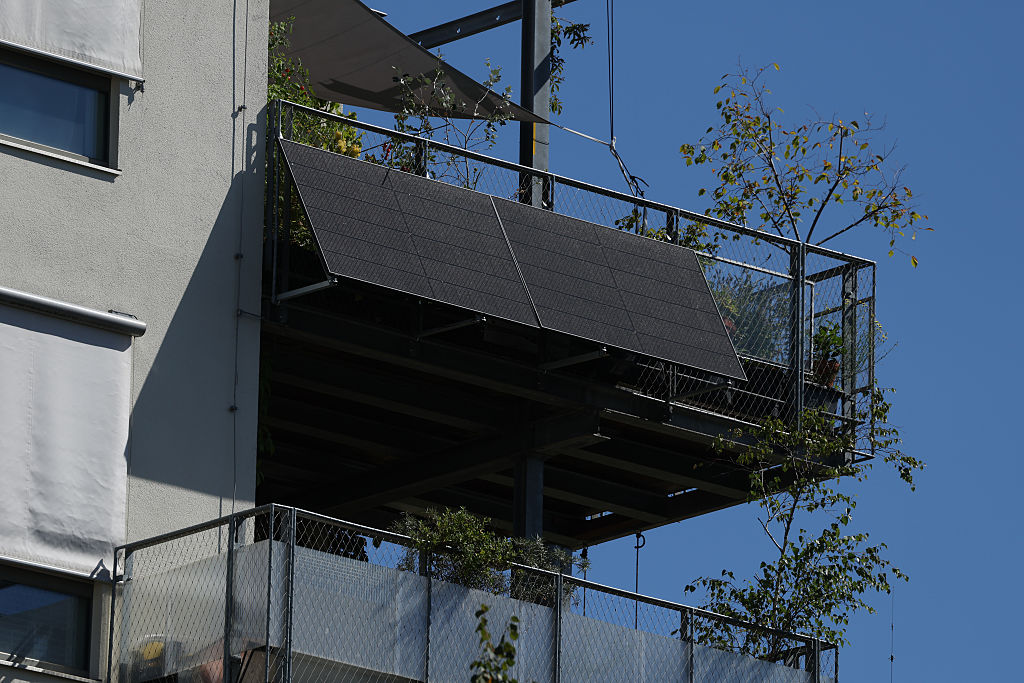
The panels require no installation cost and 40 are currently on sale having been approved. All the kits have undergone independent testing to confirm they are safe and compatible with domestic wiring, with a maximum output of 800W (a home’s baseload electricity usage is often around 250W, for reference).
An L&Q spokesperson said: “We’ve carefully reviewed the use of plug-in solar systems and have decided not to allow products that are fixed to our buildings, including external walls and balconies, or that need to be wired into a home’s electrical system. Residents can still use free-standing plug-in solar products, and we’ll provide advice on how to use them safely.”
Similarly, a spokesperson for Jigsaw Homes Group told Byline Times: “Following the Government’s announcement on plug-in solar panels, we have taken the decision not to permit the installation or use of these in any of our properties.”
And a spokesperson for Your Housing Group said: “We do not currently allow the installation of plug-in solar generation equipment in customers’ homes or on any buildings that we own.”
How Big Social Landlords are Handling Plug-In Solar
Don’t miss a story
Under Consideration
“While plug-in solar panels may help some households reduce their energy usage, they’re not suitable for every property and must be installed and used correctly to ensure they’re safe,” said Tess Dennison, asset strategy director at Thirteen.
Others said tenants would have to wait: “We’re not able to comment on this one quite yet. Our policy is due in the first quarter of 2027,” a Places for People spokesperson said. The social housing provider has more than 240,000 homes on its books.
And Newcastle City Council said: “The IET [Institution of Engineering and Technology] are publishing guidance in early 2027 at which point we would review if a policy is required.”
Jigsaw added: “We are not satisfied that plug-in solar panels are suitable for all property types and locations across our homes,” while North Lanarkshire Council noted: “So far, we have not received any requests from our tenants to install these systems.”
North Lanarkshire Council suggested it would draw up a policy after Byline Times got in touch.
Chris Hewett, Chief Executive of Solar Energy UK, the industry body, told this outlet the group was clear that approving plug-in solar in August was “just the first step”.
“Ensuring customers and landlords alike have confidence around issues like safety are paramount, as they should be with any electrical appliance. However, households should not be unduly prevented from reducing their cost of living and saving on their energy bills,” Hewett said.
The solar body chief says plug-in solar is ideal for renters unable to get full-scale rooftop systems fitted and the systems “pay for themselves rapidly.”
He added: “We hope to see plug-in batteries approved in due course, too, which would add further savings. We don’t think blanket bans are a proportionate way forward but hope to see more from government and industry to give households and landlords the confidence they need to invest in this technology.”

Conservative Plan to Scrap Solar Rules for New Homes Would Lock Millions Into Gas Use
Pledge to abolish the Future Homes Standard is branded ‘a plan for poor housing and high bills’ by fuel poverty campaigners, as the solar sector urges the party to think again
Action on the Way?
Responding to the findings, a spokesperson for the Department for Energy Security and Net Zero (DESNZ) told Byline Times: “Plug-in solar is a simple, affordable way for households to take control of their energy bills. Thousands of panels have been sold since we made the technology legal this summer, allowing families to start saving straight away.”
The Government says it engaged extensively with manufacturers, retailers and other stakeholders to support a safe and compliant market for plug-in solar products in the UK.
Ministers are understood to be exploring legislative options to help renters and leaseholders get permission to install plug-in solar more easily, while regularly reviewing the guidance available to landlords in the social and private housing sectors.
Decisions on whether to approve requests are, the Government says, a matter for landlords, freeholders or councils, but they are being encouraged to consider each case on its individual merits.
When seeking permission, consumers are encouraged to share all the information available about the merits of plug-in solar panels with their landlord or council, including how they meet the required safety standards, with a product specification officials say is more stringent than that in Germany.
The stance taken by some social housing providers appears to contrast with the Government’s own push for solar in social housing. In April it announced a £100 million top-up to the ‘Warm Homes: Social Housing Fund’ to pay for solar panels on social homes, and earmarked up to £25 million for a plug-in solar pilot run with local authorities and mayors.
Got a story? Get in touch in confidence on josiah@bylinetimes.com
holding farage to account #reformUNCOVERED
While most the rest of the media seems to happy to give the handful of Reform MPs undue prominence, Byline Times is committed to tracking the activities of Nigel Farage’s party when actually in power






 Contribute to our #ReformUncovered crowdfunder
 Subscribers Get More from JOSIAH
 Subscribers Get More from JOSIAH
Josiah Mortimer also writes the On the Ground column, exclusive to the print edition of Byline Times.
So for more from him…
