
 Subscriptions

Read our Monthly Magazine
And support our mission to provide fearless stories about and outside the media system
The Hungarian Government has told Byline Times that it has ended its media sponsorship agreement with a leading British higher education title – after this publication raised questions about why Times Higher Education had not reported on recent allegations surrounding the former Reform UK policy chief James Orr, who is also the director of a Hungarian-funded foundation.
THE’s agreement with the Hungarian Government was signed in 2024, under Viktor Orbán. The leadership of Orbán’s administration is now under investigation by the new Hungarian Government led by Péter Magyar – which confirmed to Byline Times that the sponsorship agreement is no longer in place.
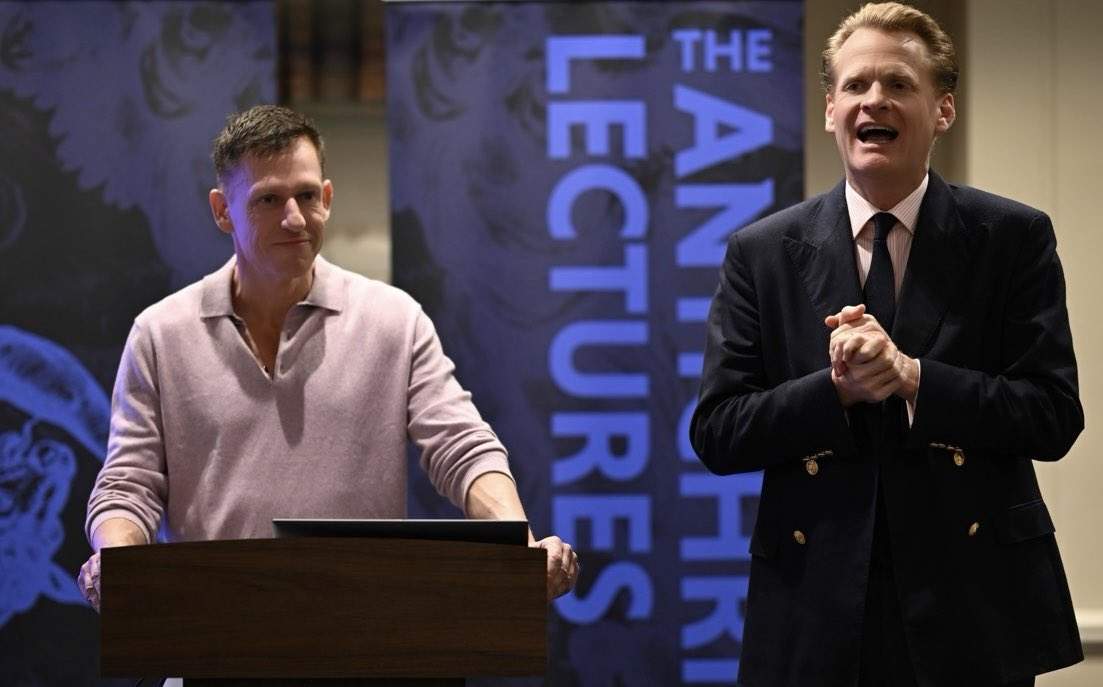
James Orr, who stepped down from Reform after appearing in undercover footage broadcast by Channel 4 News, which is now the subject of a criminal investigation by the Metropolitan Police, is the chair of the Roger Scruton Foundation – an organisation funded by the Hungarian Government.
Byline Times has extensively investigated Orr’s activities at Cambridge University, where he is Associate Professor of Philosophy of Religion in the Faculty of Divinity – including questions around student safeguarding, their ‘recruitment’ as part of Orr’s stated ideological ‘pipeline’ project for Reform, and foreign influence through tech billionaire Peter Thiel.
THE – which publishes the annual World University Rankings – has reported on neither stories.
In 2024, it entered into the partnership with Hungary’s former Culture and Innovation Ministry, created by former Prime Minister Orbán.

Orbán took control of large swathes of Hungary’s media landscape and placed political allies in key regulatory and institutional positions in his bid to build an ‘illiberal democracy’ in Hungary.
Announcing the partnership, Phil Baty, THE’s chief global affairs officer, said “Hungary’s ambitions for its higher education and research sectors are impressive”.
Balázs Hankó, Hungary’s then Minister of Culture and Innovation, said: “Our aim by 2030 is to have at least one university in the world’s top 100 and three among Europe’s top 100… through our HEIs’ performance in THE rankings we expect to attract even more attention.”
Times Higher Education’s website hosts a ‘Discover Hungary’ page. “Higher education in Hungary reflects a deep tradition of academic excellence paired with a forward-looking commitment to innovation,” its advertorial copy states.
Orbán’s Hungary placed political adverts in some of Europe’s most respected newspapers, with Reuters reporting in 2021 that France’s Le Figaro, Spain’s ABC, and Denmark’s Jyllands-Posten had all done so.
Writing in University World News about the THE partnership, Ellen Hazelkorn and Philip G Altbach said the publication was “in business to make money for their owners. The rankings are only part of the total enterprise – and perhaps a ‘loss leader’”.
Since THE’s acquisition by the private equity group Inflexion in 2019 from TPG Capital, which bought it in 2013 for £400 million, it has placed greater emphasis on consultancy and global events hosting.
Prior to the agreement, the tone of its reporting on Hungary’s education sector expressed more critical concerns.
A May 2023 article, for instance, was headlined “Scholars fear influence of Orbán-linked college (Mathias Corvinus Collegium) after expansion”.
Since then, the majority of its reporting on Hungary has focused on its institutions climbing the ranks of THE’s own World University Rankings.
James Orr had long praised Orbán’s Government, describing it as a “counterexample to the ideology in my own country that rejects national pride and heritage”.
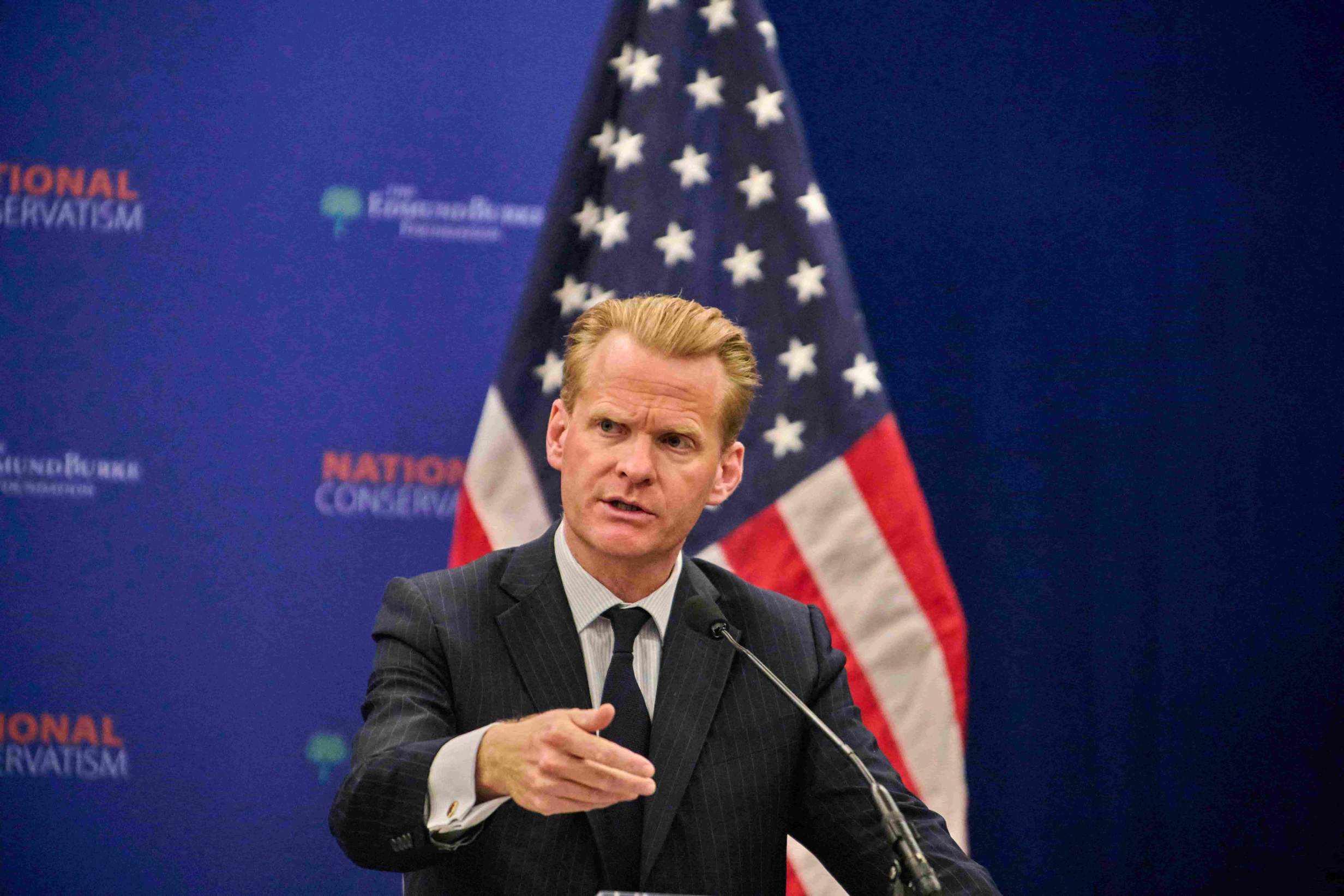
He is the UK chair of the Edmund Burke Foundation, which organises National Conservatism conferences, at which Orbán’s leadership was frequently held up as a model to emulate.
He is also the director and trustee of the Roger Scruton Legacy Foundation – which has received more than £512,500 (90% of its funding) since 2023 from the Mathias Corvinus Collegium (MCC) think tank. Under Orbán, MCC received an endowment valued at between €1.3-1.7 billion.
In contrast to the several articles published by THE on the late Jason Arday, former Professor of Sociology of Education at Cambridge University, its silence around Orr is telling.
The last and only article that mentions him – headlined “Is it time for universities to engage seriously with Reform UK?’ – was published in September 2025.
One former THE journalist told Byline Times: “For a number of former staffers, this is disappointing and that is shared by a number of academics who would be considered THE’s core constituency.”
It is understood that some former THE journalists are bound by non-disclosure agreements (NDAs).
Times Higher Education did not respond to requests for comment.