
 Subscriptions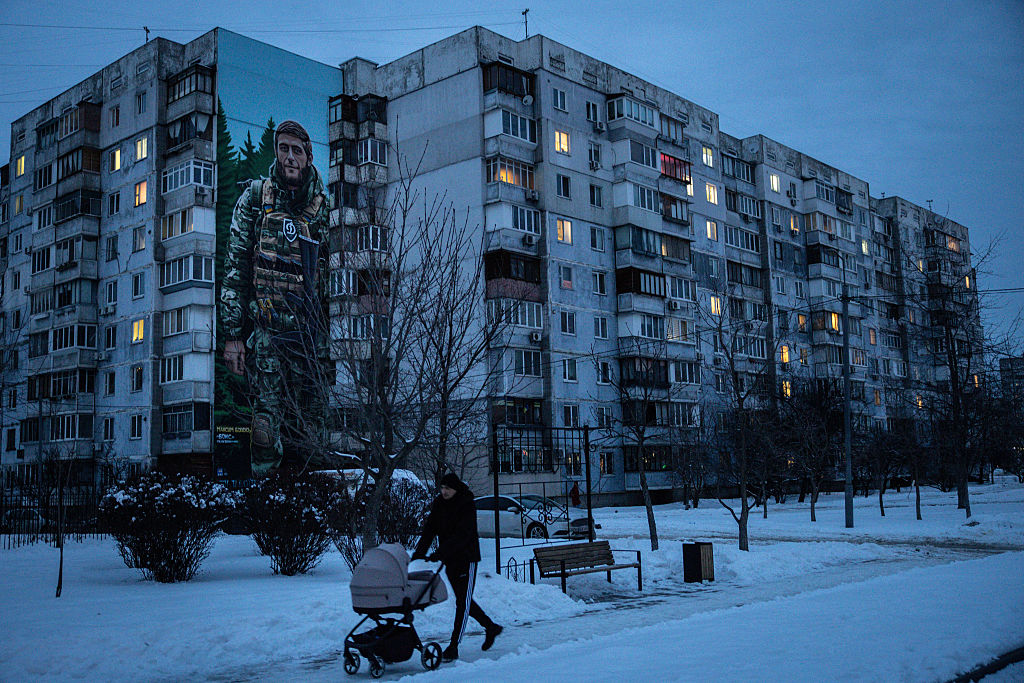

Read our Monthly Magazine
And support our mission to provide fearless stories about and outside the media system
Russia is reportedly preparing to strike Ukraine’s water and electrical infrastructure this winter, as the war stalls, Russian casualties mount and more of its jet-powered drones and ballistic missiles get through Ukraine’s defences. If Russia faces no meaningful consequences, Ukraine could target the water systems around Moscow and Saint Petersburg, and the US could be tempted to try the same tactic on Iran.
The New York Times is reporting that Russia will focus on destroying Ukraine’s energy and water infrastructure over the winter using long-range strikes with ballistic missiles, cruise missiles, and one-way jet-powered attack drones. Attacking electrical infrastructure over the winter is nothing new: Russia has done it every winter since the conflict started. Targeting water infrastructure, however, is new. Crossing that line represents an escalation that could have broader global implications.
How the Strike War has Evolved
Over the past year Russia and Ukraine have increasingly attacked each other’s infrastructure. Ukraine has targeted the Russian petroleum industry and commercial equivalents to Amazon with massive numbers of propeller-driven drones. By spring of 2026, Ukraine was producing enough of these drones that it could send more to Russia per month than Russia was able to send into Ukraine.
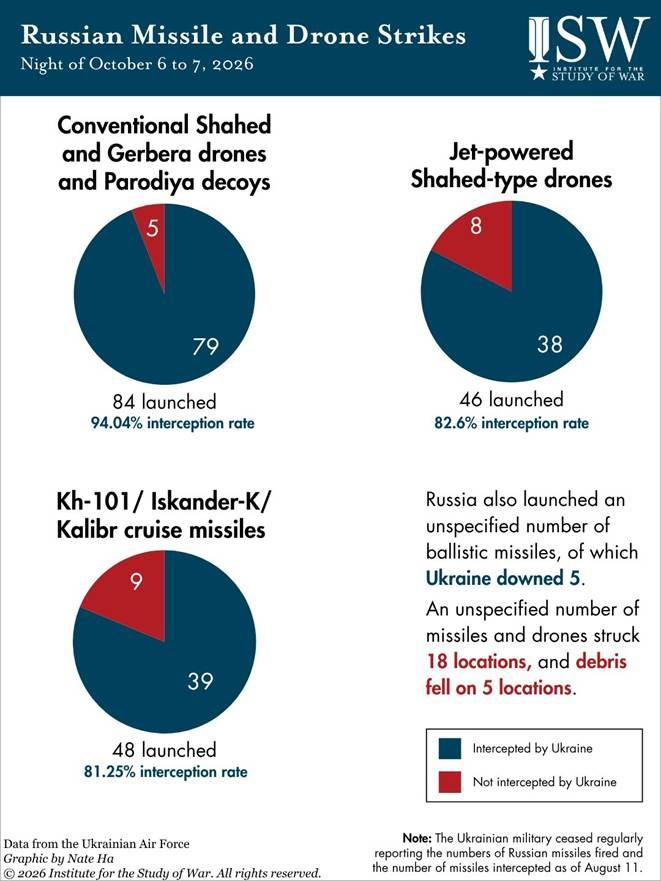
Ukraine has also become highly proficient at shooting down similar Russian-made drones, defeating roughly 90% of them. Ukraine is doing it cheaply too, using electronic warfare and a wide variety of small interceptor drones.
Russia responded by moving away from slower propeller-powered drones to slightly more expensive jet-powered drones (e.g. Geran 4, Geran 5, Banderol), along with very expensive ballistic missiles (e.g. Iskander-M), and expensive supersonic cruise missiles such as the Oniks and Zircon.
Despite Russia firing a smaller number of munitions, more of them are getting through. Ukraine has mostly been cut off from the Patriot missiles needed to deal with ballistic and supersonic targets, and has been scrambling to develop cheap, fast interceptor drones to counter Russian jet-powered drones. As a result, up to 45% of the jet-powered drones are hitting their targets, along with most of the ballistic and supersonic munitions.
There are signs that Ukrainian efforts to counter jet-powered drones are bringing the success rate up. Ukraine is developing its own system (called Freyja) to counter ballistic missiles and supersonic cruise missiles, and getting a licence to build Patriot PAC-3s, but mass production of both is likely years away.
As a result, Ukraine is successfully overwhelming Russian air defence systems with cheap drones. It has put 51% of Russia’s oil refining capacity out of commission and effectively driven Russia’s equivalents of Amazon (Wildberries and Ozon) into deep financial distress.
Similarly, Russia is able to strike high-value static targets in Ukraine with relative ease for the foreseeable future using supersonic and ballistic missiles. It is also increasingly able to hit moving targets, such as trains and trucks, deep inside Ukraine.
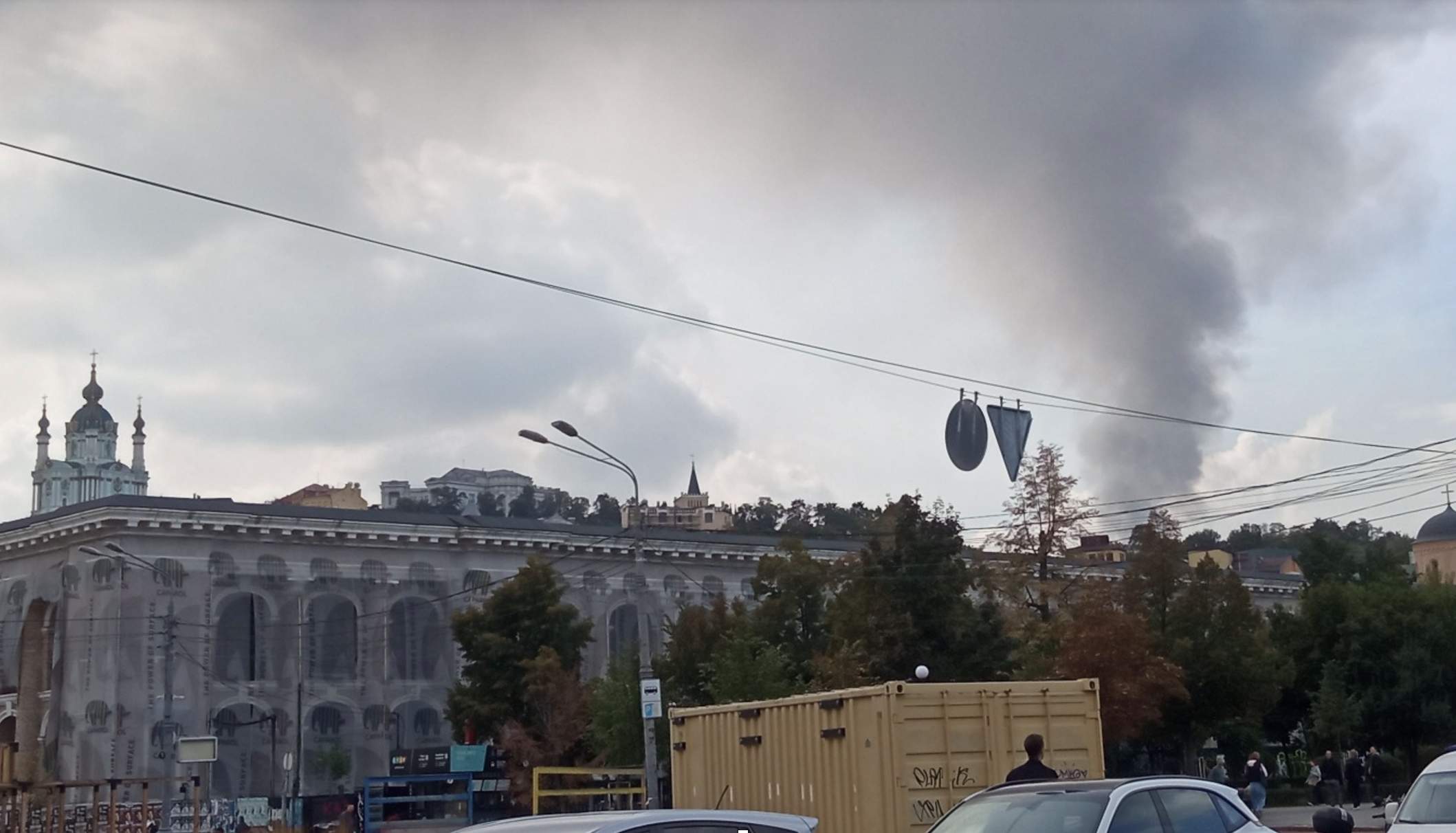
Ukraine Comes Under Assault From Putin’s Terror and Trump’s Delusions
Paul Niland reports from Kyiv as the city comes under attack from Putin’s new strategy of ‘psychological terrorism’
Ahead of Winter
Ukraine has been trying to prepare its infrastructure for the upcoming winter war, but it will be difficult in an environment where Russia can strike at will. Russia has had this advantage to some extent in years past; its efforts to leave Ukrainians cold and in the dark without electricity during the winter were often successful. It managed to cut Ukrainian electrical capacity in half compared to pre-war output.
However, Russia’s calculation that heaping misery on Ukrainian civilians would compel the country to capitulate to Russia’s extreme demands was wrong. Russian efforts to force an unfair peace, supported by US President Donald Trump, remain unsuccessful. Ukraine is making some territorial gains in Donetsk and Luhansk, thus thwarting the Russian plan to encircle Ukrainian strongholds.
Perhaps the worst part for Russia is that winters are typically when front-line casualties are at their highest. As trees lose their leaves, soldiers on the ground lose their cover from the omnipresent Ukrainian drones.
Russian casualties have risen steadily through the summer, reaching an estimated 46,320 casualties in September. This is on par with the two worst months of the war for Russia, November and December of 2024. Ukraine has previously estimated that if it can impose more than 50,000 casualties per month, Russia will not be able to recruit enough people to replace them.
At the same time, Ukraine has been keeping front-line positions lightly manned and relying on drones to detect and neutralise Russian infiltrators. As a result, and despite offensive operations around Lyman, Ukraine has managed a loss ratio between 3.3:1 and 8:1 in its favour.
Why Russia May Target Water
Russian President Vladimir Putin may be looking to break the stalemate, or even reverse his fortunes. His gamble that the election of Trump would doom Ukraine did not pay off, and even the elections of far-right candidates in France and Germany in the next year, might not be enough to help him. This may be why Russia is potentially willing to deliberately target water infrastructure.
Humans can avoid freezing to death by putting on more clothes, burning things, insulating small areas, and huddling for warmth. They can live for weeks without food. But lack of water kills within three days or so. Similarly, waterborne illnesses brought about by exposure to sewage (such as dysentery and cholera) also kill within days.
Russia may focus on targeting water infrastructure to make the country unliveable, pressure civilians to evacuate major urban centres such as Kyiv, and break the strategic deadlock of the war.
Ukrainians have shown great resilience, and will likely try to find ways to mitigate a lack of even vaguely potable water coming from the taps. This could include drinking melted snow water, burying or burning human waste, recycling water with filters or distillation, and Ukrainian Government programmes to distribute food and water. Russia’s attempt to win through misery and death may be more likely to produce a collective determination to resist and fight back, than a willingness to capitulate.
ENJOYING THIS ARTICLE? HELP US TO PRODUCE MORE
Receive the monthly Byline Times newspaper and help to support fearless, independent journalism that breaks stories, shapes the agenda and holds power to account.
We’re not funded by a billionaire oligarch or an offshore hedge-fund. We rely on our readers to fund our journalism. If you like what we do, please subscribe.
The International Response
If Russia does target Ukrainian water infrastructure, what happens afterwards may depend on how willing countries are to punish Russia, and how severely. If these attacks suddenly loosen the purse strings on $300 billion of seized Russian assets to be released to Ukraine, increase international support for Ukraine, and lead to Russian sanctions being expanded and tightened, the effort could backfire spectacularly. If little or nothing is done to Russia, the situation becomes far more dangerous.
If nothing meaningful happens to Russia as a consequence, and Ukraine feels its survival is at stake, suddenly the water, sewage, dams, and reservoirs around Moscow and Saint Petersburg are no longer off limits. The same miseries inflicted on Kyiv could be brought home to Russians, many of whom have so far been largely spared the consequences of Putin’s ambitions.
There is also another thing to consider: if there is little or no outrage at Russia’s actions, and it looks like it is having a measurable effect on Ukraine’s ability to keep fighting, Trump may believe he can use the same strategy to break the stalemate with Iran.
Iran and the US
As previously reported by Byline Times, Iran appears critically vulnerable to strikes on its water infrastructure. In a worst-case scenario there could be millions of dead, or millions of refugees.
The average Ukrainian in winter might be able to go outside, collect snow, and melt it for water; the average Iranian cannot. The survival of Iranians will depend entirely on the Iranian Government’s ability to deliver water in sufficient quantities. This could be hampered by US airstrikes on bridges, rail, and petroleum distribution networks.
The ruling party in the US very likely thinks that it is doomed in 2028 if it does not bring the war to a satisfactory close. Former US President Joe Biden never recovered from the withdrawal in Afghanistan and the inflation that struck in 2022. Trump is in a similar position of losing a war amidst rising inflation, while being even more despised by the public than Biden was.
The Executive Branch in the US has become a largely imperial office, holding nearly all the power. The Republican Party will do everything it can to hold onto power, including taking cues from Russia and the rest of the world as to how far it can go in order to win a frozen conflict.