
 Subscriptions

Read our Monthly Magazine
And support our mission to provide fearless stories about and outside the media system
At 6.45 am, in what residents consider the safest district of Kherson, southern Ukraine, Yuri, a vegetable seller, set up ripe tomatoes and peppers on the table and was picking through a crate of garlic when a Russian FPV drone hovered over, buzzing loudly. Yuri, a heavy man in his fifties, ran out of his fruit stand, waving his arms, garlic cloves clutched in his hand. His wife ran the opposite direction, and the drone swayed and rushed to chase Yuri in circles, faster and faster, until it finally flew right into him and blew up.
“I wanted to show him it’s just garlic,” Yuri said in an interview with Byline Times a few hours later. “I wanted to tell him it’s our only car. Our work car.”
A Russian drone pilot could see the cucumbers, eggplants and a middle-aged man on a screen and still proceeded to strike.
Russian FPV drones attack Kherson hundreds of times each day. They hunt civilians at farmers’ markets, bus stops, grocery stores, and on residential streets. Most attacks are not recorded as people run for their lives and journalists are rarely present. This time it was different: someone managed to record the attack from the window.
Local police released the video, urging media and the public to share it. Within hours, the video spread across social media and reached international news. Ukrainian President Volodymyr Zelenskyy and Ukraine’s Ministry of Foreign Affairs condemned the attack. International news agencies that had rarely covered the human safari campaign in Kherson reported the story.
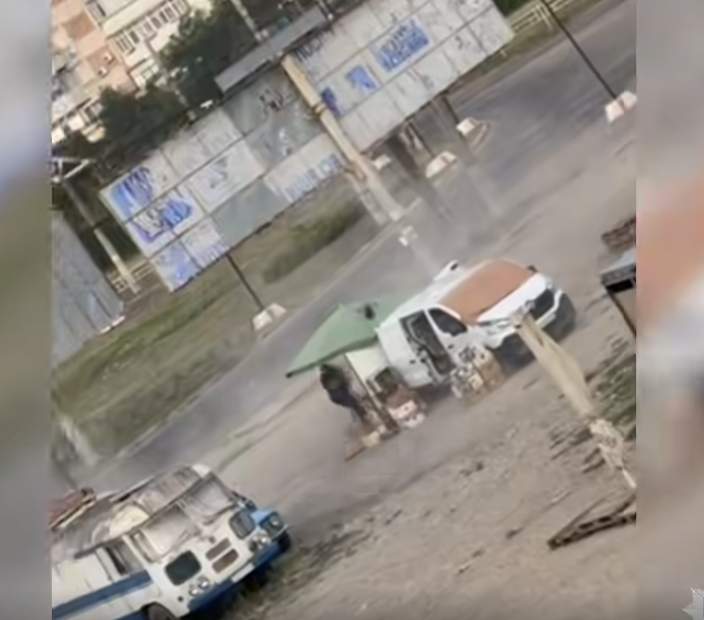
For residents of Kherson, the video showed a routine attack. It was not the first time it happened to Yuri’s family. His van was attacked and damaged before. His other car was destroyed by Russian drones. A doctor in the hospital where Yuri was recovering from multiple injuries said that, on average, their department alone receives up to 20 patients injured by drones daily. On the way from the interview, the Byline Times crew came under a drone attack.
In July 2026 alone, Russian FPV drones have killed 29 civilians and injured 395 in the Kherson region, accounting for more than 90% of all civilian deaths and 85% of all injuries caused by Russian attacks that month, according to the Kherson Military Administration.
For many around the world, the video of a drone hunting a civilian was the first glimpse of a human safari campaign that Russians have been carrying out for over two years. For millions, the term “human safari” is still unfamiliar.
Two years since Byline Times first documented Russian military using FPV drones to hunt civilians, quoting a local woman who called it “human safari,” this viral video forced the international community to watch. Yet, just watching this war-defining and largely overlooked tactic is not sufficient.
From Reporting to Legal Evidence
Since those first reports, the United Nations published three reports documenting systematic drone attacks on civilians in Kherson. Human Rights Watch conducted an independent investigation and reached similar conclusions. Both found evidence that Russian forces deliberately targeted civilians with FPV drones. Their findings showed that attacks constituted war crimes and crimes against humanity.
By August 2026, in addition to eyewitness testimony, a database of videos, official investigations, forensic evidence and a documented pattern of attacks, a body of evidence has been created that can support future criminal prosecutions of those responsible. As The Times reported, Ukraine’s Prosecutor General, with support from British legal experts, is preparing what would be the country’s first crimes against humanity case over the systematic use of drones against civilians.
Prosecutors aim to hold senior Russian political and military leaders accountable by demonstrating that the attacks formed part of a state policy rather than isolated battlefield crimes. If successful, the case could establish an important legal precedent for future international prosecutions of drone warfare directed against civilians.
Ukrainian prosecutors have opened more than 16,000 criminal cases involving FPV drone attacks since the start of the full-scale invasion. Prosecutors are pursuing not only drone operators but also their military units and chains of command, with suspects already identified in several cases.
Documented attacks rose from 187 in 2022–2023 to 2,685 in 2024 and 7,787 in 2025. In the first seven months of 2026 alone, prosecutors recorded another 2,614 attacks, affecting nearly 7,000 people, including 179 children, and killing 967 civilians, among them 10 children, according to Prosecutor General Ruslan Kravchenko. The highest numbers of attacks have been documented in the Kherson, Donetsk, Dnipropetrovsk and Sumy regions. Russian drone operators have deliberately targeted medical workers, emergency responders, police officers, journalists, utility crews and humanitarian personnel.
The Tactic Spreads Beyond Kherson
Kherson served as a laboratory of war for the Russian military due to its proximity to their positions. After first deploying the tactics in Kherson, Russian forces expanded them across the front.
By summer 2026, civilians report FPV drone attacks in Kramatorsk, Kostiantynivka, Druzhkivka, the Kharkiv region, the Sumy region and Zaporizhzhia. Drones pursue civilian vehicles, strike cyclists and pedestrians, and target emergency workers responding to previous attacks.
The tactics have evolved from Russian forces using FPV drones to strike individual targets. The new tactic is a drone siege: FPV drones are used to control territory and restrict civilian movement. In occupied parts of the Kherson region, including Oleshky, drones drop anti-personnel mines onto roads and access routes, making evacuation, humanitarian aid, and food delivery impossible. As a result, 5,000—6,000 civilians have been starving since December 2025.
Another tactic includes the use of incendiary substances that ignite homes and apartment buildings, burning entire blocks.
The technology has developed as rapidly as the tactics. Early analogue FPV drones relied on radio signals and could often be disrupted through electronic warfare. New, fiber-optic drones transmit commands through physical cables rather than radio frequencies and cannot be jammed by conventional electronic countermeasures.
Russian forces have also expanded the use of larger carriers that transport and release smaller FPV drones closer to their targets. These systems extend operational reach up to 60 kilometers behind the front line, placing communities once considered relatively safe within range.
Human Safari Has Advanced Faster Than Public Awareness
While the technology has evolved and the tactics have spread, public awareness has lagged.
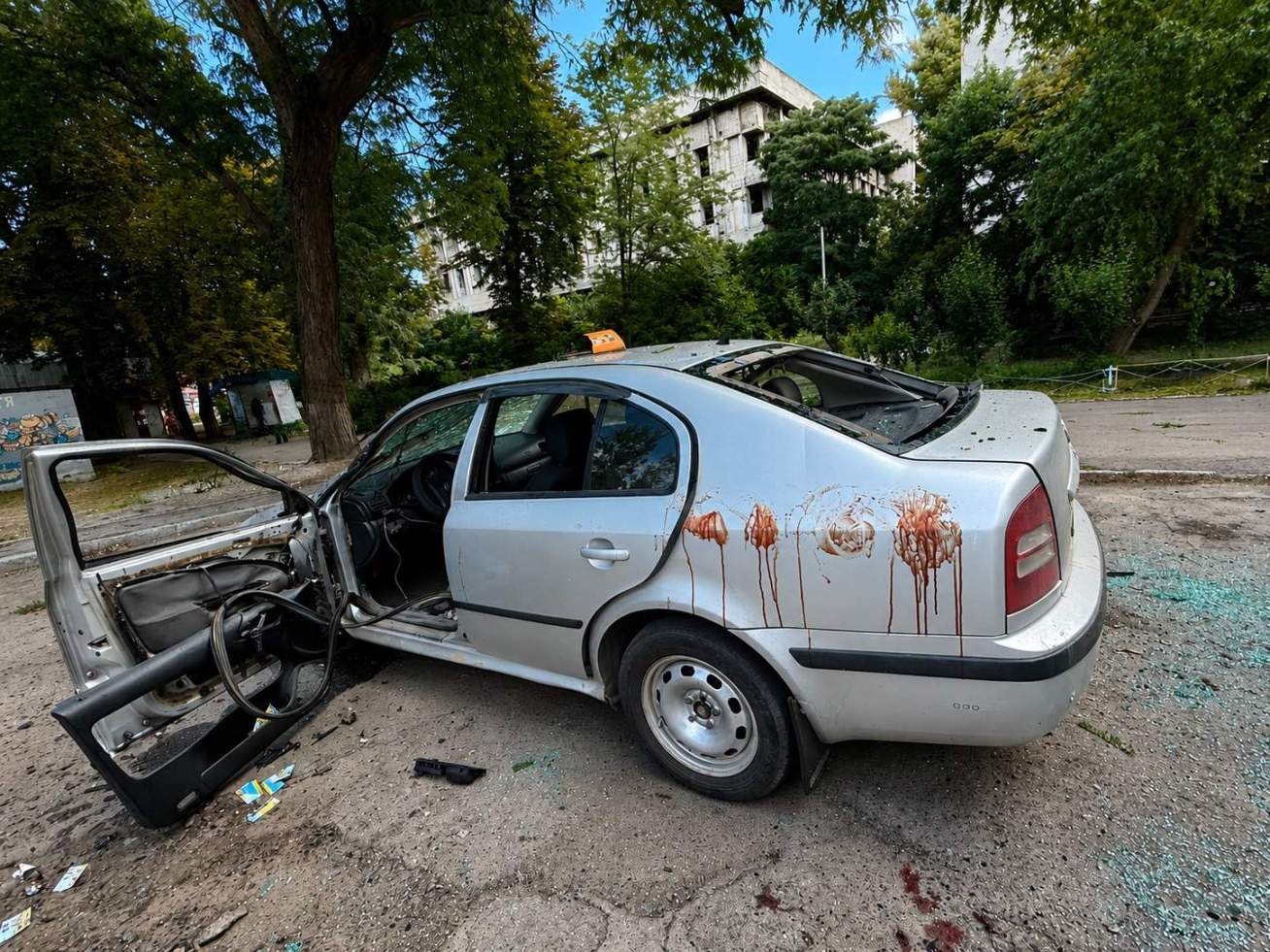
Despite growing evidence, human safari remains absent from international public debate. A handful of cases briefly broke through: 84-year-old goat herder Lora, killed alongside her herd by a Russian drone, and 18-month-old Dmytryk, killed while playing in his yard. Both made international headlines. Both were soon forgotten.
International expert discussion still often treats FPV drone warfare as a future challenge or an emerging technology. For civilians in Kherson, Oleshky and other frontline communities, it is a reality that defines daily life.
The battle field has become a battle sky. Small drones paralyze cities and define kill zones.
The video from the Kherson farmers’ market has captured global attention and allowed millions to witness one of thousands of human safari attacks. It has exposed a military strategy that has evolved over two years, spread across the front, and outpaced international recognition.
Drone warfare against civilians is not the future, it is the present.